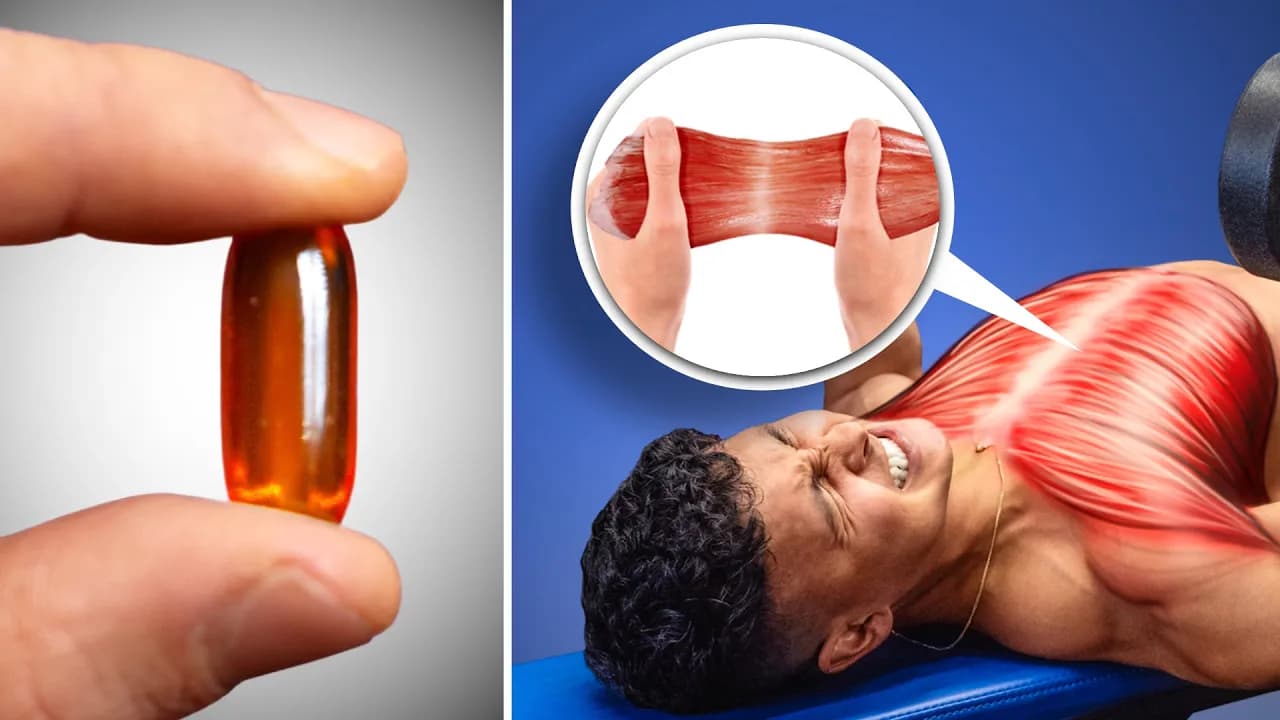
What Happens If You Take Creatine Every Day for 30 Days (After Age 50)
In a Nutshell
Daily creatine supplementation after age 50 improves cognitive function and stress tolerance in week one, then enhances strength, stamina, and recovery by week two as muscles saturate. By weeks three and four, users see better blood sugar control, easier fasting, firmer muscle appearance, and reduced joint stiffness, with full tissue saturation and increased exercise motivation. Creatine is safe for kidneys, supports bone health and connective tissue, and is especially relevant for postmenopausal women experiencing anabolic resistance.
These notes were generated by AI and may contain inaccuracies.
Creatine is a compound that the body naturally makes, but production declines significantly with age. In cells, mitochondria produce energy in the form of ATP, which has three phosphates. When a phosphate is broken off, the energy becomes usable and ATP converts to ADP. Creatine provides quick energy by donating a phosphate to ADP, enabling explosive, fast, peak power movements such as running up a hill or sprinting. This phosphagen system lasts only 5 to 10 seconds before the body shifts to glucose, which takes 15 to 30 seconds to activate. After 20 to 30 minutes, the body transitions to fat burning.
Creatine supports tissues with high energy demands including the brain, skeletal muscles, liver, and kidneys. It also draws water into muscles for hydration, which may appear as 1 to 2 pounds of weight gain that is not fat. Creatine participates in blood sugar regulation and provides methyl support for neurotransmitter production, DNA repair, and detoxification. It is required for bone health and connective tissue, making it relevant for people with osteoporosis, particularly postmenopausal females.
During the first week of daily creatine intake, cognitive function improves with better focus, concentration, and memory. Stress tolerance increases, allowing better handling of daily stressors.
By week two, muscles become more saturated with creatine, producing noticeable strength gains and improved stamina for activities such as climbing stairs or lifting objects. Recovery time shortens for those who typically experience prolonged soreness. Creatine enhances glycogen storage in the liver and muscles, improving energy availability through glycolysis. Users can typically complete a couple more repetitions during resistance exercise.
A creatine monohydrate product includes 500 mg of betaine, which supports the body's own creatine production. Zinc, copper, and magnesium are added because deficiencies in these minerals can impair creatine utilization.
Week three brings improved blood sugar control and an easier transition into a comfortable fasting state. Increased muscle hydration creates a firmer appearance, though this may register as 1 to 2 pounds of non-fat weight gain. Physical exertion during weight lifting or movement feels subjectively easier.
After four weeks, tissues reach complete creatine saturation. While bone density changes require DEXA scanning to measure, users often report reduced joint stiffness and greater connective tissue strength. Motivation to exercise increases because the body can handle additional effort.
Creatine does not damage the kidneys. One small study suggested a possible link to hair loss, but no users have reported this effect. Creatine remains stable when mixed in hot beverages such as coffee. Animal proteins supply dietary creatine, with herring containing the highest amount, followed by pork and red meat.
Postmenopausal women often experience anabolic resistance, reducing their ability to build muscle through standard exercise and protein intake. Increased resistance training combined with higher animal protein consumption supplies both creatine and leucine. Creatine specifically increases muscle stem cells that aid muscle repair.
Keep Dr. Eric Berg DC in your library
Save the videos and channels worth coming back to, and find them again in one place.