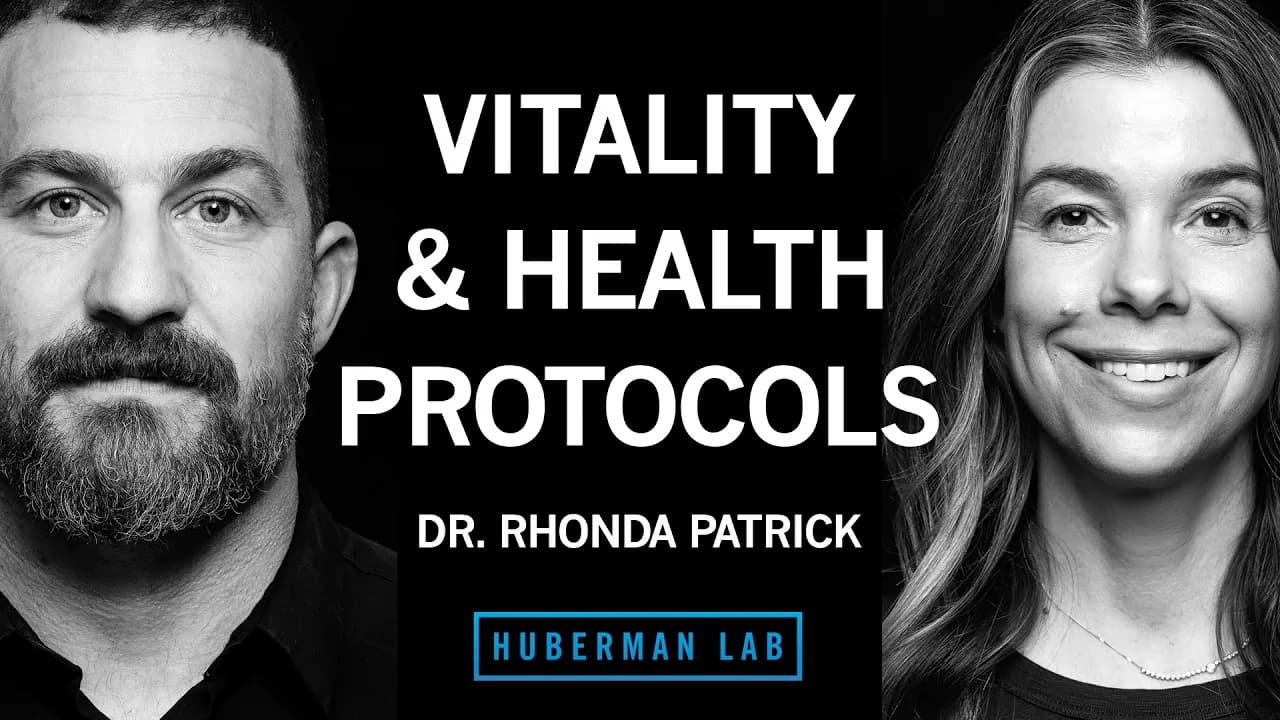
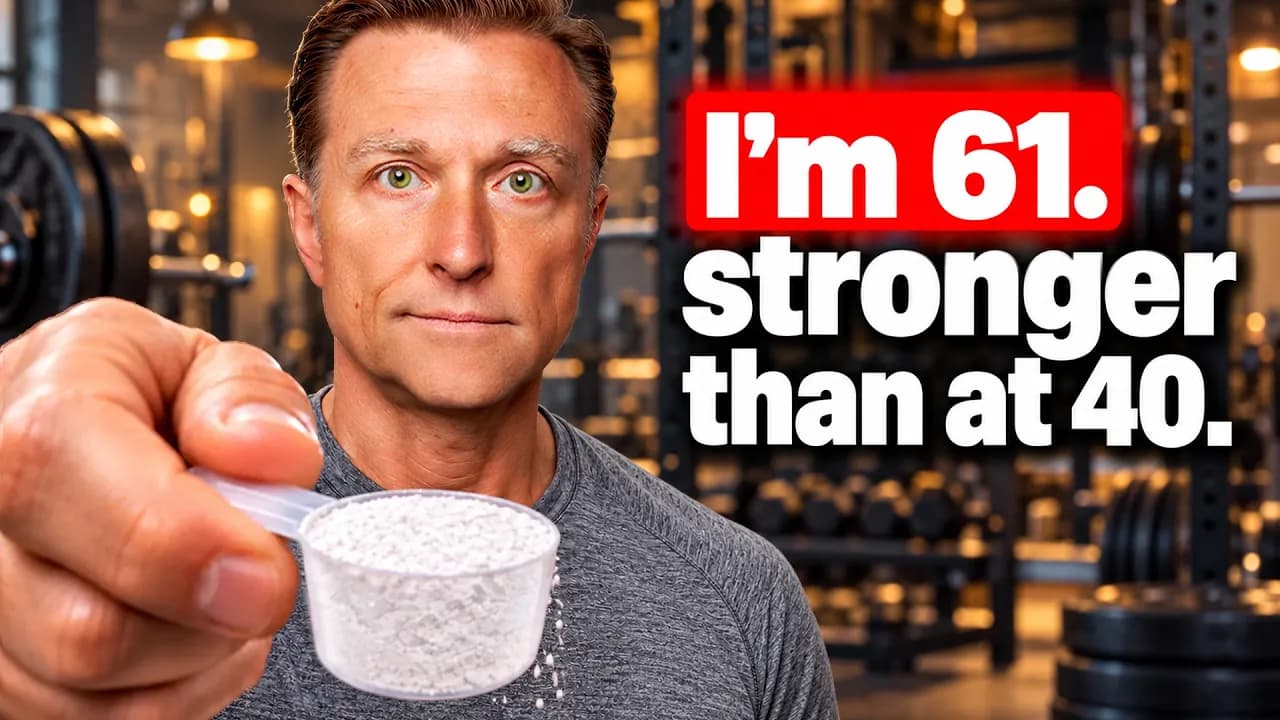
Anti-Aging Expert: Creatine Is The Fat Loss Secret Doctors Don’t Tell You - Dr. Darren Candow
In a Nutshell
Creatine (3-5g daily, ideally Creapure monohydrate) combined with resistance training increases muscle, strength, and bone density across all ages while showing potential brain benefits under metabolic stress like sleep loss. It has a strong safety record with no credible kidney, hair-loss, or cramping risks at standard doses, and higher amounts (10-20g) may help during acute stress or for bone health. The key is consistent daily use as one tool alongside training, protein, and sleep to slow age-related decline in muscle, bone, and cognition.
These notes were generated by AI and may contain inaccuracies.
A healthy brain likely doesn't need any creatine. However, when stressed through sleep deprivation, night shift work, or university students cramming for exams, the healthy brain becomes a metabolically stressed brain. Most people fall into this stressed environment, and that's where creatine comes to the rescue. The more stressed the brain is, the higher the dose seems to come into play.
Dr. Darren Candow has published over 120 papers on creatine and conducted at least 30 to 40 studies in his lab. No individuals were found who can't or shouldn't take creatine at recommended dosages. Creatine may have potential anti-cancer properties and can speed up rehabilitation. There's significant hope around Alzheimer's applications.
The current body of evidence suggests children should get at least one gram per day. In children, creatine supports optimization for bone health as well as muscle development.
Dr. Candow's mission is to promote health and help people live longer free of disease. Weight training now shows profound effects similar to cardiovascular exercise, with additional benefits. The focus includes benefits of lifting things around the house, combined with exercise and nutrition, particularly creatine and protein, to optimize longevity. The goal is to start young and move forward through aging.
Dr. Candow completed graduate school in Canada with a cell biology degree, then moved into a master's and PhD in kinesiology. His creatine research began accidentally while studying glutamine for his master's. Glutamine was found to be worthless for body composition improvements in young healthy individuals. At the same time, colleagues researching creatine found young biological males getting bigger, stronger, and faster. Research on creatine was stimulating because it improved things known to decline with aging, leading to a complete focus on healthy aging.
ATP (adenosine triphosphate) is the energy currency of all cells. Creatine acts as a helper to maintain energy currency levels during muscle work like shoveling or walking. When exercising at high intensity such as sprinting or weightlifting, ATP stores become jeopardized, and creatine sacrifices itself to maintain energy levels. This is why anaerobic sports athletes use significant creatine stores in muscle.
The body naturally synthesizes about 1 to 3 grams of creatine per day, but only in the liver and brain. Creatine is not made in skeletal muscle, yet 95% is stored there. The brain keeps creatine locally, while the liver transports it via blood to skeletal muscle. Dietary creatine from red meat, seafood, or supplementation addresses situations where more is needed.
Small populations born with inability to synthesize creatine require supplementation. Vegans and vegetarians respond best because their diet lacks dietary creatine, which is only found in animal-based flesh (red meat, seafood, poultry). Vegans and vegetarians naturally synthesize about 1 to 3 grams daily through amino acids but benefit from supplementation to increase intake.
Historically, hunter-gatherer populations consumed more creatine through dietary meat. Obtaining 3 grams of creatine through food alone requires eating substantial amounts of meat, creating challenges for those who don't eat meat or cannot afford it.
Creatine consumption in women has risen to approximately 3%. Consumption in men is slightly higher, though still relatively low overall.
When creatine is metabolized, it breaks down into creatinine. Blood work shows elevated creatinine and potentially lower eGFR (estimated glomerular filtration rate), leading doctors to advise stopping creatine. This is typically a false positive in 99 out of 100 cases. Randomized controlled trials show creatine causes no detrimental effects to the kidneys. Creatinine can also be elevated from high meat diets, dehydration, or exercise. Always inform doctors about creatine supplementation before blood work.
Taking too much too soon, such as the loading phase of 20-30 grams daily for 5-7 days, can increase water retention acutely for 3-5 days. On a maintenance dose of 3-5 grams daily, water retention resolves. The water is stored inside muscle, volumizing muscle size like a balloon. Creatine is osmotic, with water following creatine into muscle. A swollen muscle stimulates protein synthesis, leading to greater size and strength gains.
Micro-dosing results in hardly any water retention effect. A 6-week study showed only 0.86 kg increase in mass, with the majority being lean mass. Lean mass includes water, connective tissue, organs, and skeletal muscle, with about 50% being skeletal muscle.
Females respond robustly to creatine supplementation with benefits in strength, endurance, and performance. They experience some body fat loss. Meta-analyses show creatine reduces fat mass while increasing lean mass. Females respond favorably regarding bone health.
This myth originated from a study in rugby players taking 20-25 grams daily for 7 days, which increased DHT (a testosterone precursor linked to hair follicle loss). However, DHT remained within biological range, and no hair follicle measurements were taken. A subsequent study using 5 grams daily for 6-8 weeks in young males showed no detrimental effect on hair thinning or follicles.
Creatine super-hydrates muscle by drawing water in. Dehydration is a main cause of muscle cramps. Creatine may actually decrease muscle cramps, making it beneficial in hot environments during June, July, and August.
Creatine improves training volume (load × reps × sets). An 8-week study showed increased training capacity with creatine use. Creatine allows muscle to recover quicker, potentially enabling more frequent training sessions. When stopping creatine, elevated levels in skeletal muscle take about a month to return to baseline. In the brain, this is estimated at 5 weeks to 3 months.
Creatine with weight training produces greater increases than weight training alone across all ages. Expected lean tissue mass increase is about 1.2-2 kg, though only half is skeletal muscle. Creatine decreases protein breakdown, allowing muscle to maintain integrity and recover quicker. The most robust evidence supports improvements in muscle performance rather than massive muscle size gains.
In 30-40 lab studies spanning young individuals to middle-aged to older adults, combining weight training with creatine at 5 grams or more showed beneficial effects on muscle mass, muscle strength, and performance.
A standard 5-gram dose equals one scoop. This dose provides increases in lean tissue mass, muscle size, performance, strength, power, and endurance. Functional ability benefits include improved sit-to-stand capability in older adults, with applications for getting off the toilet, out of bed, or out of a car.
Loading phase (4 scoops daily) is the most rapid way to saturate muscles but may cause GI tract irritation. Starting with 5 grams daily is very beneficial without loading.
No individuals were identified who cannot or should not take creatine. Those with pre-existing medical conditions should consult a doctor. For pregnant women, human trials are ongoing regarding breast milk transfer and fetal effects. Current evidence suggests relative safety and good tolerability.
Creatine monohydrate is the optimal form. It is creatine linked to one water molecule that dissolves in the body and is identical to what the liver and brain produce. All safety and efficacy evidence is based on creatine monohydrate. Newer forms like creatine hydrochloride have some evidence but have never been shown to be safer or more effective than monohydrate.
When purchasing, look for Creapure (German-sourced, highest standard) on the label and third-party testing such as NSF certification to ensure no contaminants like lead or arsenic.
Five grams daily has been shown to be effective across the lifespan for skeletal muscle benefits. For individuals over the age of 50, a slightly higher dose may be beneficial because creatine levels in the lower legs become more compromised with age. This dosing recommendation applies without a loading phase, meaning consistent daily intake of five grams is sufficient.
Evidence shows creatine can be taken only on training days for muscle benefits, but daily consumption is recommended when considering benefits for other tissues like the brain. Seven to eight grams daily appears safe and effective for improving muscle mass and performance.
Side Effects and Dosing Strategies
Some individuals experience dizziness or jitteriness when taking higher doses of creatine, particularly on an empty stomach or when dehydrated. This occurs because creatine acts as the body's biggest methyl scavenger. When large amounts are consumed, methyl groups are spared and become available for other functions, including synthesizing adrenaline (epinephrine), which can cause feelings of increased energy or jitteriness.
Micro-dosing throughout the day reduces adverse effects. Taking smaller amounts spread across the day appears more tolerable with fewer side effects related to weight gain, water retention, or gastrointestinal irritation. One effective approach is placing five grams in a water bottle during workouts for consumption during weightlifting or cardio, plus additional intake in the morning, totaling approximately 10 grams daily.
Creatine can be mixed into various foods and beverages including yogurt, juice, or coffee. Doses of caffeine below 350 milligrams do not appear to interfere with creatine effectiveness.
The lowest dose shown to provide bone benefits is 8 grams daily, ranging up to 12 grams. This creates a dosing difference between muscle (3-5 grams) and bone requirements. Bone benefits have only been demonstrated when creatine supplementation is combined with exercise. No studies have shown bone benefits from creatine without concurrent weightlifting.
In post-menopausal females, creatine supplementation reduced the rate of bone mineral density loss around the hip region without increasing bone density. It also helped maintain or improve bone structure. These effects may reduce fracture risk during falls, which is significant given that hip fractures often lead to long-term care placement or extended inactivity.
Mechanism of Action on Bone
Creatine stimulates bone-building cells to become more energized while simultaneously decreasing osteoclast activity, which are the bone breakdown cells. This dual mechanism improves bone turnover and helps maintain bone structure. The effect is similar to bisphosphonates, medications commonly prescribed for bone loss, though creatine is not a drug.
The brain naturally synthesizes its own creatine, similar to the liver. On non-stressed days with adequate sleep, the brain likely produces sufficient creatine and may not require supplementation. The brain comprises about 2 kilograms but consumes 20% of daily energy at rest.
Under metabolic stress conditions including sleep deprivation, night shift work, travel across time zones, university exam periods, or high-pressure situations, the brain becomes metabolically stressed and may benefit from supplementation. Creatine struggles to cross the blood-brain barrier, which may necessitate longer duration or higher doses when benefits are desired.
Dosing for Brain Benefits Under Stress
Fifteen grams showed some benefits in studies. Twenty grams appears to have effects acutely based on MRI studies measuring brain creatine levels. A study using 30 grams in young individuals sleep-deprived for 21 hours increased brain creatine levels and offset some negative effects. A subsequent study using approximately 14 grams did not produce the same effect.
A healthy brain likely does not need creatine supplementation, but a stressed brain likely does, with higher doses required as stress intensity increases. Ten grams daily serves as a baseline that covers muscle and bone needs while providing some brain benefits during stress. During acute periods of high stress such as jet lag, 20 to 25 grams may be taken temporarily, then reduced back to 10 grams when returning to a non-stressed state.
Individuals typically do not feel subjective effects from creatine supplementation for brain function. Benefits manifest during performance of cognitive tasks the following day, such as memory, puzzle-solving, or basic task completion.
The Stroop test, which requires reading color names while the text color conflicts with the word meaning, is a cognitively fatiguing task. One study had participants perform this test for 90 consecutive minutes. Participants given 20 grams of creatine before and after showed statistically significant improvements in speed and cognition compared to those without supplementation.
Creatine does not boost brain function above normal levels but helps restore levels that have declined due to stress. Populations with reduced brain creatine levels, including those with Alzheimer's disease, clinical depression, and concussion, may see improvements with supplementation. In Alzheimer's patients, single-arm studies using 20 grams daily for eight weeks increased brain creatine levels and improved memory and cognition measures.
An 8-week trial in Alzheimer's patients showed modest muscle gains and a 1.9 kilogram increase in hand grip strength, which is a key predictor of survival in dementia patients. Brain creatine levels increased by 11% and cognitive test scores improved significantly.
Mental Health Applications
Creatine has not been shown to be effective as a standalone treatment for mental health conditions. However, when added to existing therapies including SSRIs, cognitive behavioral therapy, or methamphetamine use under medical supervision, creatine improved symptoms in clinical depression and anxiety populations.
Proposed mechanisms include improved bioenergetics, enhanced neurotransmission or neuromodulation, and increased BDNF (brain-derived neurotrophic factor) protein involved in brain plasticity, as demonstrated in animal studies. PTSD is another condition where creatine may have potential therapeutic applications.
A study of over 200,000 adults found that those consuming the least amount of creatine in their daily diet had the highest rates of depression.
Systemic inflammation increases around age 40, contributing to accelerated aging, increased soreness, arthritis, and joint pain. Creatine has anti-inflammatory effects but does not work like acetaminophen or ibuprofen through direct blockade.
Creatine decreases markers of inflammation specifically during long-duration exercise. Individuals preparing for Ironman triathlons who took 20 grams daily for 5 days beforehand showed reductions in inflammation markers, potentially allowing quicker recovery and reduced illness risk. From a weight training perspective, creatine decreases markers of muscle damage, providing anti-inflammatory and anti-catabolic effects.
People with clinical depression or anxiety show reduced baseline creatine stores in the brain, similar to patterns observed in concussion or Alzheimer's patients. This suggests these conditions disrupt brain bioenergetics and lower creatine levels. A clinical trial from Perry Renshaw's group at Utah found that women with major depression who added 5 grams of creatine daily to their antidepressant doubled their remission rate over 8 weeks. Ongoing research is examining creatine as a standalone treatment versus placebo.
Creatine is found primarily in animal-based foods including seafood and red meat. Herring contains one of the highest concentrations, followed by salmon and beef. Milk and dairy contain only very small amounts, requiring consumption of impractical volumes to achieve meaningful intake.
A study on young biological females found that those taking 5 grams of creatine daily slept an average of 1 hour longer on training days compared to placebo. This suggests creatine may enhance brain recovery and homeostasis following training, potentially allowing higher training capacity. The study needs replication in males to determine effects on sleep quantity.
Creatine should be viewed as one tool among many rather than a standalone solution, especially regarding brain benefits where evidence is sometimes overhyped. A useful analogy compares lifestyle interventions to a toolbox: weight training represents the hammer as the primary tool, while creatine functions as a versatile wrench or screwdriver with multi-factorial benefits across muscle, bone, and brain. Sleep and protein represent additional essential tools like the measuring tape. A comprehensive plan requires combining multiple tools for greater health improvements.
Weight training is considered superior to cardio as a single exercise choice because it delivers cardiovascular benefits while also increasing lean tissue mass and performance. When performed effectively, resistance training improves mitochondrial health and VO2 max. It requires relatively low volume to achieve benefits.
A common myth is that heavy lifting is required to build muscle mass. Research shows lighter weights performed to near fatigue can produce equivalent muscle mass gains. However, heavy lifting remains superior for pure strength development. This flexibility allows individuals to adjust intensity based on energy levels and soreness—using lighter weights to fatigue on lower-energy days while lifting heavier when feeling capable.
Cardiovascular exercise improves longevity and health markers but does not effectively stimulate strength or the muscular system. Weight training provides both cardiovascular and muscular benefits. Sprint interval training may offer some muscular stimulus through cardio, but resistance training remains more effective overall. Both modalities should ideally be performed, though either alone provides benefits compared to complete inactivity.
Consistently lifting heavy weights with low repetitions can compromise capillary density and mitochondrial health, potentially reducing VO2 max and metabolic fitness. Everyone should ideally do both weight training and cardio, but if limited to one, either provides value since most people do neither.
Guidelines suggest 150 minutes of moderate physical activity weekly, though higher volumes and intensities are preferable. This equates to roughly 21-22 minutes daily. For weight training, 2 or more sessions per week suffice, with whole-body routines performed 3 times weekly (Monday, Wednesday, Friday) being effective. A little volume and frequency produces meaningful results, especially with aging.
Muscle mass peaks between ages 20-40, then declines at an average rate of 1% per year after age 40 in sedentary populations. Strength loss occurs at 1-3% annually. Resistance training can plateau this decline, preserving muscle mass and function into later decades for activities like carrying grandchildren and climbing stairs.
It is never too late to begin resistance training—even at age 80 or 100, benefits are still achievable. Combining weight training with creatine and protein produces even greater results. Exercise is considered king, with nutrition as the complementary queen throughout the lifespan.
Combining high-quality protein with creatine produces greater increases in lean tissue mass and muscle performance than either alone. Most people now consume adequate total protein (1.2-1.6 grams per kilogram body weight), though quality matters. Vegans and vegetarians may need higher total intake to obtain all essential amino acids.
Estrogen influences creatine metabolism, affecting enzymes involved in creatine synthesis and impacting both brain bioenergetics and muscle metabolism. As women transition through perimenopause to postmenopause with declining estrogen, creatine may support bone, muscle, and cognitive health. Building tissue reserves during premenopause may help offset later decline rates.
Current evidence supports creatine safety at recommended dosages for adolescents and teenagers. Research shows improvements in balance, agility, and body composition. At least 1 gram daily is suggested for bone health and muscle development in children. Parents should consult medical practitioners. Data on infants remains limited.
Hundreds of randomized controlled trials demonstrate an exceptional safety profile. A study examining over 25,000 cases found creatine safe even at doses exceeding 10 grams daily for multiple years. Timing does not matter—creatine can be taken morning, pre-workout, during exercise, post-workout, or before bed with no difference in effectiveness.
Creatine does not need to be consumed all at once. Smaller amounts can be spread throughout the day. One study found 1 gram every 30 minutes up to a 20-gram total dose improved retention. Gummies and other alternative formats are viable if third-party tested and containing verified creatine content.
Many commercial creatine products contain little or no actual creatine. Consumers should verify third-party testing with visible logos on packaging, confirm high-quality creatine source, and ensure actual creatine content. Products lacking testing should be avoided.
A 1992 study demonstrated that 5-gram doses elevated blood creatine, with multiple daily doses maintaining elevated levels. Three grams daily for one month achieves muscle saturation as the lowest effective dose. A two-year trial in postmenopausal women using 0.14 grams per kilogram showed benefits for bone preservation and muscle performance.
Daily supplements include probiotics (morning and evening with food), two forms of magnesium (one before bed, one daytime), 2,000 IU vitamin D, protein (powder or food sources), and 4 grams of omega-3 fatty acids (one dose post-exercise). Occasional iron supplementation occurs when red meat intake is low. NAD precursors and multivitamins are also used.
Social media and evidence dissemination have increased awareness that creatine benefits extend beyond young males seeking performance gains. Older adults recognize its potential for addressing age-related muscle loss, strength decline, functional impairment, bone loss, and brain atrophy.
Any fat reduction from creatine appears indirect, likely resulting from increased lean mass stimulating energy expenditure. Animal models suggest cellular-level fat metabolism effects, but human fat loss primarily stems from improved metabolic health via lean tissue gains.
Practical placement strategies improve adherence—keeping creatine near coffee machines, on office desks, or in visible daily locations. Since effects are gradual rather than immediate like caffeine, consistency matters more than perfect timing or noticing instant changes.
After a week or two of weight training, users commonly report being able to complete more repetitions, lift more weight, and recover more quickly. Effects on bone are not noticeable. Anecdotally, cognitive benefits are reported, particularly during sleep deprivation. One personal observation is that jet lag is reduced significantly when taking a high dose of creatine.
Starting a dose of 3 to 5 grams of creatine per day will not produce noticeable differences immediately. From a muscle perspective, effects are typically noticed in a few weeks to a month. At this lower dose, cognitive effects are unlikely to be noticed unless the individual is metabolically stressed, in which case memory or cognitive benefits may appear after a few days. Three grams per day can fully saturate skeletal muscle in 30 days.
In a study using Stroop tests, participants had been taking creatine for a week in advance with a loading phase to saturate the body before testing. In contrast, a sleep deprivation study from Germany used a single bolus mega dose given before 21 hours of sleep deprivation, and participants performed better on cognitive tests the next day. This suggests a high dose could be useful before an event involving significant sleep loss, followed by a return to a consistent routine.
Some individuals are now taking 20 to 30 grams daily based on acute studies. It is recommended to ensure adequate sleep the following day. At such high doses, it is unknown whether neurons may swell with water or whether long-term detrimental effects could occur. Mega doses are not recommended consistently over time. It is also unknown whether high doses could downregulate natural creatine synthesis.
Exercise is performed at least 3 to 4 days per week with weight training, plus 20 to 30 minutes of moderate-intensity cardio or spin class on alternating days (weight training on Monday, Wednesday, Friday; cardio on Tuesday, Thursday). Weekends include hiking and similar activities. A balanced diet is followed. Caffeine intake is limited after noon due to being a slower metabolizer. Evidence-based research is applied to daily life.
There is strong interest in creatine's effects above the neck. Potential applications include concussion recovery, CTE prevention, and brain trauma. Evidence from rodent studies shows that taking creatine before head trauma speeds up concussion recovery, suggesting possible prophylactic use for individuals involved in contact sports. Additional interest exists in Alzheimer's disease and depression research.
Creatine research will likely continue for at least the next 20 years. Even for skeletal muscle, the optimal dose remains unknown. Current dosing for brain effects is based on estimates (for example, 10, 12, or 15 grams), but the best supplementation protocol and dose are still undetermined.
Larger individuals have greater muscle storage capacity for creatine, so relative dosing may need to be higher. More metabolically stressed individuals may also require higher doses because their natural synthesis cannot keep up. While general recommendations are provided for simplicity, dosing can be individualized based on body weight.
Creatine is presented as one tool in the health promotion toolbox that may help individuals live longer and better while maintaining activities of daily living later in life. Without it, loss of function can lead to accelerated aging and poorer quality of life. The importance of acting now rather than saving everything for later is emphasized.
Aging is described as catastrophic. After age 40, physical discomfort increases and retaining muscle mass becomes more difficult. The body's ability to withstand stress declines, and biological systems begin to deteriorate more rapidly. The goal is to develop strategies to slow deterioration and maintain the ability to live longer free of disease.
A lasting impression on students that research changed their lives in a meaningful way is a primary career goal. Helping even one person live longer, free of disease, and happier is considered success. The quote "get busy living or get busy dying" from Morgan Freeman in The Shawshank Redemption is referenced. The desire is to see people remain active at ages 120–130. Additional emphasis is placed on laughter as a simple but powerful practice.
The drive to study anti-aging topics stems from a deep fear of death. Religious beliefs (Roman Catholic) influence thinking about mortality, but the preference is to spend more time in the present life. The individual believes in heaven but still wishes to extend healthy lifespan. The fear of death has been present lifelong and is connected to a strong passion for life.
Keep The Diary Of A CEO in your library
Save the videos and channels worth coming back to, and find them again in one place.