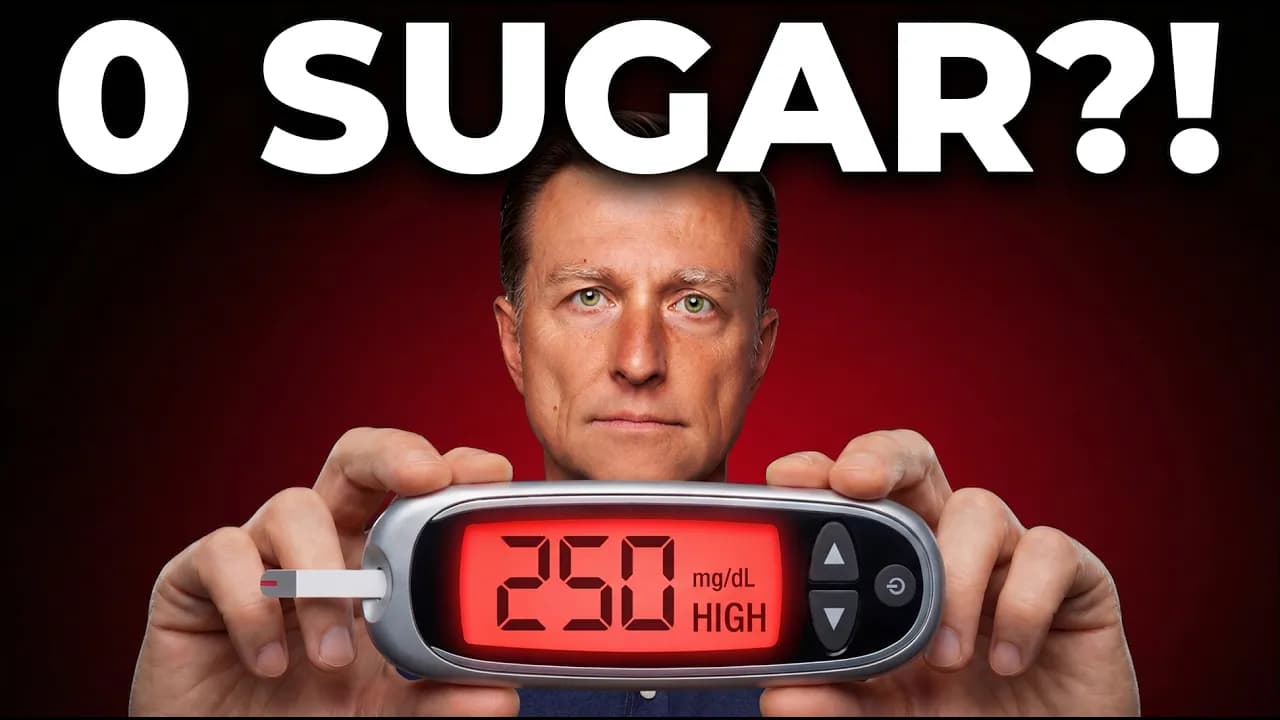
What Happens When You Stop Eating Sugar for 14 Days?
In a Nutshell
Quitting sugar triggers intense withdrawal on days 3-4 due to dopamine crashes, cortisol spikes, brain fog, and cravings, causing most to fail, but pushing past day 5 brings upregulated dopamine receptors, reduced inflammation, ketone-fueled brain repair via BDNF, steady fat-burning weight loss, sharper cognition, and no more cravings by day 14. Eliminate all sugars and starches (including hidden ones like maltodextrin), supplement B vitamins, potassium, and magnesium, avoid artificial sweeteners to prevent accelerated brain aging, purge junk food from your environment, and use keto replacements plus intermittent fasting for long-term success. A free 2-minute quiz pinpoints your body's weakest signal (e.g., insulin, gut) to optimize results.
These notes were generated by AI and may contain inaccuracies.
Most people who try to quit sugar fail on day three to four because that's when the brain's reward system is at its lowest point, right before things improve. One bad effect of sugar is glycation, where it combines with proteins in the bloodstream and arteries, damaging them. It also causes peripheral neuropathy in nerve endings in the feet. At a deeper level, it leads to insulin resistance, where cells can't access glucose (their fuel) properly via insulin, causing cells to die from lack of fuel, especially in the brain—this is behind dementia.
Day one: Stop eating sugar, including hidden sugar like starch (cornflour, maltodextrin, modified food starch) in junk food carbohydrates. Starch is glucose molecules connected together that break down into glucose when eaten. Eliminate refined sugars and starches. Nothing much happens yet.
Stored sugar (glycogen) in the liver starts being used as fuel. Glycogen holds water, so expect water weight loss: more peeing and scale drop. Many lose 7-11 lb the first week, but it's just water weight, continuing over the next week.
Day two: Cravings kick in as body hasn't adapted from sugar-burning to fat-burning. Insulin drops, body seeks fuel from stored fat, but enzymes and machinery take a few days to switch. Cravings hit hard but will go away soon—hang in there.
Day three: Body demands more dopamine, but dopamine receptors are downgraded and dysfunctional. Dopamine drives addictions to sugar, drugs, smoking via the reward system, providing pleasure or relief. Addictions start with pleasure but become relief from pressure/stress via elevated cortisol and adrenaline if you resist—it's a survival mechanism out of control.
Days three to four: Most quit due to brain fog, irritability, headaches, tiredness, anxiety, pressure, agitation—all from cortisol due to dopamine issues. Body pressures you to give in.
If environment is off, everything struggles—like a polluted fish tank where the fish stays sick despite best food/treatment. Body runs on 10 signals: insulin, cortisol, inflammation, sleep quality, gut function—each affects how you feel. One signal is usually most broken; fix it first. Free 2-minute quiz identifies the main signal holding your body back—link in description.
Hang in there past days 3-4. Day five: Things get better. Days 5-7: Dopamine receptors upregulate and reset; less inflammation, weight loss, improved mood, focus, memory, attention. Take B vitamins, potassium, magnesium to ease this.
In brain, BDNF (brain-derived neurotrophic factor) acts like Miracle-Gro, regenerating sugar-damaged brain cells. Quitting sugar repairs brain damage; brain rejuvenates on ketones (alternative fuel for neurons, even damaged ones).
Days 10-13: More weight loss, cognitive function, less inflammation, no cravings—body taps stored fat for fuel, satisfying hunger. By day 14: Normal dopamine receptors; food tastes better, sugar seems incredibly sweet. No impulse for sugar, but watch ingrained social habits (parties, family events).
Even if feeling better, avoid diet soda (sugar-free). Journal of Neurology study (2025): 12,772 adults followed 8 years consuming artificial sweeteners showed 62% faster cognitive decline—1.6 years accelerated brain aging vs. avoiders. Shift from sweet to savory.
Sugar-heavy diet isn't normal for humans; returning restarts the cycle. Under stress/fatigue/hunger, old habits return. Change environment: Purge junk food from kitchen (fridge, pantry)—throw it away. Replace with healthier foods; no willpower needed when stressed/tired/hungry.
Download below teaches label reading: Zero sugar can mean loaded starches—avoid. Stack odds for success without barriers. Did this with a family: Grocery shopped right foods, amazing health transformation in one month.
For cravings (pizza, ice cream, cookies, candy), make keto versions—replace, don't deprive. Link below to channel with wife featuring healthier versions of everything craved, especially for kids/teenagers.
Focus on intermittent fasting—details in linked video.
Keep Dr. Eric Berg DC in your library
Save the videos and channels worth coming back to, and find them again in one place.