What Was the World Like in Ancient Human Times?
In a Nutshell
Ancient humans lived in a vastly wilder world: the Sahara was a lush savanna with hippos and rivers, every continent hosted giant megafauna like 10-foot ground sloths and 7-meter lizards, and forests, clear rivers, and dense animal herds covered landscapes now emptied or desertified. The night sky was pitch-black and star-filled enough to cast shadows, serving as a calendar, while soundscapes thrummed with insect swarms, whale songs, and thundering herds—conditions that shaped human senses and instincts. Wherever humans arrived, these giants and abundances vanished within millennia through hunting and environmental change, leaving the quieter, fragmented planet of today.
These notes were generated by AI and may contain inaccuracies.
Close your eyes and picture Earth as it exists today with cities, roads, fields, fences, farms, deserts in Africa, ice in the poles, and forests broken up by highways and houses. Now delete everything a human hand has ever touched. What remains is the world ancestors were born into: a planet so wild, so loud, so packed with life that no single corner would be recognizable. The Sahara was a green savanna with rivers and hippos, the night sky was bright enough to cast shadows, and the ground shook under animals that have since been wiped off the face of the Earth. This describes the actual sensory reality of the planet when Homo sapiens first appeared, including what it looked like, sounded like, and what existed in the dark. The modern world is a pale, quiet, emptied-out version of what once existed.
When Homo sapiens first appeared around 300,000 years ago, Africa looked nothing like today. The Sahara, currently the largest hot desert on Earth covering 9 million square kilometers of sand and rock, was green 10,000 years ago. It featured dense grasslands, trees, rivers, and lakes full of fish. Hippos lived there and elephants roamed through it. Early humans fished and hunted in a place now considered one of the most hostile on the planet. Scientists refer to this period as the Green Sahara. Evidence includes fossilized riverbeds visible from satellite, cave paintings of swimming people in what is now lifeless desert, and bones of crocodiles buried under the sand. The transformation resulted partly from climate shifts and partly from livestock stripping vegetation and altering how the land reflected sunlight. A lush landscape slowly baked into desert, partly because humans arrived with goats.
This transformation was not limited to Africa. Vast forests covered regions where deserts now dominate. Europe was thick with old-growth woodland so dense that early humans often could not walk straight through it. Sea levels sat much lower during ice ages. Entire landmasses now underwater were above ground, and people walked between continents on land bridges that no longer exist.
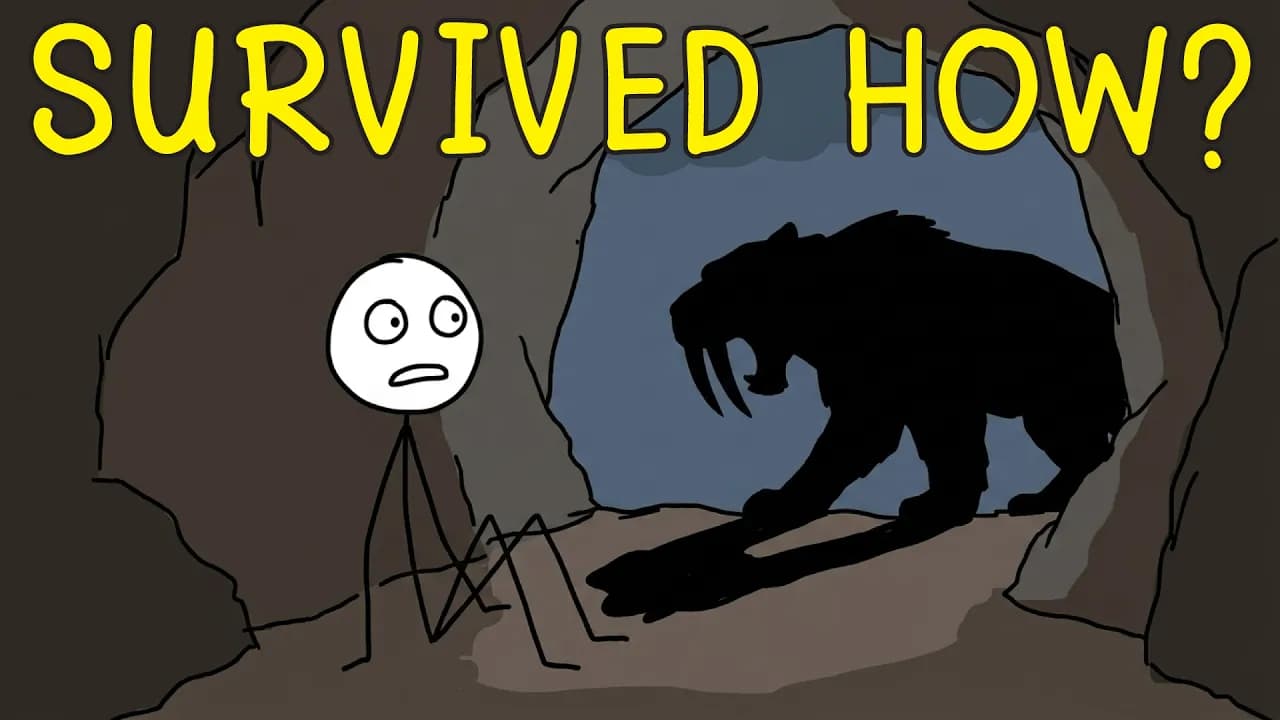
The animals that shared the planet with ancestors were unlike anything alive today. In Europe, cave lions prowled the landscape. These were not modern lions but animals 25% larger and adapted to cold. People painted them on cave walls at Chauvet in France, indicating they saw them often enough to record them. Those same caves were shared with cave bears weighing up to 500 kg. The cave was not free; humans competed for it.
In the Americas, the list of extinct species reads like a fantasy novel. Short-faced bears stood 6 ft at the shoulder and were the most dangerous land predator on the continent. Giant ground sloths reached 10 ft long and over 2,000 lb, walking on their knuckles because their claws were too large to lay flat. Glyptodonts were armored like tanks the size of a car. Dire wolves, American lions, mastodons, and woolly mammoths lived alongside horses. Horses evolved in the Americas and only disappeared there around 10,000 years ago, coinciding with human arrival.
In Australia the fauna was even stranger. Diprotodon was a wombat the size of a rhinoceros. Marsupial lions existed alongside megalania, a monitor lizard 7 m long that was still alive when humans reached the continent 50,000 years ago. Something the size of a car with teeth watched from the grass. Mammoths were everywhere and not rare; they formed part of the landscape the way cattle form part of the modern one. They were hunted, painted, and their bones used to build houses. The last woolly mammoth died 4,000 years ago on an Arctic island while the Egyptian pyramids were already standing. The world still contained mammoths when humans were building the Sphinx.
Wherever humans arrived—in Africa, Europe, the Americas, and Australia—the large animals vanished within a few thousand years. Climate receives partial blame, but the pattern is too consistent and too perfectly timed with human arrival to ignore. The world ancestors inherited was full of giants; the world they left behind was not.
There was no light pollution and not one electric light anywhere on Earth. The sky every night was completely, perfectly dark in a way almost nobody alive today has experienced. The Milky Way blazed every clear night, bright enough to cast a faint shadow. Every star was visible. Today a third of the world's population cannot see the Milky Way from where they live. Ancestors saw it every single night of their lives. The sky was not only beautiful but functional; it served as their calendar. Certain star clusters rose at predictable times, signaling when to migrate and when rains were coming. The Pleiades appear in the mythology of indigenous cultures on every continent, including groups with zero contact with each other, suggesting humans were tracking that cluster before they spread out of Africa over 100,000 years ago. The sky was a shared text every human on Earth was reading simultaneously before writing existed. Eclipses ranked among the most terrifying events possible—the sun dying midday with no warning.
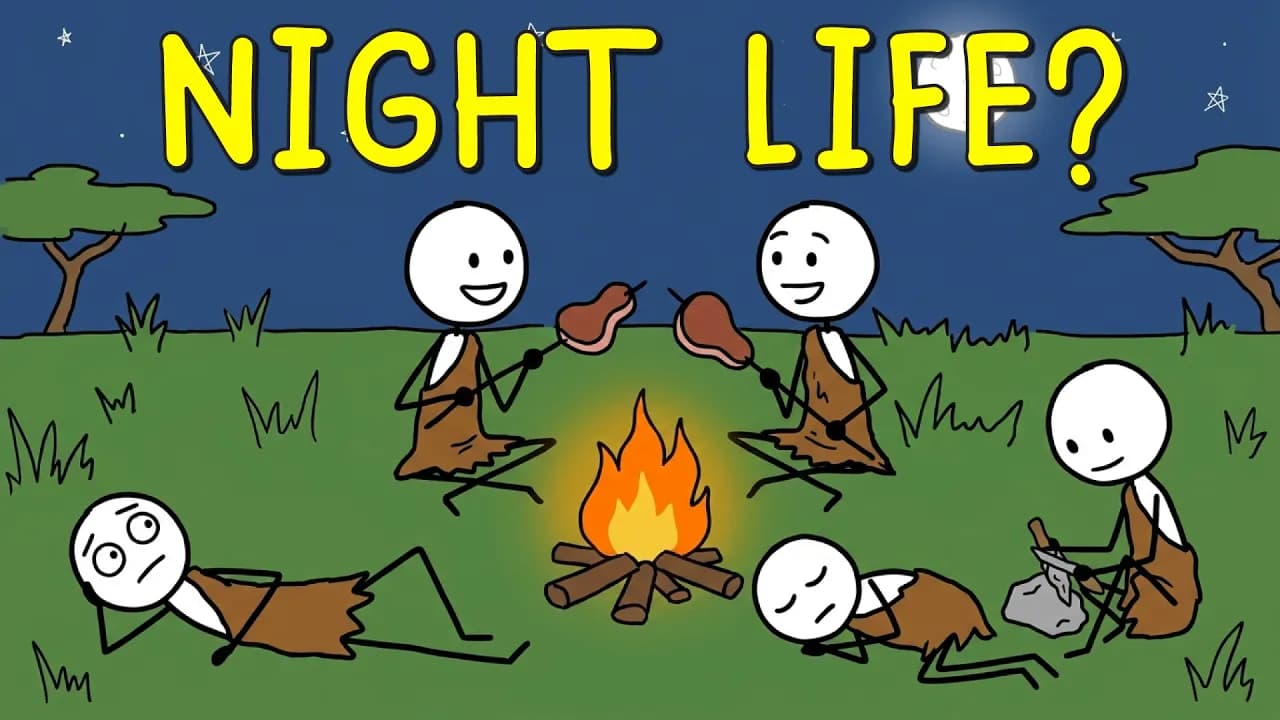
Before fire, half of every human life was spent in total darkness. After fire, the circle of light around a campfire was everything; beyond it the night was absolute. The ancient world was loud—not city loud, but alive loud. Insect swarms created walls of sound. Bird populations were so massive that migrations darkened the sky. The passenger pigeon alone numbered in the billions. Frog choruses around every water source were deafening in warm months. Whale song carried hundreds of miles through oceans with no engine noise to compete with. Herds were so large the ground vibrated as they moved. Rivers were clear enough to see the bottom. Salmon runs were so thick the water appeared to boil. The oceans held whales in populations several times larger than today, before commercial whaling began in the 17th century.
A world that full was also a world full of death. Ancestors were not watching from a safe distance; they were in it, prey as often as predators. They drank from the same rivers as animals that could kill them and slept on the same ground as things that hunted at night. Every sound mattered. Every shift in animal behavior was information—which way a herd moved, what the wind was carrying, where water was. They read the environment constantly because missing a signal could mean dying. Their nervous system was tuned to that world; the modern nervous system is still tuned underneath. The fear responses, hyper-awareness, and instincts were all built for that environment. Humans now live in a world where these responses fire at phone notifications instead of actual predators.
When ancient humans were alive the world featured a green Sahara, forests with no end, skies so dark the stars cast shadows, oceans packed with life, giants on every continent, and rivers so clear and full that a camp could be fed in an afternoon. Everywhere humans spread, the world grew quieter. The giants disappeared, the forests shrank, and the sky filled with light that drowned the stars—so gradually that nobody noticed until it was already gone. What remains is still beautiful, but it is a fraction of what once existed, emptied out and quieted down over thousands of years until the people living in it do not even know what is missing. Ancestors were born into something extraordinary; the further humans get from it, the less they remember it was ever lost.
Keep Axen in your library
Save the videos and channels worth coming back to, and find them again in one place.