Why I Eat Keto for High Lp(a)
In a Nutshell
High Lp(a), a genetically driven cholesterol particle, heightens heart attack risk up to 230% by depleting BH4, uncoupling eNOS, and generating superoxide that fuels arterial oxidative stress and inflammation—independent of ApoB. A high-fat ketogenic diet counters this by elevating BHB (>1.0 mmol/L) to boost NADPH for BH4 regeneration, restore nitric oxide, reduce superoxide via multiple pathways, and slash visceral fat. Additional protocols: 1,000 mg/day vitamin C (split doses), 500 mcg MTHF (especially for MTHFR variants), and high-flavanol dark chocolate (≥90%, low metals), targeting waist-hip ratio <0.9 (men)/<0.85 (women).
These notes were generated by AI and may contain inaccuracies.
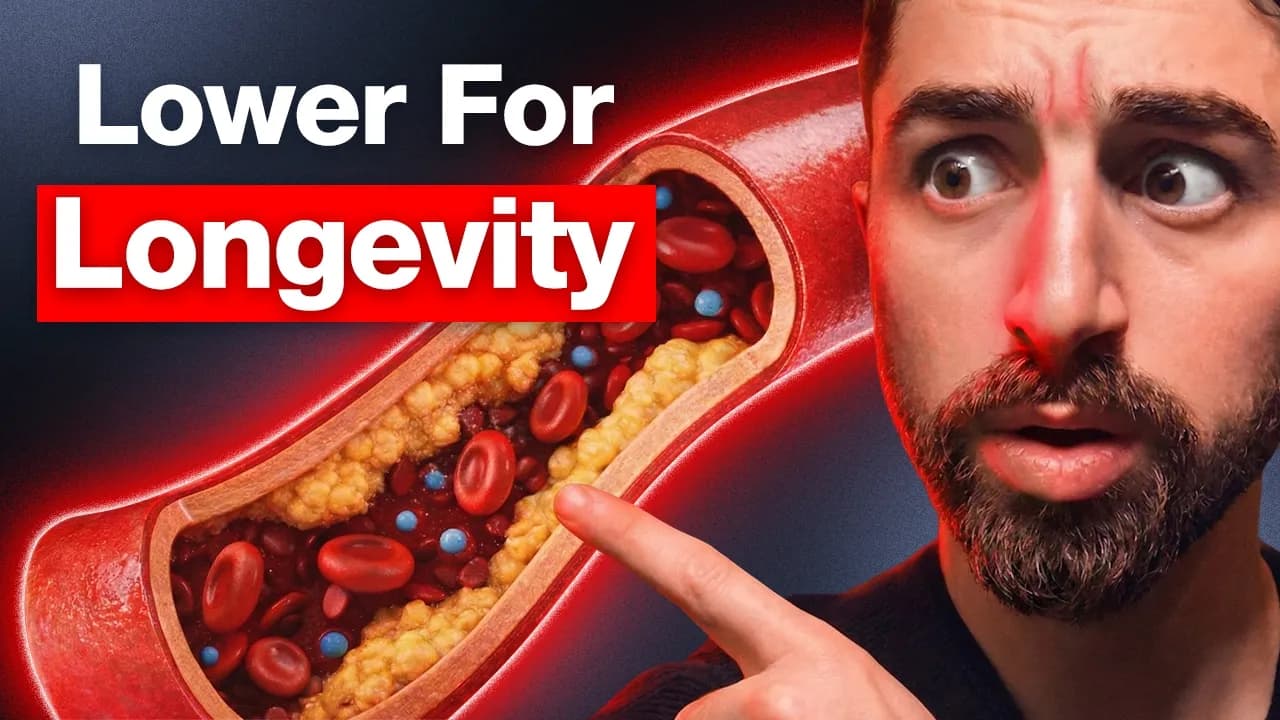
What if a carefully formulated high-fat ketogenic diet could protect against one of the most feared drivers of heart disease? Cardiovascular disease remains a world-leading cause of death. Doctors and scientists are turning attention to new players like Lp(a) (LP little a), a cholesterol-containing particle that floats in the blood and contributes to plaque buildup in arteries, heart attacks, stroke, and death. Those with high Lp(a), like the speaker, have a 230% increased risk of heart attack-related death. Lp(a) is 90% genetically determined, passed on like from the speaker's dad. This video assembles pieces of a biological puzzle for how a specific high-fat ketogenic diet might reduce or eliminate the impact of Lp(a).
Today, walk through the science and reveal tools that can make life-or-death differences. Genes are a ticking time bomb, increasing risk of dying from cardiovascular disease by up to 230%. Lp(a) is a structure believed to significantly increase cardiovascular risk. It's not a superhero; it's a super villain that bounces around chaotically in cells, damaging whatever it touches. You're not just losing a good thing; you're generating a bad one.
Real quick, find more in-depth content at the Stay Curious Metabolism newsletter, including multiple letters on Lp(a). There's a deeper level with long-form, highly referenced articles.
Chapter 1: Background on Lp(a) and why it poses serious cardiovascular risk. Chapter 2: Mechanisms—what Lp(a) does inside arteries that makes it dangerous. Chapter 3: Science-backed protocol to diffuse the Lp(a) bomb. Leave with practical insights and knowledge to school a cardiologist.
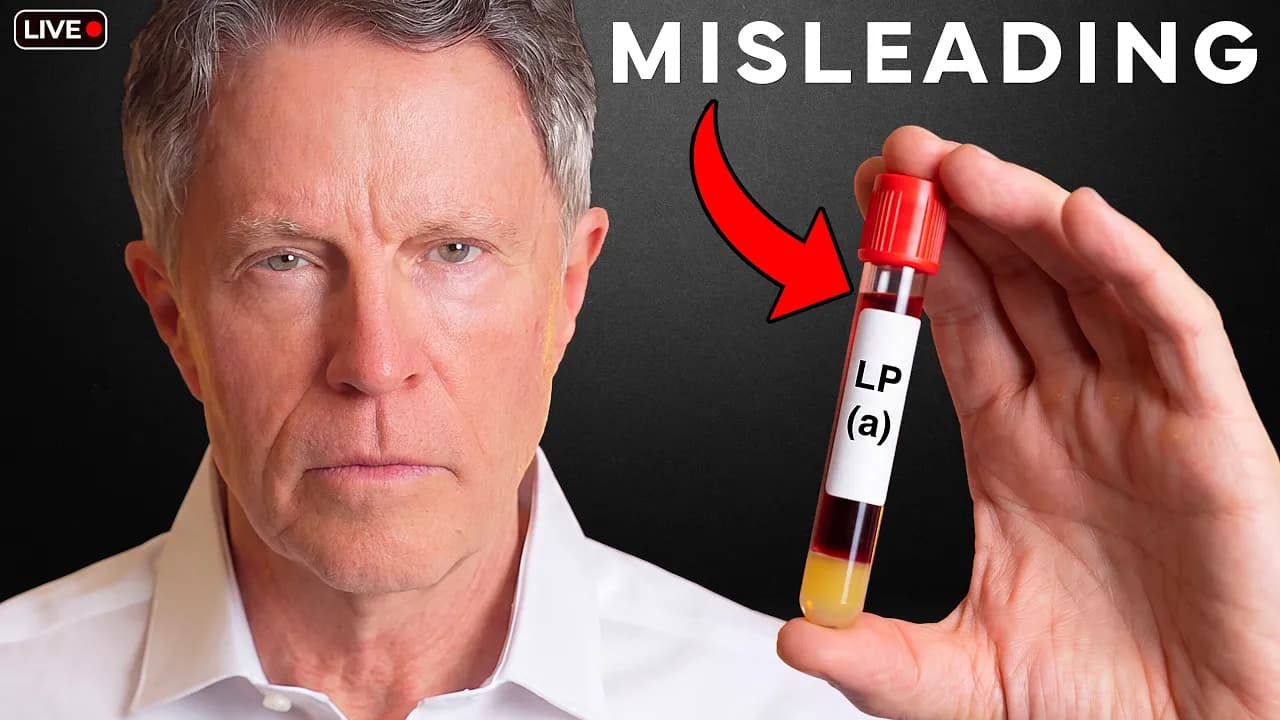
Lp(a) is a spherical molecule of fats, proteins, and cholesterol floating in the bloodstream, similar to an LDL particle (bad cholesterol). Lp(a) has a unique sticky tail called apolipoprotein(a), believed to significantly increase cardiovascular risk. The tail has Kringle repeats (named like a potato chip). For deeper dive on structure, see separate video.
Lp(a) can increase risk of dying from cardiovascular disease by up to 230%. Survival curve shows red line for high Lp(a) drops fast. 90% genetically determined, feels like bad luck or ticking time bomb—but it's not true.
Recent study obtained arterial tissue samples from humans to look inside arteries. Conventional view: Lp(a) like LDL sticks in arterial wall, gets trapped, seeds plaque (response to retention model, foundation of lipid heart hypothesis). Lp(a) is extra sticky.
Reality more nuanced. Patients with high Lp(a) had significantly higher levels of superoxide in arteries—a damaging metabolic byproduct. Superoxide is a super villain, bouncing chaotically, fueling oxidative stress and inflammation, core drivers of atherosclerosis (plaque buildup). More Lp(a), more superoxide in arterial wall, poisoning the soil. Hidden inside artery wall, not on standard blood test.
How does Lp(a) generate superoxide? Major pathway: eNOS uncoupling caused by reduced vascular tetrahydrobiopterin (BH4) availability. Nitric oxide relaxes blood vessels, essential for blood flow, made by endothelial nitric oxide synthase (eNOS) protein, which needs helper BH4.
Lp(a) reduces BH4 levels, causing eNOS to uncouple: instead of nitric oxide, makes superoxide. Less nitric oxide, more superoxide, fueling oxidative stress and inflammation. Lp(a) molecularly possesses eNOS, turning it from good to evil. Vicious cycle: superoxide decreases BH4, perpetuating uncoupling.
Recap: Lp(a) depletes BH4, disrupts nitric oxide, increases superoxide inside artery wall, leading to oxidative stress, inflammation, atherosclerosis. Damage hidden from basic blood tests.
When researchers adjusted for superoxide in artery walls, Lp(a)-associated risk for CVD death lost statistical significance—promising, shows superoxide mediates risk. Not everything, but a key mediator and target. Clear causal pathway with mechanistic clarity, unprecedented in Lp(a) research.
Risk independent of ApoB across analyses. ApoB on LDL and Lp(a) particles; lowering ApoB is a catch-all mantra, but data challenge it. Authors explicitly stated effects not explained by ApoB. Not just more particles, more risk—more nuanced picture.
Lp(a) depletes BH4. Regenerate BH4. Ketogenic diet produces ketone bodies, especially beta-hydroxybutyrate (BHB), which increases NADPH. NADPH regenerates BH4, supporting eNOS to make nitric oxide, less superoxide.
Ketosis reduces superoxide, breaks/reverses vicious cycle: less superoxide, more nitric oxide, less oxidative stress. Evidence ketones increase eNOS activity (relevant to epilepsy, keto indication). Bonus: ketones reduce superoxide via separate mitochondrial mechanism (reverse electron transport)—see speaker's PhD paper.
Triple benefit from ketones: more nitric oxide, less superoxide, improved antioxidant defenses (NADPH regenerates antioxidants).
Caveat: Intellectual framework based on mechanistic reasoning, rooted in biology. No definitive proof for clinical outcomes due to challenges in long-term RCTs on keto in high Lp(a). Can't isolate mechanisms in humans. Assembling coherent picture; speaker bets health on it, but not 100% certainty.
Ketogenic diets reduce visceral fat (inflammatory fat around organs, spits out IL-6, amplifies Lp(a) risk). Low waist-hip ratio (visceral fat proxy) shows zero Lp(a)-related CVD risk—graphs show high ratio increases risk, low ratio lines overlap. Any diet reducing visceral fat helps; keto potent at eviscerating it. Target waist-hip ratio <0.9 men, <0.85 women.
Evolutionary twist: Few species make Lp(a)—same ones not producing endogenous vitamin C (humans, European guinea pigs). High-dose vitamin C (1,000-2,000 mg/day) may reduce atherogenicity of Lp(a). Protocol: 500 mg twice daily with meals to reduce bloating. See separate video on Lp(a) and vitamin C.
Honorable mentions:
- MTHF (5-methyl tetrahydrofolate, active vitamin B9): supports BH4, enhances eNOS, improves vascular function. Relevant for MTHFR polymorphisms. Start 500 mcg/day, titrate.
- Cocoa flavanols (dark chocolate): activate eNOS. High-flavanol dark chocolate ≥90%, low heavy metals (lead, cadmium).
- Ketogenic diet raising BHB >1.0 mmol/L (fingerstick).
- Vitamin C ~1,000 mg/day, split two doses with meals.
- MTHF ~500 mcg/day (esp. MTHFR).
- High-flavanol dark chocolate ≥90%, low heavy metals.
- Foundation: low visceral fat, waist-hip <0.9 men/<0.85 women.
Started with Lp(a) as genetically determined, treatment-resistant CVD driver—no FDA drugs, survival curve drops fast. Uncovered hopeful picture: Lp(a) disrupts nitric oxide, ramps superoxide inside arteries, independent of ApoB. Ketones break cycle, restore nitric oxide, reduce superoxide at root cause. Builds picture changing underlying biology. No definitive trials yet, but science advances in pieces. Don't wait for perfect proof to make informed choice.
Stay curious.
Keep Nick Norwitz in your library
Save the videos and channels worth coming back to, and find them again in one place.