2,000 Hours of Heart Health Research in 21 Minutes
In a Nutshell
High-dose nattokinase can regress arterial plaque, lower blood pressure, and reduce clotting. TUDCA, berberine, omega-3s, and 2 g/day vitamin C each target distinct drivers—arterial inflammation, LDL clearance, heart-rate variability, and Lp(a) stickiness—while mitigating statin side-effects and possibly slowing brain aging. Together they form a practical, low-cost toolkit for protecting cardiovascular and metabolic health.
These notes were generated by AI and may contain inaccuracies.
I did a 7-year experiment where I live with cholesterol levels higher than most doctors see in their entire careers. When I underwent advanced heart imaging, there was no plaque whatsoever in my heart. My heart was astonishingly pristine. Everyone started asking for my secret. How do you build a heart that appears resistant from heart attack, from atherosclerosis? In this video, I'm going to walk through some of the highest yield strategies when it comes to protecting cardiovascular health. We're going to explore sides of cardiovascular biology you definitely don't learn in medical school, information drawn from thousands of hours of study, dozens and hundreds of papers. To respect your time, I'm going to do my best to boil down the highest yield, most practical information into 20 minutes.
Rather than just rattling off supplements and lifestyle actions, I have with me a little toolbox. I want to frame this as a practical toolkit for cardiovascular health, so I want to make it visual. We're going to go through this toolbox. Inside, there are five tools for heart health, each represented by a different object in this mystery bag.
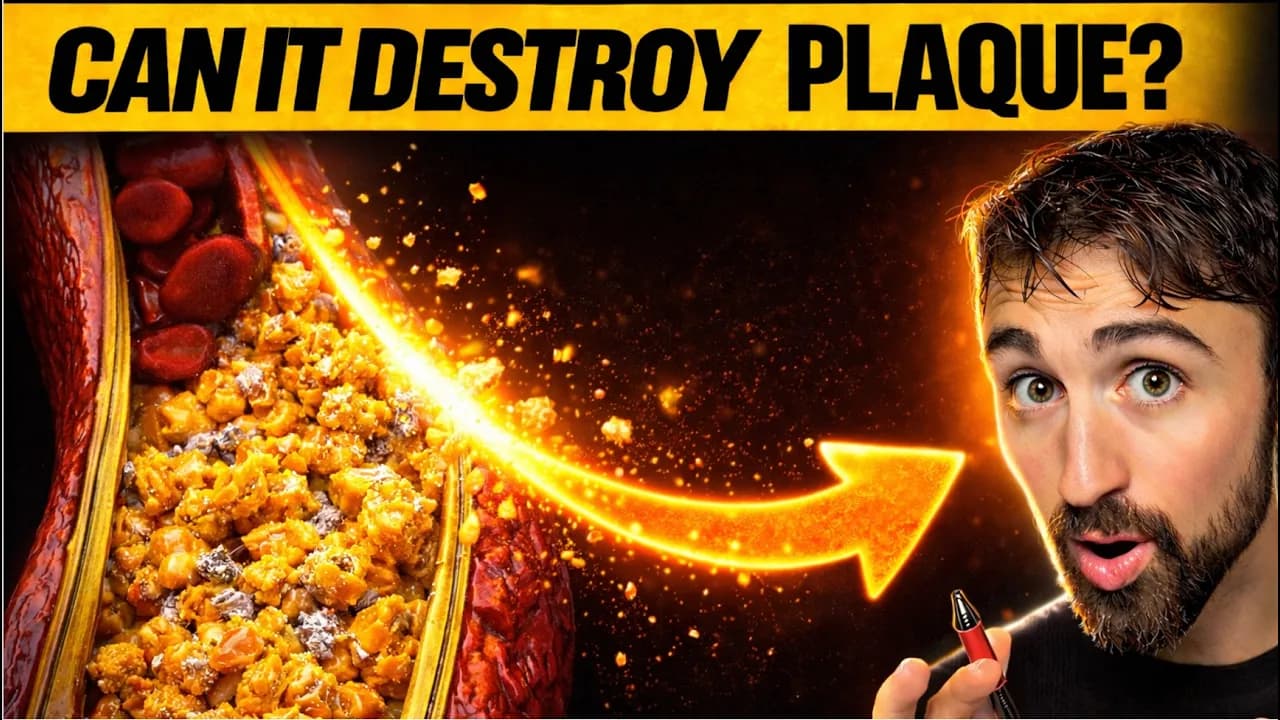
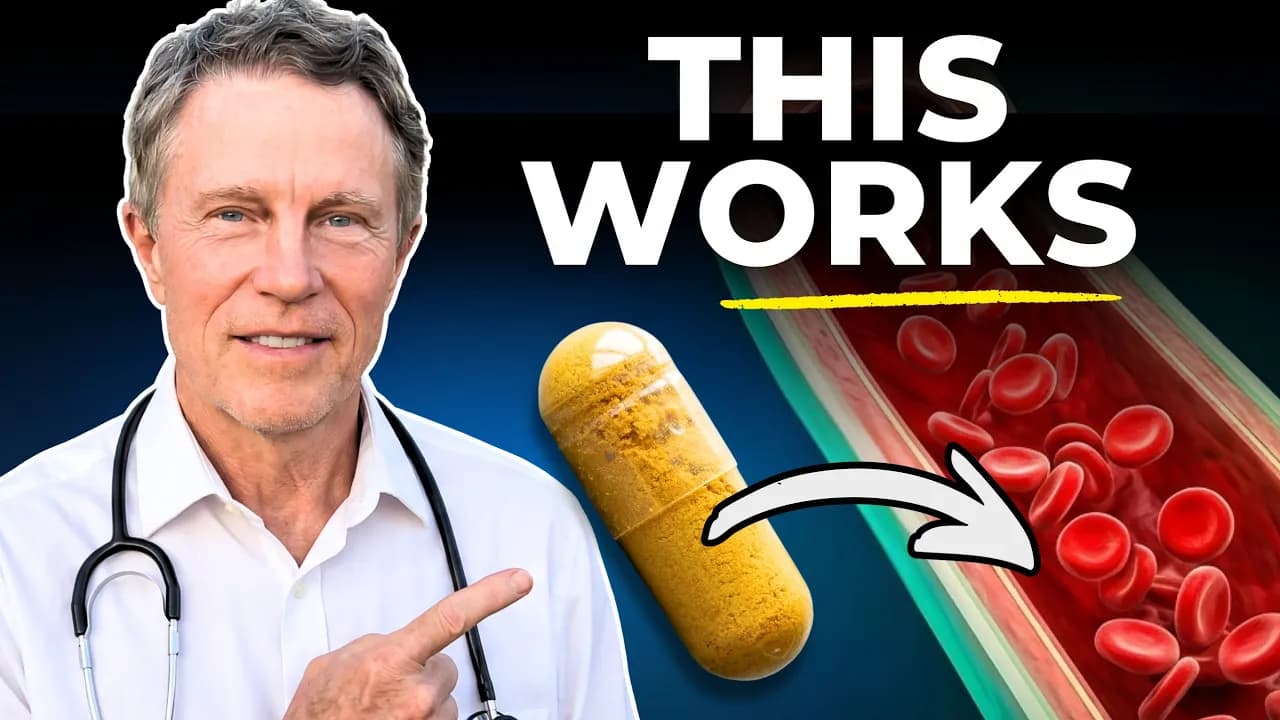
Tool number one, represented by a scoop, is nattokinase. I use this ice cream scoop to represent nattokinase because it's one of the few compounds suggested to actually reverse plaque progression or scoop out plaque from arteries. In one large human study involving over a thousand participants, individuals taking high-dose nattokinase for one year showed regression of atherosclerosis heart disease. Using ultrasound imaging of the carotid arteries going from the heart to the brain, researchers observed a 22% reduction in carotid intima-media thickness and a 36% reduction in coronary plaque surface area. Even if it's not a perfect study, and no studies are perfect, this is a finding not to be overlooked.
Nattokinase is an enzyme derived from a traditional Japanese fermented soybean dish called natto. It's been consumed for over a thousand years, and that dish, natto itself, is actually linked to lower rates of cardiovascular mortality on the order of 25% lower rates compared to those who consume basically no natto.
How Nattokinase Works
There are three main effects. First, anti-clotting activity. Effectively, nattokinase makes the blood less sticky and less prone to build up clots and debris in arteries. Second, blood pressure reduction. This has been shown in human randomized controlled trials. Nattokinase reduces blood pressure, which is a risk factor for heart disease. It acts by inhibiting an enzyme called angiotensin-converting enzyme, ACE. By reducing ACE activity, nattokinase allows your arteries to relax, lowering blood pressure and improving cardiovascular risk in the process. Third, nattokinase can reduce oxidative stress. Oxidative stress plays a central role in vascular damage, inflammation, and heart disease. Nattokinase helps by increasing antioxidant defenses, protecting against blood vessels. Nattokinase is like the Pac-Man that gobbles up free radicals.
To get the best effects, you probably need higher doses, on the order of 10,000 fibrinolytic units or more.
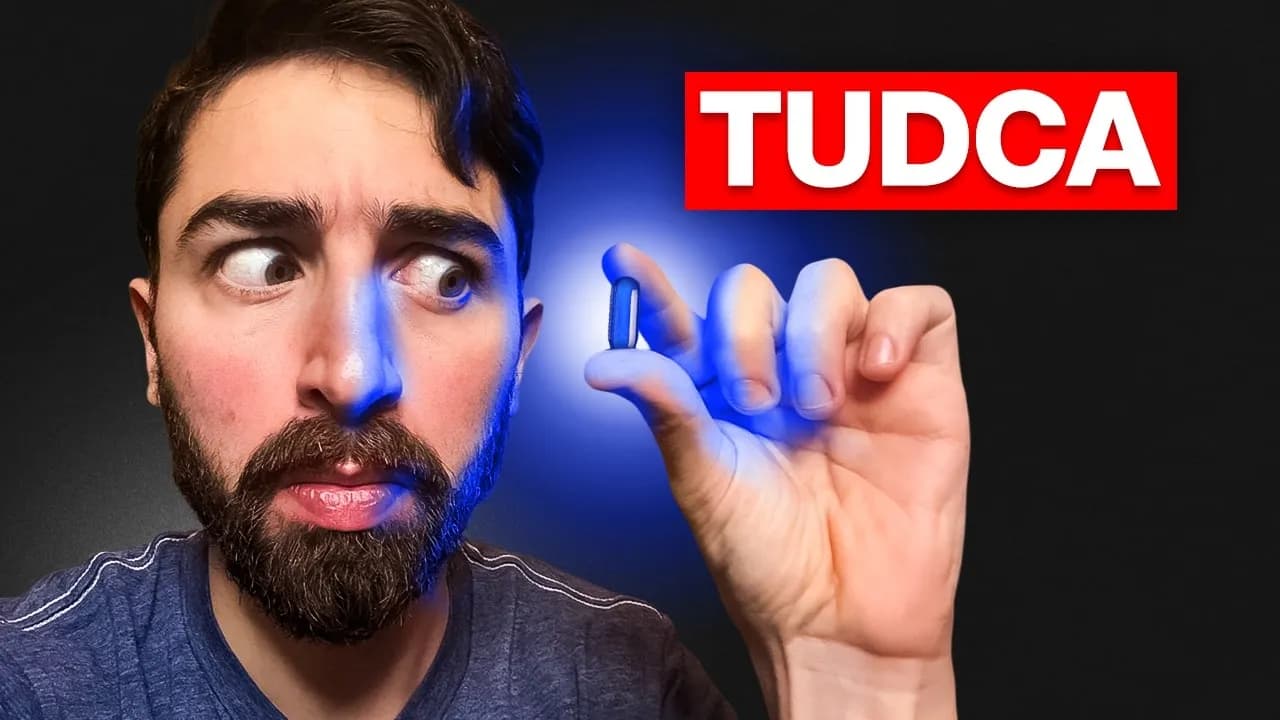
The next tool is an ice pack, representing TUDCA. The reason I choose this ice pack is because one of the most interesting aspects of TUDCA is its effects on inflammation, particularly calming inflammation within the artery wall. TUDCA is actually a gut hormone that can be made by your microbiome, and it's also a supplement.
In animals with heart disease, if you give them TUDCA, it leads to a dramatic reduction in arterial plaque or protection against arterial plaque. It's not by lowering cholesterol, but by changing the inside of the artery itself. When you give the TUDCA, you see the arteries are protected. Cholesterol isn't the thing causing the plaque deposits per se. Rather, when particles containing cholesterol get inside the artery wall, there are some immune cells that get inflamed and angry, kind of like Bruce Banner turning into tiny little dangerous micro Hulks in arteries. TUDCA calms inflammation within the artery wall like a biological ice pack. This helps prevent the formation of these angry immune cells, called foam cells, from forming in arteries and ultimately driving inflammation and plaque progression.
TUDCA and Statins
TUDCA also interacts with statins. TUDCA is a natural gut hormone made by your microbiome. Statins have been shown to reduce levels of a cousin compound called UDCA. Reducing UDCA levels is one way statins cause insulin resistance, increase blood sugar, and reduce levels of the key metabolism regulating hormone GLP-1. Tens of millions of people are taking statins. They're some of the most profitable drugs of all time, and they cause metabolic dysfunction in part by reducing levels of UDCA. This has been shown in a human study published in a highly respected scientific journal, Cell Metabolism. In addition to lowering inflammation in your arteries, TUDCA is a supplement that you can buy on Amazon right now that can actually reverse many of the harmful effects of statins.
TUDCA Dosing
With UDCA, it's probably wise to start at a low dose, 250 mg once daily with food. You can increase by 250 mg per week as tolerated up to a max of 1,750 mg split into two or three doses.
A charger represents a category of tools connected to a fascinating marker, heart rate variability. Heart rate variability refers to the tiny moment-to-moment fluctuations in the timing between your heartbeats. Heart rate variability turns out to be a predictor of death and cardiovascular risk. Your heart isn't just an isolated pump beating into the void. It's deeply connected to the rest of your biology, especially your nervous system, which is constantly influencing how your heart functions, adapts, recovers, and ultimately thrives or fails. Heart rate variability, HRV, is essentially a signature of how healthy and resilient that connection between your nervous system and your heart is. Low heart rate variability is bad, predicts an increased risk of heart attack and death, while high heart rate variability tends to reflect better cardiovascular resilience. HRV is modifiable.
Two High-Yield Ways to Improve HRV
The first is exercise. In particular, zone two cardio. That's exercise performed at about 60 to 70% of your maximum heart rate, or practically speaking, you can usually hold a conversation. Think moderate cycling or light jogging or walking around with a weighted vest on a shallow incline. This type of training consistently increases heart rate variability. In addition to exercise, omega-3s can improve heart rate variability. Omega-3 fatty acids, either supplemented or consumed through fatty fish like sardines, they literally change how your cells behave, both your brain cells and your heart cells. They do so by integrating into cell membranes and changing membrane fluidity. Omega-3s are sending your cell membranes to yoga class to get more flexible. This changes cardiac and neuronal function. Additionally, omega-3s can reduce inflammation, which can otherwise suppress HRV. Omega-3s accumulate in the brain, in particular in the brainstem, and in that way, they can improve the function of your vagus nerve, which literally is the cord connecting your brain to your heart.
Statins, Women, and Omega-3s
Statins have the highest probability of hurting women more than men, causing muscle issues, increasing blood sugar. The reason why is alarming and has to do with omega-3s. Women have two X chromosomes and men have one and that dinky little Y. That difference means women have higher dosages of certain genes, those on the X chromosome. One gene women have a higher dose of is involved in omega-3 synthesis, including the generation of the long-chain omega-3, which you get from fish, DHA. Research shows that women who have increased blood sugar on statins also tend to have more suppressed omega-3, more suppressed DHA because of this sex chromosome-statin interaction. The solution is to give back some fish oil, give back some DHA, or go on a sardine diet.
A straw represents berberine. Berberine can improve blood sugar control, and blood sugar regulation is really important for cardiovascular health. Berberine can also lower LDL cholesterol and apoB. Kind of like a statin, but also totally not like a statin. LDL particles circulate throughout your bloodstream carrying cholesterol. One way your body clears them is through LDL receptors that stick out on your liver. They grab the particles, and they suck them out of circulation. These LDL receptors are constantly being built up and broken down. To build up more LDL receptors, the cell needs a blueprint, an mRNA transcript that is basically the blueprint for the cellular machinery to build the LDL receptors. Berberine protects that blueprint for making the LDL receptor. Specifically, it stabilizes the LDL receptor mRNA transcript, and that dramatically extends its lifespan by roughly threefold. This means liver cells can produce more LDL receptors because the workers have more time with the LDL receptor blueprint, allowing them to make more LDL particle-sucking straws containing cholesterol right out of the blood.
Mechanistically, this is really elegant, and importantly, it's very different from statins or other drugs. Statins work largely by creating a state of relative cholesterol starvation inside the liver cell through inhibiting cholesterol synthesis, and this causes a compensatory response. Berberine doesn't work that way. Unlike statins, berberine tends to improve, not worsen, metabolic markers like insulin sensitivity and blood sugar. Controlled trials show that berberine can lower LDL cholesterol by up to 25% in some cases approaching or even exceeding certain pharmaceutical therapies.
Duct tape represents the humble and misunderstood vitamin C. Vitamin C works against another sticky, tape-like molecule that has become increasingly important and feared in cardiology, Lp(a). Lp(a) is essentially an LDL-like particle floating around in your bloodstream, except it carries an additional, extra sticky tail called apolipoprotein (a). High Lp(a) levels are now recognized as an independent genetic risk factor for cardiovascular disease, heart attack, and stroke. It can increase risk of heart attack by as much as 230%.
There's a fascinating hypothesis championed most famously by two-time Nobel laureate Linus Pauling. It proposes that vitamin C may help counteract or neutralize some of the damaging effects of Lp(a). It's thought that Lp(a) might function as a kind of evolutionary substitute for vitamin C. Interestingly, animals that can make their own vitamin C don't produce Lp(a), and that's most mammals. But those animals that can't make vitamin C, like humans and guinea pigs, we make Lp(a) to keep it really simple. When vitamin C is insufficient, Lp(a) might help stabilize damaged blood vessels, essentially acting like a temporary biological patch. It keeps you from dying in the moment, bleeding out evolutionarily, but it might also slowly kill you as plaque builds up in your arteries from the stickiness. When guinea pigs are deprived of vitamin C, they develop rapid atherosclerosis, heart disease, characterized by plaques that are filled with Lp(a). Conversely, when guinea pigs are given vitamin C, very little Lp(a) deposits in the arteries.
Vitamin C can make Lp(a) less sticky. Vitamin C reduces oxidative stress, acting as an antioxidant, and it improves nitric oxide in blood flow, which is actually another way Lp(a) negatively impacts cardiovascular health. So it's a one-two punch against Lp(a). All this means vitamin C can improve blood flow and allow for a protected, healthier blood vessel lining.
Vitamin C Dosing
500 mg twice daily is a good place to start. You can increase to 1,000 mg twice daily if you want. Splitting the dose just helps improve gastrointestinal tolerance and absorption a little bit.
Vitamin C and Health Span
That 2,000 mg, 2-g total dose might be doing something else entirely. Research published earlier this year suggests that vitamin C may help improve overall health span. As we age, our cells begin hoarding iron, which activates a pathway in cells called ferro aging. The solution doesn't appear to be eat less iron. It's more of an iron sequestration problem, where cells essentially become little tiny iron vaults. That build-up flips an aging catalyst switch in cells, which accelerates biological aging. Researchers set out to find something that would turn off this aging catalyst switch, and they stumbled upon vitamin C, which can bind to it and turn the switch off in a way that was never previously understood until this year. The researchers even ran long-term experiments in monkeys and found that high-dose vitamin C, the human equivalent of that 2 g per day dose, could slow brain shrinkage. Vitamin C might not just support heart health, but potentially brain health and aging and overall health span and longevity, too. That daily dose of 2 g costs about 6 cents per day.
Keep Nick Norwitz in your library
Save the videos and channels worth coming back to, and find them again in one place.