Why Is Gen Z Spending Like The World’s Ending? - Caleb Hammer
In a Nutshell
Gen Z is racking up record credit card and buy-now-pay-later debt because doom-scrolling algorithms and bleak economic news have convinced them the future is hopeless, triggering a self-reinforcing “fuck it” spending cycle. Consumer sentiment sits near historic lows even though spending and GDP remain relatively healthy, showing the gap between perception and reality is driving the behavior. The bankruptcy case illustrates the outcome: financing depreciating assets like campers and motorcycles leaves people trapped with unaffordable minimum payments and no path to real assets like homes.
These notes were generated by AI and may contain inaccuracies.
Gen Z borrowers are carrying more credit card debt than millennials did at the same age despite growing up with more financial information than any generation before them. 98% of Gen Z say credit is important, but only 53% believe they have adequate access to it. More than half of Americans have used buy now pay later services, and 59% of those users were Gen Z.
Buy now pay later services are at every checkout for concerts and everyday purchases, making them easy to use through tap to pay. Gen Z is engaging in a "Doom Loop" where algorithms expose them to constant negative information, leading them to believe everything will be bad forever, so they spend money and put purchases on credit cards.
People are unsure about the future and feel things are not going to get better, leading to a "well, fuck it" mentality similar to the end of days. During the Blitz in World War II in London, the amount of casual sex increased significantly while lingerie sales stayed the same because people thought they might die tomorrow. This represents the financial equivalent of that behavior.
This creates a recursive system and self-reinforcing mechanism. Negative information about the economy, quality of life for young people, and the belief that things will never get better encourages people to behave in ways that make those beliefs true. This becomes a self-fulfilling prophecy. There are real material changes, but the situation is worsened by this cycle.
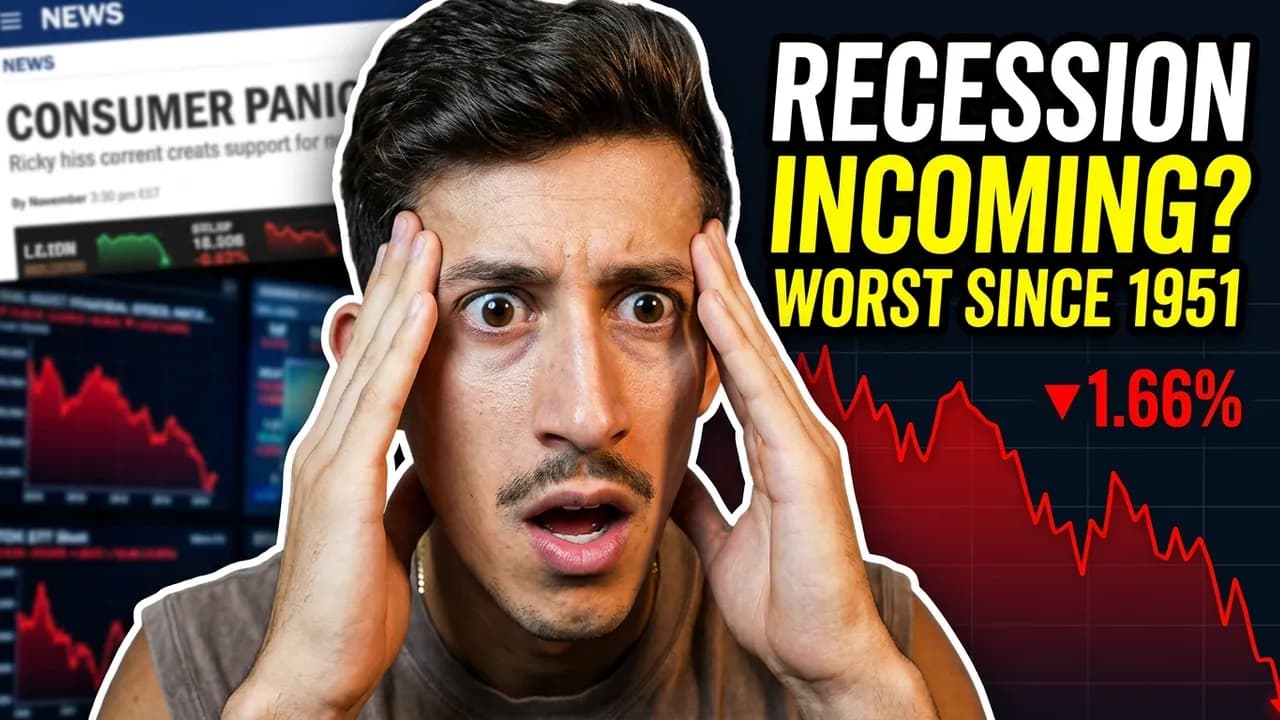
The University of Michigan has conducted consumer sentiment surveys since the 1980s. Current sentiment is one of the three lowest levels ever recorded, alongside the start of COVID and the Great Recession. However, current conditions are not near Great Recession levels in any other economic indicator. Consumer sentiment is at an all-time low despite the economy not being in crisis conditions.
Algorithms prioritize negativity because it generates more engagement and revenue. Even documentary channels focus on negative topics because super positive content is not as interesting or urgent. Nightly news is predominantly negative, which drives attention and keeps people in algorithms. This impacts people's behavior and brings the negative news feed into their finances.
Consumer spending is relatively healthy overall. This is not the best year economically, but it is also not close to the worst year. There are specific negative factors including a bad job market for new graduates, nervousness around AI, overhiring during the tech boom in COVID followed by cutbacks, and reduced job openings because people are not leaving positions voluntarily. When people are laid off in Texas, they are not being replaced. The jobs that existed during the pandemic are no longer available.
GDP growth remains okay post-inflation. There was mention of a peace agreement signed between parties including Iran.
A woman filed Chapter 7 bankruptcy with $91,300 in total debt. Her breakdown included $51,000 on a vehicle with too much negative equity to sell or trade in, a motorcycle purchased in 2022 that could not be sold for what was owed, a $13,400 camper she lives in because she cannot afford a house, $2,200 in medical bills that ended up in collections, $12,000 in student loans that do not get discharged in bankruptcy, and $7,700 in credit card debt.
Bankruptcy is not as hard or brutal as portrayed, though it is expensive and damages credit temporarily. People often end up in the same financial situation without changing behavior. The woman cannot reasonably expect to achieve home ownership while carrying debt on a camper, motorcycle, and $50,000 car. Minimum payments on the motorcycle and car alone likely exceed $1,000 combined, which prevents saving. She could qualify for an FHA loan with as low as 1.5% down payment on a first home.
Getting a trailer instead of renting an apartment creates debt on a depreciating asset. Additional expenses like new tires can arise, and she would still need to pay to park and connect utilities.
Keep Chris Williamson in your library
Save the videos and channels worth coming back to, and find them again in one place.