Why Your Belly Fat Won't Go Away (Even When You Do Everything)
In a Nutshell
To lose stubborn belly fat, perform 8–15 minutes of HIIT per week in a fasted state after an 18–20-hour fast to spike adrenaline and drop insulin to baseline. Avoid all snacking and industrial seed oils/palm oil, eat only two meals a day (e.g., 2 PM and 5:30 PM), and prioritize 8 hours of sleep plus sunlight exposure to keep cortisol low.
These notes were generated by AI and may contain inaccuracies.
The belly fat that resists removal even when doing everything right exists because of an evolutionary survival mechanism. The fat in the midsection has two receptors: beta receptors and alpha-2 receptors. The beta receptors act as the accelerator, releasing fat when adrenaline is involved. The alpha-2 receptors act as the brake pad that locks up this fat.
In the lower midsection, the ratio of these receptors is 1:9, meaning there are nine times more receptors for locking up fat than for releasing it. This is a normal physiological adaptation that developed to hold fat during stressful conditions when food was scarce.
To overcome this brake system and lose belly fat, adrenaline must be increased while simultaneously removing the brake. Several drugs have been marketed to increase adrenaline and dissolve belly fat by injection, but these proved dangerous with over 155 reported deaths.
Natural alternatives that entered the market included ephedra (ma huang), which was later taken off the market due to side effects from increased adrenaline. Yohimbe, extracted from bark of an African rainforest tree, was found to increase adrenaline and help with weight loss and libido, though it also carries side effects and is not recommended.
Insulin must be very low for the fat-release system to work effectively. When insulin is too high, more alpha-2 brake pad receptors are created and fewer adrenaline receptors remain available, with existing adrenaline receptors being downgraded.
The specific type of exercise required is high-intensity interval training (HIIT), which is the only natural way to increase adrenaline by 10 to 30 times above baseline. Light cardio or moderate cardio does not significantly increase adrenaline to the required level.
HIIT involves very short, high-intensity bursts of exercise with recovery periods, not high-intensity long duration exercise. This training overrides the alpha-2 brake pads by mimicking the intense movement patterns of ancestral environments.
Fasting for 20 hours (minimum 18 hours) is required to bring insulin down to baseline levels. An example schedule includes two meals: a late lunch at 2:00 PM and dinner at 5:30-6:00 PM. The fasted state is when HIIT training should be applied.
Optional weight training can be added to the HIIT protocol to stimulate additional adrenaline. This exercise should be performed only two to three times per week. Specific workout examples will be provided in the video description.
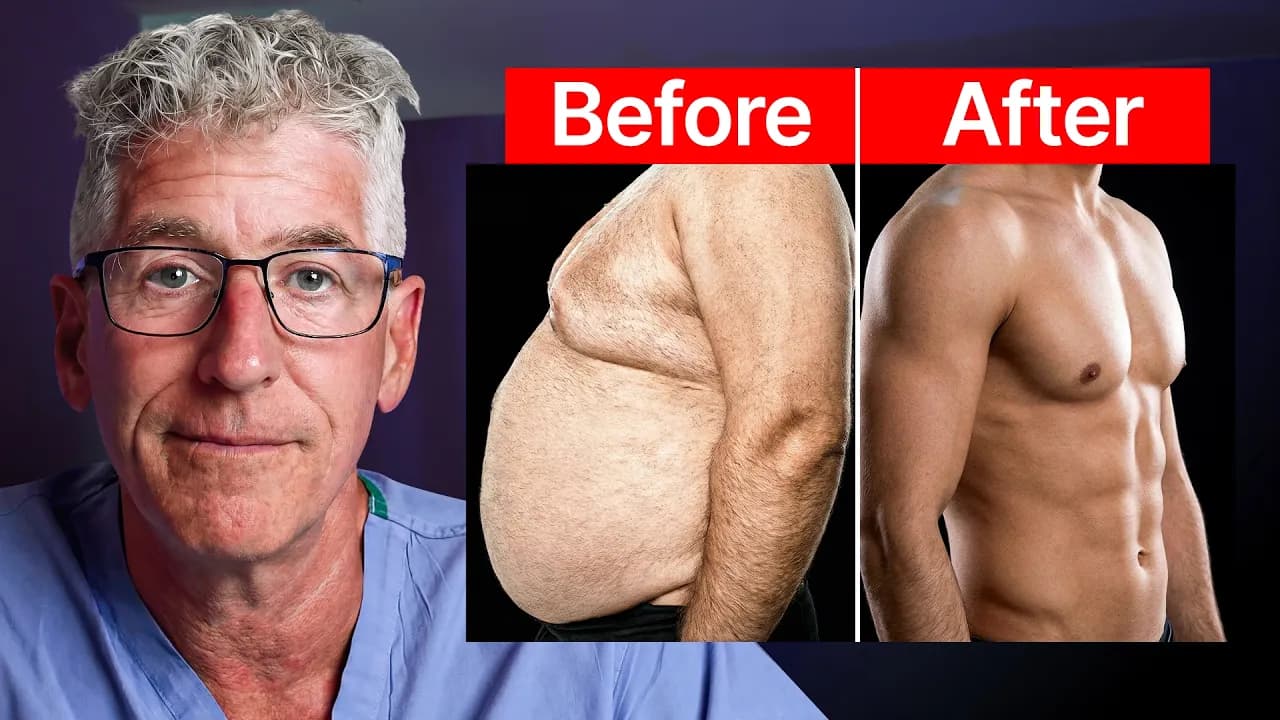
Visceral fat, which surrounds the organs and creates a protruding belly, primarily reduces when insulin levels are lowered. The 20-hour fasting protocol rapidly uses up visceral fat stores. The total intense workout requirement is only 8 to 15 minutes per week.
Many people counteract their HIIT training progress by eating small amounts of carbohydrates throughout the day or snacking. This reduces the capacity for adrenaline production. There are four times the concentration of cortisol receptors in the midsection compared to other body areas, meaning higher stress levels directly correlate with increased belly fat.
Eight hours of quality sleep is essential because this is when fat burning occurs and growth hormone is most stimulated. The growth hormone spike from HIIT training produces its benefits during sleep. Exposure to sunlight reduces cortisol levels, making walks in the sun therapeutic for stress management.
Insulin increases not only from carbohydrates but from eating anything. Snacking is particularly problematic at night. After dinner, the kitchen should be closed with no food consumed three hours before sleep.
Palmitate, a type of fat obtained from diet and also produced by the body, interacts poorly with cortisol and tends to worsen the effects of each other. Industrial palm oil, industrial seed oils, sugar, and starches that convert to this fat should be completely avoided.
The best fat to counter these problematic fats is oleic acid, found in olive oil, lard, and tallow. People following ketogenic diets sometimes practice "dirty keto" without considering the quality of fats consumed.
A free daily routine checklist is available for download, representing the exact routine used to maintain youthful energy levels. Links to workout examples and additional information on achieving eight hours of quality sleep are provided in the video description.
Keep Dr. Eric Berg DC in your library
Save the videos and channels worth coming back to, and find them again in one place.