Your Tight Muscles Are a Warning — Here's What They're Missing
In a Nutshell
Persistent muscle tightness signals stuck calcium inside muscle cells that can't exit without magnesium-powered ATP. Magnesium deficiency keeps the nervous system locked in fight-or-flight mode, deposits calcium in joints and arteries, and triggers cramps, twitching, palpitations, and insomnia—especially in the early morning. Supplementing 250–300 mg magnesium glycinate multiple times daily, plus addressing alkaline pH from high-carb diets, is required to restore normal calcium on/off cycling and relax chronically contracted muscles.
These notes were generated by AI and may contain inaccuracies.
Muscles are never fully relaxed due to stuck calcium. Common symptoms include tight traps upon waking and before bed, random eye twitching, jaw tension, and teeth grinding at night. These issues have nothing to do with stress, posture, or stretching.
99% of calcium in the body supports cell communication signaling rather than bone health. Calcium controls every muscle contraction, nerve firing, and heartbeat. Eye movement across a screen and muscle tightness are both calcium-dependent processes.
Calcium entering the muscle acts as the on switch for contraction. Calcium leaving the muscle enables relaxation. Calcium functions as both the on switch and off switch for muscle relaxation.
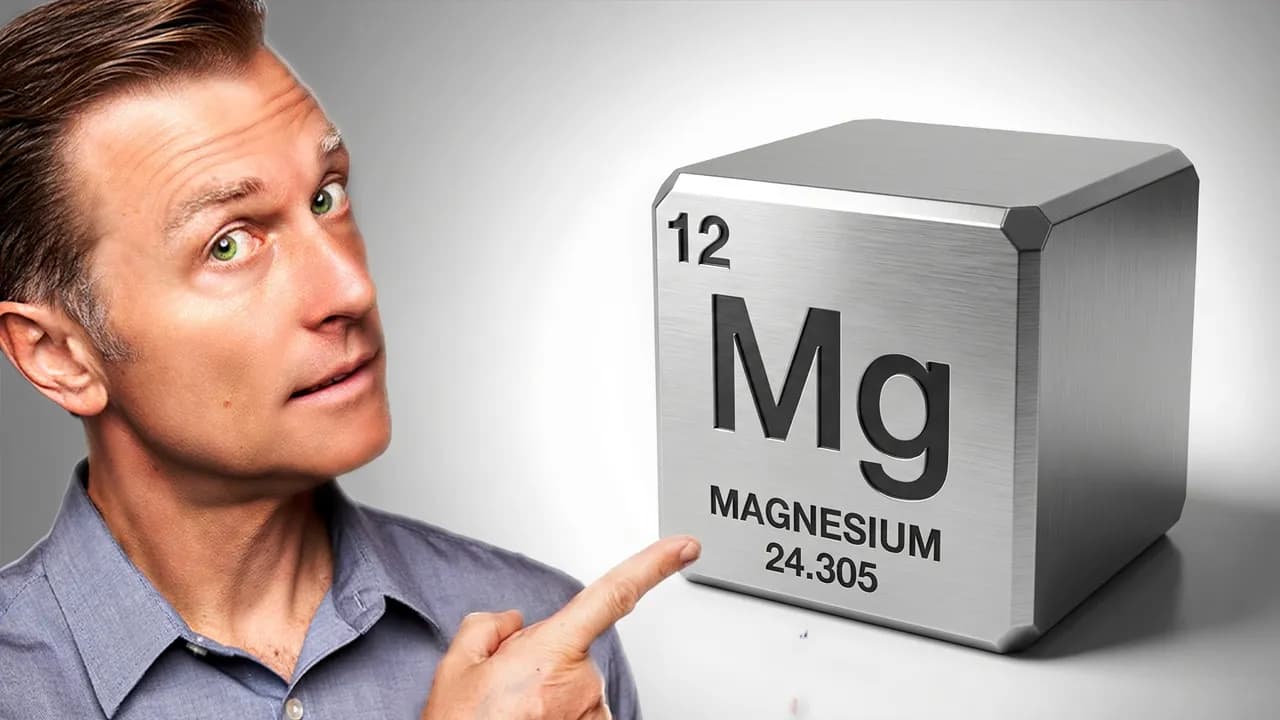
Calcium must be pushed through significant resistance out of the muscle to achieve relaxation, which requires ATP. ATP depends on magnesium to function. Without magnesium, ATP cannot work.
A super-concentrated amount of calcium exists outside the cell, while a very low, diluted concentration exists inside the cell. When the nervous system activates the muscle, it opens the gate and calcium flows passively due to pressure, creating contraction.
To relax the muscle, ATP must push calcium back outside, and this process depends on magnesium. Rigor mortis demonstrates this mechanism: when someone dies, they lose ATP and cannot remove calcium from muscles, causing muscles to become hard.
Stuck calcium causes palpitations, heart arrhythmias, tension headaches, and teeth grinding. Calcium channel blockers are medications that block and alter calcium to lower blood pressure in people with tension and high blood pressure, which often stems from magnesium deficiency.
Alzheimer's medications exist that function as synthetic versions of magnesium. Magnesium cannot be patented, so pharmaceutical companies do not promote it despite its effectiveness.
The trapezius muscle extends from the back of the skull down to T12, spreads to the outside of the shoulders, and reaches the front part of the clavicle. The lower traps are typically weak and atrophied due to prolonged sitting. The upper traps compensate by working twice as hard and remain in a constant state of contraction.
Forward head posture adds significant load to the traps: 1 inch forward adds 10 lb, 2 inches adds 20 lb, and 3 inches adds 30 lb. The traps connect directly to the flight or fight mechanism. People in chronic flight or fight maintain forward head posture.
Insufficient magnesium prevents unlocking of stuck calcium in the upper traps. Magnesium also helps lower the flight or fight mechanism. Magnesium follows a circadian wave and reaches its lowest levels in the early morning before waking.
This explains why body problems peak in early morning, including leg cramps that wake people from sleep. Heart attack and stroke risk is also highest in the early morning.
Without adequate magnesium, calcium settles in soft tissue areas including joints as arthritis and arteries as plaque. Kidney stones typically combine calcium with oxalates. The speaker's personal experience indicates kidney stones result from major magnesium deficiency.
Vitamin K2 requires magnesium as its main cofactor to keep calcium out of soft tissues. Magnesium connects to extensive biochemistry throughout the body.
Calcium functions correctly only when body pH is correct and not excessively alkaline. Excessive alkalinity causes calcium to lock up the nervous system even with adequate magnesium. This underlies twitching and continued muscle cramps.
Refined carbohydrates and high sugar and starch diets create more alkaline conditions. Eating healthy allows the body to return to proper pH. For temporary relief, apple cider vinegar in water or betaine hydrochloride can acidify the stomach and correct systemic pH problems.
Calcium supplementation is unnecessary because most people already have excess calcium causing problems. Magnesium glycinate offers the best absorption. The glycine component helps with relaxation and addresses common glycine deficiency.
The RDA for magnesium ranges from 360 to 420 mg, representing only bare minimum requirements. Therapeutic dosages for problems like leg cramps or twitching require higher amounts spread throughout the day. Doses of 250 to 300 mg taken two to four times daily may be necessary depending on symptoms.
Migraine headaches require substantial magnesium intake. Correcting stuck calcium with magnesium does not happen overnight. A twitch may resolve in a week, cramps may take several weeks, and arrhythmias may require months of treatment. Magnesium taken in the evening before bed benefits insomnia.
Epsom salt baths raise magnesium blood levels according to studies. Magnesium oil applied topically to upper traps, calves, feet, and lower back before sleep provides benefits. Myofascial stretching combined with magnesium produces significant results.
Keep Dr. Eric Berg DC in your library
Save the videos and channels worth coming back to, and find them again in one place.