21 Harsh Truths About Why You’re Still Lost - Mark Manson
In a Nutshell
Living happily amid uncertainty requires cognitive flexibility and zooming out for macro confidence, as chasing micro-certainty breeds anxiety and fragility—exemplified by COVID's stress test revealing trait confidence from surviving setbacks. Seek significance through hard, inconvenient efforts that build resilience and satisfaction, choose partners whose average Tuesdays and lifestyles you can endure long-term (optimizing for compatibility over peak chemistry), reject victimhood by using pain as fuel without expecting pity, and prioritize non-neediness by valuing self-approval over others'. Core truths: nobody owes you patience or respect (find those who give it naturally), fame demands visible sacrifices you may not want, and personal growth thrives on practice over endless learning, with death reminders urging meaningful action.
These notes were generated by AI and may contain inaccuracies.
The most important skill in the 21st century is the ability to live happily with uncertainty. As access to information scales, certainty and confidence around that information dissipates. Everyone feels more removed from reality despite 24/7 access to everything, creating a paradox. Humans have a deep instinct to seek certainty and build life around a set of beliefs and assumptions. Developing cognitive flexibility to live in ambiguity is more important than ever.
Consequences of Inability to Deal with Uncertainty
What happens if you can't deal with uncertainty? You overindex on one single belief, becoming radical about one idea and putting all emotional well-being into a single concept or worldview. Every worldview gets blown up eventually; nothing survives contact with reality. When contradicted, you either suffer immensely or double down on the delusion to maintain certainty.
Anxiety and Uncertainty
Anxiety is all about uncertainty, trying to compress it down. Imagining all possible future outcomes, especially bad ones, allows planning and war-gaming to be ready. Humans would rather imagine a catastrophe than deal with uncertainty. People prefer collapsing superposition into something that breaks laws of physics, like dead grandma returning from the grave, rather than 'I don't know what's going to happen.'
Trying to predict future outcomes to become certain inadvertently builds more surface area for uncertainty, creating more opportunities to be wrong.
Antidote: Zooming Out for Confidence
The antidote is an aperture issue: instead of certainty about specific narrow things, zoom out to find confidence. Example with AI: people freak out about world ending, job loss, or China takeover—no idea if true. But zooming out to every major technological revolution in history shows disruption and displacement, yet society adapts and moves on. Macro certainty that we'll be okay, but micro uncertainty like personal jobs in two years.
Needing a lot of certainty indicates fragility and lack of robustness. If something unanticipated happens, you can't survive unless prepared. Opposite of robustness or anti-fragility.
COVID as Lifestyle Stress Test
During COVID, lives forked into two directions: way off the rails or stupendously better. No one said COVID was okay or trajectory stayed the same—it was a lifestyle stress test. Some got dealt a shitty hand, like hospitality job about to change life that blew up, or SAS company timed perfectly for 2019 incorporation and remote work.
Confidence: State vs. Trait
Confidence operates on two dimensions: state confidence (situational certainty, e.g., done a thousand podcasts so handle light blowing up) and trait confidence (broader, from living in uncertainty where things turn out fine). Can't plan for trait confidence; must live through things not going as planned. Worst thing that's happened builds 'dark night of the soul' exposure: 'I've been here before and didn't die, so it'll be okay.' Post-COVID, most are more prepared for pandemics except 5-year-olds.
When COVID hit, Zoom stock surged; another company called Zoom (Chinese, similar ticker) share price went up 400% by fortune of name.
Do hard shit not because it's fun but because the win means something—you bled for it, broke for it, earned it. Easy wins are forgettable; hard ones change you.
Inverse relationship between convenience and significance. Humans appreciate things requiring friction or sacrifice. Classic reason: builds resilience, endurance, self-belief, confidence. Existentially, things handed to you are taken for granted. Technology hands us results (e.g., burrito taxis anytime), robbing opportunities for significance.
Intentionally introducing friction: example, wife's childhood friend sent voice notes about kid problems, business partner checked out, fight with ex-husband. Wife offered to talk; friend hadn't considered it, fearing to bother. They talked 1.5 hours, great reconnection. Reluctance to call without permission (text first) robs connective tissue of relationships—can't reproduce intimacy via voice notes or texts.
Inconvenience of friendship is where it grows. Best definition of safety: 'we can go through something hard and come out the other side okay.' Personal safety: 'I'm okay no matter what happens.'
You're not being noble if you're unable to be harmful. You're just being harmless. A rabbit doesn't choose to be harmless.
AI assists workflow but robs enjoyment of completion, even if easier/better. Deeper question: what am I doing it for? Emotional state of having finished it. Hypothetical: AI creates derivative videos getting new channel to 1 million subscribers in 4 weeks—still your work, but not satisfying without challenging process. Like book completed by hand vs. AI.
Like playing video game with cheat codes: fun briefly, but beating it unsatisfying. Last 20 years of tech innovation adds cheat codes, making everything seamless but robbing satisfaction of doing, which is the emotional state reason for doing it—linked to effort, hopefully well-done, improves lives, popular, earns money.
Mistaking convenience for purpose. Dating apps egregious: optimized for convenient introductions, but mass matching loses friction/struggle as filtration for good partners and significance in connection. Easy wins forgettable.
Crypto millionaires or lottery winners deranging: unmetered to reality, no tolerance built, no narrative/story. Lottery stat: majority end up broke, depressed, many commit suicide—no money skills developed (bad management, decisions, habits) from steady climb; air-dropped to peak, fall off.
Dating apps lack basic skills from face-to-face with uninterested people.
Nietzsche's writing changed with typewriter (mid-life): sentences shorter vs. handwriting. Tech changes us; we overshoot optimal challenge. AI regresses to mean: bottom 50% better, top 50% worse—don't do it if bottom 50%.
Incumbent to find new difficulty: use AI but push for original/unique ideas. Nature chooses path of least resistance; hard to develop that muscle.
95% of people don't get enough fiber—not carelessness, but hard through food alone. Fiber foundation of gut health: nutrient absorption, stable energy, quick recovery. If gut off, everything at fraction of potential. Fiber Plus: 3-in-1 for digestion, gut barrier strength, blood sugar stability. Cinnamon flavor great. 30-day money-back guarantee, ships internationally. Up to 35% off first subscription at livemomentous.com/modernwisdom with code modernwisdom.
When selecting a partner, you're choosing their whole lifestyle: sleep schedule, money habits, stress levels, family drama, cleanliness, work ethic, coping mechanisms—all baseline of your daily life. If their normal is doom scrolling till 2 a.m., avoiding conflict, impulse spending, never exercising, you're signing up for that ecosystem. Love doesn't cancel flaws; makes you tolerate them longer. People obsess over romantic chemistry, skip 'can I live with this person's version of a Tuesday for 10 years.'
You don't fix lifestyle from inside; accept package or walk.
People have laundry list of requirements, false perception of infinite options—fail one qualification, move on. End up 45, single, wondering why. Warren Buffett advice: list 20 things wanted in partner, order by importance, cross out all but top 3. Give to single friends: won't find all, brainwashed into thinking many tick every box (not true, won't meet them, they have options). Find 3 non-negotiables, negotiate rest. Sacrilege: 'I don't want to settle'—everyone settles (can't fly, need to sleep).
After 14 years with wife (Latina, dramatic, loud, tears, spicy/Fuego), things still drive crazy, but good outweighs bad. Iceberg of traits/personality/relationships below water—majority of relationship. People date on vibes; be conscious: crazy mother means crazy mother-in-law 40 years. Not a buffet; take whole package.
Relationships are not a buffet; you must accept the whole package. Original podcast name ideas included Crushing a Tuesday, inspired by Tim Ferriss, Mind and Matter, and Brain and Brawn. Modern Wisdom was divine inspiration at 3 AM. Most people optimize for peak experiences like amazing sex or fascinating conversations, but life consists of average Tuesdays. Goal: make average Tuesdays enjoyable. Assess the middle of someone's bell curve—how they operate normally.
Evaluate frequent interactions with reality: diet, sleep patterns, handling discomfort, heat, dysregulation. Consider family, timelines aligning, relationship with money. > Love does not cancel out people's flaws. In fact, it just makes you tolerate it for longer.
Intense love keeps people in mismatched relationships longer. Optimize for enjoyable Tuesday evenings, not just romantic chemistry, which floods you upon meeting. People angry in comments misunderstand: not seeking perfection (e.g., perfect mother, money skills), but finding someone where nothing falls below your floor—willing to tolerate their package.
Understand what you're equipped to handle. Mark Manson's wife is Brazilian with lots of feelings; he's even-keeled, handles emotions without drama. He needs intellectual stimulation, got bored with smart, hot, great-in-bed girls lacking curiosity. First date with wife in nightclub: discussed Russian grammar within 30 minutes.
Advice for intellectual guys: speedrun sending weird psychology articles to gauge engagement, not smarts—see who wants to discuss next time.
Rory Sutherland: seek an air fryer girlfriend, not Fiat 500—someone whose value only you see, disadvantages only you tolerate. Air fryer stanks kitchen (bad for smell-sensitive), but ideal if not bothered. Sutherland lives by pub and railway (noise he enjoys), orders beer over fence, gets discounted countryside cottage others avoid.
Personalization of optimization: people predisposed to psychological environments, relationship types like athletic activities. Optimization content ignores individuality. Fighter pilot seat study: averaged dimensions of pilots, fit zero—no such thing as average person.
People love certainty, absolutes; uncertainty hard. Sweeping generalizations avoided, hurts credibility, but directionally correct advice better: "seems good in most circumstances." When advice doesn't fit, consider if it's for someone else—don't dismiss.
Flip side: try general advice, fails, assume wrong with self, spiral into OCD overoptimization. > The pain of trying to be perfect will kill you more quickly than your imperfections will.
Best psychology interventions hit ~50% rate; expect half won't work. Try everything, track, be honest, adjust.
Nobody owes patience for rough upbringing or hard day. Life gives no pity passes. Use pain as fuel, not crutch. Build resilience by getting better at feeling bad, not feeling good always.
Genuine victims deserve sympathy, not more. Past "victimhood Olympics" in lefty groups: competing pain (abused indigenous person of color with three legs vs. one leg, trans, gluten intolerance). Measuring pain earns no merit badges—what will you do?
Alex Hormozi response: Agree disadvantages (gender, race, abuse) make success harder. Choices: 1) Take action, become proof for others. 2) Blame/complain. Only one improves you. > You know who wins by you not being successful? Whoever/whatever you blame. > Redefine blame as give power to—give to yourself. Do it anyway, tell them to shove it.
If you had tough shit happen, it sucks, not your fault. But now what?
Caveats, throat-clearing make communication clunky, shallow empathy. True empathy: speak to specific cohort. Empathizing by skin color/gender/orientation backfires. True equality: put up with same shit as everyone—no kid gloves, patronizing gentleness.
Australia story: James' warm-up joke hating Italians (loves food, not people). Woman complained about exclusionary jokes. Response: 2,499 others watching handling. True equality means same shit for all.
Brisbane show: Freud segment on obsession with dicks, moms, moms with dicks. Sign language interpreter uncomfortable. Q&A woman chastised for transphobia/platform responsibility; crowd booed. Teaching: if can't laugh, not equality—opposite.
Jimmy Carr: > Telling me there is a problem too serious to joke about is like saying there's a disease too bad to create medicine for. Humor therapeutic, injects levity into serious problems.
Mark Manson shares a story about his grandmother who died of a brain tumor when he was 14 or 15. It was a slow cancer over 8 to 12 months, watching her deteriorate week after week. She had a great sense of humor, named her tumor, and cracked jokes about it even as it worsened—she couldn't walk and had memory problems. When his aunt got upset, saying "Moren, you can't joke about this, it's upsetting," his grandmother replied, "There's nothing so serious in this life that you can't laugh about it. It's my tumor. I'm going to laugh at it if I want. I'm going to make any joke I want about it." This stuck with Manson deeply.
Recent research in the New Statesman shows white young women in Britain are significantly more likely than women of color to say the country is racist. This stems from a desire to be seen as empathetic, positioning themselves as saviors or white knights. It's patronizing to assume people of color or deaf people are unresilient and need intervention. Example: The person upset about a joke on Italians wasn't Italian.
Chris notes British ancestral empire privilege but modern-day embarrassment disadvantage. UK as a stock would be like Herbalife, nose-diving. A survey showed Brits think they'd rank 6th or 7th among US states economically, but actually 51st. UK ranks number one in America for heart health, obesity, and all health stats—no state beats them, showing they're completely messed up health-wise.
Most people think dehydration is from not drinking enough water, but it's also what's missing from it. For 5 years, starting every morning with cold glass of LMNT in water—electrolyte drink with science-backed ratio of sodium, potassium, magnesium. No sugar, coloring, artificial ingredients. Reduces muscle cramps, fatigue; optimizes brain health, regulates appetite, curbs cravings. No-questions-asked unlimited refund policy, free shipping in US. Free sample pack of popular flavors with first purchase at drinklmnt.com/modernwisdom.
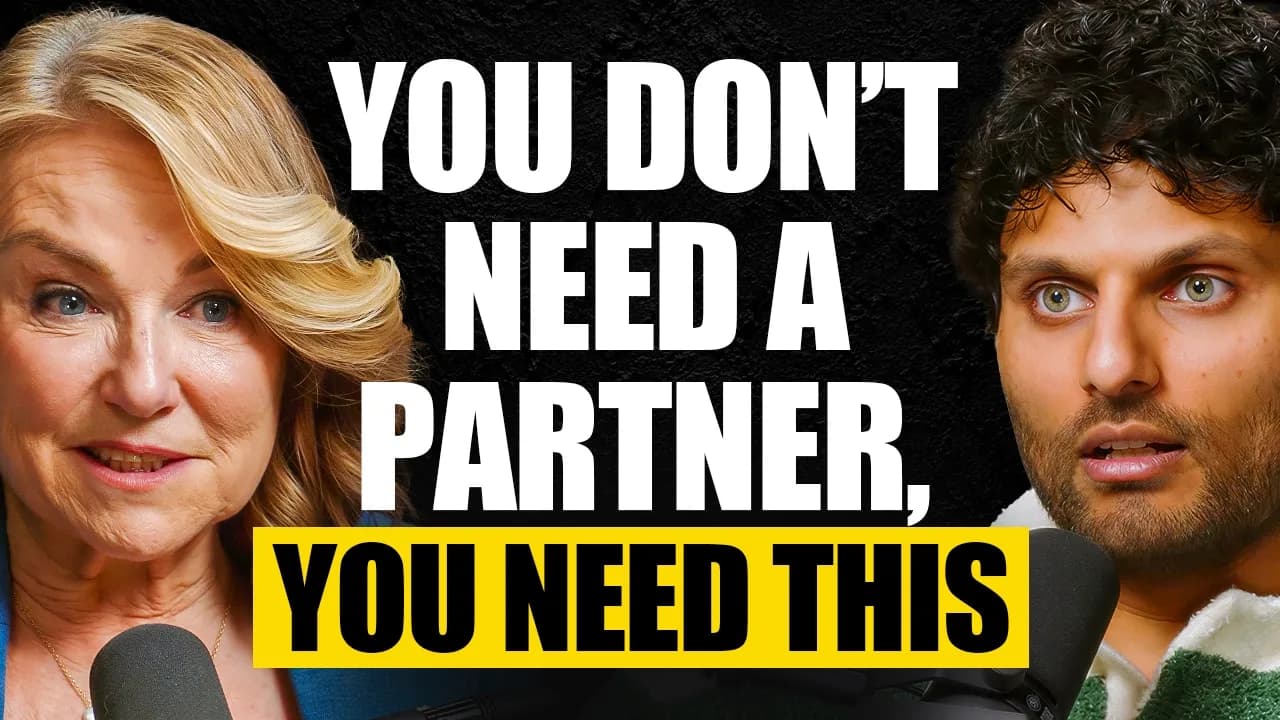
If you have to explain to somebody why you deserve respect, you're already in the wrong relationship. You shouldn't have to ask someone to prioritize you or beg them to be proud of you. Requested efforts are compliance, not real effort—it fades when you stop asking, just a performance to placate you.
The right person treats you well because that's who they are—they fundamentally care regardless. If you feel like you have to train someone to be a decent partner, they've already told you everything.
Amendment: True in the macro, not always in the micro. Egregiously disrespectful consistently—constantly fighting for acknowledgment—is unfixable. Base layer requirements for healthy relationships are non-transactional; requesting them makes it transactional, invalidating it.
But in established trust, someone dropping the ball, blind spot, or personal difficulties—it's healthy to ask on the margins: "Hey, feeling unacknowledged. Can we work on this? Show up to my birthday." Macro scale needing basics from scratch means nothing there.
People confuse macro problems (gives zero shits) with micro (answer phone sometimes). Difference between telling someone to think of you vs. explaining your love language; asking to show up vs. how you'd like them to.
Person applying effort, thoughtful, considering you—just maybe suboptimally. Vs. not considering you, or imbalance too great. With established trust, you know what to expect. If never shown up without constant refueling via requests/beratement, it's incompatibility.
Assume people show up as themselves. Goal: find someone needing minimal instruction/training. Some have big/small growth tank—start close to destination, drive less far. Then grow together.
Example: You party till 2 AM, partner bed at 9 PM—compromise needed, but maybe better with compatible match (party partner vs. early Peaky Blinders watcher). Check if incompatibilities are complementary vs. competitive friction.
Compatibility dimension (two different people) vs. partner not prioritizing relationship. Can't change priorities. With bedrock trust/compatibility, maintenance needed.
Manson example: Hopeless workaholic in boom-bust cycles. Every 3-4 years, wife hits breaking point: "Take Sunday off, go on vacation. I feel ignored, you're always working/tired." She's right, and it's for his sake too—external conscience, augmenting his life.
Stan Atkins' audiobook Your Brain on Love (best relationship book, audio-only): All relationship is set of agreements on behavior. First agreement: relationship comes first, before everything.
If one party meets it but not the other, high friction—more invested feels it most, less invested feels pressured. Leave for someone matching prioritization level.
Some not choosing neglect, lack time/emotional capacity (med school, ultramarathon training)—still a choice. Choose someone who chooses you.
Atkins likely used bullet points, reads like lecture—super listenable. Scripted audiobooks (meant for written form) are unlistenable vs. playful language. Authors as prisoners of their work in audio medium—add sentences, pauses, emotion. Not sterile representation. AI could pitch-perfect books from 5-min recording, so add dramaturgy.
Hard to detect if prioritized. Accurate measure: how much each puts the other first when nothing to gain.
Lovebombing feels like agreement, but they're gaining too. Conditions change, they withdraw. Test: behavior when busy, or was it easy downtime/hard time/you available? Friction filters.
RP Strength app by scientists for maximizing muscle gain. Tells sets, reps, weight; auto-adjusts weekly. 45+ programs, 250+ technique videos. Adjusts for <1 hour sessions. Follow same plan as host, $50 off at rpstrength.com/modernwisdom with code modernwisdom.
Learning more is smart person's favorite procrastination. Safe, feels like progress, convinces self it'll help later. But overloads brain, creates obsession/perfectionism/anxiety.
Need learning and practice. Example: Couples counseling bi-weekly, co-journaling, therapy/CBT—if relationship held together by it, delaying admitting it doesn't work.
Keeps you from engaging it's too hard/you're not good enough/takes work. Insulates from public failure pain by private postponement.
Replace learning with insight in self-help: Seminars, Hoffman Process, IFS, 3 coaches, meditation retreats—then digest by living/doing.
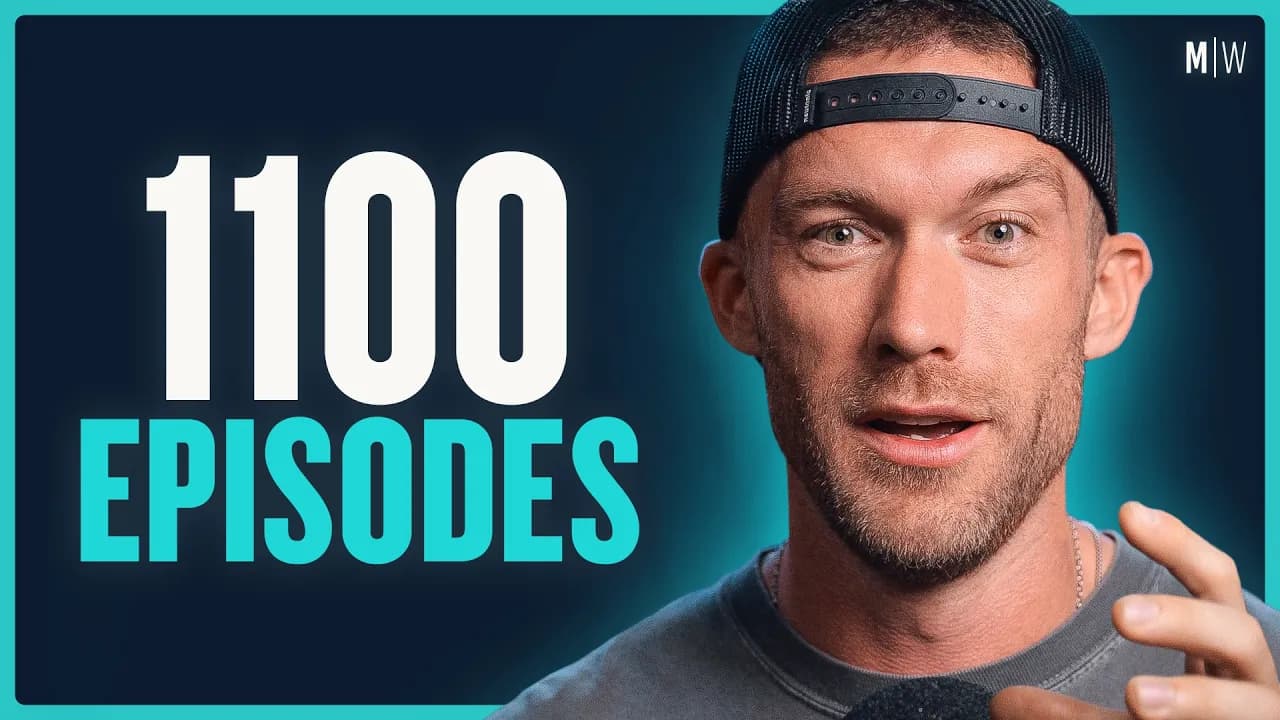
I'm going to start the channel. The YouTube's going to launch at the exact same time as the Apple podcast and in some ways I actually think that feels very justified given that that would turn into a project that was 1,100 episodes and the URL that I registered at the very beginning of that is the same one that we use now. All of those things are locked in. So it's just as well that I got it right. But also you need to be able to pick your battles because you can't spend 6 months or many years doing that.
When at university, did four years of bachelor's which included a placement year and then a master's. Already while thinking about doing the master's at the end of bachelor's, couldn't remember half of bachelor's. Couldn't remember the stuff learned as learning it. Assumed next thing because didn't know what to do: more business. Choice of degree was perfect one for business because business makes money.
Really interested in psychology and philosophy but thought those degrees are useless for getting a job as psychologist or philosopher. Biggest regrets of early life is doing something thought would be transactionally useful instead of something interested in. Thing interested in took a decade and a half or six years from leaving uni or 12 years from starting it to make own amateur version by speaking to world experts on subjects, most about psychology and philosophy. Had done the degree, Modern Wisdom wouldn't have existed, but wouldn't have had to wait 12 years to get started.
Health was the big one. Was the fat guy who could tell everything about metabolic dysfunction, insulin resistance. Used to be fat. Now in the best health of life. Spent years reading all the blogs, understood all different workout protocols, did a bunch but didn't stick to any. Hadn't stopped drinking. Pizza every day, whiskey every night, going to bed at 3:00 a.m., waking at 11:00 a.m., reading books about specific calorie causing inflammation and messing up gains, as if it mattered.
Eventually hired a coach who said, "Dude, just go to the gym." Was obnoxious client who debated rep schemes. Coach: "Dude, just go to the gym." Why talking when fat? Brazilian girlfriend can outlift you. Hung over, ate pizza last night, just go to the gym. Overoptimization is falling away.
Play game of bear or bull with friends: pick anything—trend, individual, fashion, product, country, culture. Bullish or bearish, invest in or bet against. Heavily against overoptimization. People drowning in information and advice, want simplicity and more than anything connection.
Tracked journey of learning about relationships in epochs. Became interested in mating and dating stats like sexlessness. Looked at Pew, Institute for Family Studies. Learned evolutionary psychology: physics of the system, principles guiding decisions. Combined them: red pill or sanitized version, or feminism, looking at mismatch between current situation and ancestral programming.
That's still not what a relationship is. Relationship is your nervous system interacting with someone else's. Relating has nothing to do with that. Midwit meme: idiots say just go talk to girls, Jedi say just go talk to girls. She makes me feel good. Eat protein, lift weights.
Two years ago said going to make finding a wife, starting a family big priority. Trying best. Challenge: can't do it solo, need another person to dance with. Talking point both push: single most important decision is person you choose to spend life with. Good faith advice for people who don't think about it, fall backward into relationship from age 24, living together, dog, engaged, kid without choosing intentionally.
On flip side, as people date older, creates anxiety. Meant to treat decision with care, but functionally leads to scrutinizing too much, opposite of good Tuesday. Curse of knowledge in dating. Jumped in deep end.
Importance of choosing partner objectively true in vacuum, not helpful when sitting across from somebody. Majority of marriage built over course of relationship, not found. Like finding business partner: not someone who has it figured out, but somebody can work with, build with. Get along well, fight well, high integrity, good character, things in common. Challenges make stronger. Opt in like incorporating business. One-way door keeps both invested. Situationships damaging: halfway door, one-way for one, revolving for other.
Neediness occurs when you place higher priority on what others think of you than what you think of yourself. Altering words or behavior to fit someone else's needs rather than own: needy. Lying about interests, hobbies, background: needy. Pursuing goal to impress others rather than fulfill self: needy. Focus not on behavior attractive/unattractive, but why behind behavior. Say coolest thing or do what everyone does, but wrong reason: needy, desperate, turns people off.
From Models, 15 years old this year. Everyone read it. Old book. Models by Mark Manson and Mate by Geoffrey Miller and Tucker Max: two-car garage of dating books for men. Still relevant: t-shirt that fits and jeans without stains revolutionary for many guys.
Whole book for men: neediness is unattractive.
Started career as dating coach 2008-2013, Models 2011. Met dozens of guys in person, took to bars/clubs, helped online, dates, relationships. Men's dating advice fragmented: texting game, first date, opener like college classes. Wanted unified theory of men's attractiveness. Guys supremely attractive in one phase had no problems in others. No one amazing at meeting in bar but embarrasses on date. Winners and losers, skills or not.
Successful men regardless of age, appearance, money, background prioritized their perception of themselves over girls'. Guys terrible with women motivated everything by what she wants. Attractiveness dictated by comfort with self, depth explored own life/identity, willingness to share. Non-neediness glue: don't do things for approval, don't change lifestyle, workout, say lines for approval.
Timeless concept. Career: taking abstract concepts, concretizing in phrase average person understands. Non-neediness first real success at that.
Essentializing, distilling. Descriptions of Modern Wisdom: dispelling comforting myths; spirulina for soul in fast food for amygdala environment.
Overoptimization, too much info. Can't distill human attraction to prioritize self-approval over others' with LLMs yet, needs human for language.
Red pill from PUA hate. Guys failed with pickup artistry saw selves so broken even evidence-based system failed. Success guys: contort self to be attractive. None considered system wrong, assumed women wrong. Model of dating/relationships broken, psychologically dependent.
Shot episode with Jubilee: one man versus manosphere. Told producers proto-manosphere, first five years arguing with those guys, know evolutionary psych and silly theories. Half guys fans, read book. Went well, respectful, some super smart, well-read. Expected women's studies professor, surprised. Talking point: manosphere incorrect solution to correct problem—young men struggling, real crisis not talked enough. Seed of advice good, but packaging issue. Let it go, find advice elsewhere.
Threw name in as alternative.
Timing of Jordan Peterson getting ill and God pivot inconvenient. Manosphere wouldn't have oxygen without him. Too early, timed market right but early, created demand then stopped servicing. Appreciated work, thought solved when first big. Precinct, identified cultural catastrophe years before. Golden era JBP gets more true.
Want real adventure in life, tell the truth.
Every problem because not telling truth.
Got deranged by aggression attacked with. Article by Ethan Strauss on Substack: "Criticism capture is more deranging than audience capture." Criticism not compliments sways. Militant communicators heavily attacked. Trump, Tate, Hasan Piker became more so from pushback.
Grown to appreciate: skill/personality suited for fame. Learned around Will Smith working on his book, other famous people. Some respond poorly to attention/fame, some
Some people respond poorly to attention and fame, while others function well with it. This is not a knock on Will Smith, whom the speaker has met a couple of times; as an outside observer, fame did not do him favors. It was intense and critical, and the speaker sympathizes with what he went through.
People with the skill to become famous but not the disposition to handle it face a ruthless position. The thing they want is in their hands, but through no choice of their own, they can't cope. Almost everyone wants success but lacks talent. A small group achieves success but self-destructs, detonating what they've worked their lives for. No one gives sympathy for this "velvet shit prison champagne problem"—it's a unique pain to reach the top and throw yourself off.
Examples include Kurt Cobain, Amy Winehouse, and P. Diddy. Self-destruction can be catastrophic.
Being around Will Smith revealed a systemization of fame: his team had guardrails, protocols for unruly fans, privacy, rehearsal time, and scripts to maintain functionality. There's a middle area of fame without such support, disrupting life and relationships. No one hands them the playbook.
Fame removes barriers and guardrails—unlimited money and yes-men. To stay functional, intentionally reintroduce limitations and friction.
You only envy the lives of people whose sacrifices you can't see.
It's easy and childish to want only benefits. Check if you want the costs before pursuing. Struggling and sacrificing makes benefits meaningful; without it, you wouldn't appreciate them.
If you saw the costs others paid, you probably wouldn't want their life. If you got there without sacrifices, you wouldn't appreciate it. Elon Musk: "People think they want to be me. They don't want to be me. My mind's a storm."
James Clear: > "It doesn't make sense to continue wanting something if you're not willing to do what it takes to get it. If you don't want to live the lifestyle, then release yourself from the desire. To crave the result but not the process is to guarantee disappointment."
George Mack compares Call of Duty to war: people think they'd love playing it constantly, but war is burnt gunpowder and friends losing legs. Becoming a world-famous guitarist means practicing a decade to no one, then playing in a band to no one with no promise.
As a failed musician, the speaker confirms: 95% is sitting alone practicing with no applause, frustration, difficulty, playing the same song hundreds of times. Practice until impossible to get wrong—if 100 reps get it right, do 1,000 to never get wrong. Monotonous and soul-destroying unless you love it and can't imagine life without it.
Every pursuit worth having comes with some degree of pain and struggle and sacrifice. So choose what flavor of shit sandwich you want to eat.
Unsexy work becomes sexy in glory, but if you don't want the process, it's impossible without insurmountable willpower, detracting from other life areas.
Some never get a worthwhile obsession. Speaker calls himself a serial obsessive: cricket (10-18), club promoting (18-27), personal development (to early 30s), podcast (now). Mostly beneficial except cricket. Banter ensues about cricket vs. baseball—cricket lasts 5 days, sometimes draws, weather-dependent, drinking mandatory.
- No one is coming to save you. Being a functioning adult means realizing you are responsible for everything in your life, even if it wasn't your fault.
- Strong boundaries make for good relationships. Weak boundaries make drama.
- Many problems don't get fixed. You just learn how to live despite them.
- Your mind lies to you all the time. It will tell you that the world is ending when it's not, that a mistake is fatal when it's not, that everyone is thinking about you and laughing about you when they're not. Learn how to tell your mind to shut the fuck up.
- Stop trying to convince people to like you. The right people won't need to be convinced and everyone else is just going to get very annoyed.
- Sometimes the best thing you can do is let a dream die.
- Only a few people in your life are going to matter in the long run. When you find them, treat them right. Make time for them. Keep them close. Be grateful.
How is this not taught in schools? People discover it at 34 via podcasts.
After 17 years, perspective shifted: early career focused on ideas, information, knowledge as keys from psych studies. But truly, obvious concepts and principles we know but lose sight of in daily life require rituals and reminders.
Historically, religion provided reminders: you're responsible, treat people well, let go of small stuff. Modern world lacks this; online content (podcasts, Instagram, YouTube) reinvents it. Not life-changing info, but reminders.
Modern world craves novelty, so repackage core messages (clean your room, tell the truth, neediness) with novelty via spaced repetition like Anki flashcards: "Oh yeah, I just need to go for a walk and sleep more" or "say how I feel to my partner."
Advice like fire extinguishers—known but vital in crises (dumped, death, move). Embarrassing to realize past learnings solve current problems, or re-face old pains/books written on them.
When book took off (#1 everywhere), speaker faced identity crisis, disorientation, depression: got everything wanted, impostor syndrome, said yes to unwanted things, felt trapped, stressed, anxious, health failing, fat. Read own book (The Subtle Art of Not Giving a Fck*) in 2018-2019: chapters exposed saying yes to uncared things, overload, no boundaries, lost values, wrong struggles. Heart-to-heart needed.
Over-optimization is true post-experience, not before. Obsess on personal development (David Allen's Getting Things Done, James Clear's Atomic Habits, Morgan Housel's Psychology of Money, The Subtle Art) for 3-6 years to earn "black belt," realize 95% packaging, maintain core, add rare novel insights yearly.
Novel when introduced (choosing struggles, neediness). Now territory mapped like video games. Tech allows speedrunning insights—ancient wisdom repackaged secularly, memorably. Formative hockey-stick curve in 2010s with Peterson, etc. Now personal development fatigue for starters, but newcomers (e.g., 25-year-old beginner) lock in 6 years.
After, maintain practice. Unique moment: info diffuse, free online. Previously, $10k Tony Robbins or Cornell psych grad program. Internet democratized, repackaged exclusive knowledge (2010s role). Now Instagram floods 800 pieces daily advice, speedrun in 1-2 years vs. years digging books/studies. Implementation more crucial, though not generalizable.
There's not a generalizable solution. It's a weird transition time with something anti-mimetic—not just not spreading, but actively pushed back against or criticized to the point it shrinks. Telling people new information isn't better or at the speed it used to be. The market has slowed down. If there's already a solution out there, the reason you haven't fixed your problem is your fault, rather than chasing novel things due to recency bias.
There's a transition period. The Solved podcast series is great because it's in-depth on topics like fear or relationships, not done before. Some upcoming content with guests sat around a table is unique and genuinely novel, with novel insights. But for the most part, it's going to get worse with AI. Imagine optimization-obsessed influencers powered by an infinite robot army, plus a thousand copycats on TikTok and Instagram paring anything with traction. Already derivative, but now derivative at scale powered by AI.
Bullish on authority and credibility over the next 10 years. So much slop out there, especially from random stick figures on YouTube, people will lose patience and crave someone who actually knows what they're talking about or has done something. Ironic: the great explosion in information dissemination 10-15 years ago destroyed credibility—anyone could write a blog post. Now taken to extreme, there will be incredible demand for authority and credibility, even pedestalization of legacy media, mainstream media. If you get placed on 60 Minutes or the new Dr. Phil, that's prestigious because anybody can do YouTube.
Started an AI company last year: Purpose, an AI personal growth coach (purpose.app, free 7-day trial). Launched in December, hired PR agency for publicity and conventional media logos. Publicists got interviews with big newspapers, TV stations, radio stations—prestigious traditional stuff. Did interviews: journalists didn't care, half-ass 10-minute conversation, generic article on AI products, drop a quote. Then journalists say, "While I've got you here, I'm working on a book—can I run ideas by you?" Happened three times. Journalists traded prestige media mention for career advice from a bestselling author. Most calls were giving career advice in exchange for a quote.
Reminder: your time on earth is extremely limited, everyone you love is going to die—put the phone away and do something meaningful. Death salience is magical, like memento mori. Important practice, especially for doom-scrolling: periodically ask, if I were to die soon, is this what I'd want to be doing? When I'm 80, will I look back proud? In Subtle Art, last chapter "And Then You Die"—publisher said it's dark, supposed to finish on an up note, but confronting death was impactful, big in Stoic philosophy, Buddhist philosophy. Unexpectedly mimetic, gets traction, people resonate and engage.
- What do you regret from the last year? What did you do too much of and too little of? Typically same as last decade, but you can't remember.
- If you wanted to make 85-year-old you as miserable as possible looking back, what would you do more of or less of?
Famous five regrets of the dying: wish I'd allowed myself to be happy, kept in touch with friends more, hadn't worked so much. About to breach first wave of people with good chunk of life on smartphones/devices dying—"wish I'd spent less time looking at a screen" will be number one. Smartphones around under 20 years, so 60-70 year olds—not quite there, couple more decades, within two it'll explode.
At some point, you realize the permission you've been waiting for was your own. People seek advice when they just want someone to say it's okay—to want what they want, stop doing something, change mind, be wrong. Many emails/messages boil down to feeling bad and wanting to be told it's okay, or wanting to do something but afraid, needing "you should do that." Don't need theory, framework, childhood trauma breakdown—just "it's okay, you should do that, seems important to you."
World split: people who don't know how to improve lives (don't care, don't overthink) vs. those too scared to start (paralyzed by capacity to think). Thoughtful people making things happen overcome their thoughtfulness—it's fuel and barrier, uncertainty paralyzing. Someone saying "it's okay to want that or not think that's cool, try it" closes the loop.
Describes self as having lifestyle-wide praise kink—responds well to encouragement. Two types of British people: thrive on mutual piss-taking vs. meant to be American. Americans have permanent frontline cocaine energy—want to make enthusiasm great again, re-export to UK. Happy with mutual piss-taking with boys at table, but for going for stuff, prefer "you got this, go crush it" over piss-taking. Piers Morgan likes piss-taking because galactic ego needs feet on ground; for permanently unsure, encouragement good (cringy in UK).
Exported self to US pioneer spirit: okay to want that, say what you like. At 27-28, club promoter stopping drinking sounded insane in British culture 2016 (pre-NA beers like Athletic Brewing Co., Heineken Zero). Sometimes people do stuff without permission, but often that's what they're looking for: "it's all right, you got this" or "you'll be all right anyway, okay no matter what."
Proportional to age: young people need reassurance; older realize nobody knows what they're doing, nobody cares what you decide. British culture: epitome of "I'd rather be right/snarky than happy" (rather snarky than cringy/enthusiastic). Planting flag creates criteria for success/failure—snipers can make you fail, or success leaves them behind. Americans hope you succeed (take them with you); British hope you fail (leave them behind).
UK had second highest millionaire exits in 2024 behind China (China 13x population)—per capita, lost most millionaires by multiples. Not welcoming for innovative people wanting different paths. Same number top 10 global universities, but American universities produce 5x more entrepreneurs than British (UK has international cohort—people get contorted by culture, leave with veneer).
Appreciate you—fascinating watching renaissance or dark ages in personal growth/development, appreciate stewarding it. markmanson.net, Solved Podcast, purpose.app (free 7-day trial)—Mark Manson in your pocket without touchy-feely; AI optimized to challenge, call out bullshit, spot blind spots, challenge assumptions like good coach to help grow, not kiss ass.
Keep Chris Williamson in your library
Save the videos and channels worth coming back to, and find them again in one place.