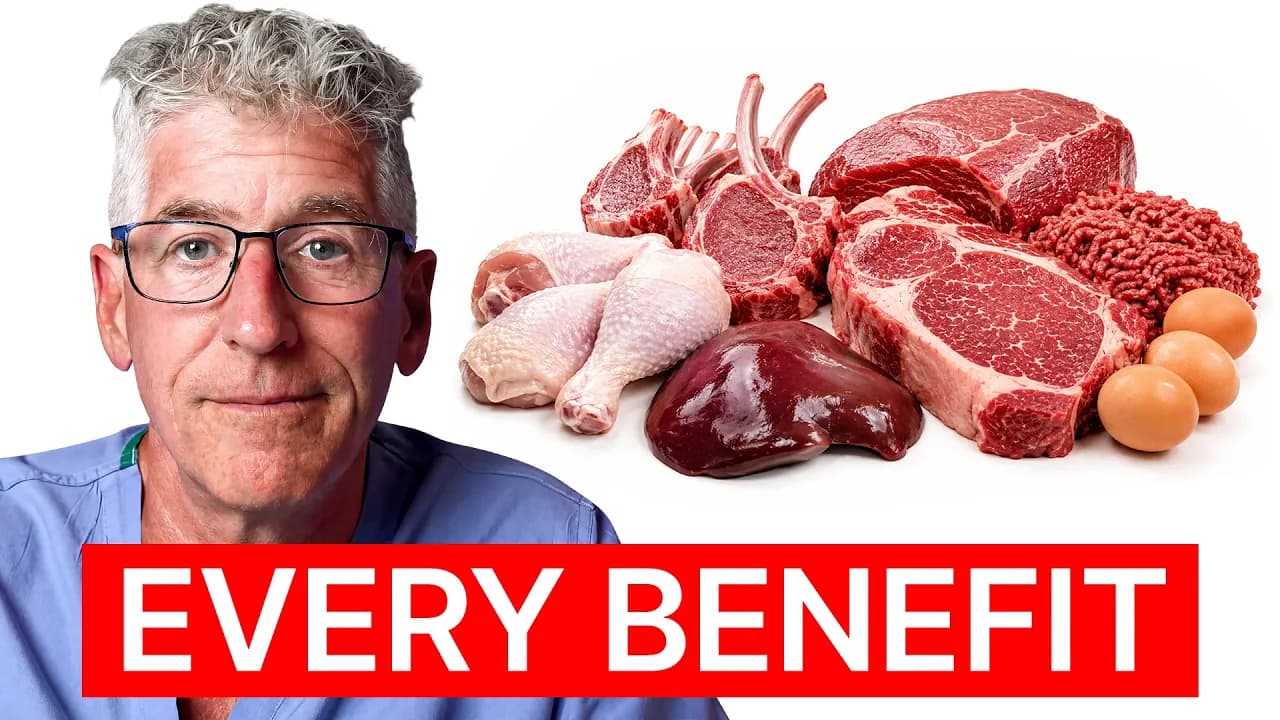
4 Foods Inflaming You Worse Than Red Meat
In a Nutshell
Judy Chu's clinical testing shows carnivore diets reduce inflammation markers more effectively than standard diets, contradicting studies that blame red meat while omitting contradictory data from high-meat-consuming populations. Chronic inflammation stems from underlying triggers that keep the immune system activated, leading to insulin resistance and diseases ending in "-itis," rather than the inflammation itself being the root problem. The most inflammatory foods are processed products with additives, gluten-containing grains, and nightshade plants—not meat—making a meat-only elimination phase followed by systematic reintroduction the optimal approach for identifying personal triggers.
These notes were generated by AI and may contain inaccuracies.
Judy Chu states that red meat does not cause inflammation based on laboratory tests conducted in her clinic. She explains that her initial focus on fatty meats potentially clogging arteries caused her to overlook widespread inflammation throughout her body. She describes how chronic disease occurs when the immune system remains continuously activated due to an underlying trigger.
A province in China where residents consumed significant amounts of meat showed low inflammation markers, but this data was excluded from the study dataset. The China Study and related research by a father-son team examined various communities to determine what causes inflammation, concluding that dairy and meat were the most inflammatory based on tested markers.
An independent blogger discovered that the researchers selectively included data, omitting the province with high meat consumption and low inflammation markers. This selective data handling mirrors the approach taken in Ancel Keys' Seven Countries Study. The original data technically showed minimal inflammation associated with processed meats.
Inflammation represents a normal human physiological response when the body detects imbalance. The immune system activates inflammation to address foreign objects, infections, or injuries such as a sprained ankle. This process involves different organs working together to resolve the issue.
Acute inflammation manifests through fever during infections or swelling after injuries, representing the immune system's healing response. The problem emerges when inflammation persists rather than resolving, leading to chronic disease states including type 2 diabetes, insulin resistance, and high blood pressure.
Chronic inflammation functions like an ongoing internal conflict where the immune system continuously attacks perceived threats, causing collateral damage over time. Cytokine storms during COVID-19 exemplify this persistent immune activation. Anti-inflammatory medications can suppress symptoms but fail to address the root cause maintaining immune system activation.
Judy Chu's book "Fixing Inflammation" can be pre-ordered at inflammationfix.co. After December 8th, the book becomes available on Amazon in print, ebook, and audiobook formats. Pre-order benefits include a guide containing 100 recipes covering the meat-based diet protocol and all its stages.
Pre-ordering helps signal major retailers like Barnes & Noble and Amazon to promote the book more aggressively. Without sufficient pre-orders, retailers may reduce promotional efforts regardless of the book's quality.
Insulin resistance constitutes an inflammatory condition where the body attempts to restore blood sugar balance that has become disrupted. Hormones including cortisol participate in this rebalancing effort. The condition indicates an underlying imbalance requiring identification.
Current medical approaches focus on forcing blood sugar levels down through medications rather than addressing root causes. Long-term consequences include many type 2 diabetes patients eventually requiring insulin injections when medications prove insufficient. Associated diseases emerge over time because the underlying inflammatory condition persists.
Judy Chu's clinic conducts extensive laboratory testing including C-reactive protein measurements and mold disease indicators. Results show that individuals following carnivore diets demonstrate lower inflammation markers compared to those consuming standard American diets, even when undergoing mold treatment protocols.
Decreased inflammation appears across all tested indicators when patients follow carnivore diets. Antibody levels decrease, particularly in Hashimoto's disease cases. Colitis and other localized inflammatory conditions show improvement. The carnivore diet appears to be the least inflammatory dietary approach based on clinical observations.
Processed foods and laboratory-created artificial products contain additives and preservatives that negatively impact human physiology. Foods capable of extended shelf life without spoiling contain ingredients unsuitable for human consumption. Natural whole foods should form the dietary foundation.
Humans are not physiologically adapted to high plant consumption based on evolutionary history. Early humans consumed minimal plants, occasionally encountering berries that were significantly less sweet than modern varieties. Vegetables like broccoli and cauliflower did not exist until approximately 200 years ago.
Plants produce toxins as defense mechanisms to prevent consumption by animals and ensure species survival. Gluten represents a difficult-to-digest protein found in wheat and grains that causes hypersensitivity reactions. Even without celiac disease, many patients react negatively to gluten exposure.
Nightshade family plants including peppers and tomatoes trigger severe inflammation in susceptible individuals due to their genetic composition. Multiple elimination diets documented in medical literature share meat as the common element in their most restrictive phases.
Rather than managing multiple plant elimination decisions, removing all plants initially and focusing intensively on meat allows assessment of healing potential and establishment of baseline health. Plants can be reintroduced individually while monitoring whether baseline health remains stable.
Reintroduction requires individualized approaches based on specific health conditions. People with diabetes should avoid starting with fruit. Those with latex allergies should exercise caution with nuts. The book provides detailed guidance for different health profiles and reintroduction sequences.
Mistakes commonly occur when multiple foods are reintroduced simultaneously, making it impossible to identify which items cause problems. A systematic scientific approach to reintroduction prevents this confusion.
Medical conditions ending in "-itis" consistently indicate inflammation. Interviews with multiple physicians revealed consistent emphasis on inflammation and insulin resistance as underlying factors in various health conditions.
New viewers should focus on understanding infections, inflammation, and insulin resistance. Judy's book provides education on these interconnected topics that many people overlook until experiencing related health issues.
Keep HomeSteadHow in your library
Save the videos and channels worth coming back to, and find them again in one place.