9 Harsh Truths No One Wants To Admit - Shaan Puri
In a Nutshell
The core message is that fear—not lack of intelligence or resources—blocks most people from achieving what they want, and the solution is to give yourself permission to act while finding environments and obsessions that pull you forward rather than requiring discipline to push. Key takeaways include the ABZ framework (know your current state, next step, and end goal without overthinking), the Iron John concept of releasing your "wild man" to become a "great king," and that true success requires balancing achievement with relationships, personal growth, and moment-by-moment greatness rather than just accumulating wins.
These notes were generated by AI and may contain inaccuracies.
Economics operates as a system where intelligent people pay beautiful people to promote products to insecure people. A small group of people often have an idea or specific agenda that gets transferred to society through a strange food chain. Satellite creatures observing this ecosystem would see intelligent animals exploiting public concerns. This creates good business advice: if selling to mothers, focus on child safety; if selling to women, focus on beauty or youth; if selling to men, focus on status and position.
The world operates in an exploitative manner, as seen in accounts like "Nature Is Metal" on Instagram. Animals exploit each other, and it's foolish to see the world as it should be rather than as it is. Understanding human nature requires recognizing what drives people to move and act in certain ways.
Gary Halbert, a great marketer, stated that more money has been lost selling what someone should want instead of what they actually want. This means communicating with people where they actually are, understanding what they want, and formulating product benefits to align with their desires.
When facing two bad options - one manipulative and exploitative, the other noble but ineffective - the third option combines understanding human psychology with noble causes. People love stories and react strongly to happy endings rather than being told what to do. Market product benefits instead of features, using human nature understanding for noble purposes.
ABZ is a simple framework for those who overthink while being smart and hardworking. Overthinking is like a dangerous, highly contagious disease. The treatment is simplification.
Most people trap themselves by needing to know A, B, C, then D, E, becoming exhausted by the middle of the alphabet with accumulated doubt. The alternative is knowing only three letters: A, B, Z.
- A is your current situation, requiring honest reflection
- B is the next step that gets you to Z
- Z is your desired end state
Once achieving B, you receive a new A, and Z remains constant while progressing step by step.
Successful people often launch called "The Achievers Under Pressure" - they achieve success but suffer tension throughout, spoiling the fun of the entire process. The journey is long and the destination is small, with the vast majority of experience being tension, brief comfort, new goal, new tension.
When believing C will happen, you don't need to know all steps to get there. Walking to the grocery store for ice cream demonstrates this: you know you're not there today, know where you want to go, and have no doubt you'll arrive, so you focus only on the next step without worrying about everything else.
Wanting to become the most prominent podcast requires setting realistic goals like 30 million downloads this year, 100 million next year, having a beautiful studio, and hosting dream guests. A realistic vision of current reality includes current guests, program type, skill level, communication volume, and preparation time. Then identify the next logical step like making 20 contacts this week, studying Chris Williamson's introductions, or learning from others.
At any moment without feeling progress, people don't feel happy regardless of how objectively good their life is. Human bodies are predisposed to feeling happiness during progress, making this feeling relative to current location. This equation achieves goals while feeling satisfied during achievement, monitoring acceleration and slowing down like tangible speed changes.
People requesting advice actually want short-term loans on courage, not information. When asking advice from someone, people often ask five people looking for someone to confirm what they really want to do. They're seeking permission to proceed, like wanting someone to confirm parking a car in a corner.
The world is not confined by intelligence - gates of life don't require intelligence to penetrate. The world is confined by courage, wisdom, and energy. People who are less intelligent than us often live happier lives, form better families, succeed in marriages, and get everything we desire because they possess energy, wisdom, and courage to try even when things seem silly or when they're beginners.
Instead of asking advice from others, ask what permission you need. If God descended saying you can do something and will be fine, the direction we know we should go is often blocked by fear. Giving yourself permission is usually what you need. This doesn't mean it's not good to get support from others - we've all had moments with safe people who believed in us and provided temporary courage.
A piano teacher asked if the speaker wanted to sing. When told they weren't good at singing, the teacher asked who said that. The speaker said no one said it - they just weren't good. The teacher said people who started much worse than him had learned to sing. This led to doubt creeping in many times, with the speaker asking if they could just stop and return to playing piano and reading notes.
The teacher shared his story of growing up as a black man where singing was considered a flaw, not done, and he was mocked. He assumed he was bad just because he loved singing, which was worse than being bad at singing, so he stopped. He transferred to another school, was in an empty room when talent show auditions were happening, started singing along, and the choir teacher heard him and asked if he could sing. When he asked if he could be honest about whether he could sing, she asked who said he couldn't sing. He eventually participated in American Idol because someone believed in him.
The only reason for not doing things is fear. When asking why repeatedly, the answer is fear of failure. Under all fear lies the fact that we're not enough and won't be popular. Stress is a euphemism for fear. Nervousness is a coded word for fear. Anxiety is a secret word for fear. Procrastination is a secret word for fear.
The supplement industry is full of products claiming unprovable promises. Momentus was founded by Jeff Byers, a former NFL player, according to higher standards. Each product uses evidence-supported components, transparent doses, and independent third-party testing. All products are NSF sports certified. Momentus has a 30-day money-back guarantee and ships internationally, offering up to 35% off first subscription.
Courage is not the absence of fear, but feeling afraid then doing what needs to be done anyway. Motivation is feeling the desire to do something. Courage is feeling fear and going through it anyway. No one describes a person sipping coffee as courageous because there was nothing to risk. Courage requires having something to risk.
The same physical action can have completely different meanings depending on the psychological state of the person performing it. The fear of taking a sip of a drink when someone has been struggling with addiction is fundamentally different from simply drinking casually.
Puri describes his son who was born during the pandemic and developed significant fear around entering new environments. The child was afraid to go into his jiu-jitsu class despite Puri going in with him the previous three times. The teacher had sent an email requesting parents stay outside, which added to the challenge.
Instead of feeling frustrated with his son, Puri shifted his approach. He shared his own childhood experience of crying during gymnastics lessons and normalized the feeling of fear. He explained that everyone has courage in their hearts and fear in their stomachs, and these forces are constantly fighting.
Using his son's interest in Pokémon, Puri framed the internal conflict as a battle between Charizard and Pikachu, explaining that sometimes fear wins and sometimes courage prevails. This reframing helped his son feel understood rather than pressured.
After three consecutive classes where his son didn't enter, Puri maintained his non-judgmental approach. On the fourth week, his son went in. When Puri expressed pride, his son replied that he "didn't want to let fear win today" - a phrase Puri had said to him a month earlier that the child remembered and returned to him.
This experience led Puri to reflect on how children's actions serve as metaphors for our own lives, particularly regarding whether we let fear win in our own decisions.
Puri identifies moving to San Francisco as the most important decision in his life for becoming a successful entrepreneur. He emphasizes that moving is greatly underestimated - people tend to attribute success to personal qualities and decisions while forgetting the importance of their environment, comparing it to a flower forgetting the soil.
He references a business saying: when a great founder faces a bad market, only one maintains their reputation, and it's the market that's bad. This principle applies to life - it's much easier to achieve success in a fertile environment.
Puri advises people in their twenties to move to the center of whatever they're interested in. Being surrounded by people who inspire you deeply - literally living in the same house if possible with others who have similar dreams and passions - will benefit you more than any book, podcast, or other resource. This proximity is the most important factor you can change in your life.
When Puri first arrived in San Francisco, he overheard conversations in a cafe about "peptides for dogs" between founders and investors. He realized that in San Francisco, it was normal to be eccentric about ideas, actions, and career paths. Working at JP Morgan was considered low status, while having a bold startup idea was prestigious.
Puri describes feeling like "one note out" on a piano string while all other notes were harmonious. He realized he wasn't necessarily a bad note, but rather needed to find other strings where his tone would fit completely or suit better. The people who push you to explore yourself more, who you can sit with in silence, who don't require a filter, and who understand and encourage you to be more honest with yourself.
Despite running one of the largest event companies in the UK, having business partners he enjoyed, earning a successful living, being the first in his family to graduate university with two degrees, Puri felt he couldn't compensate for being a "negligent person" - someone not in harmony with their place. Success and wealth couldn't make up for this fundamental misalignment.
He compares the experience to being "in soup" - the question is whether the taste of the soup aligns with you, rather than just finding individual people who match.
Puri presents a framework distinguishing three types of drive:
- Discipline: Forcing yourself to do something; accepting resistance
- Motivation: The desire to do something; removing resistance
- Obsession: The inability to stop doing something; the opposite of resistance - you're pulled toward it
Many people ignore their concerns, whether negative (politics, pornography, harmful relationships) or positive (fitness, learning to sing, joining a band). A positive obsession is the highest degree of discipline and motivation you can achieve. If you don't have a positive obsession, you're wasting valuable fuel.
Puri shares that when starting his podcast, he was obsessed with learning everything about podcasts. He took 3,982 notes on Apple Notes, obsessively studying YouTube courses about thumbnails, click-through rates, and watch time. This obsession, not talent or discipline alone, created what appears to be natural ability.
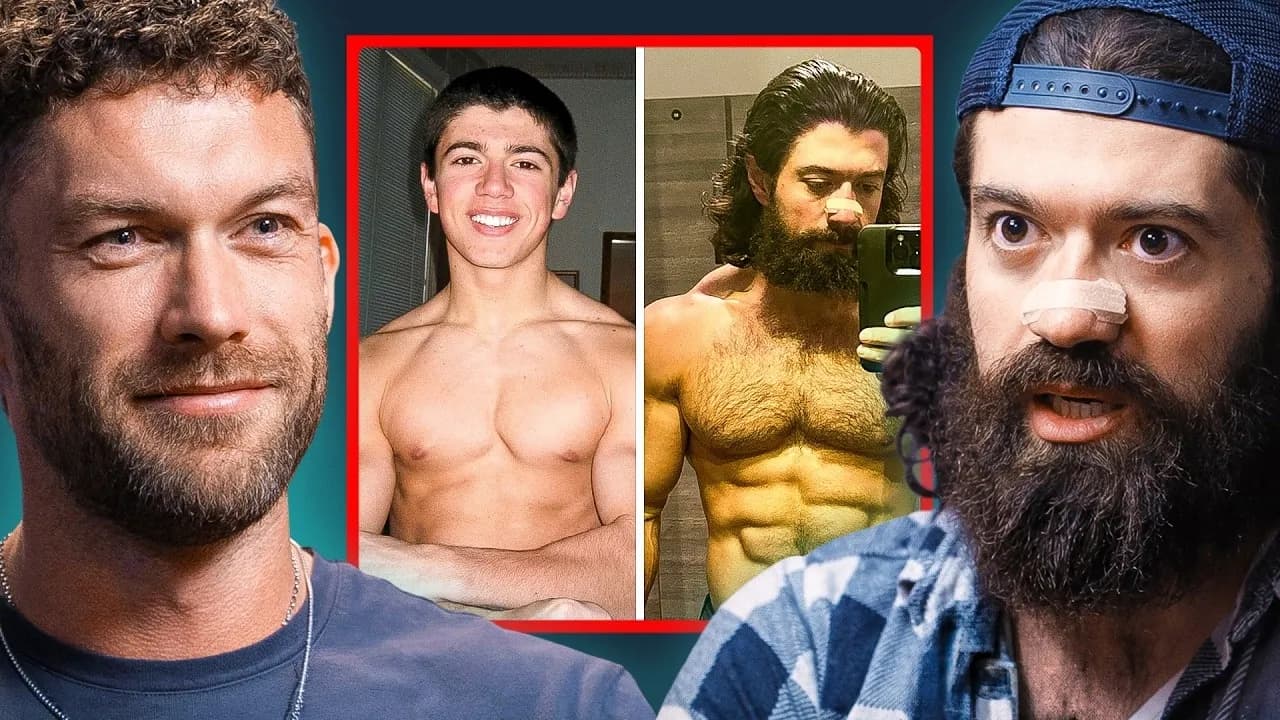
Similarly, at 18, Puri was obsessed with bodybuilding after experiencing bullying, spending nights reading bodybuilding forums instead of going to parties. This obsession became integrated into his identity and physical being.
Obsession is temporary - this feeling won't last forever. If you let the energy of obsession pass without acting on it, you won't be able to recover it. This doesn't mean being swept away by every passing obsession, but giving up on all of them means spending your life resisting difficulties instead of working with them.
Puri references Steve Jobs' Stanford graduation speech about connecting the dots backwards. Jobs took a calligraphy class because he was interested, despite not knowing its future utility. This later influenced the beautiful typography on the first Mac, which contributed to its success.
You can't connect the dots looking forward, only backwards. To create vibrant, potentially future-connected points in your life, you must do things that arouse your genuine interest and passion, with all sincerity, despite not knowing if they'll lead anywhere.
At dinner with a young venture capitalist, Puri's friend explained the problem: "You don't open except for the windows, and never open the doors." Windows represent opportunities where you know what will happen on the other side. Doors represent unknown possibilities - you don't know what's there, sometimes no one answers, sometimes the door opens, sometimes what you want isn't there.
Being intensely focused on opportunities (windows) means missing the chance for luck and success that comes from knocking on enough doors to create space for luck to work in your favor.
After selling a company, Shaan Puri found himself with all the money needed for himself, his children, and grandchildren, yet felt lost. He described the sensation as a dog that chased a car and finally caught it, then wondered why it had been barking at the car all along. Seeking guidance, he was referred to Dr. Jack, who described himself as someone who reads people's souls and helps them understand their talents and what is required of them.
Shaan encountered Dr. Jack through a short TikTok video with only ten views that resonated deeply. He paid for a session where Dr. Jack began by telling the story of Iron John, describing it as a fairy tale that contains wisdom wrapped in a simple, beautiful story capable of surviving for thousands of years.
The story begins in a kingdom near a vast forest. A dog chased a deer into the forest and never returned. Four friends went searching for the missing man and also never returned. The king then sent his elite cavalry battalion, but they too disappeared. After this, no one dared enter the forest for many years.
A teenager, full of energy and boredom, was given permission by the king to investigate the forest. While walking through the trees, he saw a swamp-like pond. As he passed by, a hand reached out and grabbed his dog. The boy returned to his friends and they decided to empty the pond using buckets.
At the bottom of the pond, they found a savage man covered with hair from head to toe, with red hair that appeared rusty. They named him Iron John. Robert Bly, who retold this story, spent his life working with men around the world and described Iron John as representing unbridled masculine energy—the savage man that exists within every man but most have never met.
Iron John was imprisoned in a cage at the palace. The king had a young son described as a good boy who says please and thank you, wears decent clothes, listens to his parents, and does everything expected of him. One day, the boy was given a golden ball representing his vitality and life energy. While playing, the ball rolled into Iron John's cage.
Iron John offered to return the ball if the boy would let him out. The boy initially refused, but when he realized his parents would be furious about losing the golden ball, he became desperate. Iron John revealed the cage key was kept under the mother's pillow. Robert Bly's interpretation notes that mothers don't dream their sons will become pirates or savage men—they want them to be safe and decent.
The boy stole the key and released Iron John. Realizing what he had done, he feared his parents would kill him. Iron John offered to take the boy with him to the forest, claiming he knew riches far greater than anything seen in the palace. The boy realized he had been trapped in the palace all along.
Dr. Jack explained there are three types of men: good boys, savage men, and great kings. The good boy strives to please others and does what he believes will satisfy people—whether his wife, parents, or society. He follows the expected path: school, good grades, good job, meeting a good girl, buying a house, having two children, building a fence, and joining a sports club—without ever asking if this is his true desire.
Good boys live their entire lives based on this grammar without questioning whether it reflects their true desires. The wild man exists within them but remains imprisoned, leading to self-sabotaging behaviors and feeling unsatisfied despite possessing everything they were supposed to want. The dissatisfaction comes because they never released the untamed man inside them.
The savage man is not the opposite of a good man—he is a free man who is ferocious, seeks what he wants, is brave, disciplined, and has principles. He meets his own needs rather than others' expectations. Great kings, which everyone aspires to become, can emerge from savage men who begin caring about things beyond themselves.
Shaan recognized he was closer to the wild man than the good boy but not yet a great king. Dr. Jack shared his own story of first meeting his savage man at age fifteen when he asked a girl out and borrowed his older brother Tommy's car.
During the date, Tommy paid the dinner bill and received the change, which he kept. At the cinema, Tommy repeatedly moved the car forward five feet, forcing his brother to chase it. When the brother refused, Tommy tore off the car's antenna. The brother demanded the dinner change to cover the damage. When Tommy refused, the brother threw the money into the street and demanded Tommy retrieve it.
They fought the entire fifteen-minute drive home. Tommy hit his younger brother, who kept returning punches instead of giving up as he usually did. Tommy realized his brother would not give up, even if it meant being killed. Something had changed that day—this was the first time Dr. Jack met his untamed self, though he didn't fully release it for another fifteen years.
Every man should examine aspects of his life where he acts like an obedient person versus where he notices the wild man. He must give energy to the wild man rather than keeping it imprisoned. The final step is asking how to become a great king by using the untamed man's energy for something greater.
When born, humans care only about their own needs—milk, diapers, naps—and cry if these aren't met. Over time, attention expands to appearance, grades, and other matters. Each time attention is directed toward something new, one must evolve to meet that need. When deciding not to be bullied and to become better, the motivation came from caring about something beyond personal comfort and safety.
Dr. Jack shared another story about sacrificing something to survive, comparing it to cutting off a leg. The result was becoming a three-legged wolf that would remain that way forever, but now a free and ferocious wolf. Life contains small crucial moments that allow unleashing inner strength in a one-way transformation.
A king is not limited to meeting personal needs but concerns owning a kingdom where everyone—family, friends, neighbors, strangers online, community members, or even those with rare diseases one decides to serve—can be happy and prosperous. This requires directing immense energy toward something more precious than comfort, lifestyle, and possessions.
Despite having three children, a happy marriage, good health, all needed money, hobbies, a podcast, and fame, Dr. Jack asked what more Shaan wanted. The answer revealed there is always something beyond current achievements.
Tom Hardy shared his phone call with Charles Bronson, where he discussed being trapped in a relationship pattern affecting all his relationships. Bronson responded with a story about a boy whose foot got stuck in a drain as the river rose. When asked why this wouldn't happen to him, Bronson said he would have said "Cut it now"—sometimes a small part of yourself must be cut, no matter the pain, to grow and move forward.
The idea of sacrificing a small part of oneself to grow resonated with Shaan. Success often carries the promise that fears, weaknesses, and need for appreciation will be satisfied if one builds a great enough castle or climbs high enough on the mountain. Many reach this stage and realize it won't solve their problems, leading to new challenges and existential crises.
When energy sources run out and destinations are achieved, the question becomes where to go next. Andrew Wilkinson introduced Shaan to Dr. Jack through a men's group exclusively for project owners who achieved nine to ten figure profits and suffer from an unhealthy version of post-traumatic stress disorder.
After achieving significant success, many people become lost without a clear destination or sense of direction. The question becomes: what was the original motivation that brought them to their current position, what personal sacrifices were made along the way, and what psychological hardening has accumulated over time. This includes examining the adaptive mechanisms and coping strategies developed to avoid certain feelings or contain emotions that shouldn't have been felt.
When people achieve success without addressing these underlying patterns, they often return to operating in the same way and develop what can be called winner's syndrome with the gold medal. The thinking becomes: "This is everything - I need to do this twice because the previous successes might have been just luck, and now I need to prove it." Elon Musk has achieved this four times according to this framework.
A founder of Airbnb explained his motivation for starting another company: "Part of me wants to prove that it wasn't as if I was unlucky." The response to this was: "Who are you proving this to? Do you think you were lucky? I heard the story. Very little luck - the walls that you destroyed to succeed in that project were supposed to fail one hundred times." Everyone is susceptible to falling into these psychological traps, even the smartest people in the world.
The concept that what benefits you most is the same thing that can harm you if not careful - the dose determines the poison. Storytelling ability is an example: it can be convincing and powerful, but it also means the ability to deceive oneself scientifically. The same traits that create success can become the very things that harm if not handled carefully. Most swords are double-edged - the tool used to cut other things is the same one that may hit you in the neck when swung backwards.
At this stage of life, success itself no longer impresses. The focus has shifted to balanced success and enjoyable success - achieving success while maintaining a kind personality, emotional engagement, community involvement, and family support rather than exploiting those around you. Achieving results alone is relatively simple with a ready recipe, but achieving success while connecting it to other aspects of life is closer to art than science.
There's often superficiality or emptiness in achieving things, called the access fallacy. When meeting people who have achieved significant success, the assumption is often that "this person has found the solution," but frequently they're just as lost or even more so, living in a greater delusion. This doesn't mean people can't achieve success and mastery of everything, but on average, success is an introduction to more work rather than a final destination.
Victory needs to be defined personally as more than success in one field - it's the science where success becomes the art of achievement, combining both while being a good person, good friend, good father, good husband, enjoying things with friends, and maintaining ambition without being overpowered by it. This true success equation is shared, but not everyone sees it the same way - what some see as paradise, others see as hell.
Looking at Elon Musk's life: "I am happy it's so good to have you here. And I am very happy because I'm not in your place." The response: "I would have killed myself if I were in your place." Some people have psychopathic traits that make them feel happy in such positions, and these people are needed and loved for watching them, making films and books about them because they're exciting.
David Goggins is inspiring for an hour daily during exercise, but the goal shouldn't be to become like him. Many rich people with billions of dollars are actually bankrupt - they wake up feeling anxious every day, treat people badly, don't know their children, and their children don't like them. This would be considered bankruptcy in the definition of success.
There are many obese doctors, so independent thinking is required regarding what suits you personally. Some people are partial examples - take part of what they do and apply it to one aspect of life but not others. Nobody is perfect, but the more complete the picture, the better. Making this a personal compass is very useful in life.
Anything extreme is not worth the effort - perfect bodies, celebrities, billionaires, Olympic athletes. The cost of the last 10% exceeds the first 90%. The internet has created a bubble of superpowers where extremism is plain to see but undesirable. There's a confusion between exceptional results and exceptional life. Kevin Kelly, founder of Wired magazine, when asked about the price of being Kevin Kelly, said the price was greatness, but he was happiest when moving from one thing to another without building the biggest empire.
Our minds are very bad at understanding non-linear growth. The famous rice doubling story demonstrates this: one grain of rice doubled every day leads to owning the entire empire within 30 days. Progress follows a strange curve where initial effort yields immediate huge gains, then reaches a plateau where more work doesn't yield proportional results. The last 10% or 1% to become like Michael Phelps requires sacrifices that most aren't willing to make.
25% of Olympic athletes say they would sacrifice their lives after 4 years in exchange for a gold medal. The question becomes: are you ready to be that person? There's no good culture for appreciating those who say "I'm fine" or "I'm satisfied" - they won't get movies, books, or podcast invitations. In a merit-based capitalist system that glorifies exceptional achievement, saying "I'm satisfied" can be seen as revolutionary.
Three years ago, participating in a podcast would have been exciting for audience growth and social media engagement, but now all communication apps have been removed from the phone. The motivation has shifted to: "Is there anything I can do today that benefits someone else besides me?" Sharing examples, stories, ideas, or motivation for people to think about other questions can serve people well.
The traditional definition of greatness focused on accomplishing something great - breaking global records, accumulating money, participating in races. But this is a very limited way of thinking. The question becomes: what about being great moment by moment, day by day, situation by situation? Being great in everyday interactions - praising someone on their clothes because they chose that shirt to feel contentment - rather than focusing only on accomplishing something great.
Ramon, a single father from the Netherlands, raised his son alone. When his son wanted to play American football for social and sports reasons, Ramon formed a team despite knowing nothing about the sport, bought 16 books about American football, attended every day to train the boys, and helped his son make friends. When his son stopped playing, Ramon continued coaching other students in eighth grade, focusing on helping them come out of their shells and learn the meaning of serious work rather than focusing on tactics and plans.
Parents began sending messages saying their sons were different - "the child we had hoped for." The school asked students who should give the graduation speech, and they selected Ramon. Instead of giving a traditional speech, Ramon told the story of a very shy student who had opened up to the world. In appreciation, he played "Gangnam Style," the song that child adored, and the child danced while his friends joined him. The students said they would never forget that moment.
Greatness isn't about accomplishing something that doesn't matter and won't make you happy. The relentless pursuit of greatness should focus on being great moment by moment, day by day. If this is done with sufficiency, the result will be true greatness rather than achievement that has no one and won't bring happiness.
The RP app for strength training provides the best training sessions based on real scientists who built the application on the passion to overcome high school bullies and provide the most effective, scientifically supported approach to maximum muscle growth. The app specifies exercises, sets, repetitions, and weights needed, automatically adjusts each week based on progress made. The code "modernwisdom" provides up to $50 discount at rpstrength.com/modernwisdom.
Dr. Gottman and his wife are considered essential references in relationship studies. They gathered many married couples in various stages of love and problems in the laboratory, conducted assessments, and reached a conclusion about diverse theories. The key insight is that the ability to predict the long-term health of a relationship during the process of determining whether every wound heals 99% of the time or 101%.
John Gottman has a clever trick where he observes a couple for a short period of time, one minute or five minutes, and predicts with 90% accuracy whether they will stay together or not. This has been studied extensively. The prediction isn't related to their compatibility, hobbies, interests, commonalities, or basic values. Rather, his understanding is that relationships revolve around how you deal with disagreements.
When couples argue and differ in how both sides behave, and when a wound occurs, the question becomes whether it heals at a 99% rate or 101% rate. If it was a 99% healing rate, the relationship is deteriorating and it's just a matter of time. But if there's a 101% healing rate, this is conclusive proof of something valuable. A slight change in percentage of just 2% is what makes this happen.
Healthy couples compared to couples who suffer from problems show that when you're in a moment of conflict, don't focus on the healing but rather focus on the wound itself. The pattern is to focus on the wound and say things like "how dare you, I can't believe you did this again." The focus becomes defensive: "perhaps I may have hurt you, but that's only because you hurt me previously." The key shift in perspective is asking: "how do I get to 101 instead of 99?"
Visakan Viraswamy speaks on the paradox of marriage or the paradox of divorce. Many people who looked closer together at the dinner table end up in separate rooms. The times of nervousness are a better indicator of relationship outcomes than the times of happiness. The disagreements, not the happy moments, determine the duration of relationships. Relationships rarely end due to lack of positive experiences, but rather most of them end because of many negative experiences.
Neutrality for many people living in relationships based mostly on conflict represents happiness. The question becomes whether we should seek more than neutrality. There are many circles of hell located below neutrality, and there are people living in incompatible marriages that are stable and continue together lifelong. If they can stay together in a negative case, the stable mode would be extremely easy, and above that, they can start thinking about building a relationship.
When in an argument, a coach advised asking: "What are we trying to do here?" This question is not related to the situation that the disagreement started there. It's not about going out to eat Mexican or Italian food tonight. It's about asking: "What are we trying to do here? I love you and you love me. We try to have a good time. We want our relationship to be amazing." The faster you recognize that and direct attention to that instead of focusing on mistakes in the situation, the less intense the tension becomes.
The difference between reaction and response determines the course of your life. Great people respond instead of reacting with emotion. They realize when something happens that bad things will always happen and we all tend toward impulsive reactions. Those capable of understanding what they really want in the long-term and how they feel about it, and what the other party might be thinking, then move to response mode.
When recognizing that a reaction was not good, the technique is to literally activate a replay function at home by making a sound effect and saying "let me try again." This reduces the severity of the situation. Because it might be difficult to continue from the mistake that was just made, the approach is to shake the drawing board and break the tension with something funny.
Attending an improvisation course teaches that the first lesson revolves entirely about silencing the sound of what's inside our heads. The teacher asks who among the students wishes to be put in an embarrassing situation where they tell the appropriate joke and direct the scene correctly and present the funny moment that provokes loud laughter. Everyone raises their hands. Then the question becomes who fears going up to the theater and not knowing what they will say, saying something stupid, making the situation awkward, and spoiling things. Everyone raises their hands.
The teacher explains that everyone will do that, and if she were a good enough teacher to prevent them from doing that in the improvisation classroom for beginners in San Francisco, it wouldn't matter. The key learning is how to fail in a decent way. When you say something and your inner voice immediately tells you that was bad or stupid, all you have to do is say "whoop." When one person does it, everyone should respond "whoop," becoming like shaking the table where everything ends and it's a blank page to continue.
During the first 20 minutes of practice, they would say a word, then another word, building up to saying names like "Michelle Obama" and "Michelle Obama's sister," with everyone laughing. This simple technology of a simple laugh is extremely effective because suddenly there's a way to clear the mind.
Tony Robbins has a great story about one of the presidents he trained, possibly Reagan negotiating with Gorbachev in Russia during a situation that was extremely nervous, almost like a cold war. The dialogue wasn't going well and the two men were competing for authority. The president stood up, turned to leave, and said "Do you know what we need?" Then he got up and left. When he reached the door, he turned around slightly and returned saying "Hello, I'm Ronald" and re-introduced himself merrily with a slight smile, and things changed exactly as planned.
If you have some of these tools that are not traditional in your bag, you might feel embarrassment when using them, but they work. You can't always rely on logic or brutal force only. Using these other tools, breaking the frame slightly by saying what you think is happening, or asking if someone else feels the same way, can be effective.
In a business meeting that lasted 45 minutes with frustration because everyone is making their best efforts and desiring the same result but no progress seems to be made, acknowledging that everyone feels the tension confronts the problem without judging someone. After doing that, which represents almost all the pressure, there's major pressure due to failure to achieve anything in a work meeting, but there's much bigger pressure from knowing the existence of pressure and no one acknowledging it.
In relationship disputes, acknowledging "Hold on, wait, hug me, a big kiss, we are in the same damn team" breaks the frame. It's like playing tennis where they exchange the ball back and forth. This is one reason arguing is difficult when not together, such as by phone or text messages, because you can't break the frame when you're not in the same boat.
Being cheerful enough on the phone to say there's another caller on the line, being sorry about the other man who said some stupid things, and instead intervening because he wants to talk about feelings, allows for acknowledging feelings without things going as planned on the difficult road.
There's a completely different style of martial arts in this game of life that involves using humor, play, nonsense, and even tickling. The limitation to things that look very serious, substantial, deep, and powerful isn't necessary. If you change the music accompanying a video, you will feel a different feeling completely. When accepting that you get new tools enabling you to play in other ways. Sometimes with hard and deep work, but you can't always focus on that. Sometimes sitting and working seriously, but you can't continue working hard all the time. Life is not a difficult job, and learning the other arts that are fun makes things easier.
After moving beyond the stage of economy, the focus shifts to looking for ways to do fun things that take back to square one to reinvent. Making a film and working on other projects involves building amazing kinds of magic and madness in New York that are considered extremely enjoyable. Undertaking creative projects with very inspiring people comes from thinking deeply that the answer is loving working with young people.
The question becomes who are these young people that one wants to spend a lot of time with, finding excuses, and what projects will showcase what's best, release anything new, have meaning in the world, make many people happy, or make them great in a way they weren't before. Paying people forward involves aspiring very little, and if you can help people be more ambitious but toward pursuit beyond their goals, whatever their method of seeking, it will feel extremely happy. The idea is working with young people on great projects.
Keep Chris Williamson in your library
Save the videos and channels worth coming back to, and find them again in one place.