Anti-Aging Expert: This Reverses Gray Hair & This Myth Is Costing You Your Health!
In a Nutshell
Gray hair reversal is possible because stress and energy misallocation directly affect mitochondrial function in hair follicles. The body operates with a fixed energy budget, and chronic stress, overeating, and inflammation steal energy from maintenance and repair processes that keep you young. Most diseases—including cancer, Alzheimer's, and diabetes—are fundamentally disorders of increased energy resistance where mitochondria can't efficiently transform and flow energy.
These notes were generated by AI and may contain inaccuracies.
Graying of hair is reversible and can be pre-fast. Human hair encodes biological history. For example, if marijuana was consumed 6 months ago, it will be detectable in the hair.
A research lab had the idea that if they could find what was happening in a person's life when young hair became old, they could understand the mechanism of the aging process.
The secret to anti-aging is the proper allocation of energy. Energy is real and is the difference between feeling like you can change the world or feeling completely drained. Many people live on the drained end of the spectrum.
There is a finite energy budget with a hierarchy of energy needs in the body. An experiment found that the stress hormone increased energy expenditure by 16%. This energy needs to be stolen from things that keep you young.
It is not the stress that burns people down, but the response to stress.
Energy is in the mitochondria. There are about 5,000 trillion mitochondria in the body. Mitochondria made human bodies possible and can change how a person feels.
Studies on brains of dead people have found that those with the greatest sense of purpose have more efficient mitochondria. Humans are in service of the mitochondria, which allow people to be alive.
Questions include how patients with ME, chronic fatigue, or long COVID can safely rehabilitate their mitochondria, how consumption impacts the efficiency of energy, whether red light therapy impacts mitochondria, and whether there are ways to have more energy available.
Most diseases or disorders can be explained by understanding energy resistance. There is increased energy resistance in cancer and Alzheimer's. Diabetes is fundamentally a disease of energy resistance.
People are energy. Humans literally are the energy that's flowing through the body. This is not a woo concept but requires the right scientific framework to understand from first principles as energetic processes.
People want to understand what energy is and how to have more energy.
Sometimes people wake up and feel amazing, having done the same things, but other times do not feel amazing. This creates an opaque mystery about how to wake up with more days in a row feeling like one can take on the world.
Friends suffering with chronic illness or long COVID repeatedly wake up and feel low energy for years at a time. Waking up repeatedly and not feeling capacity or energy to be in the world is a tough place to be.
Martin Picard is a regular guy with lived experiences who has gone through tough things that taught lessons and wonderful things that made life feel special and precious. He became a scientist and discovered mitochondria.
He thought mitochondria offered an approach to bridge what's true about human experience from first experience empirically, known to be real because people feel it, with what science tells about how things work in bodies, health, and disease.
He became a scientist to bridge the domains of science and experience. He has led a research group at Columbia University for 10 years and founded an institute to build systems and technologies to help people grow, heal, and transform.
His PhD was in mitochondrial biology of aging. A video was formative for him. He took the video in England in Newcastle upon Tyne with his Geordie friends while a graduate student on exchange. This was the first time he saw mitochondria moving and saw the inner life of cells.
When he saw this, something struck him that he was able to see living mitochondria because of the mitochondria inside him. The energy flowing through his mitochondria in his eye allowed him to perceive and see this. Mitochondria made multicellular life possible and made bodies possible.
Humans might just be a vehicle for mitochondria to propagate and keep on living. When he saw this, it was like mitochondria looking at mitochondria.
Mitochondria do more than just transforming energy. They take the food eaten and the oxygen breathed in, and those two things converge inside the mitochondria. The electrons stuck on food that were stuck together in a green leaf somewhere through photosynthesis are unpacked, ripped off one by one, and flowed like an electrical circuit.
This happens in the 5,000 trillion mitochondria in the body. When electrons flow, they need to flow towards something, just like an electrical circuit. The circuit is closed in the mitochondria, so electrons from food flow towards oxygen breathed in, and then it becomes water.
The vital flow of energy, electrons flowing towards oxygen, allows people to be alive. Mitochondria transform energy from food biochemistry into electricity, signals, and heat. The reason the body is warm is because mitochondria, as they transform and flow electrons like a little energetic circuit, release heat. The warmth felt when shaking someone's hand is from their mitochondria.
There is on average 1,000 mitochondria per cell. There are about 5,000 trillion mitochondria in the body. Anyone who cares about their energy should care about mitochondria, about having enough energy to do what they really care about.
Everyone has a unique authentic self that wants to come out. The only way for this to come out and for a person to flourish is through energy. If there's no energy flowing through the body, a person is dead. If energy doesn't flow efficiently and smoothly through a person as an organism, life feels hard.
When people are sick and their immune system is draining all energy, it's really hard to be optimistic, be a good person, be a good dad, and want to do good for the world if struggling with energy.
There are three things foundational to how energy works in the human body. First, a person is the energy that's flowing through the body. A person is not their body but the energy flowing through it. The expression experienced is an expression of the flow of energy. If there was no energy flowing through the body, through the heart, through the brain, a person wouldn't exist.
The difference between a dead body, a cadaver, and a living, thinking, feeling, conscious person who cares is the flow of energy.
There is a fixed energy budget that everyone has to deal with. If someone wants to have more energy to do more podcasts, write more articles, or be more creative, the solution is not eating more. If the system is overloaded with too much food, especially too much sugar, it's really hard on the system.
Like an electrical system, if voltage is jacked up, the system starts to overheat. Inflammation is this overheating. There's too much energy in the system, or cells are burning too much energy, and they need to tell other cells, and those signals are called inflammation cytokines.
Over time, the organism does a lot of finessing and adapting to try to preserve this energy budget.
Stress is linked to energy as an overconsumption of energy, requiring loads of energy.
The third foundational point is that life is resistance. In order to be alive, grow, learn, and transform, resistance is needed. Energy is needed to go through resistance. If energy just flows with zero resistance, then there's no possible transformation.
If life was always easy and there were never any challenges or stress, a person would remain as is, and it would be very boring.
The sun shoots energy as photons. Light energy remains light energy until it hits a green leaf, which offers resistance by stopping the photon in its path. When light energy faces resistance, it can be converted. This is the basis of making food. Plants crystallize energy from sunlight into molecules. Life requires resistance for energy to transform into something meaningful.
Mitochondria are little resistors that allow the flow of energy through the system.
A mitochondrion is singular, and mitochondria is plural. There are about a thousand mitochondria in each cell. There are about 5 trillion cells in the body that have a nucleus and these mitochondria.
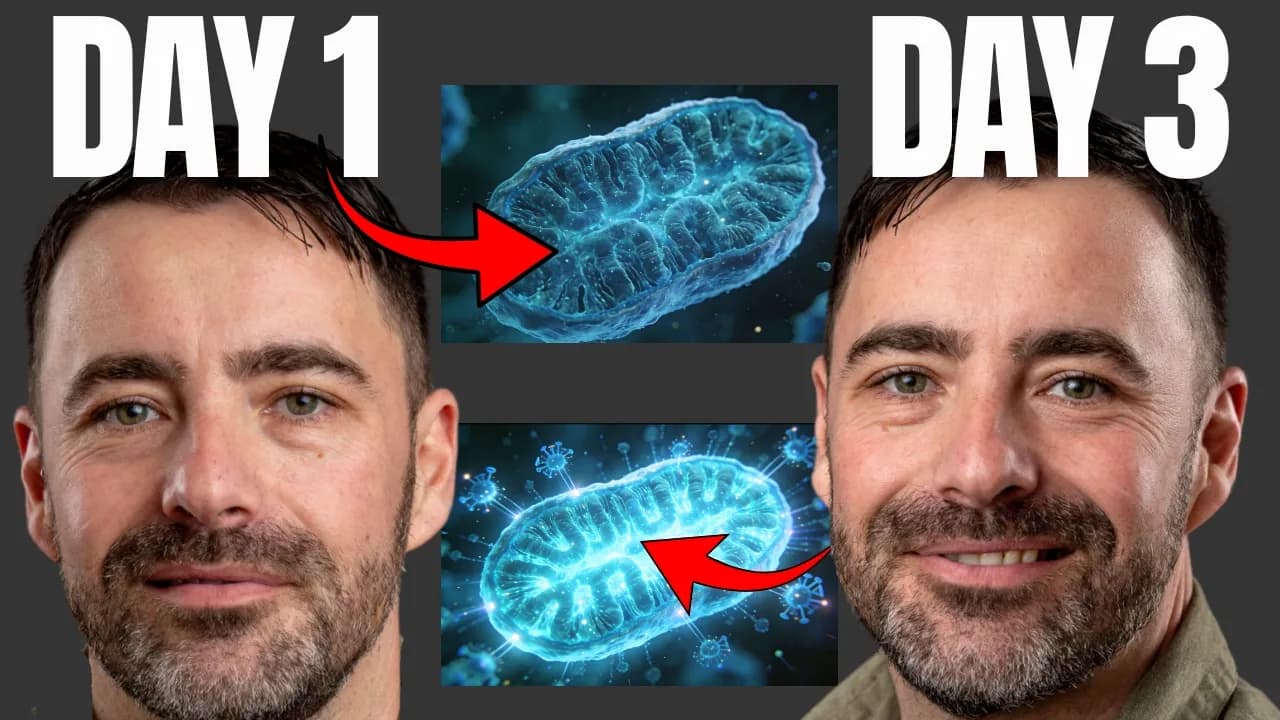
The little wings seen in images are called cristae. The cristae is where the food eaten and oxygen breathed end up. This is where electrons are flowing through little electrical circuits. As electrons flow, mitochondria become charged like little batteries.
A mitochondrion has sites of oxygen consumption and food consumption that get transformed into a little charged battery. Once charged, mitochondria can use that charge to make ATP, adenosine triphosphate, which is the cellular energy currency.
If a cell wants to contract, a muscle cell needs ATP. It calls upon the mitochondria, which get to work flowing electrons, consuming food, and burning oxygen, which is why people get out of breath. When out of breath, mitochondria are using oxygen and calling for more oxygen.
Mitochondria do a lot more than just making ATP. They use their energized state to produce signals, receive information, and produce signals.
Mitochondria are talking to each other. They form a whole collective, monitoring what's happening inside and outside the cell. On the surface of mitochondria are little receptors for signals that tell the mitochondrion if there's enough energy, if energy is running out, or if there's a stress hormone indicating something dangerous.
Mitochondria are like a little distributed brain, the intracellular brain.
Mitochondria used to be bacteria. About 1.5 billion years ago, there were two different types of bacteria. One type could use oxygen to transform energy. The other type was anaerobic and could only ferment its food.
The anaerobic bacterium was probably a little bigger with more genes. The big one either engulfed the small one, or the small one infiltrated and colonized the big one. This gave a whole bunch more energy to the big cell.
The favored version based on evidence is that when mitochondria came in, they gave the ability to perceive the environment differently and compute information differently. Mitochondria made the big cell social. Before this event, cells were asocial, operating from a selfish perspective trying to replicate and survive.
When mitochondria came in, it gave cells a different view on life, leading them to work together with division of labor. Some cells get energy, some move. Together they can do a lot more. This led to bodies with organs where the liver feeds the rest of the body, the heart keeps things flowing, and the brain computes and plans.
Most diseases or disorders can be explained by understanding energy resistance. Diabetes is the clearest example. Diabetes affects millions in the world and is fundamentally a disease of energy resistance.
If resistance is too high because too much energy is pushed onto the system, like too much sugar or glucose, or if mitochondria are impaired and can't flow energy, then energy is stuck. It faces greater constraints.
This is like water flowing nice and smooth, then encountering a dam. If the dam has zero openings, water accumulates with high pressure. Eventually the water accumulates, floods the landscape, and damages things.
If floodgates on the dam are opened, energy can be used to make electricity. The movement of water transforms into electricity. Mitochondria do this basically. If moving and physically active, the flow of energy through mitochondria can transform into work, speed, movement, and lifting.
Cancer is linked to energy resistance. If looking at the biology of cancer and the hallmarks of cancer, there are about 10 core features, and all of those features have some relationship, some very direct, with increased energy resistance.
If energy can't flow smoothly and a cell is burning too much energy and doesn't flow energy through the mitochondria, which is what cancer cells do, cancer cells ditch their mitochondria and revert back to this ancestral cell that didn't have mitochondria. It was anaerobic, spitting out lactate. This is called the Warburg effect.
Cancer cells say they're not going to use their mitochondria even if there's oxygen and even if mitochondria can respire. By doing this, cancer cells revert back to the ancestral cell that just cares about itself, becoming an antisocial cell.
The organism in the tumor will try to make more blood vessels around it, called angiogenesis. The cancer cell is trying to decrease energy resistance by calling for more oxygen.
Energy resistance is the product of two things: how much energy is being demanded, like how much power is being deployed in the tumor or working muscle, and how much energy can flow through the system, like current in an electrical system.
If there's a lot of demand, a lot of power being generated or activity happening like in a cancer cell, but not enough flow to support that activity, then resistance increases.
The transcript ends mid-sentence with the question about understanding how cancers are caused and what causes the moment where
The cancer community used to think that dominant driver for cancer was genetic mutations, but there's an emerging perspective that changes in metabolism, changes in the way electrons flow through energetic circuitry through the mitochondria, can actually drive the instance of a new cancer cell. When a cell becomes cancerous, it ditches its mitochondria and goes back to a selfish state, making more of itself.
Every cell in the body is in a social contract with every other cell, preserving the life and health of the whole being. A cancer cell gets out of this agreement and says it's going to fare for itself, take all the energy it can, and make more of itself, going into bacterial mode. This happens sometimes because of mutations, and other causes like hyperglycemia.
Hyperglycemia refers to high blood glucose. Diabetes is a major risk factor for developing cancer. From an energetic perspective, the increase in blood glucose increases pressure with more electrons being pushed onto cells or mitochondria. When too much energy is pushed on a system that doesn't need energy, it's like trying to shove a lot of water through a very small pipe.
Insulin resistance is a protection mechanism when too much glucose is being pushed onto the cell. This causes excess energy coming in, and the cell damages the mitochondria through this excess resistance because there's too much heat produced, reactive oxygen species, and oxidative stress.
In cigarette smoke, there are carcinogens that are molecules that can damage the genome and cause mutations. There's a strong link between lung cancer and smoking, but for all other cancers, there's much less of a clear connection between exposure and cancer. Obesity, high blood glucose, and diabetes especially cause very high spikes in blood glucose that are damaging to cells.
Biology processes energy in terms of resistance. It makes computations about how much energy is flowing now, how much energy demand, and how much energy pressure is being exposed to. If there's an imbalance, that causes damage.
Rather than being innocent bystanders, mitochondria are hijacked by cancer. The tumor re-programs them to stop acting like the body's protective energy factories and starts using them as a manufacturing plant to build more cancer cells. Targeting mitochondrial metabolism has become a major promising frontier in developing new cancer therapies.
In a normal cell, behavior is driven by the mitochondria, which are in the driver's seat. Mitochondria can call the shots about whether the cell is to live and divide, contract and remain the same kind of cell, or whether it's a stem cell to divide or remain a stem cell, or whether it's to die. Cells have to make these decisions all the time.
Cell suicide for the greater good happens all the time in bodies. When a cell defects from the social collective, the organism has the wisdom to say this is no longer ours and get rid of it because it could become cancer. Most of the time that works well. Cancer cells ditch their mitochondria and start to use them for their own growth. By ditching their mitochondria, they immunize themselves against the death that mitochondria could trigger. Mitochondria have a veto on cell life or death, and cancer somehow is able to get away from that.
Eating sugar in excess increases probability of cancer because it does something to energy systems causing malfunction somewhere. If you overload your body with excess energy, the body has to deal with this. In a simple electrical system circuit, if voltage is jacked up and the system is too weak to take this, then resistance goes through the roof, transistors start to melt, and the system gets damaged.
If you overload the system with too much energy, too many electrons, there's a very direct parallel with the electrical circuit. Electrons get stuck on glucose molecules. If ingested, this increases voltage in the body. If mitochondria can't keep up because they're not flowing energy due to being sedentary, then that increases resistance. The clear connection is too much energy equals increased energy resistance. Then electrons that normally flow smoothly in metabolism from food to mitochondria face resistance at every point in the cascade, increasing the chance that electrons jet out and become oxidative stress.
Hair graying is reversible. Aging is not this linear progressive decline with nothing that can be done about it. Hair contains biological history crystallized in it, like tree rings. If someone had a drug a month ago or 6 months ago or 2 years ago, depending on hair length, the hair can be used to find the chemical signature of what was taken.
Physical evidence from multiple people showed white hairs can go back to being dark, contradicting the idea that aging is a linear progressive process without flexibility. One participant found five hairs with the pattern of reversal happening when going on vacation during annual cycling training camps where all that was done was biking, eating, and sleeping.
The main signal found was a mitochondrial signal. In white hair, there was more mitochondria, not less. There was an upregulation where the hair follicle where the hair was becoming old wasn't letting go of things but doing more. When cells become old instead of just dying, they struggle. When a cell has damage in DNA or mitochondria not working properly or accumulates damage and becomes old, the cell struggles to make more mitochondria and tries to compensate, ending up wasting a lot of energy in the process.
Stress hormones like cortisol can make a cell struggle. Cells interpret cortisol as a signal that there's something dangerous in the environment, preparing for fight or flight. An experiment found that the stress hormone increased energy expenditure at the cost of life by 60%. When stressed, cells use 60% more energy, though in whole bodies the energy expenditure increases somewhat due to buffering systems.
A hair pigmentation pattern from a young Asian woman showed a hair that was dark, became white for 2 cm, then completely regained color and became darker than before. This transition from white to dark happened in just about a week. A stress graph was developed with the Y axis as most stressful thing that ever happened (10) to no stress at all (0), and the X axis as time from a year ago to now.
The stress graph correlated perfectly to hair going gray. For one participant, the most stressful 2 months involved finishing a PhD thesis while jobless, breaking up with her boyfriend, traveling to Europe, and family drama. There's a window of opportunity where a hair slowly accumulates damage and becomes more energetically inefficient with more energy resistance, then hits a threshold and loses color. If something changes in the body like going on vacation or intermittent fasting, more energy becomes available and color can be reversed by going back up against that threshold.
If going through life with a more resilient mind and not mounting a stress response to bad news, mitochondria use less energy because there's less cortisol. It's not the stress that burns people down, it's the response to stress. Nothing is free in biology. For the heart to beat a little faster when mounting a response, energy is being burned. Tensing shoulders burns energy. The brain going into rumination mode, anxiety, and sweating all cost energy.
The sequence of events is: getting a bad email, which goes into psychology and mind, creating a story about what it means, causing a physiological response of chemicals like cortisol, which goes into cells and mitochondria that have to work harder or use more energy, ultimately meaning more tiredness because of finite energy per day. The key solution to cutting that sequence of events that ends up draining energy is to become aware of it. Awareness and somatic awareness or interoception allow interrupting the chain. People who study contemplative practices, meditation, and mindfulness approaches think this awareness is key.
Acute stress is just feeling a little spike but being fine 5 minutes later, which is normal and useful. Chronic stress is waking up every day with the same feeling of stress deep inside for many days or weeks in a row, which can cause a lot of damage. This brings back the concept of how energy is flowing through the body. If it flows with not enough resistance, survival isn't possible, but if there's too much resistance, then energy gets drained.
When starting to exercise, there's increased resistance in muscles as they're contracting, and also energy resistance. Energy is trying to flow through the muscle, and if there are just a few mitochondria and muscles are contracting really hard during sprinting or interval training, mitochondria don't have capacity to flow as much energy as the muscle is asking. This is an imbalance of demand to flow capacity. The product of this demand divided by flow capacity is resistance. If demanding a lot of muscle during sprint but not having a lot of mitochondria, it feels terrible because resistance creeps up, muscle becomes really hot, there's inflammation, burning, and discomfort. This is an acute bout of energy resistance. The benefits of exercise don't happen during the exercise, they happen after during recovery.
When resistance decreases in the system, the cell responds by preparing for future energy demands. A sedentary individual who trains for a marathon can double the amount of mitochondria in their muscles. This adaptation occurs because the system experiences increased resistance and responds by building capacity for the next time. The benefits of exercise come from these energy spikes, and stress is not intrinsically bad because a spike of stress stimulates the body to implement long-term efficiency improvements that decrease resistance.
Gray hair represents the last domino to fall - the symptom rather than the cause. The first domino involves understanding the sequence of events leading to gray hair in the follicle. There's a finite energy budget in the body, and the organism allocates energy like a business allocates resources. When stress occurs, energy gets pulled away from processes that keep you young.
The body operates with a hierarchy of energy needs similar to Maslow's hierarchy of human needs. Maslow's framework states that safety, food, and shelter must be secured first before building relationships, then developing skills, and finally pursuing self-actualization. When constraints appear, the top of the pyramid gets sacrificed first. Hair color ranks low on this hierarchy, so when cells become less efficient with age, inflammation increases, and various stressors stack up, energy gets diverted away from growth, maintenance, and repair processes.
When facing a perceived life-threatening stressor like a lion chase, the body commits all available energy to survival. This means sacrificing repair processes such as skin maintenance near the eyes, leading to wrinkles, and diverting energy away from hair follicle pigment production. The visible signs of aging occur because energy has been allocated to higher-priority survival functions.
Presidents often enter office with dark hair and leave with gray hair after just eight years. Football managers in the Premier League show similar patterns - appearing sprightly on their first day but developing gray hair, bags under eyes, and wrinkles within two years, appearing to have aged ten years.
The real secret to anti-aging lies in proper energy allocation. Avoiding energy waste from stressing about the future and past, and spending more time in the present without overreacting, allows more precious energy to flow toward anti-aging processes. However, simply eating more does not provide more energy or slow aging.
Efficiency can be improved through exercise, which increases energy resistance temporarily but triggers adaptation. During recovery, the body makes more mitochondria, muscles grow stronger, the heart becomes more efficient, arteries become softer, and inflammation decreases. These changes reduce the energetic cost of activities, making more energy available for anti-aging, growth, maintenance, repair, and vitality.
Alcohol functions as a toxin that costs energy to metabolize and eliminate. Studies measuring energy expenditure show that after alcohol consumption, energy burning increases significantly even while sitting. The detoxification systems in the liver break down ethanol, consuming energy in the process. Other toxins like pesticides likely work similarly by stealing energy away from growth and maintenance processes.
Children exposed to more pathogens due to poor sanitation experience increased energy costs fighting infections. When fighting a flu, immune cells go into overdrive, stealing energy from the brain and causing sickness behavior - feeling cold, wanting to stay in bed, becoming antisocial, and avoiding movement. These behaviors represent energy conservation strategies.
Chronic states of energetic distraction occur when energy gets reassigned from fundamental flourishing requirements to dealing with invaders or stressors. With fewer resources available for core functions, processes like hair pigmentation, skin repair, brain function, and immune system maintenance may be compromised. Quality control cycles that normally clear damaged proteins, repair DNA, and create new mitochondria through mitophagy may be affected.
Alzheimer's and dementia are not primarily caused by amyloid plaques and tau tangles as traditionally believed. People in their 60s, 70s, and 80s can have zero protein deposits yet full-blown dementia, while others with abundant plaques maintain normal cognition. The actual process involves early hypermetabolism where specific brain regions burn more energy trying to compensate for dysfunction, followed by hypometabolism when these regions become exhausted and symptoms appear.
Inflammation in the brain triggers stress responses that secrete cytokines, signaling for repair processes. This healing costs energy, similar to how muscles invest energy post-exercise. The early hypermetabolic phase involves increased energy expenditure, eventually leading to hypometabolism where brain regions burn less energy, affecting memory, associations, planning, emotional regulation, and mood.
Alzheimer's represents a disorder of increased energy resistance. The term "type 3 diabetes" reflects how glucose struggles to enter the brain when the system becomes overwhelmed. Excessive glucose loading creates pressure that damages mitochondria through electron flow and sparks, leading to accumulated damage, mutations, and defects that characterize aging.
When mitochondria reach capacity for handling energy flow, muscle cells become insulin resistant by removing surface receptors. This protects cellular mitochondria from excess energy pressure but causes blood glucose to rise. Obesity then serves as a protection mechanism against excess energy resistance by storing surplus energy as fat.
Physical inactivity increases Alzheimer's risk by preventing energy flow through mitochondria. Protective factors include physical activity, avoiding excessive sugar consumption, and ketogenic diets. Ketones enter the brain more easily than glucose and can improve cognition by allowing electron flow without the resistance associated with glucose overload.
Mitochondria in the liver communicate with and feed mitochondria in the brain. The pathway for ketones to reach mitochondria is much shorter in terms of number of enzymes and energy resistors compared to glucose, which has a very long pathway. Ketones are difficult to overwhelm the brain with, unlike glucose which can cause overload.
Ketones are difficult to overwhelm the brain with, unlike excess glucose. When sugar is mixed with fat, foods become highly rewarding, leading people to eat for reasons beyond hunger. This is why GLP-1 drugs are powerful because they address overeating at its source by regulating how much food enters the system.
Indigenous groups like the Hadza hunter-gatherer tribe in Tanzania and rural agrarian populations like the Yoruba show exceptionally rare cases of Alzheimer's and vascular dementia. This points to Western diets and lifestyles as contributing factors. These populations move constantly and don't overeat, avoiding excess energy storage.
Some people have congenital leanness where they cannot accumulate fat. When they overeat high sugar or high fat, excess energy accumulates in the blood and gets stored in ectopic locations like muscle, liver, or brain, causing damage from excess energy pressure and system overheating.
Visceral fat, stored around internal organs, is linked to increased inflammation and various diseases. However, visceral fat is a symptom rather than the root cause. Obesity reflects a deeper state of increased energy resistance where mitochondria cannot keep up with energy flow, leading to protective fat storage.
Ketones provide high-quality, steady focus without crashes, unlike caffeine. The brain runs more efficiently on ketones than other fuel sources. KetoMojo IQ offers ketone supplementation that fuels rather than stimulates the brain.
Cometeer flash-freezes coffee to lock in flavor. They source from locations worldwide including Honduras, Panama, England, USA, Italy, and France. No machines are necessary for preparation.
When eating, consider mitochondrial needs rather than weight or body image. Ask whether you're depleted or tired from excess energy pressure on mitochondria. It's much harder to deplete mitochondria than to overload them with too much food. Not eating enough is typically innocuous for most people because the body has energy stores.
The body stores glycogen and glucose in muscles and the liver. When running low, the body can metabolize fat to produce ketones. Most people have enough energy stored as fat, plus glycogen, to survive at least a month without eating. The world record for not eating is over 300 days, achieved by an Irish man who lost 250-300 pounds.
Many people eat not from hunger but to serve other needs. Eating taps into reward systems similar to gambling and social connection. Hunger should be viewed skeptically because pathways from sadness, boredom, and stress converge on hunger sensations. Most people overeat, making this a safe general assumption.
Restricting eating windows makes overeating more difficult. A severe 4-hour window (2:00 p.m. to 6:00 p.m.) works well for people with overeating habits. This allows social eating with partners while maintaining metabolic efficiency.
The belief that breakfast is the most important meal originated from cereal and bacon advertising campaigns. Before the industrial revolution, breakfast wasn't heavily scrutinized. Harvey Kellogg promoted grain-based diets to cure indigestion caused by heavy breakfasts among sedentary office workers. As people age into their 60s and 70s, metabolism changes, and constant eating prevents the body from entering an efficient state.
People who switch from three meals plus snacks to intermittent fasting report more energy despite consuming fewer calories. Energy perception comes from flow and transformation rather than total amount. The body accumulates poorly functioning mitochondria when constantly eating, creating friction and inflammation throughout the body.
For optimal daily performance, use a smaller eating window, eat only what is needed without overeating or undereating. Overeating today impacts performance today, while undereating can be compensated for tomorrow.
During illness, the immune system enters defense mode and drains energy from cognitive functions. Heart rate increases significantly (from 60 to 110 bpm at rest) while fighting infection. Despite higher metabolic rate, individuals feel drained because energy is redirected to immune function rather than mental processes.
Energy coherence determines mental function quality. Like a laser versus incandescent light bulb, the same amount of energy produces vastly different results based on coherence. A laser focuses photons in phase for maximum power and distance, while diffuse energy spreads in all directions with limited reach.
During cash flow stress in growing businesses, motivation can disappear despite responsibilities to hundreds of employees. This represents chronic energy deficit rather than character failure. When stress resolves, motivation and purpose return to focus.
When team members focus on the same goal, success increases dramatically compared to pointing in different directions. OKRs create coherence by directing all energy toward specific problems. Purpose focuses energy like converting diffuse light into laser coherence.
Steve Jobs operated at 80% signal to 20% noise ratio, focusing on the top 3-5 critical tasks for each 18-hour period. Elon Musk operates at 100% signal with no tolerance for noise. Signal represents the most urgent tasks that must be completed regardless of distractions.
Steve Jobs was remarkably focused, treating focus as a minute-by-minute practice rather than a Monday decision. This approach enables achieving significantly more when truly focused on current priorities.
Focus is not a Monday morning decision or an aspirational state. It is a minute-by-minute commitment to the task at hand. When truly focused, people can achieve far more than when they spread their attention across multiple interests.
Steve Jobs would challenge team members by asking how many things they had said no to. The key distinction is that real focus requires declining opportunities that feel phenomenally compelling, not just rejecting things one was never interested in anyway.
The principle of resonance explains how intense focus amplifies success. When someone walks through life with clarity about truth and direction, they become a resonator that broadcasts this energy pattern through their actions, emails, speech, tone of voice, and attention patterns.
This energetic coherence becomes visible to others as what people call the "founder's vibe" or "entrepreneur's vibe." People are drawn to a pure signal, like a well-tuned symphony, and this draws collaborators who amplify the original energy.
Steve Jobs' famous "reality distortion field" (RDF) was a term coined by Apple software engineer Bud Tribble in 1981 to describe Jobs' ability to convince everyone around him to believe practically anything. The RDF combined intense charisma, unyielding willpower, and persistence in a particular direction.
Apple engineer Andy Hertzfeld recalled that when told a task would take 6 months, Jobs would insist it could be done in 2 weeks. Engineers would often accomplish this due to the force of his conviction. Bill Gates remarked that Jobs was "casting spells" while Gates felt like "a minor wizard" watching people become mesmerized.
Great leaders hold a vision so strongly that they mobilize others toward it. When approaching human beings, including his 6-year-old son Noah, the speaker sees people as energy patterns flowing through physical bodies.
Parenting and leadership both require providing the right amount of resistance and constraints. Too few constraints leads to poor development, while too many traumatizes the system. The art lies in providing appropriate structure so energy has challenges to work through.
Worthwhile goals function as magnets for energy. The moon landing goal pulled energy toward it, and similarly, setting worthwhile goals as a company leader attracts people and energy toward the objective. Unworthy goals fail to attract energy.
A Chicago study examined whether purpose correlates with mitochondrial efficiency in the brain. Participants completed questionnaires about purpose, connection, and optimism over multiple years, then researchers analyzed their brain mitochondria after death in the dorsolateral prefrontal cortex.
People who felt more purpose had mitochondria with greater energy transformation capacity and lower resistance. The relationship works both ways: purpose can improve mitochondrial function, and mitochondrial function can affect how purposeful someone feels.
Animal studies demonstrate this bidirectional relationship. Chronically stressing mice changes their brain mitochondria, and altering mitochondrial function changes their anxiety levels, social interactions, and dominance behaviors.
When people lack purpose, mitochondrial inefficiency develops, leading to fatigue, burnout, and loss of enthusiasm. Johann Hari's research on depression found that some cultures treat depressive symptoms by providing purpose.
Most depression appears to be a loss of coherence. A protein marker called GDF15 reflects energy friction and resistance when mitochondria cannot flow energy smoothly. This marker is elevated in cancer, Alzheimer's, diabetes, hypertension, and heart disease.
A study measured GDF15 levels during a stress-inducing scenario where participants had to defend themselves against a false shoplifting accusation. The marker increased significantly from mental stress alone, without physical exertion.
GDF15 travels to the brainstem's area postrema (the vomiting and nausea center), where the brain interprets it as an energy shortage. This triggers two responses: conserving energy (leading to loss of motivation and depression-like behavior) and mobilizing energy stores (increasing blood glucose and lipids).
UK Biobank data shows that people with high GDF15 levels are more likely to develop mental illnesses (bipolar disorder, depression, schizophrenia), cardiovascular disease, hypertension, and have higher mortality rates over 14 years of follow-up. They also tend to avoid physical activities like taking stairs or walking for pleasure.
GDF15 increases throughout the day, suggesting sleep serves to reduce energy resistance. The pattern involves natural cycles of increasing and decreasing resistance rather than maintaining one optimal level.
Lifestyle factors that prevent excessive GDF15 include avoiding extreme stresses, overeating, undereating, and oxidative stress. Living more aligned with human evolutionary patterns—connecting with others, eating natural foods, spending time in nature, and reducing screen time—provides a simple framework for reducing chronic stress.
While methylene blue may give electrons to mitochondria and potentially relieve energy resistance, and NAD+ is the best-supported intervention for reducing inflammation while serving as an electron carrier, the speaker leans away from relying on supplements as magic solutions. The concern is that seeking shortcuts prevents bringing awareness to one's actual state and needs.
Most people are not NAD+ deficient, suggesting supplementation may not be necessary for everyone.
Most people are not deficient in NAD+, so giving more to the system might not help, but for reasons that are not fully understood, it seems to help some people and makes people feel more energetic. NAD+ is typically taken as oral supplements that are precursors to NAD. Eating NAD directly does not have good bioavailability and does not get into cells very well. NAD+ can be injected or infused intravenously, and that gets to cells better. This is not an approved or recommended medical intervention, but people with mitochondrial disease have reported it helps them, and normal healthy people have also reported feeling more energy.
Urolithin A is a new compound that seems to stimulate the degradation of bad mitochondria. Cells contain thousands of mitochondria, and some are always getting old and eventually degraded, especially during fasting. When a cell is starved, it degrades the least functional mitochondria. There is a selection process inside the cell to identify which mitochondria are bad versus good. The bad mitochondria get targeted and degraded during fasting or exercise.
Urolithin A appears to accelerate this process of mitophagy, the degradation of bad mitochondria, so that the cell has to make more of the good ones.
Clinical evidence for urolithin A has rapidly expanded over the last few years, transitioning from compelling animal data to highly rigorous placebo-controlled human clinical trials. The human research confirms that urolithin A targets mitochondrial dysfunction and systemic inflammation. A 2022 study published in JAMA Network Open involved adults aged 65 to 90 who received either placebo or urolithin A for 4 months. The group given urolithin A showed statistically significant improvements in muscle endurance and a reduction in biomarkers of mitochondrial inefficiency.
The speaker does not take any supplements and is skeptical of new supplements that claim to cure mitochondrial dysfunction. Mitochondria have dozens of functions, and the term mitochondrial dysfunction is considered misleading. There was significant hype about NAD, coenzyme Q, CoQ10, anti-inflammatory berries, and antioxidants 10-20 years ago, which turned out not to be as useful as claimed. Excessive antioxidants can actually impair normal adaptation and signaling.
Urolithin A feels like the next fad, though the science appears fairly compelling. The speaker trusts the wisdom of the body and mitochondria more than pharmaceutical companies trying to sell supplements.
Trusting the wisdom of the body means recognizing that humans are the energy flowing through their bodies and that humans are a piece of nature. Across the animal kingdom and living kingdom, things heal. In biomedicine, the focus is on diseases and studying when things go wrong, with attempts to understand the molecular features of diseases. There is not really a science of the healing process. The basis of health requires continuous healing, repairing damaged DNA, repairing old mitochondria by getting rid of them and making new ones, and preserving the wholeness of the system. To heal means to become whole again.
Even when sitting in a dark bunker with no sunlight, healing is still possible. However, optimal environments support better recovery. Research shows that putting plants in hospital rooms helps patients recover faster. Studies have examined windows with natural light and views of nature, finding that patients recover better. There is good data on nature exposure helping recovery, though it is unclear whether this is due to slightly more oxygen in forests, phytochemicals produced by plants, or simply seeing green and being in an environment that matches what humans evolved to be around. Nature exposure helps calm the body and improves recovery.
Red light therapy is discussed as a support for mitochondria. There are hundreds of different devices including helmets, hairbrushes, and bands. Light is energy, and energy is the potential for change and the capacity to change something. Red light, especially infrared that cannot be seen with the eye, can penetrate tissue, going through hair and skull into the brain, where it appears to change metabolism.
The best hypothesis is that for light to do something in biology, there needs to be something in biology that resonates with it. The receptor or antenna for red light seems to be mitochondria. There is something in mitochondria where electrons flow and meet with oxygen to become metabolic water, specifically involving cytochrome c oxidase.
When red light is applied near the skin without needing to touch it, the light goes into the mitochondria of cells and helps mitochondria become more efficient. However, there is concern that red light therapy might offset the natural order that the body has created. The organism is a beautiful dynamic equilibrium where mitochondria transform energy, genes are expressed, and cells perform their functions in a balanced way. When the system is out of balance, signals like inflammation indicate energetic imbalance that turns into molecular-level signals, and the system tries to come back into balance.
It is possible to have too much red light. Phototoxicity is a real concern, and staying too long in intense red light beds is probably not good. A compelling study published last year on blood glucose regulation found that shining red light on the back of people as they ingested a large amount of glucose resulted in a smaller spike in blood glucose. The study measured mitochondrial metabolism through the mouth by measuring oxygen coming in and CO2 coming out. People who had red light on their back had slightly higher metabolism, with increased electron flow through mitochondria. This may explain why glucose did not spike as much, because electrons that came into the blood were able to flow through the mitochondria. This supports the idea that energy modalities outside of ourselves, including light or electromagnetic fields, affect metabolism.
Red light therapy follows a bell curve model. A 2009 study found that low to moderate doses of light perfectly stimulate mitochondria to produce ATP and a healthy small burst of ROS (reactive oxygen species) to trigger cellular repair. However, when the dose is pushed too high, the light creates massive amounts of reactive oxidative species, and this excess oxidative stress overwhelms the cells' antioxidant defenses, completely shutting down mitochondrial respiration and inducing cellular apoptosis (cell death) instead of healing.
This bell-shaped relationship is seen in many domains of biology and physiology, similar to exercise. A workout of half an hour, an hour, or two hours can be beneficial for a well-conditioned athlete, with recovery occurring over 23 hours afterward, making the person more efficient. However, working out for eight hours is not good. The organism has worked out through evolution and through individual life and development to find the optimal sweet spot.
Living in alignment with the body's signals is important but easier said than done. There is a lot of noise in the external environment that makes it difficult to listen to internal signals.
A breath-holding exercise demonstrates how the body experiences energy resistance. Participants close their eyes, feel gravity pulling the body down, take a breath in and out, then hold the breath with empty lungs for as long as possible while paying attention to sensations emerging in the body. The longer the breath is held, the more intense the sensations become.
During this exercise, participants reported feeling vibrations and waves going across the body, becoming very aware of their heartbeat, and feeling energy moving through the body. Near the end, when breath could no longer be held, participants felt uncomfortable sensations like starving for oxygen and air.
Mitochondria consume oxygen continuously, every millisecond, and produce CO2 (carbon dioxide). Humans evolved to feel signals of oxygen depletion very sensitively. The subjective experience of holding one's breath is an experience of energy starting to stall. Without oxygen in mitochondria, electrons have nowhere to go, creating extreme levels of resistance.
The most extreme case of energy resistance most people are familiar with is a heart attack. During a heart attack, blood flow can no longer bring oxygen to mitochondria in the heart. Electrons that normally flow freely onto oxygen from food suddenly have nowhere to go. This causes electrons to backflow, which causes oxidative stress and damages the heart. This process feels extremely aversive.
Living life with just 5-10% of the horrible feeling experienced during breath-holding may be what some mental illnesses feel like. There is interesting data showing that injecting people with lactate, a signal of energetic stress, can trigger a panic attack. This is not done by messing with brain neurochemistry directly but by injecting the body with a signal that mitochondria cannot keep up with energy flow, tricking the body into thinking energy resistance has been increased to very high levels.
This feels like anxiety. People with traumatic memories and PTSD can have traumatic memories reawakened by simple injection of lactate. There is an emerging notion in psychiatry called metabolic psychiatry, where mental illnesses are understood as energetic disorders of the brain. In chronic states of ill being where people do not feel well, including hypervigilance and anxiety, part of this may be driven by energy not flowing properly, with the body living in high energy resistance all the time.
Data from McLean and Harvard directly measure energy resistance in the brain, and lactate tends to be elevated in people with mental illness. The marker GDF15 is also elevated in mental illness.
Lifestyle factors including purpose and exercise help with mental health, but changing life circumstances is really hard. Exercise helps many people, but many people do not feel they have the capacity to exercise. Ketones seem to be life-saving for some people. Going on a ketogenic diet has been life-changing for dozens of individuals whose lives were crushed by schizoaffective disorder, bipolar disorder, and major depressive disorder. These individuals were treatment-resistant, meaning pharmacotherapy was not helping and in some cases was making things worse with difficult side effects.
After changing their diet, cutting all sugars, and going on a medical ketogenic therapy while monitoring ketones, many people reported that this was life-changing. The first thing many people notice is having more energy. However, the ketogenic diet does not work for everyone, and it is not known why.
People respond differently to medications and interventions even though they are supposed to work the same for everyone. The science used to get knowledge to inform lives is almost entirely a science of averages. The highest gold standard studies are RCTs (randomized controlled trials). In an RCT with a thousand people, 500 are randomized into a normal diet group and 500 into a ketogenic diet group. After two months, depressive or anxiety symptoms are assessed, the groups are compared by averaging the 500 people together, and means are compared.
Many clinical studies are skewed toward men, and findings do not always apply to women. Women have been treated like little men in research, assuming everything applies when biology is actually entirely different. This is why nuances of gender, origin, biology, and DNA need to be considered.
When examining clinical studies and RCTs closely, some people are amazing responders who are cured and have no symptoms, some people do not respond at all (non-responders), and some people get worse.
The most commented and urgent questions from viewers concerned long COVID, ME/CFS (myalgic encephalomyelitis/chronic fatigue syndrome), and fibromyalgia. For patients with ME/CFS and long COVID, the standard advice given is to exercise for mitochondrial health, but for these individuals, exercise often triggers severe crashes. The question concerns what is happening at the cellular level when the energy budget is broken and how these individuals can safely rehabilitate their mitochondria without causing further damage.
An estimated 3 to 5 million people in the US, 2 to 3 million in the UK, and 20 to 24 million worldwide suffer from myalgic encephalomyelitis/chronic fatigue syndrome (ME/CFS) or long COVID. These patients experience chronic fatigue and low energy, yet blood work often appears normal, creating a disconnect between measurable biochemistry and subjective experience.
Doctors struggle to help these patients because they lack diagnostic tools and effective treatments. The common recommendation of exercise often backfires, causing patients to worsen. Studies show that energy resistance and energy friction signals increase dramatically after exercise in chronic fatigue patients, leading to post-exertional malaise. The marker of energetic stress, GDF15, can travel to the brain and induce feelings of nausea and tiredness, similar to how immune system cytokines create sickness sensations during infection.
A key study published within the last two years examined muscle biopsies from the quadriceps of people with chronic fatigue syndrome. Researchers found that mitochondrial energy transformation capacity was significantly lower in these patients. When mitochondria cannot properly flux energy, individuals feel they lack the capacity to exercise or push themselves physically.
A family friend shared her experience of recovering from chronic fatigue syndrome. In her twenties, she was debilitated, unable to work, and spent multiple hours daily in bed. Her life felt completely disrupted. One summer, she had a brief affair with a visitor from Hawaii. She reported that her chronic fatigue lifted without any medical intervention, and she never experienced it again.
Chronic fatigue often involves a precipitating trigger such as immunization, infection, parasite exposure, or mold poisoning. Sometimes there's a lingering condition followed by an acute trigger, after which the body struggles to fully recover. The story of recovery through human connection illustrates that hope itself can maintain an optimistic mindset even when circumstances appear stacked against recovery.
Patients with genetically defined mitochondrial diseases experience daily discomfort comparable to holding one's breath for too long. Those who lose hope tend to deteriorate physically and often die earlier. In contrast, patients who maintain hope and find something they love, supported by family environments, tend to fare better despite their mitochondrial limitations.
Human interactions through sound, physical contact, and emotional exchange create energetic resonance. Love represents the experience of resonance with another person. These energetic interactions between individuals can influence health outcomes and recovery.
Any activity that increases breathing rate indicates mitochondria are working harder. The optimal approach is individualized based on personal energy capacity and sustainability. For an untrained person, running 20 minutes every other day may be appropriate, while attempting a marathon would cause injury. The concept of mitoception involves feeling into one's mitochondria to determine what level of activity is sustainable.
Routine is developing a technology platform to help people tune into their mitochondria through mitoception. This would allow individuals to assess whether interventions like ketogenic diets, relationships, jobs, or life directions are energy-giving or energy-draining. The platform aims to provide an energetic GPS for making life decisions.
Important life decisions are often made based on how one feels rather than rational analysis alone. The energetic system serves as the most sensitive instrument for determining whether life choices align with individual identity. Many people report that rational decision-making without energetic consideration leads to negative outcomes.
Approximately one year ago, Martin Picard and his fiancée experienced a miscarriage at three months of pregnancy. They had been excitedly referring to the pregnancy as "new life." The miscarriage occurred at home, involving significant pain, bleeding, contractions, and emotional devastation. Picard initially experienced a victim mentality, questioning why this happened to him as someone trying to do good in the world.
Picard adopted the stance that there's something to learn from every experience. Two days after the miscarriage, while processing the grief, he wrote about his experience and asked what lesson it contained. The clear answer that emerged was "slowing down."
Throughout his life, Picard had moved quickly, completing his PhD rapidly and advancing to professor status. While this drive enabled achievements that might otherwise have been impossible, it also created problems. The fast pace hurt others around him and impaired his effectiveness as a leader by lacking sensitivity to people who moved at different speeds.
The lesson of slowing down created greater clarity about priorities and sharpened focus on what truly mattered. This shift has made Picard a better listener, more compassionate father, and more effective scientist. He acknowledges that this lesson might not have been learned through any other means.
Human beings are energetic processes shaped by the sum of experiences and relationships. Every interaction creates transformation. The miscarriage experience, though devastating, provided a lesson that fundamentally changed Picard's approach to life and leadership.
The discussion revealed that mitochondrial science extends far beyond cellular biology into philosophical territory. Energy is everything that determines life experience, business decisions, and human relationships. The conversation fundamentally shifted perspectives on how to preserve, conserve, and direct personal energy.
The primary resource for learning more about Martin Picard's work is martinpicard.energy, which contains information about his book, research, core energetic principles, animations, and the institute.
Keep The Diary Of A CEO in your library
Save the videos and channels worth coming back to, and find them again in one place.