How to Upgrade Your Mitochondria for More Energy
In a Nutshell
Mitochondria function as dynamic signaling networks whose health drives energy, aging, and inflammation; modern factors like obesity, processed foods, circadian disruption, and inactivity cause them to leak and trigger disease. Morning sunlight, ketogenic diets, and consistent exercise restore mitochondrial fusion/fission dynamics, enlarge mitochondria, and preserve youthful gene expression in muscle. Cutting-edge peptides SS-31 (stabilizes cardiolipin and is FDA-approved for Barth syndrome) and MOTS-c (exercise-induced mitokine that boosts endurance) plus emerging mitochondrial transplantation represent the next frontier for upgrading cellular power.
These notes were generated by AI and may contain inaccuracies.
People think of mitochondria as the powerhouse of the cell, but that view is incomplete. Mitochondria function as living, breathing, dancing signaling networks and trillions of hormonal factories interspersed throughout the body. How a person chooses to live their days and feed themselves determines everything about them as a human being at the most fundamental level, including how they age. The biological signatures that distinguish the longest-lived humans, the super agers, including a report of a woman who lived to 117, show that healthy aging features healthy mitochondria. Unlike a battery or car engine, mitochondria can heal, recover, and renew themselves. This renewal can begin immediately using free tools as well as cutting-edge performance-enhancing mitochondrial peptides and hormones.
The question is why people lose energy as they age and whether that decline is reversible. When one of the tools was used for a week, the result was feeling supercharged. The session will unpack the fundamental tools to reset and upgrade mitochondria for better health at the fundamental level, better energy, and better aging. The plan starts with the most accessible and free tools and then progresses to more experimental approaches.
Obesity, processed foods, circadian disruption, environmental pollutants, and physical inactivity represent the root causes of autoimmune and inflammatory diseases. When it comes to long-term mitochondrial health and overall health, the fundamentals are critical. In one example, Crohn's disease is described as the immune system attacking itself. When mitochondria become more powerful and efficient, their metabolic rate in fat tissue was more than twice as high, and there are a lot of mitochondria.
This video consolidates a series of Stay Curious metabolism letters covering dozens of papers into a single coherent story about upgrading mitochondria, rebooting and upgrading the body's batteries. For deeper fundamentals and primary literature, the Stay Curious Metabolism community on Substack is recommended. Subscribers call it the best investment they made in their health. One subscriber, Victor, stated: "I can't believe you provide 40,000 words of graduate level education for less than the cost of one run to Starbucks per month."
The roadmap is structured like mitochondria build ATP. Part one covers free and foundational tools for mitochondria: things done outdoors in the morning, in the kitchen, and in daily routine. Part two moves to more advanced mitochondrial peptides, including one that is FDA approved for mitochondrial disease and another remarkable mitochondrial-derived hormone. Part three provides a glimpse of the future of mitochondrial health.
Exposure to morning sunlight kicks off a mitochondrial dance. Mitochondria are not fixed static little batteries; they ebb and flow. They literally fuse together then break apart in a dynamic process known as fusion and fission. This mitochondrial dance of fusion and fission is critically important for maintaining mitochondrial function. When mitochondria fuse together, they effectively become more powerful and efficient. The fission part helps segregate out old damaged mitochondrial components so they can be broken down and recycled in a process known as mitophagy. By analogy, imagine if the batteries in a phone could merge together into a super battery when demand increased and then split apart to repair themselves. This process happens in the body with mitochondria trillions and trillions of times per day.
The balance between fusion and fission, building up and breaking down, is dictated by light and circadian rhythm. A paper out of Oxford last year, published from the department of physiology, anatomy, and genetics, identified the dance of mitochondrial fusion and fission as one of the key drivers of sleep. When researchers manipulate mitochondrial fusion and fission in animals, they can alter sleep drive and desire to sleep. The relationship is bidirectional: light regulates mitochondrial dynamics, and mitochondrial dancing and mitochondrial dynamics regulate sleep. The actionable insight is to get exposure to morning sunlight as best as possible, or if that is not feasible, use a 10,000 lux lamp, which costs approximately 40 dollars on Amazon. Minimize exposure to bright artificial light at night. This helps initiate and synchronize the mitochondrial dance, the mitochondrial fusion and fission dynamics, as part of an evolutionarily appropriate circadian rhythm, and in doing so likely helps preserve mitochondrial function and health over the long term, over years, over decades, across the whole body. Getting morning sunlight and minimizing exposure to artificial light at night is like getting an orchestra conductor to lead a harmonious symphony.
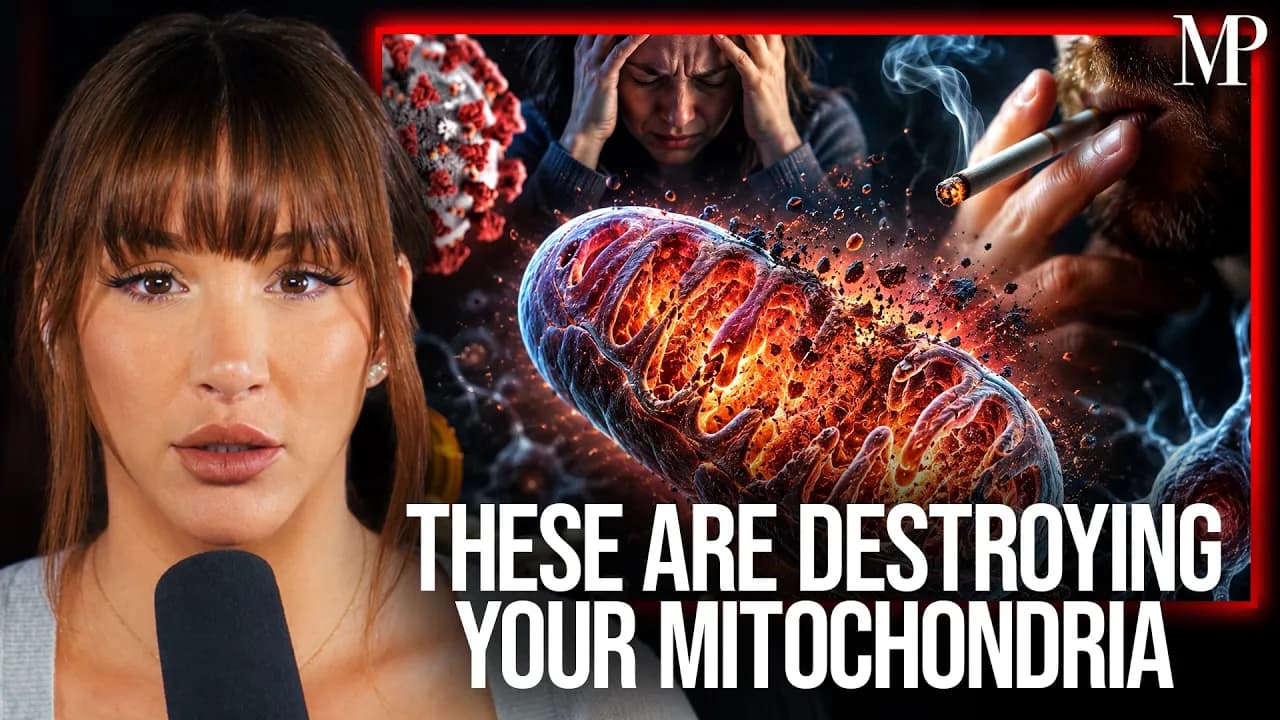
A paper published in Nature proposes that many autoimmune and inflammatory diseases stem from a breakdown of the ancient relationship between the body and mitochondria. Mitochondria were once free-living bacteria-like organisms that fused with cells roughly 2 billion years ago in a process known as endosymbiosis. Endo means within or inside, symbiosis means living together. Mitochondria are like ancient bacterial refugees that struck a peace treaty with cells billions of years ago. Because of their foreign origins, mitochondria still retain bacteria-like signatures that human immune systems can recognize as the other or invader. Normally mitochondria are kept safely within the cell, but under conditions of stress and dysfunction, mitochondrial contents can leak out and trigger inflammatory immune signaling. Researchers argue that this break in endosymbiosis, or leaky mitochondria, may be one of the root causes of inflammatory and autoimmune diseases including inflammatory bowel disease, lupus, rheumatoid arthritis, and multiple sclerosis. In other words, autoimmune diseases may represent a breakdown in the diplomatic relations between cells and their ancient bacterial energy partners, mitochondria.
What seems to drive leaky mitochondria in the first place are features of modern living: obesity, processed foods, circadian disruption, environmental pollutants, and physical inactivity. Routine trips to McDonald's may break open mitochondria causing spillage that triggers chronic disease.
When it comes to long-term mitochondrial health and overall health, the fundamentals are critical: sleep, exercise, avoiding environmental pollutants as best as possible, and eating a minimally processed diet. If foundations are not optimized, then finagling at the margins is like adding a multivitamin gummy onto a fast food diet. If foundations are nearly optimized, there may be ways to further top off mitochondrial function.
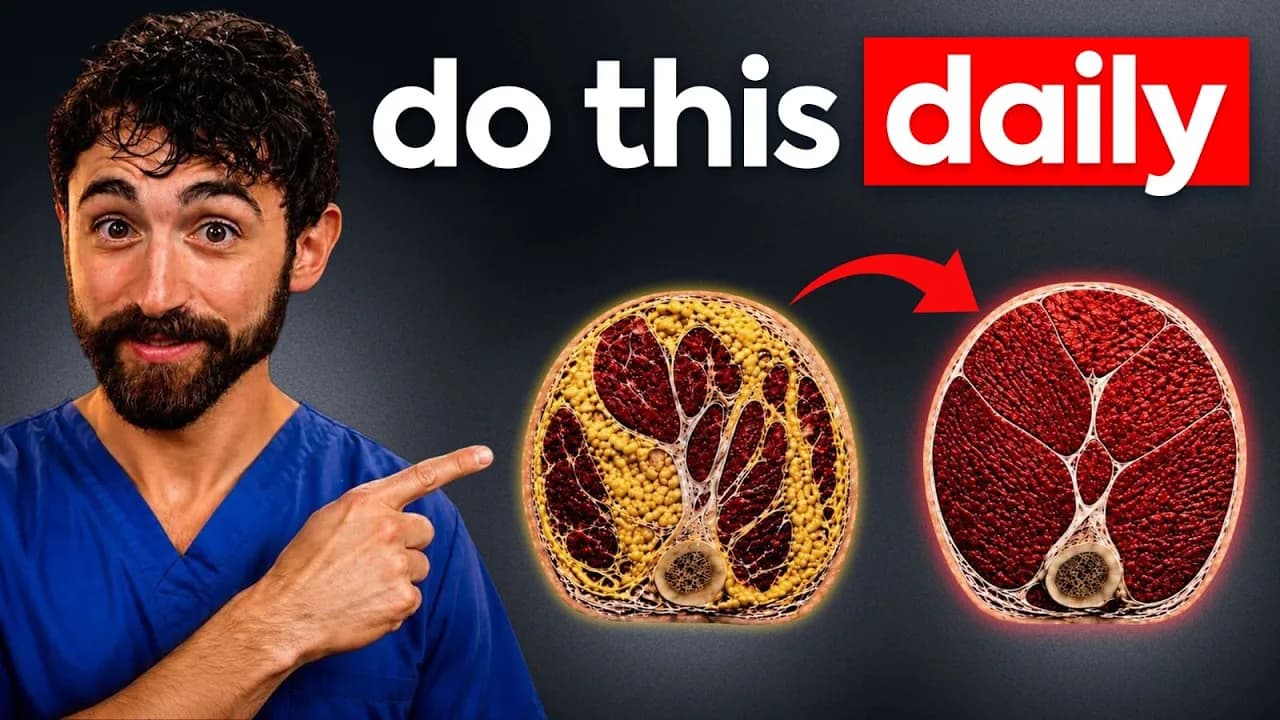
One particularly interesting approach is a ketogenic diet. Effects extend further and deeper into the foundation of energy metabolism, affecting mitochondria. When animals are fed a ketogenic diet, their mitochondria appear to become physically larger, more numerous, and more powerful. Electron microscopy images show visible enlargement of the mitochondria on a ketogenic diet. Lipid droplets become smaller and more numerous, effectively increasing surface area and improving the tissue's ability to burn fat for energy. Ketogenic diets literally remodel fat tissue toward enhanced fat burning with bigger mitochondria and smaller, more numerous lipid droplets. If carbs become scarce, the body needs to upgrade the machinery required to run on fat, including mitochondria.
In human controlled feeding studies, when carb calories are progressively swapped for fat calories while trying to maintain weight, energy expenditure in humans increases on the lower carb diets. When researchers take muscle biopsies from humans in these studies, they find increased mitochondrial power. Professor Ben Bickman, the lead author of this research, stated: "What we found is that when ketones are elevated, fat cells are burning faster, or in other words their metabolic rate went up. In fact, we confirmed this in all three commonly used biomedical models: in fat cells grown in a petri dish, in adipose tissue from rodents, and even adipose tissue from humans where we took little fat biopsies from the belly. In fact, in the humans when they were in ketosis, their metabolic rate in their fat tissue was more than twice of what it was when their ketones were not elevated." At the microscopic level, ketogenic diets and lower carb diets remodel mitochondrial structure and function. At the whole body level, humans exhibit increases in mitochondrial capacity and energy expenditure when on ketogenic diets.
A paper published in Nature Aging on July 3, 2026 took muscle biopsies from humans, young adults and older adults split across the fitness and training spectrum: trained, normal, and physically impaired. The question was what changes in human muscles in terms of gene expression as people age, and what does not if adults are trained and fit. In trained fit older adults, 55% of the gene expression changes associated with age did not happen. Those 55% were enriched in mitochondrial and energy metabolism pathways. The changes thought to happen in muscle with age to slow metabolism, decreases in mitochondrial complex 1 and complex 4 for example, do not happen if a person stays trained, fit, and exercises. Exercise is not just building a muscular reserve; it changes the operating system of mitochondria to preserve youth as people age.
SS-31, standing for super soldier 31, is a mitochondrial targeting peptide. Inside mitochondria is a highly folded inner membrane where energy production actually occurs, like packing an entire power plant into microscopic origami folds. Embedded within that inner mitochondrial membrane are the complexes of the electron transport chain, the literal machinery that generates ATP energy. The inner membrane folds increase surface area for energy production and organize how the machinery in mitochondria interacts with one another. Cardiolipin maintains the structure of this inner membrane and thereby provides essential support for mitochondrial energy production. Cardiolipin acts like adding glue to the origami power plant; it literally holds the structures together at least when healthy. When cardiolipin is not doing its job to support mitochondria, energy metabolism begins to fall apart at the most fundamental level. There are human defects in cardiolipin that manifest in a condition known as Barth syndrome with muscle weakness, heart problems, and extreme fatigue. As mitochondria become damaged with aging and disease, cardiolipin becomes destabilized, which means mitochondrial structure literally deteriorates and energy production starts to fail.
SS-31 homes to the inner mitochondrial membrane like a smart heat-seeking missile, binds to cardiolipin itself, and helps stabilize the machinery responsible for energy production in mitochondria. If cardiolipin is like Elmer's glue, SS-31 turns it into superglue. SS-31 was FDA approved for Barth syndrome, a devastating rare mitochondrial condition characterized by cardiolipin dysfunction. In a randomized placebo-controlled human trial, SS-31 improved fatigue and physical performance in these patients. Mitochondrial dysfunction is not unique to rare diseases; it is a hallmark of aging itself along with chronic diseases like heart disease, diabetes, nerve degeneration, and metabolic dysfunction more broadly. Researchers are now exploring SS-31 in the context of heart disease, Alzheimer's disease, diabetes, and so on. The pre-clinical literature on SS-31 is promising. SS-31 has been shown to preserve mitochondrial structure, reduce scarring of the heart after injury, restore mitochondrial integrity in diabetic retinas, and even improve cognitive function in animal models of Alzheimer's disease. Human efficacy data remains limited outside Barth syndrome, but if a glimpse into the future of mitochondrial medicine is desired, it might be worth watching this molecule.
MOTS-c is a peptide but also functions as a mitochondrial hormone. MOTS-c is actually encoded by the mitochondrial DNA itself. Mitochondria do not just generate energy; they also have their own miniature genomes which is a remnant of their ancient bacteria-like origins. Mitochondrial DNA is capable of producing signaling molecules called mitokines, which literally means mitochondrial hormones, including MOTS-c. One thing that makes MOTS-c interesting is that it is naturally stimulated in humans by exercise. In human studies, exercise increases MOTS-c levels nearly 12-fold within muscle. MOTS-c functions like an internal exercise memo sent from mitochondria to the rest of the body. Animals treated with MOTS-c demonstrated dramatic improvements in endurance and power. In one experiment, 16.6% of control animals could complete the highest treadmill speed on a running test, but when they were given MOTS-c, 100% of every single animal could beat the test and completely obliterate the test. MOTS-c also reduced fat gain while preserving lean mass. At a very high level, MOTS-c can be thought of as a mitochondrial signal telling the organism to adapt, become stronger, faster, and better.
MOTS-c is experimental. A short one-week cycle was run. Although major changes in body composition would not be expected, exercise performance increased, particularly with endurance. During high-intensity interval sessions, times improved and fatigue diminished. Workouts felt easier and more pleasurable. A strong spontaneous drive to move throughout the day was noticed, even more than normal, which ultimately showed up in activity metrics. Since starting MOTS-c a few days prior, there was an incredible compulsion to move, like 18,000, 20,000, 22,000 steps per day spontaneously. Many calls were taken outside due to not wanting to sit down, which also meant getting more sunlight, creating a self-reinforcing mitochondrial health loop. The experience lined up remarkably well with both the animal literature and a growing body of anecdotal reports emerging from the biohacker community. Comments received from friends after the experiment included statements like: "It feels like an amplifier for my morning workout," "It's like having an extra gear I didn't know I could access," and "My afternoon fatigue just vanished. Poof." If SS-31 is about stabilizing the structure and machinery of mitochondria, MOTS-c appears to be more about metabolic signaling, adaptation, and resilience. Together they offer a fascinating glimpse into what the future of mitochondrial medicine might look like.
Peptides like SS-31 and MOTS-c may just be the beginning. Early work is already emerging on mitochondrial transplantations. While this sounds like science fiction, there are already compelling animal data and even early-stage human trials beginning to emerge. A recent 2026 study published in Cell explored transplanting mitochondria wrapped in red blood cell membranes into animals to rescue mitochondrial dysfunction. In a mouse model of Parkinson's disease, which is typified by mitochondrial dysfunction, these mitochondrial transplants reduced neuron loss, improved motor function, and restored mitochondrial activity within the affected brain regions. This represents a leap forward in regenerative medicine. Imagine not far from now having a literal mitochondrial bioreactor in the kitchen, maybe next to the coffee machine, generating fresh, highly functional mitochondria that can be infused back into the body periodically, perhaps paired with compounds like SS-31 to heal and preserve the integrity of mitochondria. That future is closer than most people think.
Keep Nick Norwitz in your library
Save the videos and channels worth coming back to, and find them again in one place.