Best 3 Unique Wearables I Use!
In a Nutshell
The video highlights three advanced wearables that go beyond standard heart rate and GPS tracking: the Flow Bio sensor for real-time sweat rate and sodium loss, the Core sensor for monitoring core body temperature to prevent overheating, and the Train Red NIRS sensor for tracking local muscle oxygen saturation during exercise. These tools enable personalized hydration, safer pacing in heat, and more precise intensity management by showing when muscles are operating above sustainable thresholds. The creator also briefly notes supporting gear like Zwift for indoor training and Meta smart glasses for long runs.
These notes were generated by AI and may contain inaccuracies.
During a normal run, up to 2 L of water and 2,000 mg of salt can be lost. Core body temperature can reach fever-level temperatures. When exercising hard, muscle oxygen saturation continuously drops, indicating operation above the sustainable threshold and accumulation of fatigue. Before measuring these parameters with consumer-grade wearables, these effects and their scale were unknown. A few years ago, only real athletes and elite amateurs had the opportunity to measure these parameters, but now they are accessible to everyone.
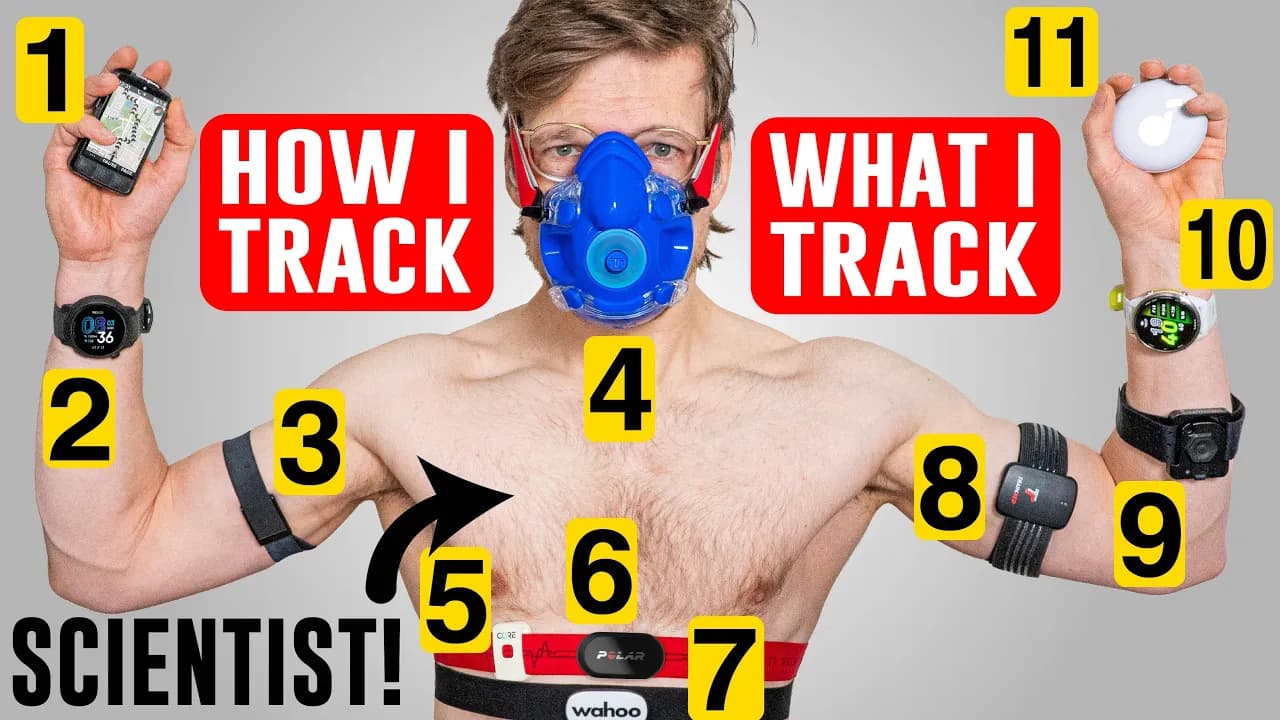
Rob is a post-doctoral scientist specializing in biological data analysis. The video examines data from three sensors that go beyond what most watches provide. Most common wearables such as Fitbit, Garmin, Coros, and Apple Watch focus mainly on heart rate, GPS, sleep, blood oxygen, and derived metrics like chances of high blood pressure. These parameters were easier to develop early on and represented low-hanging fruit. Niche companies have now gone beyond these metrics.
Three sensors are presented that influence behavior, provide insight into the body, and help exercise at safe intensity. References were obtained for two out of three devices. Additional workout equipment that improves training is also mentioned.
The Flow Bio sensor is worn on the biceps or attached to a chest strap such as the Fitbit Aria. It estimates fluid and sodium loss during exercise to provide personalized hydration advice. Generic advice recommends fixed amounts of fluid per hour or electrolyte tablets, but sweat rate and sodium concentration vary enormously between individuals. Two athletes doing the same workout under the same conditions can lose very different amounts of fluid and sodium. Within the same person, sweat losses change depending on temperature, humidity, exercise intensity, clothing, acclimation, and duration.
The technology uses microfluidics and electrochemical sensing. Sweat enters via a small channel and is guided over sensors that measure electrical properties related to electrolyte concentration, especially sodium. The device combines local sweat chemistry with skin temperature, exercise intensity, environmental conditions, heart rate, and movement data. A separate heart rate sensor is required. It samples from a specific location (recommended on the arm, or attachable to an ECG strap) and uses algorithms to estimate whole-body sweat loss and sodium loss. There is direct measurement at the site with extrapolation to the whole body.
Indoor cycling sessions showed close agreement between Flow Bio estimates and actual body weight loss (accounting for intake). Deviations were 0.09 L and 0.06 L. Running results were mixed: one outdoor run showed only 0.09 L difference, but a hotter run had a larger discrepancy. Overall error values were 0.09 L, 0.09 L, and 0.06 L, with one outlier. Percentage errors were generally acceptable. A study in Frontiers in Physiology found sweat loss accurately predicted but total sodium loss underestimated by about 20% compared to laboratory flame photometry.
The device turns sweat-patch and lab-analysis requirements into repeatable measurements without consumables. It can be cleaned and reused. Patterns of sweat rate and sodium loss across conditions become visible over time, enabling personalized hydration plans. Limitations include variation due to gut tolerance, race duration, heat stress, and strategy. Maintenance involves cleaning and drying the channel after each use. The strap showed minor wear.
Core body temperature can reach close to 40 °C (104 °F) during normal healthy workouts. The Core 2 sensor is primarily marketed for performance and heat adaptation training, but its primary personal value is preventing overheating and heat stroke. Trained amateurs may be at higher risk because they can push through body signals more effectively than untrained individuals. The greatest personal risk occurs during running, especially when preparing for a faster marathon.
Validation compared Core Gen 1 and Gen 2 against a rectal pill thermometer during indoor cycling. Patterns were very similar and close to the line of perfect agreement. Core sensor readings were slightly higher. The pill measurement location may not be fully core, potentially explaining minor differences. A derived heat strain index provides an intuitive indicator of thermal load without requiring interpretation of raw temperature values. Applications include pacing for long rides, hot climbs, triathlons, and indoor training, plus safety monitoring.
Heat training uses controlled heat exposure to trigger adaptations: increased plasma volume, earlier sweating, improved sweat response, and reduced cardiovascular strain at a given workload. A noted design limitation is that the sensor must be removed for charging and is easy to forget to reattach.
The Train Red sensor uses near-infrared spectroscopy (NIRS) to estimate muscle oxygen saturation (SmO2 or tissue saturation index) in a specific muscle during exercise. Heart rate reflects central cardiovascular effort but does not show local muscle status. During cycling, heart rate may appear manageable while the vastus lateralis becomes increasingly deoxygenated. During intervals, heart rate may recover quickly while local muscle oxygen remains low.
Near-infrared light penetrates skin into superficial muscle tissue. Oxygenated versus deoxygenated hemoglobin absorbs light differently. Detectors measure absorbed and scattered light to estimate local oxygen availability relative to consumption. When muscle extracts oxygen faster than it is delivered, SmO2 falls. When delivery catches up or recovery occurs, SmO2 rises. This supply-versus-consumption signal supports pacing and interval training decisions.
During endurance exercise, a steady drop in SmO2 without stabilization suggests the monitored muscle is above sustainable intensity. An initial drop followed by a plateau indicates a more stable metabolic rate. During intervals, the depth of SmO2 drop during work and the speed of rebound during recovery can serve as individualized recovery markers instead of fixed rest times.
Applications include cycling (vastus lateralis), running (thigh or calf), climbing (forearm flexors), and rehabilitation or performance testing (left-right comparisons). The signal is local and placement-dependent. Consistent placement, strap tension, and avoidance of ambient light or tattoos are required for reliable repeated measurements. Tissue thickness and subcutaneous fat also affect readings. Multiple sensors may be needed for different muscle groups.
Personal comfort was limited by the thick strap on the legs, so usage was occasional rather than during every workout.
Zwift was adopted again for its social features during indoor cycling after previously using only free alternatives. A Zwift indoor trainer was obtained; it is quieter and includes purpose-built virtual shifters. The social aspect of riding with others online was valued. Green or polka-dot jerseys are personal ride goals.
For longer runs, Meta Oakley smart glasses were used during a marathon-distance effort. Advantages include easy video recording at set intervals and integration with Garmin planned workouts, providing a red light alert when outside target pace. Disadvantages include battery life that ended before marathon completion (around 3 hours 40 minutes) when using audio playback, added weight, and inability to insert prescription lenses, requiring contact lenses.
Links to device websites are provided in the description. Many devices come from startups; support is encouraged. Anker Soundcore Liberty 5 Pro and Liberty 5 Pro Max earbuds are sponsored; they performed well for workouts with good ANC, stability, call quality in noisy environments, adaptive noise cancellation, and convenient case controls. AI note-taking transcribed a YouTube video accurately. Affiliate links for Zwift and the Zwift bike are available, along with general Amazon affiliate links.
Keep The Quantified Scientist in your library
Save the videos and channels worth coming back to, and find them again in one place.