Apple Watch VO2 Max Accuracy! (Scientific Review)
These notes were generated by AI and may contain inaccuracies.
VO2 max is associated with better performance and a longer, healthier life. In the real world, VO2 max is messy to measure and even messier to estimate from a watch. This video explains what the Apple Watch is doing when giving a VO2 max number and shows Apple's validation plots to reveal uncertainty and trust in that single value.
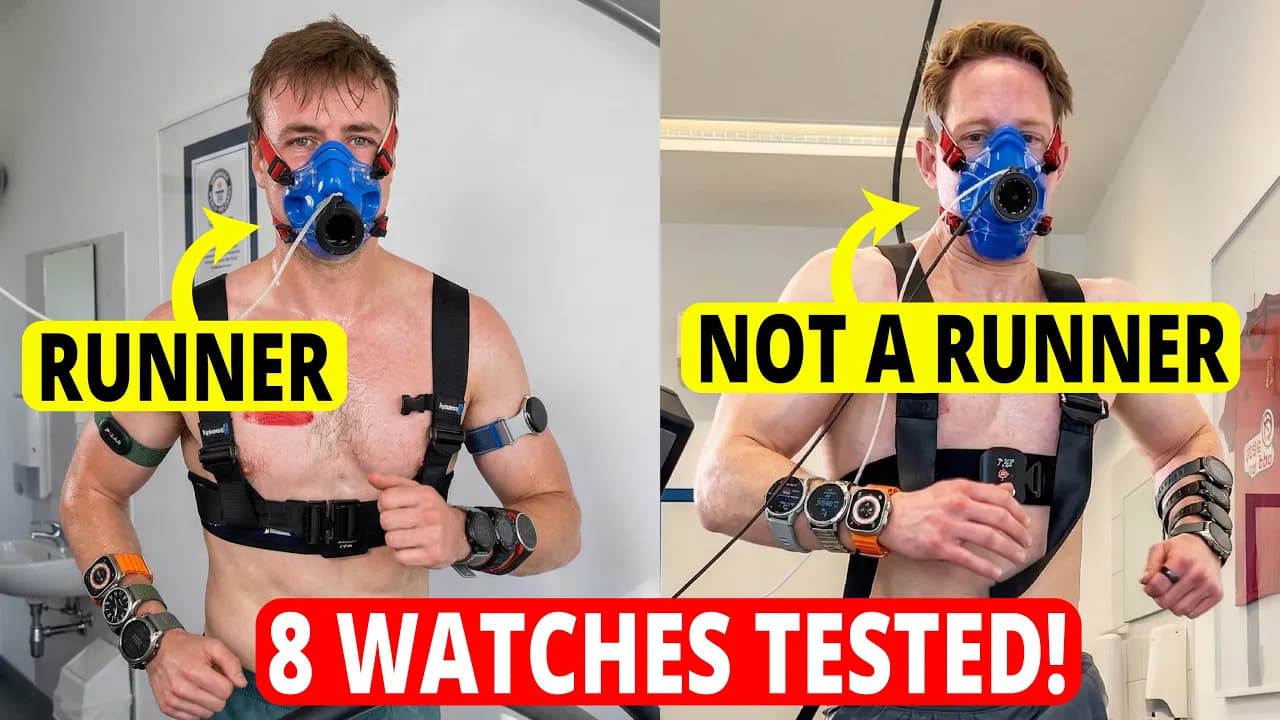
Gold standard is CPET (cardiopulmonary exercise testing): on a treadmill or bike, intensity ramps up, wearing a mask to measure oxygen and carbon dioxide directly. It's accurate but not practical for most people often.
Wearables estimate from heart rate and movement. Apple released a detailed white paper. Apple Watch uses heart rate response to outdoor walking, running, or hiking, plus pace and motion from GPS and motion sensors.
- High heart rate for given pace → lower cardio fitness.
- Low heart rate for pace → higher cardio fitness or VO2 max.
Filters: relatively flat ground, good GPS signal, decent heart rate signal, enough effort. Watch catches situations where math makes sense.
Apple's white paper includes validation figure: each dot is a person with reference VO2 max vs. Apple Watch estimate. Digitized the plot for analysis (not full internal dataset, but visible points; ~fewer dots than claimed, but not problematic). Rob is a post-doctoral scientist in biological data analysis.
Plot: reference VO2 max (x-axis) vs. Apple estimate (y-axis). Perfect agreement on dotted line; red line is best fit.
Good news: higher lab values → higher Apple values; lower → lower. Captures real signal.
Bad news: cloud not tight, decent scatter. Watch can be noticeably above/below lab value for random person.
- Bias: Apple Watch ~1.45 ml/kg/min higher than reference.
- Typical absolute error: 3.83 ml/kg/min.
- RMS error: ~5 ml/kg/min (punishes big deviations).
Not terrible for wrist watch not measuring O2/CO2.
Difference (Apple - reference, y-axis) vs. mean (x-axis). Bias: red line shows Apple slightly high.
Limits of agreement: +10.7 and -7.8 ml/kg/min (95% of people).
For most (~95%), Apple Watch 8 units below to 11 units above lab value.
True value: Apple number -12 to +8 (95% range). E.g., watch 40 → conservative 29-48 range. Huge range, so don't treat single value as definitive.
Not off by 10 for everyone; day-to-day ~4ish (MAE). But big misses possible, not rare enough to ignore for strong conclusions.
Apple value (x) vs. reference (y). Shaded 95% prediction interval shows uncertainty for individual. Red line: expected reference.
Trend real; devices improving but not perfect.
Errors by Apple value neighborhood. More spread at higher values; less data at extremes. Deduct a bit from watch value; spread ±7-10.
Apple lists: heat, dehydration, caffeine, altitude (raise HR without matching work → look less fit).
Terrain: sand, hills, wind, trails, heavy backpack, stroller.
Medications/health: beta blockers (lower HR → watch overestimates if not told); medical conditions decoupling HR from activity.
Don't obsess over single number or treat as lab test.
Use for trends:
- Drifting upwards over months → meaningful.
- Noticeable sustained drop → meaningful, especially if matches feel or other indications.
- Week-to-week bounces of couple points → normal; ignore unless trend over many weeks.
Slight +1.5 bias average. Typical ±4 error. 95% range: -12 to +8 around watch number.
Good for big picture/trends vs. lab (expensive, exhausting, mask, day-dependent, infrequent).
Wearable: fuzzy but trackable over time, most useful.
Keep The Quantified Scientist in your library
Save the videos and channels worth coming back to, and find them again in one place.