Betting on War; The Knowledge; Christopher Nolan | 60 Minutes Full Episodes
In a Nutshell
**TLDR:** Insider trading on prediction markets and oil futures has exploded around recent US military operations, with a US Army sergeant and linked anonymous accounts profiting hundreds of thousands to millions by betting on classified details like raid dates and ceasefires; regulators are investigating but enforcement is weak. In London, black cab drivers who spent years mastering "The Knowledge" of 25,000 streets now face competition from AI robo-taxis from Waymo and Wave, which claim superior safety and adaptability but still make errors. Christopher Nolan calls adapting The Odyssey his hardest film yet, shooting it entirely in IMAX with practical effects across multiple countries to immerse audiences directly in the story.
These notes were generated by AI and may contain inaccuracies.
As long as there have been wars, there have been war profiteers, but never quite like this. New evidence shows that bettors, including a US soldier, may have profited by using inside information to wager on when and how military operations will unfold. A soldier using classified intelligence to trade is unprecedented.
There is nothing to compare that to. This is a new kind of insider trading.
On ancient roads in London, a very modern battle is brewing. Black cabs will soon be competing with artificial intelligence powered autonomous taxis. London's cabbies are not about to hand over their keys.
Your knowledge is better than what a Google map will tell you to go.
Oh, don't make me laugh. Seriously, you know, it's like comparing a hot dog vendor to a Gordon Ramsay.
Christopher Nolan is one of the great directors of our time. His films include Oppenheimer, Dunkirk, and Interstellar. His next project is The Odyssey.
I mean, it was the hardest movie I've ever done by far. I mean, not even close.
The war with Iran and the US military operation to capture Venezuelan President Nicholas Maduro have carried the usual hallmarks of conflict including soldiers, strategy, casualties, and cost. This year alone, more than a billion dollars has been staked online on military decisions and outcomes. Bettors all over the globe have taken positions, some suspiciously timed and with information seemingly too specific for a civilian outsider, on when and how an attack might happen, even the fate of world leaders.
Cloaked in night and shrouded in secrecy, US special operations forces captured Venezuelan President Nicholas Maduro on January 3rd. He was taken to the US to face drug trafficking and narco-terrorism charges.
As it turned out, the president of Venezuela wasn't the only figure in the operation who would find himself confronting federal charges. US Army soldier Ganon Ken Van Dijk, who was involved in the planning and execution of the Venezuela mission, was charged last month with using classified intelligence to place bets based on when the surprise raid would unfold.
If the allegations are true, this is one of the worst betrayals of trust in this area that I can remember and possibly ever.
Americans should feel confident the most important little agency they've probably never heard of is on the job. Now a private lawyer in Washington, Rob Schwarz until last year worked for the Commodity Futures Trading Commission, a federal agency policing fraud in insider trading.
A soldier using classified intelligence to trade. Unprecedented.
Classified intelligence that he knew about because he helped plan and execute the mission. There is nothing to compare that to.
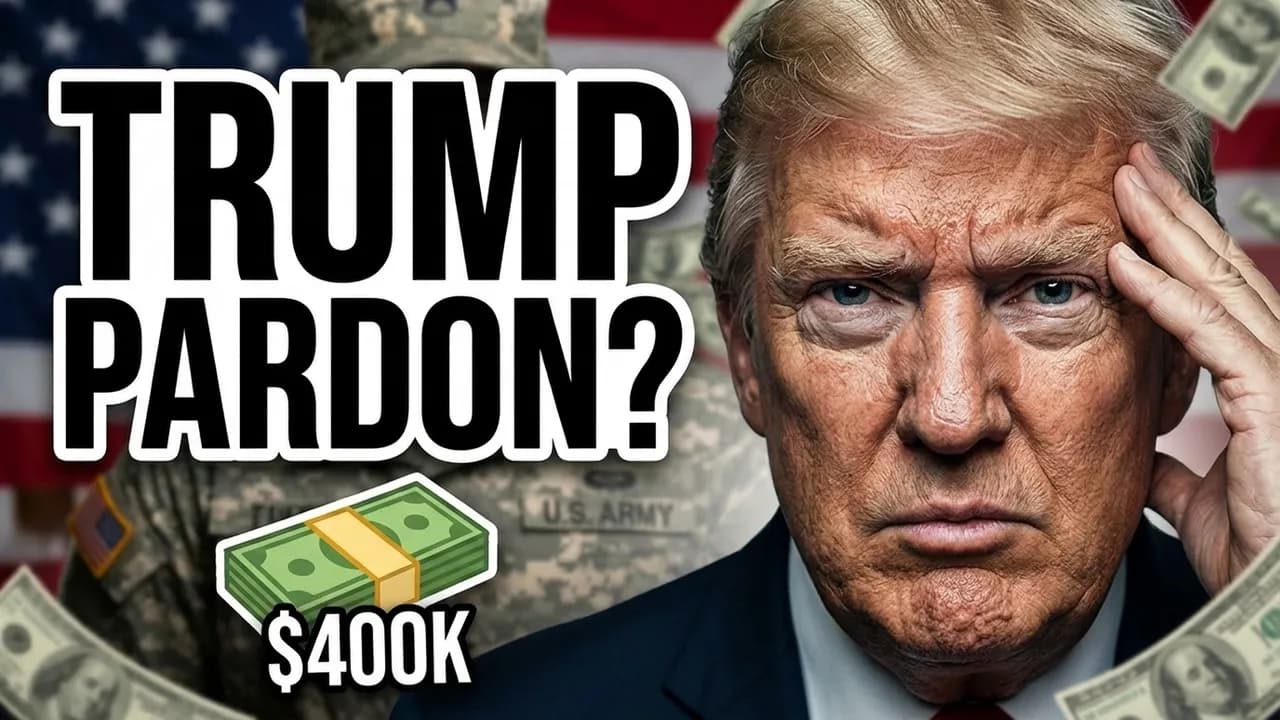
The Justice Department alleges Van Dijk made a series of wagers totaling roughly $34,000, including a half dozen the day before the raid. He ended up netting more than $400,000. According to the indictment, Van Dijk immediately withdrew his profit, then tried to delete his betting account on Poly Market, the world's biggest online prediction market. The 38-year-old Army Master Sergeant has pleaded not guilty. Poly Market says it cooperated with law enforcement.
If you are a corporate executive and you're privy to non-public business information, you go trade on that, that's insider trading. Everybody knows that. But the same thing exists in prediction markets where this soldier is alleged to have traded.
You're saying different context from what we usually think. Two guys at the golf course are winking and whispering and tipping each other off, but this is still meeting the definition of insider trading.
Exactly right. This is a new kind of insider trading.
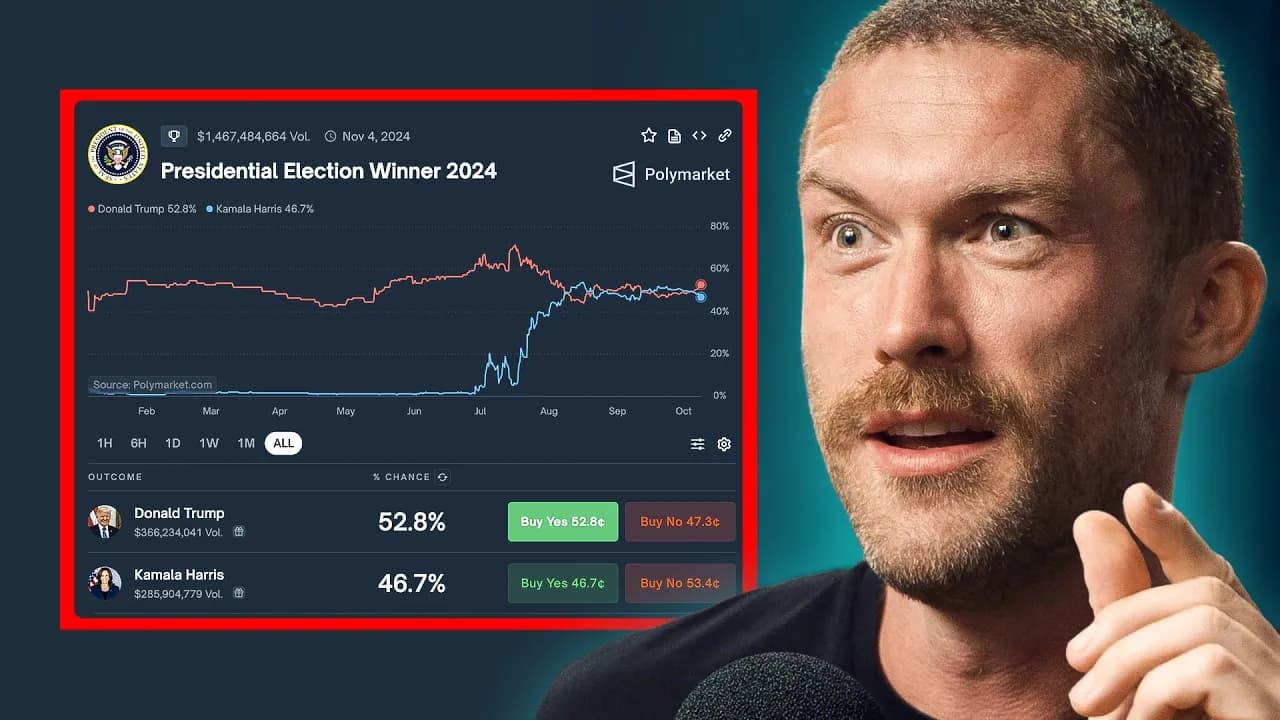
Spiking in popularity, prediction markets including Poly Market offer wagers on the likelihood of future events. Will the Dodgers win the World Series? Will Jesus return in 2026? In a 60 Minutes interview, would President Trump say the word trillion more than 10 times? Turned out that one didn't pay off.
Lately, another kind of wager has found popularity: what will happen in military conflicts? Dates of attack, will an airspace close, will enriched uranium change hands. You can bet on it. You can also bet on insiders, people holding non-public information, laying down their money too. In the US, it's prohibited to make military bets on platforms like Poly Market, though it's easy to find digital workarounds, as Ganon Ken Van Dijk allegedly did.
Here's what's more astounding than the existence of military bets: how often they pay off.
It's alarming to see a culture around betting on war.
Michelle Kendler Crretch and her team at the Anti-Corruption Data Collective examined Poly Market bets on military outcomes. She looked specifically at longshot wagers, bets with less than 35% odds. Despite being underdogs, they won more than they lost, a telltale sign of systemic insider trading.
Give me the apples to apples comparison. This military bets versus say sports wagering. So military bets are 52% success rate, sports 7%.
Wildly disproportionate to what conventional probability should be telling us.
In an ocean away, another team of digital detectives say they too have identified crooked bettors wagering on war.
This might be the most insane pattern we have found on Poly Market so far.
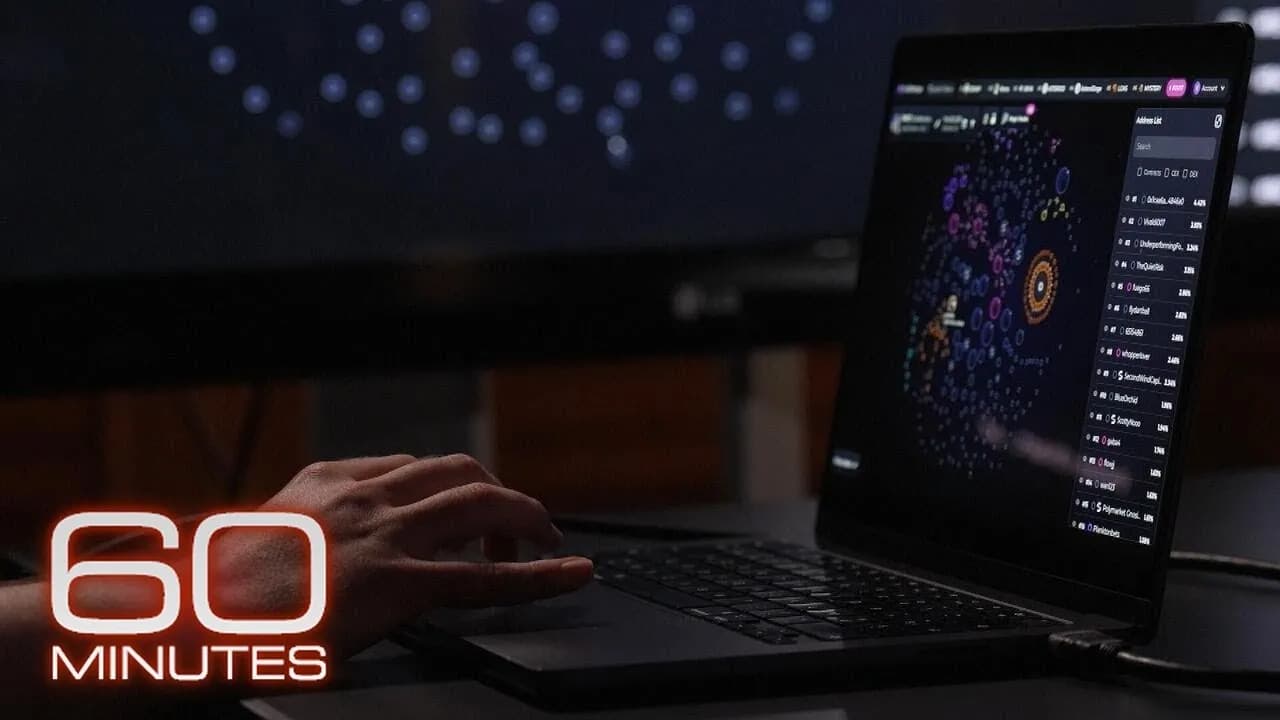
Based in Paris, Nicholas Vman's small data analytics firm Bubble Maps creates visualizations of bets on Poly Market to spot bubbles or clusters of suspect traders. One paradox of Poly Market is that everything about the trades is totally transparent and public except the traders themselves remain anonymous.
The firm's head of investigations goes by his online handle Deebs. He asked to obscure his identity over fears of retaliation for his detective work. They shared for the first time what they believe is a more egregious insider trading case than Ganon Ken Van Dijk's.
We spotted nine Poly Market accounts, all connected, who made collectively $2.4 million betting almost exclusively on US military operations. Van Dijk made $400,000. The linked accounts made dozens of winning bets on the specific dates of pivotal moments in the war with Iran, even when the odds were low. The first US strikes, the removal of Iran's supreme leader, the announcement of a ceasefire.
How do we know this isn't just someone who has really good instincts?
Luck alone cannot explain those numbers.
If you know this, why don't federal prosecutors? Well, hopefully with your interview, they're going to know this.
We talked to one source in the defense department with relation to Sergeant Van Dijk, and he said there are dozens more of these. Van Dijk was just a small fish.
Oh, sure. There's so many people involved in the planning and the execution of a military operation.
A former US military officer, Deebs speaks from firsthand experience when he says military bets are ripe for corruption.
You have obviously the government officials, but you also have the military planners, right? You have the military intelligence analysts and even spouses. They hear things and that means that there consequently are a lot of potential insiders.
It's not just the voguish high-tech online prediction markets where trades based on war have raised intense suspicions. It's happening on the old school and heavily regulated commodities markets too.
I'm highly suspicious at this point. And I'm not the only one. Any trader right now is highly suspicious.
A former commodities trader, David Coll is now a New York lawyer representing victims of fraud on the same markets he once traded. In 2021, he secured the largest whistleblower award for commodities market manipulation in US history.
David Coll walked through the morning of March 23rd. Fighting had been raging for 3 plus weeks and it was a slow trading day in oil futures.
If you see the chart, you'll see that no one is trading during that time period. Why would you trade at that time? That doesn't make a lot of sense unless you have a real reason.
Then, according to data the financial firm LSEG provided, suddenly at 6:50 a.m., more than $800 million was staked on the chance of oil prices dropping. 15 minutes later, President Trump posted on True Social that the White House and Iran had very good and productive conversations about ending hostilities. The news sent the price of oil plummeting more than 10%. What kind of profit is that resulting in? Tens of millions, could be $80 million.
You see this graph and you think insider trading. That's a natural conclusion to draw. I can't know it without knowing what happened, but it's a natural conclusion to draw.
David Coll is not alone in finding this highly dubious. 60 Minutes has learned federal investigators are probing these oil market trades as well.
What are the odds the government knows the identity of whoever executed that? If they go to the exchanges, they can know them.
This could have been someone inside the US. This could have been someone from a foreign country. This could have been an enemy.
Identifying who it was would be the secret to figuring out whether it was insider trading or not.
It's not just markets that risk manipulation by war bets. It's truth as well. Emanuel Fabian, a military correspondent for the Times of Israel, thought little of a piece he wrote in March about an Iranian missile strike in an empty forest near Jerusalem. But soon after he published the account, Fabian received a barrage of messages asking him to change his story. He ignored most, but they turned darker.
One of them was you're going to make us lose $900,000 and we'll invest even more than that to finish you is what he wrote. He also wrote details about my siblings as well. He said, I know how often you visit your family.
What's your fear factor at this point?
I was quite worried.
He investigated and found war bets on Poly Market hinging on whether an Iranian missile would enter Israel specifically on March 10th. And Fabian's small news story voided the side of the bets predicting no missile angering the losers.
That was at $14 million that were being waged there.
$14 million?
Yeah. But by the time it closed, it actually went up to $22 million if I'm not mistaken. Also the person who wrote them, they wrote that, you know, if you abide by my instructions and change it, then you can end with money in your pocket and this will all be over.
Despite this pressure campaign against you that escalated to death threats, you did not go in and change your copy. Do you worry that other people might not have your principled stance?
I do worry. We know when there's a lot of money involved in this case, $22 million. I think that can cause people to lie.
Fabian reported the threats to the police and to Poly Market, which said that threatening a journalist was unacceptable and banned the accounts involved. Poly Market has said they work proactively on any suspicious activity constantly behind the scenes.
Overseeing all this, playing sheriff in this new Wild West. In the US, it's that niche government agency, the Commodity Futures Trading Commission, the CFTC, set up in the 70s to regulate food prices. Historically led by a commission of five, today it's run by one person, Michael Seelig, a 36-year-old whom President Trump nominated chairman last fall.
We will hold whoever is engaging in fraudulent, manipulative, or insider trading activity accountable to the American people.
But enforcement actions have dropped by more than 2/3 since 2024. Staffing has dropped sharply too. Seelig declined the interview request, though the CFTC told us it is hiring more staff and using AI to go after bad actors.
And government officials are aware of the new potential for corruption. In March, the White House issued a memo to staffers, noting it is a criminal offense for anyone to use non-public information on prediction markets.
Where do you draw the line? I guess reasonable people can debate where the line is.
Source after source told us they fear today's insider trading scandal is tomorrow's national security scandal. If market watchers can spot irregular trades, surely enemies can too, and they'll make their war plans accordingly.
Just to put it plainly, this could be putting people's lives at risk. Other adversaries may be using this information in order to plan their own strategy.
If you're taking a futures position a year from now, Sergeant Van Dijk is the only person charged with insider trading.
No, I think it's just going to multiply from here.
On ancient roads and in medieval alleyways in London, a very modern battle is brewing. Black cabs, which are as synonymous with that city as Buckingham Palace, will soon be competing with artificial intelligence powered autonomous taxis. Tech companies promise these AI inventions, some of which are already operating in several American cities, are safer and smarter than human drivers. But London's cabbies aren't about to hand over their keys. After all, just to get a license, they've already proven their own kind of intelligence. Studying often for years to pass a 161-year-old test called the Knowledge. There's nothing artificial about it. They just have to memorize 25,000 streets and thousands of landmarks and businesses and know the shortest routes between them all.
Look, we're the oldest form of transport in the world. In fact, we come before buses and trains and stuff. Yeah. We are the icons of London.
If we do a left here, you'll have the Goldsmith's Hall.
Tom Scolion has been driving one of London's famous black cabs for the past 34 years.
What's the weirdest request you've gotten from a passenger?
Uh, what this week or you wouldn't believe. There's a guy, it's a regular ride and he's got an Irish wolfhound dog. Gives you a bit of paper where the dog lives. Dog jumps in the bag. One of the best customers I've got. Never says a word, never complains about a ride. Uh, but we get people hanging in the morning, take my kid to school.
Never seen me before in the life. Probably never seen me again. That's the trust we get.
The trust and confidence in cabbies here dates back to 1865 when the Knowledge exam was first introduced to London's horse-drawn cabmen.
Do you have riders testing your knowledge?
Every ride. Which way you going, mate? And Google says this and Google says that.
You're never going to beat the knowledge.
Your knowledge is better than what a Google map will tell you to go.
Oh, don't make me laugh. Seriously. You know, it's like comparing a hot dog vendor to a Gordon Ramsay.
At the Transport for London office, nervous aspiring cabbies dress up in their Sunday best to take a series of oral exams known as appearances.
Whenever you're ready, sir. Will go from Soho House 40 Greek Street to the Chantry Rosewood, please.
Candidates are quizzed on how to get between two random points.
Living left Greek Street, right Shbury Avenue, left Great Will Street, forward H Market.
As examiners measure the distance, ensuring they're calling the shortest route.
Unfortunately, sir, I can't score you today.
He failed this round. But for those who do pass the Knowledge, this memorization has proven to be so challenging it can change the structure of their brains. A study from University College London found cab drivers' posterior hippocampi, the part of the brain linked to memory, got bigger throughout their careers.
Everyone in their profession has had to train themselves with knowledge to be the best what they are. And that's what we're doing.
Steven Fairbrass has been trying to pass the Knowledge for eight years. Anu Morjani for five. They showed us the official study guide known as the blue book.
These are like the points of interest that any paying customer would want you to take them to.
I mean, there's thousands.
Thousands of them.
Yeah. 6,000 of them.
I just got to look at this. The Last Judgment, PH, the Law Society Hall, the London or Hotel, the Marquee, the Mann Library, the National Gallery. I mean this is crazy that you have to know all this. You have to learn individual restaurants.
Individual restaurants.
Public houses.
What if a restaurant goes out of business?
Then it changes names and then you learn a new name.
Then it comes on the list.
It comes on the list.
Yeah, it goes on the list.
Now, their knowledge is being tested like never before. Autonomous vehicles haven't been approved to pick up passengers in London yet, but several companies are already trying out their cars here. Wave, a British startup backed by Nvidia and Microsoft, hopes to be operational later this year, as does Whimo, which is owned by Google's parent company, Alphabet. Tea Maakana is Whimo's co-CEO. She says putting more of its robo taxis on the roads can save lives by reducing the million traffic deaths worldwide each year.
You believe driverless cars are safer than a human driven vehicle.
In the case of Whimo, we actually have the data that shows us that we're five times safer than a human driver.
Whimo has already made significant inroads in the US. It first began offering rides to customers in a Phoenix suburb in 2020. Now, millions of riders across 11 major US cities are being driven by Whimos each month.
Humans want to get in the car, send that last email they didn't get to send, and check on the kid that's screaming. But we're trying to drive and do that. So, this really gives you the chance to take care of all of those things and then let the Whimo driver safely get you to from point A to point B.
You call it a Whimo driver, but there's no driver.
We really think it's important to think of it as there is a driver, right? This driver is the most experienced driver in the world. We travel over 2 million miles a week. So, humans drive about 700,000 miles in a lifetime. So, this is almost three lifetimes per week that our fleet is driving because it's been trained on every other ride that Whimo's given.
The whole fleet. Yes.
Whimo's AI has also driven billions of miles in simulation to train for the countless rare scenarios it might face on roads like snow on the Golden Gate Bridge or even an elephant stopping traffic.
In San Francisco, we took a trip in one of its robo taxis with product manager Chris Lewick.
Happy Friday.
It's a little freaky not to have a driver. You hear this all the time, but like I'm watching the wheel very, very carefully.
Yep.
But after a few minutes, the ride felt strangely normal.
Feels like a very careful driver.
Our goal is kind of blissfully boring.
The car is outfitted with 29 cameras, six radars, five microphones, and five LiDAR sensors, which continuously pulse to measure distances, objects, and people as far as three football fields away. Inside a screen shows riders what the car is seeing.
It sees an intersection, I don't know, 300 feet away, but because there's other cars, I can't see it, but it sees around these other cars.
That's right. And that's partly the design of the placement of the sensors makes it super human compared to what a human would be able to do.
Whimo says the data gathered from these sensors enables the AI to respond faster than a human. We saw that when a woman talking on her phone crossed right in front of us.
It's kind of crazy to see a person change their mind and how quickly the Whimo responded to like a slight motion of them moving forward.
Exactly. System has learned to react to those subtle cues because that's what's necessary.
Whimo's AI may have a lot of training, but it still makes some rookie mistakes.
Oh my god, what the is that Whimo doing?
In Los Angeles, a Whimo drove through an active police scene.
Whimo, come on.
There has also been incidents of the robo taxis getting in the way of emergency responders and illegally passing stop school buses, leading to a software recall and a federal investigation.
Back in London, Whimo's robo taxis have been driving the streets to build a detailed 3D map to train its AI, a company standard before operating in a new area. But it does have competition.
We want to make sure our AI can understand every concept it might encounter.
Alex Kendall is Wave's CEO. Unlike Whimo, his artificial intelligence doesn't map out a city before driving in it.
How is it possible you don't need to map a city entirely before getting your vehicles to drive autonomously in it?
Well, think about how you and I learned how to drive. I learned how to go through a few traffic lights and that taught me how the concept of traffic lights works. In a similar way, that's how our AI learns. We train it on millions of hours of experience driving all around the world. So this means when it goes somewhere it's never seen before or it's never been mapped, it can understand what's in front of it and make decisions in real time.
Wave's robo taxis are still in testing and not yet available to the public.
The products that we're building will use inbuilt sensors.
But Kendall believes his AI will be able to more easily adapt to new environments.
Let's go for a drive.
Okay.
He took us to Westminster, a district in London that's home to some of the city's most historic landmarks to show us where he's been training his fleet since Wave's early days in 2019.
And your foot is not, you're not.
So I'm not touching the controls. The AI is controlling the steering, the speed, the indicators, the brake.
Until robo taxis are approved by the government here, a human has to sit in the driver's seat for safety.
Here's one of the busier roundabouts in front of Westminster. Right in front of Parliament. Lots of tourists around, different vehicles.
This guy just crossed into our lane.
Now back to another lane.
There's a bike that we have to wait for before making the lane change.
Just such a long list of things that can happen on the road.
I think that's the main advantage of an AI driver here is that it can have the intelligence to deal with things that you may never expect on the roads.
I'll go lead by Palish lift into MLA road.
Aspiring cabbie Steven Fairbrass didn't seem too concerned about that.
Do you worry about the future of this? You know, autonomous vehicles driving around.
No.
Why don't you worry?
To me, the human brain will always be the strongest tool. Can you imagine you're trying to how down a vehicle with no driver in it? You're standing there in the rain trying to get home and that vehicle just drives straight past you because it hasn't got a sensor or a human brain or an eye to turn. So to me, human beings, drivers, always going to be needed.
Always.
Anu Morjani, however, didn't seem so sure.
Every profession is being affected by AI. I don't know what it's going to do in near future but it's always there on your mind that yes and you're doing you're getting into a career not knowing what the future is.
Over the last decade London's black cab industry has seen a steep decline. The number of drivers has fallen from 25,000 to 16,000 today. So has their income as Uber and other ride hailing companies have been cutting into their business.
Mr. Fairbrass.
Even so, hundreds still sign up for the Knowledge each year.
Okay, sir. Hello, sir.
This was Steven Fairbrass's 20th attempt.
We're going to go to the Riding House Cafe, please.
Uh Ryen House Cafe, sir, is on Great Title Street, sir.
Okay, sir. Go right into Mort Street. Right into Nauseia Street. Left
Anu Morjani attempted the Knowledge exam for the 41st time. He successfully navigated a route from Ryen Street to Portland Place and then to Ladybell station, demonstrating knowledge of streets including Broccley Road, Adelaide Avenue, Ladybell Road, and railway terrace. Morjani passed after five years of trying and will now earn his license.
Do you want to drive around in one of them famous cabs out there?
Morjani reflected on the significance of the black cab tradition: "Hundreds of years of world of history. It means a lot to people of London. It's like London without a queen. I'd say you can't have a London without a king or queen. You can't have London without a black cab. No. Impossible."
Christopher Nolan is among the great Hollywood directors of his generation. His blockbusters have won 18 Academy Awards and grossed more than $6 billion. His next project is an adaptation of The Odyssey, scheduled for summer release. The 55-year-old British American was interviewed in his Los Angeles office.
Nolan has directed Oppenheimer, Dunkirk, Inception, Interstellar, and The Dark Knight. A Nolan movie is described as a spectacle at the limits of what's possible, while his stories focus on imperfect people revealing what it is to be human. Nolan imagines every film as potentially the last he will ever make, creating a sense of responsibility to deliver the fullest experience for audiences.
Nolan tries to establish a point of view from inside the film rather than observing characters from a distance. He aims to immerse the audience in the experience, conveying what a place would smell like and feel like. His goal is to create the most involving and extreme version of a story possible.
The Odyssey represents an extreme version of the Bronze Age war story featuring Odysseus and his Trojan horse deception, followed by a 10-year struggle to return home. This marks Nolan's 13th film in 28 years. He writes his own screenplays, visualizing the film as an audience member experiencing the story.
In the case of the Odyssey, I'm trying to put the audience into that horse. I try to put them on the deck of Odysseus's ship. You don't want the audience to watch the film. You want the audience to be in the film very much.
Nolan began making films using Super Eight cameras as a child. His family had a Super Eight camera instead of a video camera. His younger brother Jonathan Nolan recalled that Chris was given the family 8mm camera to keep him busy, and they created their own version of Star Wars in the basement using firecrackers on toys when Chris was approximately eight or nine years old.
Nolan graduated with a degree in literature and applied to film school but was rejected. Despite the rejection, he continued shooting films on weekends with friends. In 1999, he made Memento, a complex mystery featuring an amnesiac investigator who remembers clues through tattoos. This film introduced Nolan's trademark intricate plots with shifting timelines.
Movie executives initially feared Memento was too confusing, and no distributor wanted to release it. It took a year to find distribution. The film was nominated for an Oscar for its screenplay, and audiences embraced the challenging narrative.
It was a lesson in humility. It was a lesson in patience of independent filmmaking which is you know you finish a film and you really feel you've achieved something but convincing the industry of that the distributors of that it can take a long time.
Emma Thomas met Nolan on the first day of college. She has produced all of his films, and they have been married for 26 years with four children. Thomas noted that filmmaking is genuinely the most important thing to Nolan outside of family, and he would be deeply frustrated if unable to tell stories through film.
Nolan prefers practical effects over computer animation when possible. He collapsed an actual building for The Dark Knight. For Tenet, he purchased a 747 and built a hangar to crash it into. In 2024, Oppenheimer won seven Academy Awards, including Nolan's first for best director and best picture.
Nolan described pushing hard on The Odyssey production. The film brought Matt Damon and thousands of cast and crew to Greece, Iceland, Morocco, Italy, and Scotland. Two million feet of IMAX film were shot.
Nolan views himself as the representative of the audience on set, using this perspective as his guiding principle. He stated that taking on The Odyssey required the biggest scale yet because that was the nature of the story.
Matt Damon described the film as the hardest he has ever done. This marks Damon's third collaboration with Nolan after Interstellar and Oppenheimer. Cillian Murphy has appeared in multiple Nolan films including the Batman series, Dunkirk, and Oppenheimer.
Nolan hands actors scripts and expects them to become experts on their character's perspective. Actors then inform him during production about how their character would view events. He is considered an actor's director despite the large canvas of his films.
The Odyssey was shot 100% in IMAX, which had never been done before. Nolan first encountered IMAX at age 16 when he saw a documentary on a five-story screen at a museum. IMAX film offers up to three times higher resolution than digital formats.
The production used the last remaining film lab of its kind in the world to cut and glue the 70mm IMAX footage. While digital photography is faster and cheaper, Nolan continues using film to retain original image quality.
Nolan hopes Hollywood historians will describe his career as long and that he added something to the body of work of filmmakers he admires. He aims to play a part in moving the language of film forward.
Mark Twain, Richard Pryor, Lucille Ball, and Lenny Bruce used comedy as a mirror to reflect the nation. Nate Bargatze noted that in a large country, comedy brings people together through shared experiences. Shows like The Andy Griffith Show, The Jeffersons, Saturday Night Live, and Seinfeld demonstrate that laughter can be found nearly anywhere on any topic.
Comedy like Blazing Saddles and All in the Family confronted bigotry by ridiculing prejudice. Bargatze encourages young artists to try stand-up comedy, believing its authenticity will stand the test of time, while observing that AI is not particularly funny.
The 58th season of 60 Minutes concludes, with season 59 scheduled to begin in September.
Keep 60 Minutes in your library
Save the videos and channels worth coming back to, and find them again in one place.