Can an Animal-Based Diet reverse heart disease and diabetes With Sean O’Mara, MD. - 1of2
These notes were generated by AI and may contain inaccuracies.
Dr. Paul Saladino hosts the Fundamental Health podcast, focused on understanding and correcting roots of chronic disease for optimal health.
Beef organs back in stock at heartandsoil.co from grass-fed, grass-finished, regeneratively raised cows in New Zealand. Recommended supplements: Lifeblood (whole blood extract, liver, spleen) and Heart of the Warrior (liver, heart). Histamine Immune coming soon. Email [email protected] for supplement advice. Reclaim ancestral birthright to radical health via organs. Alphas in tribes get organs first.
Traditionally trained MD in Minneapolis, spent decade+ analyzing thousands of abdominal and brain MRIs. MRIs accurately show visceral fat (fat in peritoneum) better than DEXA or CT. Observed visceral fat shrinks on animal-based diet (no seed oils, no refined grain-based carbs). Recent study: more visceral fat correlates with worse COVID outcomes. Images show visceral fat reduction and atherosclerosis reversal in brain arteries. Achievable via ancestral diet: meat, organs, least toxic plants, eliminate refined grains and seed oils.
Start with impactful case studies. Podcast visual; watch on YouTube or heartandsoil.co. Dr. O’Mara does MRIs in Minneapolis, shows visceral fat reversal and brain atherosclerosis reversal via diet.
Patient: 68-year-old male, company owner, no exercise.
Intervention: Cut processed carbs; ate meat and vegetables.
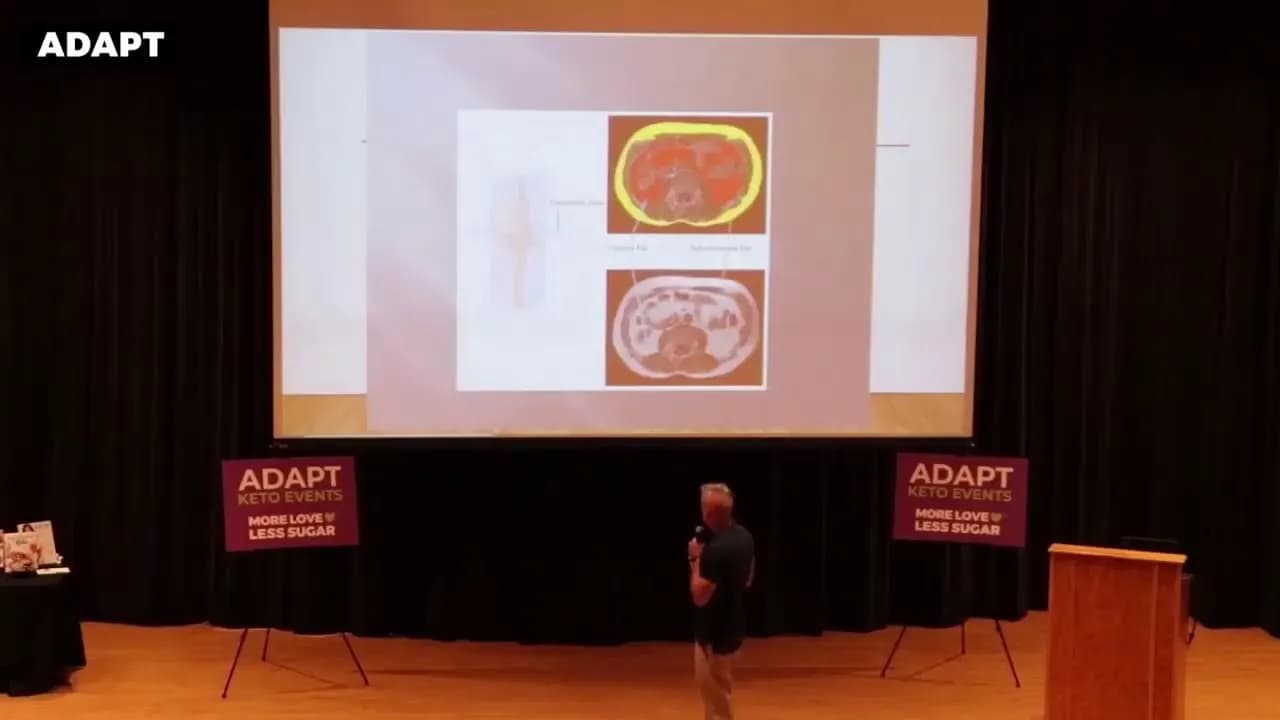
MRI scans (cross-section at belly button, visceral fat colored reddish-pink, subcutaneous yellow, back muscles dark, love handles yellow fat pads):
- Week 0: 5.6 lbs visceral fat.
- Week 2: 4.2 lbs (lost 1.4 lbs visceral fat), abdomen diameter smaller.
- Week 5: Increased to ~4.7 lbs after eating chips and pizza (seed oils, refined carbs); caught by scan, recommitted.
- Week 35: 1.8 lbs visceral fat (~68% reduction). Intramuscular fat in transverse oblique muscle resolved.
Visual changes more impactful than numbers for optimal health; senses wired from hunter-gatherer past. Diet > exercise for visceral fat loss (patient exercised zero). Exercise key but insufficient without diet.
Paul: Mainstream "eat less, move more" wrong; diet foundational (sleep also key).
MRI: View from feet, slice through abdomen. Visceral fat (peritoneal, pink) vs. subcutaneous (yellow). 5.6 lbs to 1.8 lbs visceral fat in 35 weeks via diet only signals profound metabolic health improvement (not just weight loss). Visceral fat = direct indicator of metabolic dysfunction/insulin resistance. Labs would show drops in fasting insulin, postprandial glucose, hsCRP inflammation.
Patient's overall weight loss unknown/not tracked; focus on visceral fat over scale weight. Final scan: looks like collegiate athlete with six-pack (from diet discipline, not exercise).
Visceral fat links to chronic diseases: arthritis, degenerative joint disease, heart attacks, strokes via atherosclerotic cardiovascular disease.
Patient eliminated processed carbs (thus seed oils). Re-added chips/pizza (seed oils + refined carbs) → visceral fat rebound. Optimal health requires no processed foods/seed oils.
Paul: Carbs not all bad; ancestors ate seasonal fruit, occasional tubers (Hadza-like: dates, honey). Moderate non-processed carbs ok (his insulin markers unchanged).
Sean: Difference between processed vs. natural carbs (fruit, berries). Processed carbs + seed oils deleterious. Rice weekend cheat → visceral fat increase on Monday MRI. Stomach visibly grows post-poor eating.
Six-pack not always optimal; thin subcutaneous fat layer healthier than zero (e.g., bodybuilders at 4-5% body fat = hormonal nightmare). Paul ~9-10% body fat, visible abs, good hormones. Too-low fat tanks hormones.
Patient ate meat; vegans claim meat causes insulin resistance/diabetes. Sean seen vegans with visceral fat (they don't share scans). Vegan proponents tout cholesterol on low-fat, high-carb plant diets but avoid visceral fat imaging.
To answer your question
We've had vegans come in. One encounter: a vegan of 27 years walked in confident of no visceral fat. We measured his visceral fat with an MRI, and he was loaded—more than many others. He was a tophi, thin on the outside, fat on the inside with excess visceral fat. This immediately changed him; he started eating meat after seeing the scan.
Haven't seen a long-term older vegan without elevated visceral fat. They're almost always tophi—thin on the outside, fat on the inside. They don't look good, may have paucity or excess subcutaneous fat depending on lifestyle, but clearly have a lot of visceral fat.
Correlation with faces: after scanning thousands, can see elevated visceral fat in their face before they walk in, due to level of inflammation.
Experiment for audience: look at images of bikini-clad women, assess abdomens without faces—which looks healthier? Attraction to opposite sex signals health for mate selection. Healthier abdomen correlates with healthier face. Not attracted to real thin muscular types with no subcutaneous fat; that layer looks more attractive. Vegans show inflammation in their face.
MRI better than DEXA for visualizing visceral fat (cross-section vs. longitudinal view). DEXA gives numbers, not imaging. CT also gives cross-section. Physicians and radiologists overlook visceral fat in scans.
Advice: if you've had abdominal CT or MRI, get the image from your doctor, ask to see visceral fat levels then, and repeat to track lifestyle changes. Visceral fat is a very important biomarker to track.
Screen share comparison: host vs. well-known plant-based physician (nameless). Plant-based doctor's face looks inflamed, ashen skin, no neck, likely visceral fat.
Challenge audience: form opinions on leaders (hunters, gatherers, alpha male/female) by appearance and performance. Can tell who performs better. Clients eliminating visceral fat via diet improve appearance and functional performance.
Example: at 55 (now 57), learned lacrosse from son—first time holding stick, half-hour back-and-forth, dropped ball only three times. When healthy, perform remarkably well, pick up new sports.
Appearance and functional performance more important than numeric data like cholesterol/labs—for millions of years, that's what we followed to establish excellence in leading hunts.
Debate challenge on Twitter: opponents must show VAT (visceral adipose tissue) levels. No vegans stepped up, as it would crush them. Response of 'fat shaming' dismissed: not shaming if full of visceral fat—either not following advocated diet or diet doesn't work. Stand behind it: banner in debate showing opponent's higher VAT. No vegan will beat in VAT.
Renewed vigor: no debates without opponent's VAT proof. Staunch vegans full of visceral fat cause problems.
Article on Dunnigan familial partial lipodystrophy: monogenic insulin resistance from LMNA gene mutation. Rare, cannot store fat subcutaneously (low peripheral fat threshold), so fat goes straight to visceral adipose tissue.
Result: protuberant 'tortoiseshell' abdomen (six-pack but pushed out), horrible insulin resistance, premature atherosclerosis.
Key: no elevated LDL, yet full of visceral fat, get atherosclerosis quickly. Indicates visceral fat's role in inflammation/cytokines independent of LDL.
Agree: awesome model for visceral fat's contribution to atherosclerotic cardiovascular disease. Gene mutations likely from ancestral bad lifestyle choices.
Challenge: get healthy for children/future offspring—lifestyle affects genetics across generations. Fixing parents could prevent issues in offspring.
Video of atherosclerosis reversal in brain arteries (Circle of Willis: basilar artery, posterior communicating arteries, posterior cerebellar artery, anterior communicating artery, internal carotids, middle cerebral arteries, anterior cerebral artery—underside of brain blood supply).
Non-contrast MRI (no radiation/contrast needed)—differences in blood, plaque, brain parenchyma magnetically. Disease blocks flow: white = good flow, dark = compromised.
Initial scan: carotid arteries show dark plaque blocking flow (turbulence areas), occlusion in left side digital segment—persists in 3D rotations.
Repeat scan 9 months later after lifestyle improvement: plaque resolved, blood flow restored in all views. Seen in couple dozen cases, this one prominent.
Recommendation: in 40s-60s, especially with past poor metabolic health, get MRI to measure, improve lifestyle, track reversal. Use MRI/biomarkers to reverse, not just treat, disease.
Keep Sean OMara, MD JD, Health & Performance Optimizing in your library
Save the videos and channels worth coming back to, and find them again in one place.