Cancer Is a Parasite
In a Nutshell
Cancer behaves like a parasite, relying on ancient survival mechanisms—glycolysis for energy, microtubule scaffolding for rapid division, and immune-evasion signals—that it shares with worms, fungi, and bacteria, as discovered by Otto Warburg nearly a century ago. Fenbendazole and other antiparasitics (like ivermectin, wormwood) dismantle these by disrupting microtubules, removing "don't kill me" signals, and blocking glycolysis, leading to complete remission in stage 4 patients and 100% survival in chemo-resistant mouse studies. Cut sugar/carbs/grains/glutamine/ketones, rotate diets to prevent adaptation, boost immunity with vitamin D, fasting, sleep, and exercise; cheap, effective solutions ignored due to expired patents and no pharma profits.
These notes were generated by AI and may contain inaccuracies.
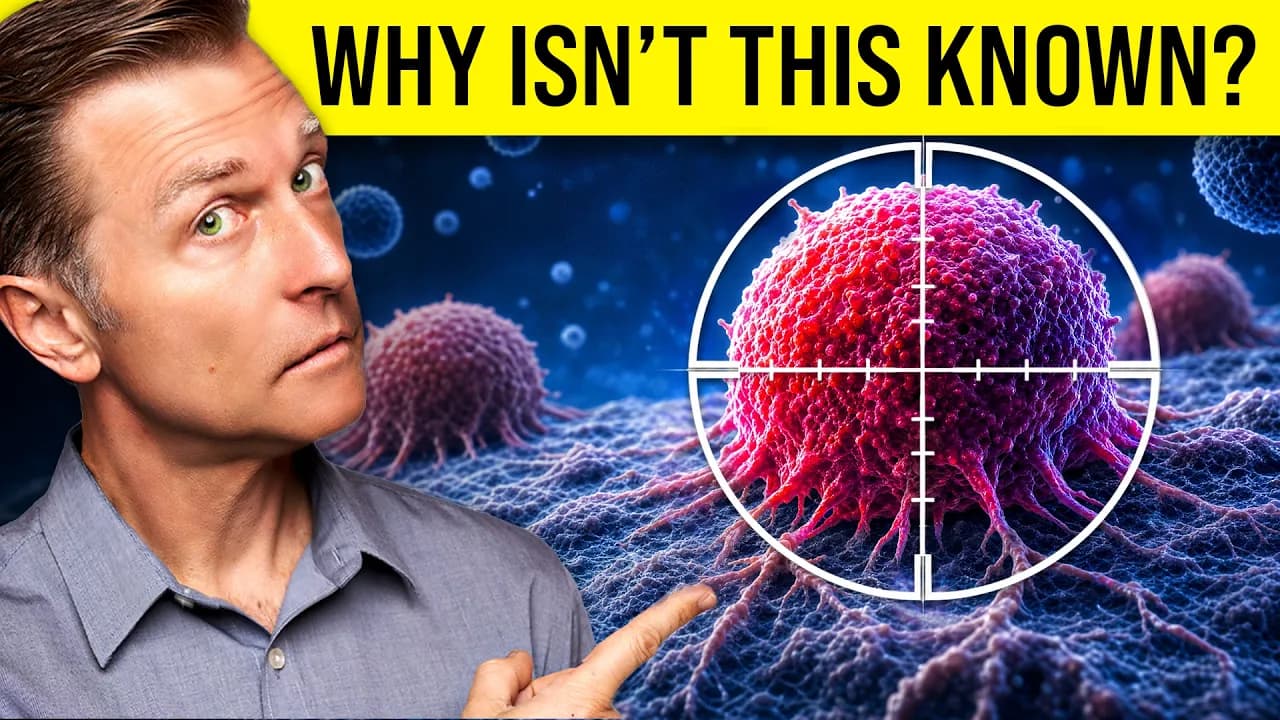
Cancer is actually a parasite. A drug designed to kill parasitic worms helped three stage 4 cancer patients into complete remission for $5. No major cancer center will run a clinical trial on it. Cancer consumes resources, spreads into new territory, and runs the same survival machinery as parasites and fungi used for billions of years.
In 2025, over 2 million Americans were diagnosed with cancer. Cancer in young people is up 79% in 30 years. Colorectal cancer went from the fourth leading cause of cancer death in young men in the '90s to number one. Survival success in cancer means surviving 5 years; if you die past 5 years, you're still considered successful.
Cells have mitochondria, energy factories producing 36 units of ATP per glucose. Mitochondria originated from bacteria; we provide the home, they make energy. When damaged by toxins or radiation, cells switch to a different, ancient, inefficient pathway outside mitochondria, producing only 2 units of energy per glucose. This exists in bacteria, fungi, and other life forms. This is what cancer is.
Otto Warburg, Nobel Prize winner, discovered this nearly 100 years ago. PET scans inject radioactive sugar; cancer lights up bright due to high sugar metabolism via this primitive survival mode called glycolysis.
Glycolysis produces lactic acid waste; cancer thrives in that environment where normal cells struggle. Cancer can travel into inflamed areas, like lungs from smoking. Cancer is adaptive: lives on glutamine, branch chain amino acids, and in advanced cases, ketones.
Glycolysis is one of the oldest metabolic pathways on Earth. Parasites, fungi, worms, and cancer share three survival systems:
Internal Scaffolding
Internal skeleton for structure. Cancer and parasites are rapid dividers (e.g., tapeworm produces 50,000 eggs a day). Cancer cells divide non-stop without brakes. Fenbendazole grabs tubular proteins (microtubules), breaking scaffolding. Other antiparasitics (ivermectin, herbs like wormwood, black walnut hull, clove) do the same directly or indirectly.
Disabling Self-Destruction
Normal damaged cells commit suicide (apoptosis). Parasites, fungi, cancer display a "Don't kill me" signal tricking the immune system. Antiparasitics remove this badge, allowing immune system to kill them.
Blocking Glycolysis
All use glycolysis for fuel. Antiparasitics block it directly or indirectly, starving cancer.
Supplements recommended: Search Amazon for "Dr. Berg supplements".
Patents expired; no one funds $100 million for a $12 remedy. Research from universities in South Korea, India, small labs—no industry funding, no conflicts. Published case studies on stage 4 patients resistant to chemotherapy. 2025 study: Fenbendazole targets regular cancer cells and cancer stem cells (survive chemo, regrow tumors). 100% survival in treated mice, zero in untreated controls. Works in chemo-resistant cancers.
Cut sugar, refined carbs, grains, starches—they feed cancer.
For cancer, avoid glutamine, branch chain amino acids, ketones (details in another video). Do multiple things: cancer adapts. Rotate diet to switch fuel sources as cancer adapts.
Immune system kills cancer via killer T cells and natural killer cells.
Supporting Killer T Cells and Natural Killer Cells
- Increase vitamin D levels (not just 600 IUs—more for immune support).
- Fasting (regular and prolonged—most powerful).
- Sleep.
- Exercise.
Antiparasitics (medication and natural) dismantle survival mechanisms of parasites, worms, and cancer because cancer behaves like a parasite. Watch next video: "What to eat when you have cancer" and how to rotate eating plan.
Keep Dr. Eric Berg DC in your library
Save the videos and channels worth coming back to, and find them again in one place.