Cancer is More Terrifying Than I Thought... Until I Found This
In a Nutshell
Cancer cells already exist in most people as precancer, but tumors contain diverse cell types—including slow-growing stem cells and pre-existing drug-resistant cells—that standard chemo often misses, allowing relapse. Cancer hijacks the body by sending scouts to distant sites, turning immune cells against you, stealing their energy, and relying on constant growth signals like high insulin from sugar and refined carbs. Prevention centers on lowering insulin through low-carb eating and fasting, fixing sleep and vitamin D, reducing inflammation, and supporting DNA repair with nutrients like magnesium, folate, and sulforaphane.
These notes were generated by AI and may contain inaccuracies.
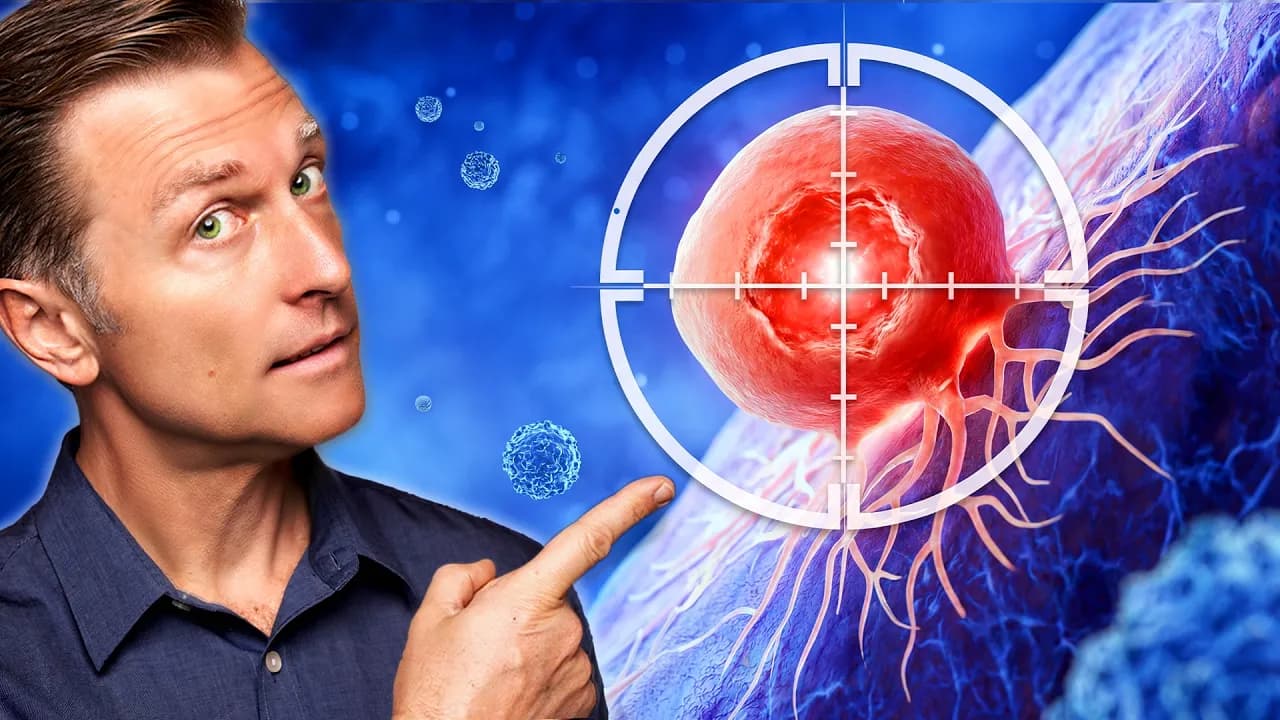
Right now, you actually already have cancer cells in the form of precancer that can turn into cancer. Within one tumor, there are dozens or sometimes hundreds of different types of cancer cells, each with their own abilities. Some eat sugar, some eat protein, some survive on oxygen, some can live without oxygen. Some are fast and aggressive, others are slow and even invisible. This explains why many common treatments don't work long term. Chemo might kill 99% of the cancer, but the 1% that survives can rebuild the cancer from scratch.
Number one: cancer sends scouts. These little packages travel to distant organs and begin laying the groundwork, remodeling the tissue, making the tissue cancer friendly. They are planning an invasion even before it happens.
Number two: cancer has the ability to turn your own immune cells against you.
Number three: cancer physically steals energy from your immune cells. As the cancer cells get stronger, the immune system dies out.
Number four: the most dangerous cancer cells are the quietest ones. The cells that don't get killed and cause relapse are the cancer stem cells. They grow really slowly and very quietly. Standard chemotherapy is designed to kill the fast dividing cells, not the slow ones. This is why 99% of the cancer can be wiped out but the 1% can come back and rebuild the whole thing.
Number five: drug resistance already exists before the treatment starts. Drug-resistant cells are hiding in the tumor cells before the first dosage of medication is ever given.
Every cell in your body follows two simple rules: only divide when the body tells you to, and die when the body tells you to. A cancer cell is a cell that stopped following orders from the body.
The first stage is the cell multiplying a little too fast. This is called hyperplasia and is a precancer cell.
The next stage is multiplying fast while the cells start looking weird. This is still not full active cancer but is moving in that direction.
The following stage is called metiplasia, where the tissue starts changing what it is. It is not full-blown cancer yet but is starting to change its identity.
The next stage is dysplasia, where the cells look completely wrong under a microscope. Only 5 to 15% of these cells actually go into the next stage. The body is actively correcting and quietly reversing this problem at every stage.
The next stage is carcinoma in situ. This is actual cancer but it has not broken out of its location yet.
The following stage is invasive cancer, where it is spreading locally to the surrounding tissues.
The final stage is metastatic cancer, where it has moved to other organs through the bloodstream or the lymph system. This is the most dangerous stage.
There is a scientific debate on whether DNA mutations come first and then the cell starts behaving abnormally, or whether the cell's behavior and environmental change happens first through epigenetics, with DNA mutations happening after. If the environment comes first, then the environment is where prevention lives. If the environment is off, everything else struggles. It is like a fish tank: pollute the water and the fish gets sick. You could feed them the best food and treat every symptom, but if the water stays toxic, nothing recovers.
The body runs on 10 signals like insulin, cortisol, inflammation, sleep quality, and gut function. Every one of them affects how you feel, but there is always one signal that is more broken than the rest. Until you fix that one, everything else stays stuck.
One of the biggest signals for growth in the body is insulin. Every time you eat, especially sugar and refined carbs, insulin increases. It tells the cells to build, divide, grow, and even store fat. In cancer, that signal is jammed and is on constantly. Its goal is to build and grow as fast as possible from the glucose it consumes. When the cancer cell consumes glucose and creates lactic acid, the immune system gets paralyzed.
The medication metformin, which lowers insulin by improving insulin resistance, reduces the risk of cancer by 25 to 40%. Prolonged fasting completely shuts down the resources for cancer. Body cells can deal with prolonged fasting easily, but cancer cells are already living on the edge and get pushed over when fasting occurs.
There is a guardian cell with a protein called p53. When p53 detects a cell with serious damage, it stops the cell from dividing and tries to fix the damage. If it cannot fix it, it encourages the cell to self-destruct. This prevents the continuation of that mutation into cancer.
The immune system, especially natural killer cells, is the real weapon against cancer. Natural killer cells go out and kill cancer and viruses. They patrol the body constantly looking for cells with signs of abnormal surface proteins to destroy them. Getting only 4 hours of sleep one night causes natural killer cells to drop their activity by 30%. The immune system is highly influenced by sleep, stress, and environment.
Cancer suppresses the vitamin D receptor. Vitamin D helps the immune system for surveillance to look for and kill cancer cells and viruses.
Cancer cells need their own blood supply and send signals to grow new blood vessels. Sulfurophane suppresses the growth of these new circulatory blood vessels to the tumor. Sulfurophane is found in radishes, broccoli, broccoli sprouts, green tea, berries, onions, and garlic.
More inflammation makes the body more prone to cancer. An old injury can make it easier for cancer to metastasize in that area.
DNA is getting thousands of hits every single day from junk food and alcohol. There are little proofreaders scanning DNA for errors and crews that come in to fix them.
It is impossible to isolate yourself in a complete stress-free environment. The issue should be viewed as a broken repair system rather than just a cancer problem.
Chronic high blood sugar and high insulin is at the top of the list. Most people live on too many refined foods and carbohydrates, creating huge insulin spikes and turning people into pre-diabetics with insulin resistance. This is handled by lowering insulin through a low carb diet and intermittent fasting.
Vitamin D deficiency is common, and having enough vitamin D is really important.
Chronic inflammation from the wrong foods is a factor. Visceral fat gives off toxicity and sets up risk for certain types of cancer.
Sleep deprivation is important to address by getting enough sleep.
Alcohol hammers the liver and puts people at risk for breast cancer.
Smoking increases cancer risk.
Heavy metals such as cadmium, lead, and arsenic increase the risk of cancers.
Chemicals including pesticides, insecticides, herbicides, and fungicides also increase risk.
Magnesium is necessary in the repair of DNA.
Folate deficiency prevents cells from repairing. Best sources of folate are dark leafy green vegetables, liver, and avocados.
Zinc is involved in protecting the repair mechanism. Shellfish is a source of zinc.
Sulfurophane in cruciferous vegetables is very protective on DNA and cells.
Exercise provides tremendous protection not just against cancer but against heart disease, mood problems, cognitive disorders, and pretty much every chronic illness.
Vitamin B3 is necessary for NAD in the mitochondria. Having enough NAD helps prevent cancer by keeping mitochondria healthy.
Selenium, which is missing in soils, can help autoimmune conditions especially of the thyroid.
Polyphenols are powerful antioxidants that help protect DNA.
The lowest hanging fruit and biggest lever to prevent cancer is learning how to keep insulin low and eat correctly.
Keep Dr. Eric Berg DC in your library
Save the videos and channels worth coming back to, and find them again in one place.