Chernobyl, Fukushima, Kyshtym | 60 Minutes Full Episodes
In a Nutshell
Three of the world's worst nuclear disasters—Chernobyl, Fukushima, and Kyshtym—share a pattern of government secrecy, inadequate safety systems, and long-term contamination that renders areas uninhabitable for centuries. Chernobyl's damaged reactor still requires a $770 million shortfall to complete its containment arch, while Fukushima's cleanup will take 30-40 years and has permanently displaced over 100,000 people. Kyshtym, the largest nuclear accident until Fukushima, saw the Soviet Union cover up an explosion that obliterated 30 towns and contaminated 1,000 square kilometers, with U.S. intelligence agencies suppressing evidence to protect the nuclear industry.
These notes were generated by AI and may contain inaccuracies.
Some tragedies never end. Radiation virtually never dies. After the 1986 explosion, the Soviets built a primitive sarcophagus to cover the stricken reactor, but it wasn't meant to last. Engineers say there's still enough radioactive material inside to cause widespread contamination. A massive project has been underway for the last five years to seal the reactor permanently. The undertaking is three-quarters of a billion dollars short, and the completion date has been delayed repeatedly.
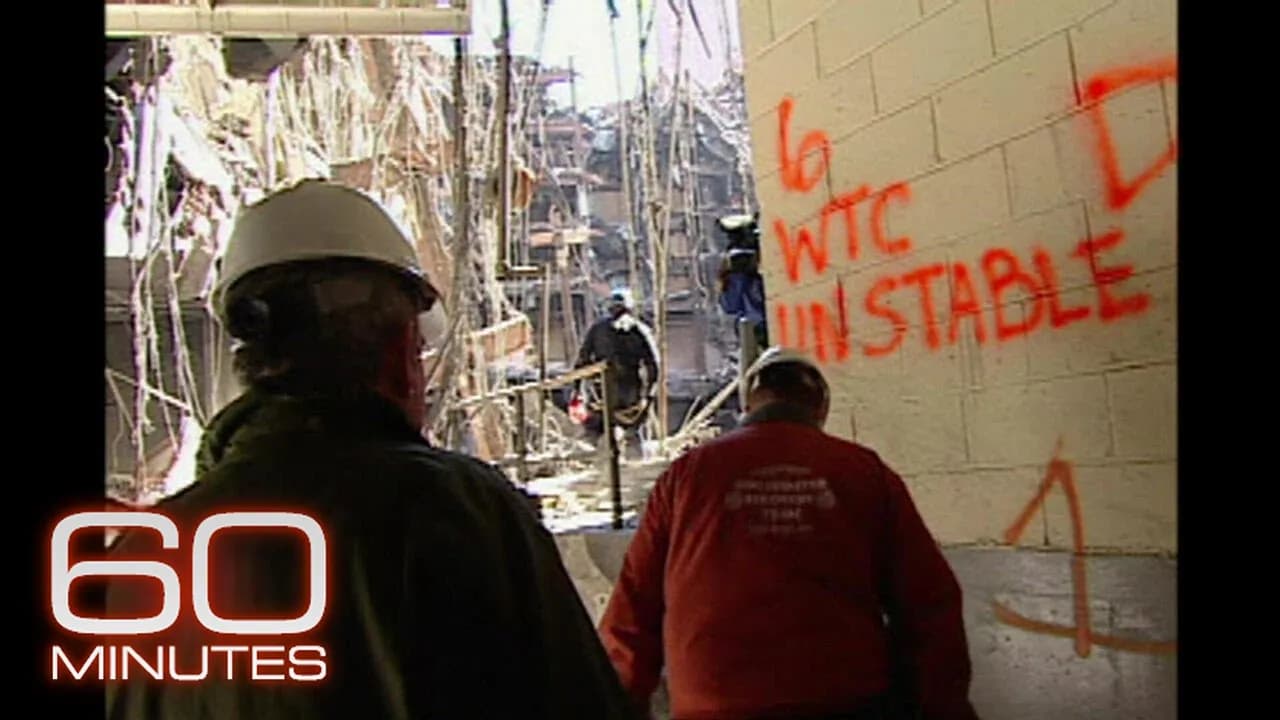
Thirty years later, Chernobyl's crippled reactor still has the power to kill. The 20-mile no man's land was evacuated nearly 30 years ago. A massive structure appears to rise out of nowhere in the center of the zone. With funds from over 40 different countries, 1,400 workers are building a giant arch to cover the damaged reactor. It will be taller than the Statue of Liberty and wider than Yankee Stadium, the largest movable structure on Earth.
Nicholas Kai is overseeing the arch's construction. The disaster was sparked by massive explosions that tore the roof off Chernobyl's reactor number four, spewing radioactive dust into the atmosphere. The Soviets drafted over half a million troops to put out the fire and clear the nuclear debris. Thousands got seriously ill from radiation exposure.
Heaps of gnarled steel and concrete pools of nuclear fuel have hardened into a dense mass called the elephant's foot. There's still so much radiation coming from the reactor that workers have to construct the arch nearly a thousand feet away, shielded by a massive concrete wall. When finished, the arch will be slid into place around this sarcophagus, then sealed up. The average speed will be around 10 meters an hour, approximately the speed of a snail.
The old plant and sarcophagus are falling apart. Just two years ago, a snowstorm caused the roof of one of the buildings to collapse, forcing workers to be evacuated and raising fears of further contamination.
Building the arch under these conditions is challenging enough, but some of the biggest obstacles have nothing to do with radiation. As violence gripped Ukraine, one of the arch's contractors backed out. The project is also $770 million short and has been plagued by repeated delays. No matter when it's completed, vast stretches of the zone will never recover.
This is the city of Pripyat, 2 miles from the reactor. Thirty years ago, the population was 50,000. Today, it is zero. Pripyat was where many of the plant workers lived, grateful for their posting in a town that was the model of Soviet modernity. Nine-story apartment buildings lined the boulevard. The forest has taken over.
Andre Gloff lived in Pripyat in 1986. The Ferris wheel never had any kids in it. These bumper cars on the left had never had kids on them too. When speaking with former neighbors, they call it 26, the date of the accident, the 26th of April.
Back then, Gloff worked for Chernobyl's nuclear safety division. He was off duty that night, but what he saw when he drove past the damaged reactor was like nothing he or anyone else had ever seen. The glowing core of the reactor looked like a sunset in the distance about 100-200 yards away. That was the first time he realized the scale of the disaster. Gloff told his family in Pripyat to stay inside and close the windows. Soviet authorities covered the area with secrecy, told people they had nothing to worry about. But 36 hours later, over a thousand buses were sent in to evacuate everyone. Authorities told people it would only be for three days, one of many lies.
Ivan Ivanovich and his wife Maria were evacuated to an apartment block near Kiev after the accident but couldn't take it. They came back two years later. Today there are three other people living in their village just a few miles from the old power plant. When asked if anyone told them it was dangerous, Ivan responded that when he lived in the apartment block, he got sick all the time, but when he came back, he was fine.
Tim Mousseau has been studying the contamination's impact from a makeshift lab inside the zone for the last 15 years. Some of the mice have on the order of 10,000 times more radioactivity in their bodies than in clean areas. Thyroid cancer and leukemia affected thousands, though the exact number of deaths is still being debated. There is evidence that some of the genetic damage that occurs at the level of the DNA can be transmitted from one generation to the next.
There will be areas that will be contaminated for thousands, if not millions of years. Tourists are visiting the zone. One tourist stated their friends thought it was very strange, but people have been coming here for a while, so they guess it must be safe.
Thousands of workers come into the zone every day to look after what remains of the plant. Others live here year-round in the town of Chernobyl itself. Yvan Ganchureno lives there and finds it a very interesting, maybe even sacred place. He spends much of his time writing music on his bass guitar.
A decade after the disaster, workers built a monument honoring their colleagues whose lives had been destroyed. The workers and firemen made the monument themselves. It says: "To those who save the world." When the reactor exploded in 1986, radioactive dust and debris were carried as far away as Italy and Sweden. Until the arch finally seals up that stricken reactor, something like that could happen again.
There's a reason we use a Japanese word for a catastrophic seismic ocean wave. Japan has had more tsunamis than any place else on Earth. The massive 9.0 earthquake nine days ago and the subsequent tsunami has left nearly 8,500 people dead, some 13,000 missing, and nearly a half a million homeless. It leaves Japan teetering on the edge of a nuclear crisis that has already resulted in measurable amounts of radioactivity turning up in milk, drinking water, and in some crops.
The Fukushima Dichi crisis is not one nuclear emergency. It is four potentially catastrophic events standing side by side. In all, there are six reactor stations. Numbers one through four are in peril. Last week, crews risked their lives to get water onto melting uranium fuel. Through explosions and blasts of radioactive steam, a few hundred Japanese join battle with the most powerful force known to man.
Julia Neshwat is a State Department official who has been on the Fukushima disaster from the start. The US is providing the full resources of the United States government. An American team of top experts arrived shortly after the disaster, but they were largely stuck at the US embassy. The Japanese didn't think they needed the help.
By last Tuesday, the emergency was out of control and the US gave the Japanese an ominous private warning that if they don't expand the efforts, it will require heroic work done that could be quite devastating for the workers. That means they could very well lose their lives. An official with the US government told the Japanese that their people are going to have to die to save that plant unless they let the US help them.
At one point during the week, the hazard was so great the Japanese took all but about 70 workers out of the plant. The problem is water. The systems that keep the radioactive fuel rods cool failed. The rods are partially melting, releasing radiation. There are also used fuel rods stored in pools nearby. They're also losing water, and American experts fear that one of these pools is already dry. The danger is multiplied because the reactors are so close together.
All last week, the US said the crisis was more grave than the Japanese apparently believed. Last Wednesday, the American embassy began a voluntary evacuation of US citizens. It wasn't until two days later that the Japanese acknowledged the threat was greater than they'd thought. The Japanese declared a voluntary evacuation zone of 12 miles around the plant. The US says it should be 50 miles. Top experts disagree on fundamental questions such as whether melting fuel rods would cause an explosion or just a fire.
More than 50 American experts are in Japan, including engineers from the Nuclear Regulatory Commission and public health advisers. They're working in three joint emergency operations centers around Tokyo. One of their biggest problems is getting a good look at the damaged reactors. Surveillance pictures have been poor. The US team is using cameras and sensors carried by drones in the air and robots on the ground to get a clearer idea of what's going on.
The tsunami inundated about 400 miles of the northern coast. Matsushima was said to be among the most beautiful places in Japan, a famous vacation spot. The trees are about all that's left. David Chum Runert is a native of Texas who's been teaching English in Matsushima schools for a couple of years.
Noiru Elementary School is around the corner. David Chum Runert was among the teachers and students who were wrapping up the day when the building began to roll on the greatest quake Japan has ever seen. Some guy with a helmet on ran in and said the tsunami's coming. The principal said everyone run back to the school. The fifth grade teacher saw a wall of water coming and said everyone run back inside. It was too late to get out of the gym.
Inside there were about 200 people, children from 6 to 11, parents who'd come to pick them up. Less than 30 minutes after the quake, they were swept up in a surge of seawater and debris. The water rose up to the stage level. David grabbed the wall and then a grandpa and some lady who was hanging on to him washed by him and they managed to grab his shoulder. They were hanging on to him and he could feel it getting pulled. He grabbed the railing and found his footing, possibly the top of the basketball goal.
David saw one of his kids struggling, so he grabbed his shirt and pulled him over to the side. He saw a big desk with four or five of his kids hanging on to it, shouting for help. He was able to grab the desk and pull it closer, then grab them one by one. There was one more lady and they got her over too.
In two hours, night had fallen. They were in total darkness in the freezing cold with the seawater all around them for about six hours. The aftershocks would come and everyone would huddle down together, afraid again. David kept saying to the children, "Hang in there," and tried to give them a little smile. Six-year-old SA Suzuki was rescued from the gym. The water came up to her neck, up to her face. A teacher grabbed her by the arm and pulled her up out of the water.
We came back to the gym and found those who did not survive lying across the basketball court and up on the stage. Families searched for their loved ones, lifting blankets one by one in a combination of hope and dread. There are about 85 bodies in the gym. It is now five days since the tsunami. The army has come in and done the best they can. They pulled a car out of this entrance way and wrapped most of the bodies up in army blankets. There is no place to put this many bodies. The morgues are completely full and there aren't enough people to move them.
In Matsushima, we found one small unit of Japanese self-defense force engineers. They're clearing roads and searching houses, but the response so far seems strangely small. They're spread thin over the 400 miles. There's no sense of hurry. The engineers knock off at dusk, a sign that they're not expecting to rescue anyone. All across northern Japan, nearly half a million are homeless, nearly a million have no power, and more than 2 million are without water.
In the coastal city of Sai, a city of a million people about the size of Detroit, we saw nearly 3,000 residents patiently waiting for a grocery store to open for the first time in days. There are shortages of food and lines for gasoline stretch half a mile. Add to all of this what you might call nuclear refugees. Thousands are in shelters because their homes are too close to the Fukushima reactors.
Tomoori Kato came in to be checked for radiation. He was clean, but his home is half a mile from the nuclear plant. He's lived there 50 years, and he expects he will never return. The nuclear refugees were loaded onto buses and hurried away, carrying almost nothing. Yoshihiko Igarashi's house is three miles from the plant. His daughter was born there. She turned 20 last week in the shelter. Sixteen hundred people are in this shelter alone. It's just 20 miles from where the reactor fires are burning.
The magnitude 9 earthquake that struck Japan on March 11, 2011 not only shook the ground, it shook the Japanese people's faith in their government and the nuclear power industry. The whole area is now a radioactive wasteland. The people who live there don't know if they'll ever be able to go home. Many don't know if they'll want to. Three years later, the events of March 11th darken their lives so deeply that many speak of it simply as 311.
The hell that broke loose on March 11, 2011 was the strongest earthquake in Japan's history. When the shaking stopped, the tsunami raced toward shore. Almost all of the more than 18,000 people who died that day on Japan's northeast coast died in the flood. The quake didn't do much damage to the Fukushima Dichi nuclear power station, but the tsunami shut down the reactor's emergency cooling systems and they started to melt down. Hydrogen gases inside the buildings then exploded, spreading radiation into communities more than 25 miles away.
Today, in the town of Tomioa, the radiation levels are considered safe enough to allow people in during the day. Loudspeakers warn visitors that they must leave by 3:00 p.m. The disaster seems to have stopped time. The clock shows 2:46, the moment the earthquake hit. The stack of newspapers we found were dated March 12th, 2011, the day after the quake and tsunami. People had to leave in a hurry. The government told people of this town and neighboring towns to get out quickly.
Welcome to Okuma, says the sign. Population today, three years later, zero. More than 11,000 people left town that day and never returned. Nio Kimura lived with his wife and two daughters next door to his parents. The tsunami killed his father, his wife, and his youngest daughter, Yuna, a bright and cheerful 7-year-old. This is what their homes looked like before March 11th, 2011. This is what's left today. Foundations and scraps of memories that he keeps in a small box by what was once the front
Norio Kimura can only visit his former home in Okuma 10 times a year and stay only 5 hours due to radiation levels. During a February visit in the middle of a blizzard, he brings flowers to a small shrine honoring his family, who were among the 111 people who died in Okuma that day. The remains of 110 have been recovered, but his daughter Yuna remains missing.
Kimura continues searching for Yuna because stopping would mean losing his connection to her. He states that finding her and her belongings is what allows him to live each day and maintain his sanity. Volunteers help him dig through debris while wearing protective clothing to limit radiation exposure.
On March 11th, Kimura made a decision he will never forgive himself for. At work on a farm, he stayed after his boss told him the tsunami would be 3 meters tall. Since his house was 5 to 6 meters above sea level, he believed his family would be safe and didn't return home.
When asked if there was anything he could have done to save his family, Kimura replied: "I should have gone home right away. I regret believing the information easily while my family was in life-threatening danger. Even now, I say to myself, what was I thinking?"
When radiation forced the evacuation of Okuma, the town leader told Kimura to stop searching for the missing and start caring for the living. His surviving daughter Mayu moved with him to the Japanese Alps, where they plan to open a guest house. Their new home is 2,000 feet above sea level and 180 meters from the Fukushima plant.
Three years after the disaster, more than 4,000 workers continue at the Fukushima plant, all wearing layers of protection. Workers in contaminated buildings are only allowed to work 2.5 hours per day. The facility is not producing electricity but conducting cleanup operations.
Yawichi Fabashi, a former newspaper editor who led an independent investigation, concluded that the government had conspired with the industry to convince people nuclear power was safe. He stated: "The government effort at the time was to convince people that there was nothing to worry about. Exactly. Nothing to worry about. Don't worry. Even don't prepare for that severe accident because that would cause unnecessary unease and unnecessary misunderstanding."
American nuclear engineer Lake Barrett, who directed the Three Mile Island cleanup, was hired as an adviser. He estimates the Fukushima cleanup will take 30 to 40 years, stating this timeline is not unusual given the complexity compared to Three Mile Island, which took 10 years despite being a much simpler accident.
Barrett noted the decision-making process in Japan requires consensus, which often takes considerable time. The most difficult job will be dismantling the melted reactors, where radiation levels are too high for workers to access. Currently, 100,000 gallons of radioactive groundwater must be pumped out daily before it reaches the ocean, with storage tanks notorious for leaking.
Entire communities outside the plant are being cleared of contaminated materials that will require storage for generations. Agriculture has ceased in the area, with the only "crop" being black bags of radioactive waste filling empty spaces in towns like Okuma.
Children from Okuma now live and attend schools 70 miles away. When asked how many would like to return to Okuma, all raised their hands, but none believed they would actually return due to radiation concerns. These children will be middle-aged before the cleanup is finished.
About a third of Okuma residents moved into government-provided temporary housing that has become permanent. The three generations of Kimuras are now split apart, with Norio and Mayu living in Nagono, 5 hours from his mother Tamoe, who lives alone in temporary housing furnished only with photographs.
Tamoe explained she cannot join her family because her husband's ashes are with her, and the family cemetery in Okuma is contaminated with radiation. She stated she could visit two or three times a year to burn incense, but her grandchild would not be able to come.
In the winter of 1957-58, the largest nuclear disaster until Fukushima occurred in the southern Urals near the town of Kyshtym, between the cities of Sverdlovsk and Chelyabinsk. Dr. Zhores Medvedev, a Soviet scientist living in exile in London, revealed that several hundred people died shortly after the disaster, with several thousand more dying in the following years.
The area was chosen for the Soviet nuclear weapons program after World War II. The first nuclear reactor was built to obtain plutonium for a nuclear bomb, with the product taken to a chemical plant for plutonium extraction. The haste to deliver the first bomb for Stalin's 70th birthday led to improper disposal of millions of gallons of liquid nuclear waste, which was buried in bore holes and mineral workings.
The buried radioactive waste spontaneously exploded in winter 1957-58. While the explosion itself was small, the radioactivity released was devastating. The area remains contaminated and will likely stay so for two centuries.
In 1977, prompted by Medvedev's claims, Ralph Nader and Richard Pollock used the Freedom of Information Act to request documents from U.S. intelligence agencies. They received 14 documents from the CIA, including a 1958 report stating that stores selling milk, meat, and other foodstuffs in Kamensk-Uralsky were closed due to radiation exposure, and people grew hysterical with fear as mysterious diseases broke out.
Medvedev found evidence in Soviet scientific journals, including articles from "Atomnaya Energiya" about contamination of two lakes. Dr. John Bradley, who translated thousands of Russian scientific works, confirmed that the radiation levels described could not have been created for experimental purposes and indicated a major accident.
A team at Oak Ridge National Laboratory analyzed the Soviet literature and concluded in a 1980 federal report that the Soviet Union had suffered a major nuclear waste accident. They suggested ammonium nitrate may have caused the explosion rather than Medvedev's theory of a small nuclear reaction producing a steam explosion.
Maps of the southern Urals before 1958 showed an L-shaped area with 30 communities, each with up to 2,000 inhabitants. Maps printed after 1958 show these 30 communities have completely disappeared. Michael Middleman, who traveled through the Urals, described seeing a "dead forest" with a "color of death" from a train window.
Despite U-2 spy missions over the area starting in 1958, including the mission that resulted in Francis Gary Powers being shot down in 1960, intelligence agencies failed to piece together evidence of the accident. Ralph Nader charged that the CIA deliberately covered up the accident to avoid spreading bad news about nuclear energy.
Herbert Scoville, CIA chief of scientific intelligence from 1955-1963, acknowledged the agency knew something had happened but stated that in those days, nuclear accidents were not a major concern, and they did not sense the scale of what had occurred.
The Atomic Energy Commission requested special translations of Soviet scientific papers about the accident in 1963, indicating they recognized its significance. However, dozens of AEC officials from the late 1950s and 1960s claimed they did not know about the disaster.
The Kyshtym disaster contaminated about 1,000 square kilometers, obliterated 30 towns and villages from maps, forced permanent evacuation of several hundred thousand people, and made the area uninhabitable. This catastrophe occurred during the critical period when the U.S. government and utilities were deciding to expand nuclear power plants nationwide.
Keep 60 Minutes in your library
Save the videos and channels worth coming back to, and find them again in one place.