Why Christopher Nolan shot "The Odyssey" on IMAX film
In a Nutshell
Christopher Nolan shot *The Odyssey* entirely on IMAX film for the first time in history, using custom soundproof enclosures to overcome the camera’s loud noise and short runtime. The production relied on analog film processing at Photo Cam, including hand-splicing negatives and photochemical color timing for superior image quality. Nolan emphasizes that large-format film and communal theatrical exhibition deliver an irreplaceable cinematic experience that digital alternatives cannot match.
These notes were generated by AI and may contain inaccuracies.
Director Christopher Nolan has created some of the most spectacular films of the 21st century, including The Dark Knight, Inception, Interstellar, Dunkirk, and Oppenheimer. His latest film, The Odyssey, adapts a nearly 3,000-year-old Greek epic and opens in theaters in July.
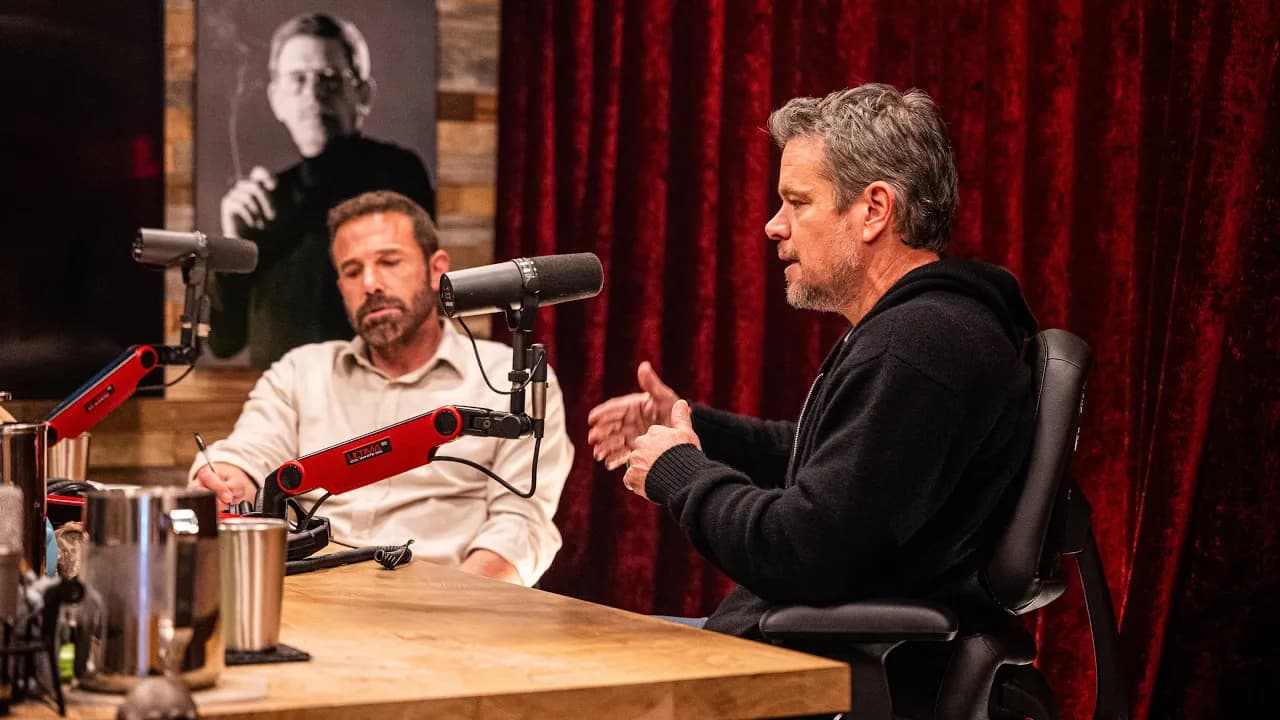
Matt Damon portrays King Odysseus in The Odyssey, marking his third collaboration with Nolan. Nolan distinguishes himself through ambitious storytelling and equally ambitious execution methods, preferring to capture everything in-camera rather than relying on digital effects.
The Odyssey is the first feature film shot entirely on IMAX film. Each frame delivers image resolution up to three times higher than digital formats. This marks the first time a production attempted to shoot 100% in IMAX, an approach that had never been accomplished before.
The IMAX camera requires reloading every two and a half minutes due to the large format size, which limits how much film the camera can hold at once. When operating, the camera produces significant noise from its heavy-duty film transport mechanism, comparable to a sewing machine fighting a stapler.
For intimate scenes, the loud camera noise previously made IMAX filming impractical because audio recording would be compromised.
Nolan's production inspired IMAX to develop a soundproof enclosure for the camera. The enclosure measures approximately the size of a coffin and weighs over 300 pounds when assembled. Special steel plating had to be added to the dollies to support the weight of this housing.
The production successfully completed filming with this setup, demonstrating that entire features could be shot entirely on IMAX film.
The production visited Photo Cam in Burbank, California, the only motion picture film lab worldwide that still produces 70mm prints. Ron Pores, a negative assembly technician, demonstrated the splicing process.
Every scene change requires hand-cutting and splicing of the film negative. With dozens of scene changes occurring per minute, this results in thousands of individual cuts throughout the film. The splicing machine appears to date from the 1940s and uses glue to join film segments. This represents an analog, human-driven process in contrast to digital editing workflows.
The 70mm film format provides the highest quality imaging format available, offering superior sharpness with minimal visible grain compared to digital alternatives. When properly exposed, printed, and projected on large screens, film delivers image characteristics that cannot be replicated by other formats.
Lance Spindler, a lab color timer at Photokim, described the photochemical color timing process. Initial color grading occurs on an analyzer to approximate the desired look, followed by fine-tuning using physical filters including primary colors (cyan, magenta, yellow) and secondary colors.
This traditional method differs from standard digital color correction performed on computers. The photochemical approach preserves analog color with infinite gradations rather than discrete numerical values.
Film captures color, grays, blacks, and whites in a manner closely approximating human vision. The analog process provides the closest technological equivalent to natural sight, avoiding the discretization inherent in digital systems.
Color corrections are applied during printing as the film passes through different colored lights. Each shot's timing is programmed so that valves and lights adjust automatically as the film advances through the printer.
After chemical processing and drying, the final release prints are produced one reel at a time. Multiple reels are processed sequentially before full production begins.
The Vista Theater in Los Angeles is one of the few venues capable of projecting 70mm film. Industry concerns exist about the potential disappearance of traditional theaters with large screens.
Nolan argues that traditional theaters represent both historical and future elements of cinema. The communal experience of watching films together—shared laughter during comedies or collective emotional responses during dramatic moments—remains unique to theatrical exhibition.
Despite evolving economics in film distribution and home viewing, Nolan maintains confidence that the communal theatrical experience will remain a permanent part of cultural life.
Keep 60 Minutes in your library
Save the videos and channels worth coming back to, and find them again in one place.