Could Your Own Cells Rebuild Fragile Bones? | Dr. Robert Sackstein
In a Nutshell
Dr. Sackstein's team developed a sugar-based "GPS" technology that directs a patient's own mesenchymal stem cells to bone marrow via simple IV injection, where they form new bone-forming cells. In a Spanish safety trial, 8 of 10 women with advanced osteoporosis experienced zero fractures for up to 8 years after one treatment, despite previous fractures on standard medications. This autologous approach bypasses the rebound fracture risk and side effects of current osteoporosis drugs like denosumab and bisphosphonates.
These notes were generated by AI and may contain inaccuracies.
Dr. Robert Sackstein focused his research on osteoporosis because his mother died from the disease. He made a personal promise to find a cure for osteoporosis. His work has produced preliminary human study results on advanced osteoporosis published in the journal Cell. He is a bone marrow transplant physician and pioneer in glycobiology who discovered the "H" cell that helps hematopoietic stem cells enter the bone marrow and developed a "GPS" system to modify sugars on living cells to improve their movement into tissues.
Most people misunderstand the term "stem cell" by thinking they can only come from embryos. Adult stem cells are present in our bodies at all times. Without stem cells, wounds would not heal. Stem cells produce more of themselves and differentiate into daughter cell types. The stem cell that forms bones is called a mesenchymal stem cell, which produces bone precursors called osteoblasts. These differentiate into cells that occupy bone.
Bones are in a constant state of renewal and can adapt to stresses like becoming a long-distance runner. Bones function like scaffolding with iron bars and concrete pillars. As we age, repair processes slow down due to declining stem cell content in all body tissues. This causes wrinkles, slower muscle recovery, and longer injury recovery times.
When a bone breaks, the first cells to work are osteoclasts (bone-destroying cells) that remove dead, shattered bone. This creates the right environment for stem cells to develop into osteoblasts. The process resembles earthquake recovery where rubble must be removed before rebuilding. Bone-forming cells (osteoblasts) do not divide or reproduce, so the only way to get more osteoblasts is through mesenchymal stem cells.
Osteoporosis results from an imbalance between bone deterioration and formation. Bones become weaker and porous. The term "osteoporosis" comes from Greek meaning "pores" or "holes" in bones. Simply injecting stem cells into bone marrow fails because bone marrow functions like a swamp - needle insertion disrupts the entire microenvironment and pressure destroys bone marrow structure.
Stem cells must enter bone through physiological blood flow rather than direct injection. Blood vessels function as highways for cell delivery. White blood cells reach infection sites through precision mechanisms depending on sugars on their surface. These sugar structures on cell surfaces create "Velcro"-like adhesion that can extend the diameter of a red blood cell, allowing cells to touch and sense microscopic environments.
Every protein and fat molecule in cell membranes is decorated with attached sugars, forming a network called the glycocalyx. The technology places specific sugar structures on cell surfaces without introducing genetic material or causing cellular disturbance. This surface modification does not affect cell biology and remains for approximately 48 hours - like renting a tuxedo for a wedding. The sugar structure functions as a GPS system directing cells to bone marrow with high specificity.
Human mesenchymal stem cells were extracted from healthy donor bone marrow (6 tablespoons or less, often 2 tablespoons from the pelvis), cultured to multiply, and injected into immunodeficient mice. This resulted in uniform formation of human bones in all mouse bones, surpassing the mouse's natural bone formation ability.
The journey began in the late 1980s when determining how hematopoietic stem cells reach bone marrow. Bone marrow transplant survival rates improved from 15% to over 50%, with some scenarios reaching over 90% long-term disease-free survival. The molecule directing cells to bone marrow is permanently expressed on blood vessel linings within bone marrow and also appears on blood vessels at sites of tissue injury or cancer.
Patients must be healthy without acute conditions like infections when receiving transplants. People with cancer history are excluded because stem cells could promote tumor growth. The technology has implications beyond skeletal diseases - it can direct any cell type to locations of desperate need, such as directing white blood cells to infection sites where E-selectin levels are elevated.
Bone is made from the inside out and decomposes from the inside out. The active parts of both bone formation and breakdown are located within the marrow. Placing stem cells into bone marrow provides the opportunity to form more bone when needed.
Dr. Sackstein was born in Havana, Cuba and immigrated to the United States. His mother was a concert pianist and student of Claudio Arau. Due to displacement from Cuba, she could not continue her professional piano career. The family could not afford a piano for three years after arriving. His mother worked accounting jobs and the family worked three jobs daily, demonstrating perseverance that influenced his 40-year research commitment.
His mother's bones were brittle due to being vegetarian since age sixteen without knowledge of calcium and vitamin D requirements. She avoided sun exposure and did not consume meat or milk. Despite severe osteoporosis by her fifties, her piano technique prevented fractures in wrists, arms, shoulders, and scapula by allowing force to flow through fingers to arms rather than concentrating on joints. She played piano until age 93 when she died from complications of vertebral fractures that impaired her breathing.
The first clinical trial phase focuses on safety testing with a small group of patients. Ten women with very advanced osteoporosis participated. All participants continued receiving their existing exemplary medical care as an "add-on" study rather than replacing current treatments.
Two medication categories exist: anti-resorptives that stop bone deterioration and bone-growth-promoting molecules that promote bone formation. Romosozumab does both but can only be used for one year because continued use paradoxically reduces bone-building ability. Bone-forming drugs are primarily hormonal analogs of parathyroid hormone given intermittently (daily, not continuously). Current medications do not work efficiently for hip and wrist fractures, working best for vertebral fractures. Bisphosphonates improve bone crystalline shape but produce unusual bone mineral. Denosumab is a powerful anti-resorption drug that inhibits degradation.
The problem with this
The problem with this drug, and it is a big one, is that if you have to stop it because you can no longer tolerate it or because it simply doesn't suit you, you will face a rebound risk of further fractures after stopping it. Therefore, you should immediately switch to another medication such as bisphosphonates if you are going to stop taking it.
These are questions related to therapeutic management, but the main point is that these drugs are not without side effects. Even bisphosphonates are sometimes not well tolerated. There are problems with every medicine you have to take.
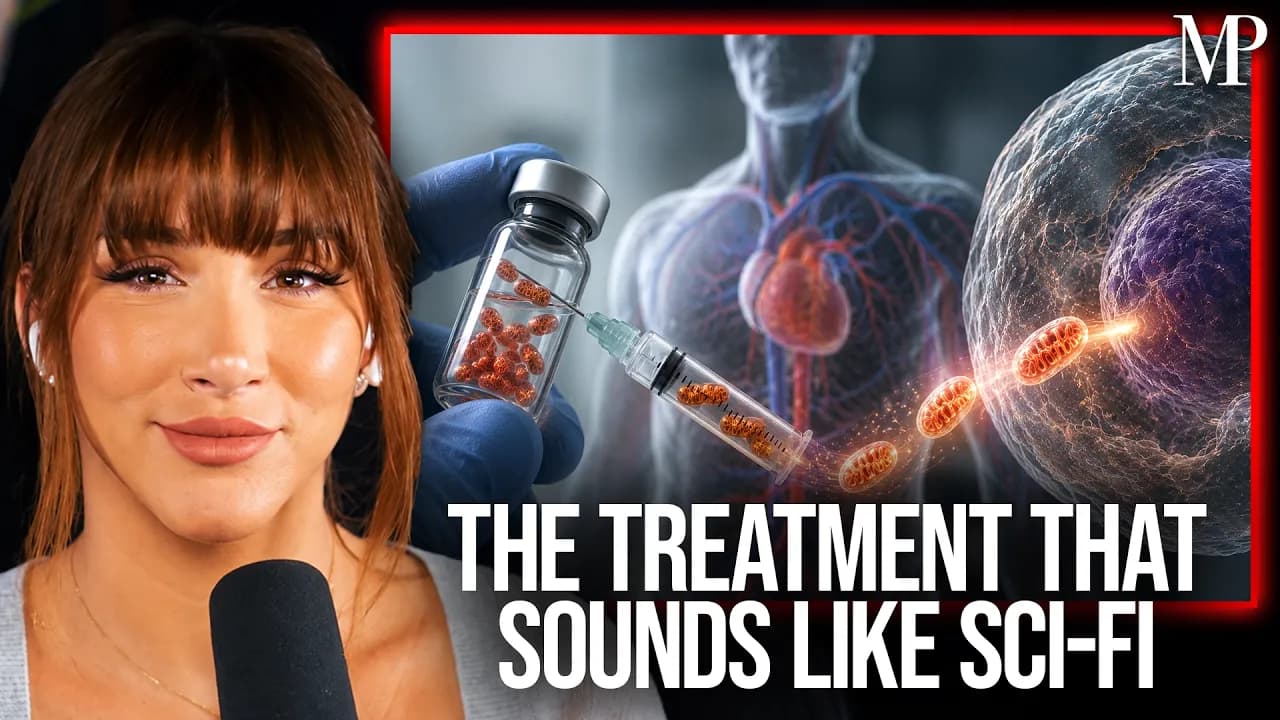
If we can treat it, which is what I intend to do, I think we can get rid of all those problems. What you do is take the person's own stem cells, multiply them, and then return them to him. This is the main treatment, so to speak. We put them into a culture to increase the number of these cells, and then those large numbers are treated with a modified glucose GPS technology, so that we then introduce the cells into the bloodstream via a simple injection.
We do not use an IV bag. It is literally injected within 10 minutes via an IV line set up for only 10 minutes of injection, and then it's all over.
The study was only supposed to last for two years of monitoring the safety of each patient, after which the study was supposed to be closed. We were allowed to study 10 people in this condition who were suffering from advanced osteoporosis. The last person to be enrolled in the study received the injections in May 2018. The study was officially scheduled to end in May 2020, but in March 2020 Covid emerged, and the Spanish Agency for Medicines and other doctors involved in the project said: "Wait a moment. We have a completely new disease. We need to follow up with these people. What if their outcomes are worse if they get COVID or something terrible happens, you know, because they may have received stem cell therapy? They may have a higher risk of developing cancer or something else during this COVID period."
We were asked to continuously monitor patients during the COVID period, and that is why we have this long observation period which has completely shocked us, which is a remarkable decrease in the number of fractures.
It was an observational study. It is a safety assessment experiment. Therefore, it was based on observation at that stage. Any doctor treating these patients can change the medication as desired if they need to or feel it is necessary. But there were very few changes in medication after the injections because the doctors were saying, "Well, the patient seems fine to me. I don't think I need to change my medication." Therefore, there weren't many adjustments after the injections.
Many modifications were made before the injections and people were still suffering from fractures despite all the modifications, and suddenly, after one injection, eight out of 10 women never suffered another fracture. Eight years of follow-up for the longest-serving patient.
Now, she asked us about that patient, the first patient. This character had developed osteoporosis before menopause. She had a mother who had suffered a similar course, and all the other women were suffering from osteoporosis after menopause. But she was so desperate that she begged to join the experiment, and basically, in her youth, she was a motorcycle enthusiast and toured all over Spain and Europe on a motorcycle. That was one of the ways she discovered she had osteoporosis, because she went on a motorcycle trip and ended up with a broken back, without any collision or anything, without any physical injury. Yes, and so it was the vibration of the motorcycle itself that broke a vertebra, one of the vertebrae of the spine.
So she was devastated. Her mother died due to complications related to osteoporosis, pain, and suffering. She underwent the tests and immediately started taking the medication. That was about 10 years before she joined the experiment. She had suffered multiple fractures and had completely stopped riding motorcycles. She was even taking painkillers to control the pain at the time of the experiment.
Within 3 months of the injections, she felt so much better that she returned to work as a florist. She went out and bought herself another motorcycle. On a 1500-kilometer motorcycle journey across Spain.
Would doing this several times, out of curiosity, help? This is another question for another study, and we will evaluate that in the future. This raises a lot of questions in my mind, namely that we wanted to use autologous stem cells. Self-reliance means being self-reliant, because it has the lowest rejection rate, I believe, and the highest levels of security.
There is no rejection. It's coming back to you. If you have used an intermediate stem cell from another person, which is called allogeneic, it is called an allogeneic. If you take a stem cell from another person, a mesenchymal stem cell, and inject it, the mesenchymal stem cell generally has the ability to hide. We call them immunologically inactive because they do not have many tissue antigens on their surface and produce a range of anti-inflammatory molecules. So initially it is a hidden cell, but once it develops into an osteoblast, the osteoblast is covered with a set of molecules on its surface that recognize you as a stranger to another person. Therefore, it will be rejected immediately. That's why we use the subjective approach.
There are some laboratories and companies that are popping up these days, yes, that advertise that they can take, say, your hair follicles or something else, keep your autologous stem cells intact, multiply them, and store them in a laboratory in a freezer, and then one day you can use them for whatever purpose you want. I understand that. I understand the logic, but there is a part of me that doubts the reliability of such a process.
I think it is very promising, but at the moment it is a long way off. The reason I say it is promising is due to two things. First, the younger you get the stem cell, the less likely that stem cell will be depleted by what is called telomere depletion, where the number of times the cell divides begins to lose the small caps at the ends of the chromosomes. Those coverings are there to help the cell maintain its ability to continue dividing before it starts to reach the actual important DNA in the chromosome itself, which causes the cell to die when that happens.
So, from an operational standpoint, you would always think that younger stem cells would be better than older ones, which is again one of the reasons why everyone was surprised because this result was incredibly unusual. However, having said that, you can always get stem cells from the body at almost any time. So, you don't really need to insist that it be at birth. I mean, ideally, if you get it at birth, that's probably the best possible moment because you can get it from the umbilical cord. But again, you won't get it from the bone, but umbilical cord stem cells are still capable of forming bone; don't misunderstand me. There is a tendency for earlier to be better, but don't worry, you can get it later. Absolutely not.
However, obtaining a specific stem cell from a particular location makes it more likely to be the type of cell needed at that location. Therefore, the hair follicle stem cell would be a better cell for forming skin or skin appendages than the mesenchymal stem cells derived from bone marrow. Believe it or not, mesenchymal stem cells from fat are the best anti-inflammatory cells.
So, let me move on to another topic. I don't want to distract the readers, but it's really important to clarify this point. We can treat many inflammatory diseases in their early stages, for example, diabetes mellitus. Autoimmune diabetes can be stopped in its tracks in an animal model by giving mesenchymal stem cells the moment sugar levels start to rise. There is a honeymoon period for everyone who is diagnosed with diabetes. It may last for months and sometimes years, during which your blood sugar levels are high, but you are still producing insulin.
So, we conducted a preclinical animal study, where we took mesenchymal stem cells and made them allogeneic (from a donor) because we wanted to evaluate, because if you're going to have a honeymoon period of diabetes, you don't want to waste too much time growing your own mesenchymal stem cells. You want to get something ready to use and see if you can stop the process. Therefore, we deliberately used cryptic mice. That was a study on mice. We completely stopped the onset of diabetes in these mice that were susceptible to it. It was a model called the NOD mouse that develops spontaneous diabetes with almost the same type of immunity as humans. The intermediate cells we treated had the same sugar modification. I went to the pancreas because that's where the inflammation was. It colonized the eyelid itself, stopped its destruction, and the animals recovered from diabetes.
Therefore, we can use mesenchymal stem cells to stop an inflammatory process. In another mouse model, we did this with multiple sclerosis. Stop that. You can obtain an anti-inflammatory stem cell. What we have observed now is that the best anti-inflammatory stem cell is the one extracted from fat. You can simply take a gram of fat, extract a little fat from the abdomen, and grow those cells; they are very powerful anti-inflammatory cells.
Well, that's absolutely fantastic. It is in a way a one-stop solution for organs or systems, with the exception of cancer, of course. So, well, even in this case, let me share something that will excite you. You can load a mesenchymal stem cell with a cancer-killing molecule or a cancer-killing virus. Thus, you can use it as a "Trojan horse." You can take the same concept and use it as a "Trojan horse" to deliver it to the site using the specificity of a virus that targets a particular type of cell, and you can do this using an intermediate stem cell via such a technique. This is very interesting. So it is more like a variation on our current techniques and immunotherapy such as CAR-T and so on, but using a different technology.
Okay, we're really talking about a basic technique here. This is very exciting as we talk about it, but it has been somewhat delayed for organizational reasons. This is why you have to go abroad. I believe the regulatory hurdles were reasonable, and I have no doubt that the people who offered counter-arguments were wrong because many new drugs were in development. So, by the time we were developing the concept for the study, it was after 2008. The compelling study was one in which a human mesenchymal stem cell was injected into a mouse to form human bones inside the mouse. That was in 2008. That's when we arrived at the concept that we might be able to direct the movement of stem cells directly into the bone marrow and force the regrowth of bone-forming cells there.
But at the same time, new biological drugs were emerging. A drug called "Denosumab" and the next drug that was "Romosuzumab" were already in the release phases to move forward. So the FDA said we have promising new things coming, and that involves a kind of risk. But frankly, this is not the best idea because you are taking cells from already diseased tissue, and we might end up with more fractures. They were more hesitant at the time.
However, Spain is implementing a social medicine system. So Spain was eager to move forward because the goal here is treatment. There was a community interested in finding out if we could stop the 5.7 billion euros we spend annually on osteoporosis by doing something that might reverse the course of the disease. Meanwhile, the United States is spending $57 billion, and this is a conservative estimate. Some estimate that the cost to care for all the complications of osteoporosis could reach $300 billion.
However, we seem to be comfortable with this situation. But Spain was more in a hurry about the matter. Now, having said that, the Spanish government funded that experiment primarily. In a different model in the United States, I had to raise money from venture capital to achieve that, and nobody would have cared. And I tried, believe me, I tried to a great extent because of the hesitation about safety.
We are now in a new era, and I truly hope that people who aim to help humanity, and who are also interested in economic viability, will consider intervening now, because this is the right time for venture capital to bring the experiment to the United States, especially since the Spanish government is moving forward to fund the second and third phases of the experiment because of their enthusiasm for the results of the first phase. Now, I must bring this experience to the United States. It will not be offered to patients unless there are funding sources to provide the necessary infrastructure to begin the second and third phases of the trial in the United States.
This is extremely important and imminent for many of us, because, as I said, it is affecting us right now. It is not something theoretical or far-fetched in the future. I think that as a country we are just beginning to realize the need to prevent this bone deterioration through strength training, hormones, and so on.
As I also said, this is just a first step towards creating a complete platform of solutions for all the diseases that we all worry about in later stages of our lives. I agree with you. I think short-term trials will mature within three to five years, but we haven't yet touched on multiple doses. We did not practically consider combining it with other factors. As you know, it may be best administered with another drug as a combination therapy. There are many ways this issue will develop, but the bottom line is that, in my opinion, it will lead to better results in any formulation used for the purpose of reversing osteoporosis.
Well, I think we now have a great opportunity to democratize knowledge thanks to what is available on the Internet. But in places like these we can talk frankly with each other, and give people a chance to hear what the concerns were, to learn about turning points, and what people were thinking at some point. We must be careful because it requires careful coordination, and that is exactly what you are doing, Dr. Lynn. I want to offer you all the support I can, and I will support you when necessary if people start asking you more questions, and I hope they do because we need to tell the whole story. I would be happy to come back again.
Keep Hillary Lin, MD in your library
Save the videos and channels worth coming back to, and find them again in one place.