Mitochondrial Transplantation Explained and What Has Already Been Done
In a Nutshell
Mitochondrial dysfunction underlies chronic diseases and accelerates with age, explaining sharp rises in conditions like Alzheimer's, cancer, and long COVID after age 55-60. Mitochondrial transplantation, developed about ten years ago, has already been used in heart surgery, stroke recovery, wound healing, and diabetic ulcers, with Northwell Health now testing it in ERs for heart attacks. The core advance is sourcing or growing mitochondria in bioreactors for rapid delivery to damaged tissues, enabling faster recovery and immune support when the body's own supply is depleted.
These notes were generated by AI and may contain inaccuracies.
Mitochondrial dysfunction is always present in the background of many conditions even when it is not the main cause. When energy levels decline around ages 55-60, people begin developing Alzheimer's, Parkinson's, ALS, arthritis, and cancer at significantly higher rates. The odds of developing cancer at age 60 are approximately 10 times higher than at age 30 because weakened mitochondria can no longer adequately power the immune system to control cancer cells. Mitochondria may not be the primary driver of every disease but function as a consistent contributing factor across multiple conditions.
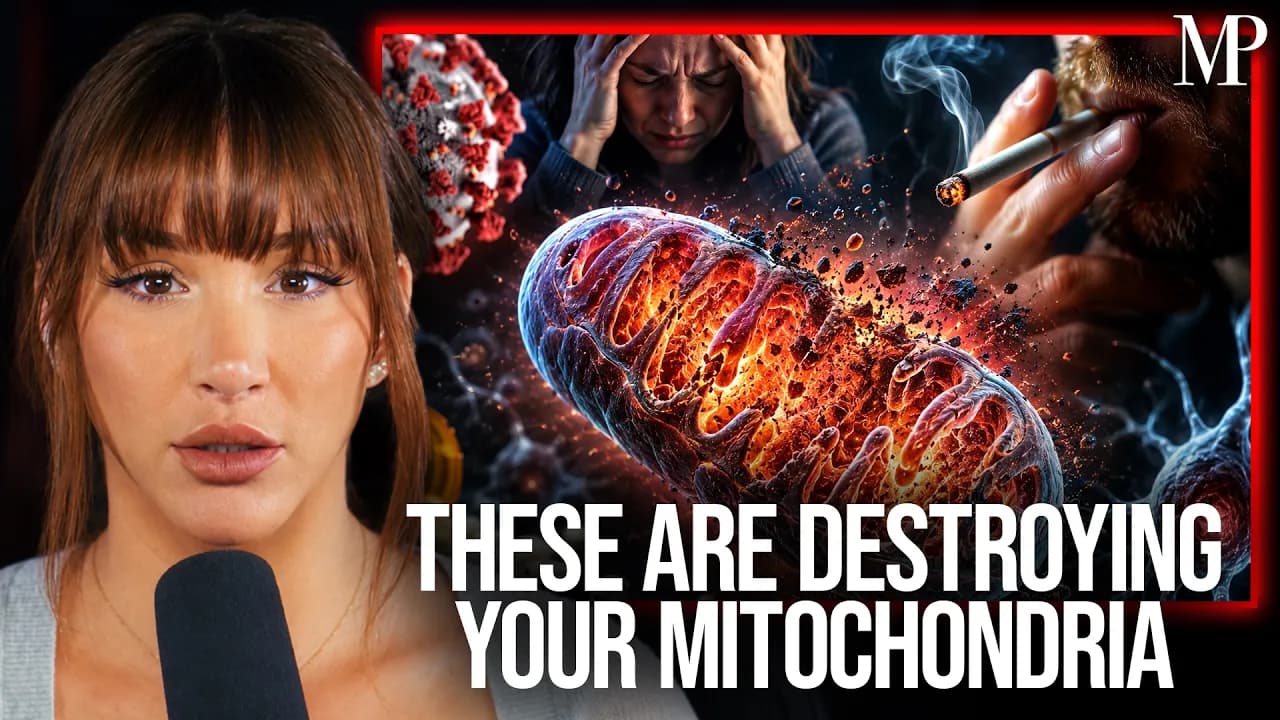
COVID destroys mitochondria on a massive scale, a fact established by research papers published approximately two years prior to this discussion. Some individuals experience more severe mitochondrial damage leading to long COVID while others recover more fully. The speaker notes that mitochondrial dysfunction contributes to multi-system failure affecting the brain, mental health, chronic fatigue, and pain simultaneously.
No doctors are currently addressing mitochondrial health as part of standard care. Physicians report having no prior knowledge of mitochondrial transplantation techniques. This information does not appear in medical textbooks. The speaker characterizes mitochondrial transplantation as a coming revolution in medicine that is not yet integrated into healthcare systems.
Mitochondrial transplantation was discovered approximately 10 years prior to this recording. The technique has been applied to human patients on a very small scale. The inventor originally developed the method for heart surgery on infants to restore damaged cardiac tissue during operations. Initial applications focused on acute injury repair rather than chronic disease treatment.
Northwell Health, the largest hospital chain in New York State comprising 23 hospitals, is actively developing mitochondrial transplantation protocols. Research projects are underway to deploy the technology in emergency room settings for heart attack patients. The approach involves delivering fresh mitochondria to damaged heart tissue to restore function.
Studies have demonstrated successful application in stroke victims. Additional applications include skin wound healing, burn treatment, and chronic diabetic wound care. For external wounds, mitochondria suspended in a gel are applied directly to the wound surface and covered with a bandage, allowing the mitochondria to integrate into the tissue.
When the body encounters infection or cancer, the number of mitochondria loaded into each platelet doubles, representing a proven physiological response. The body increases mitochondrial production when needed to combat infection. Mitochondrial resources remain rationed because the body has limited quantities available and must balance conservation with survival needs.
Mitochondria can be sourced from donors or grown in bioreactors, with bioreactor cultivation being the primary focus of current development efforts. This would enable on-demand production of mitochondria for patients. Potential applications include strengthening immune function in elderly patients during illness, maintaining hospital inventories of transplantable mitochondria for trauma cases such as injured soldiers or firefighters, and accelerating healing in acute injury scenarios.
Keep Mikhaila Peterson in your library
Save the videos and channels worth coming back to, and find them again in one place.