Destination: Nowhere; Tina Peters; Australia's Experiment | 60 Minutes Full Broadcast
In a Nutshell
The U.S. deported thousands of people—including those with court-ordered protection against return to their home countries—to third countries like Ghana, where officials then sent them back to the very nations they were barred from, sometimes with U.S. knowledge. President Trump pressured Colorado to free convicted election official Tina Peters and withheld disaster and infrastructure funding when the state resisted. Australia banned social media for children under 16, cutting accounts by 20% in three months, though platforms face criticism for weak enforcement and workarounds.
These notes were generated by AI and may contain inaccuracies.
The US has deported 25,000 people to countries that many of them have no connection to. Some of those countries are sending them straight back to the home countries US judges said they should not be returned to. Nearly 1 million people were deported from the US during the first year and a half of President Trump's second term. Most were returned to their country of origin. About 25,000 were sent somewhere else, places where they may have never been and may not speak the language. They're called third countries because they're not the US and not the person's home country. Iranians were sent to Panama, Cubans to the Central African Republic. Deportations like these can be legal, and past administrations have carried them out, but not at this scale. A five-month investigation uncovered cases in which people ended up in places where US immigration judges said they would likely be persecuted or tortured.
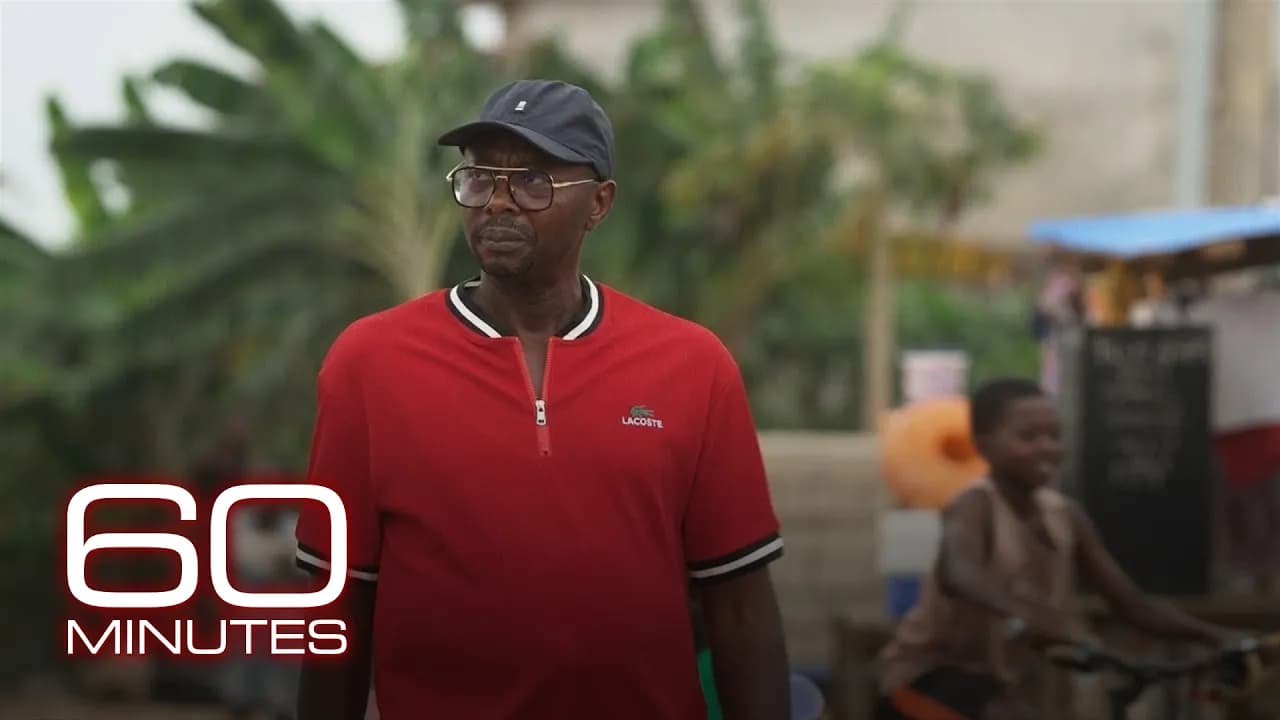
On July 11th, Musa Diawara, who had been in the US for 25 years with no criminal record, was arrested by ICE agents as he returned home from his night shift as an Uber driver in Houston. He owns a home in the Houston suburbs with his wife and children who are US citizens. After 3 weeks in ICE detention in Texas without being able to speak to his lawyer or a judge, he was put on a plane and deported to West Africa. 25 years ago, Diawara entered the US and overstayed a tourist visa. He applied for refugee protection, arguing he would be persecuted if he were returned to Mali, the war torn African country he's from. In 2012, a US immigration judge ruled he could be deported, but not to Mali. As a result of the ruling, he was able to get a US work permit.
On July 31st, Diawara landed in Ghana, a place he'd never been. He and others were detained in a hotel by armed guards and not allowed to make phone calls. Within 5 days, Ghanaian officials forced him onto a flight to Mali, the very country a US judge said he could not be deported to. In Mali, Diawara was homeless and in hiding. He had converted to Christianity, and Mali is a Muslim majority nation with an Islamist insurgency. He was dropped with no money or ID, and used a bank as his bed for two weeks. After 3 weeks in Mali, with the help of some local truckers, he escaped to another African country which he asked not to be disclosed.
The US government's position is that Diawara overstayed his visa and was in the country illegally. They had an order of deportation. They couldn't send him to Mali, but they could send him to a third country. In a statement, the Department of Homeland Security told that Ghana had provided the US with diplomatic assurances for his safety. DHS also questioned the credibility of Diawara's arguments for fearing persecution in Mali. James Perl, the top lawyer for the Department of Homeland Security, stated that third country deportations are widely misunderstood and that they have stopped crimes from happening and kept Americans safer.
Third country deportations occur when someone is a serious criminal and the country won't take them back, or when immigration judges grant country-specific relief where someone must leave the United States but go somewhere other than their home country. When an immigration judge rules that someone cannot safely be sent back to their home country, it's called withholding of removal. Musa Diawara had that protection. So did dozens of others on his deportation flight.
The deportation flight left Texas on July 30th and stopped in Sierra Leone, the Central African Republic and Ghana. The names of all 63 people on Diawara's flight were obtained. 17 of the 19 people reached who were sent to Ghana reported that Ghana quickly transported them against their will to countries that US immigration judges had ruled they should not be returned to. When asked if aware of cases where Ghana has sent people against their will to a country where they have a withholding of removal, Perl stated he was not aware of any such cases. He suggested people might consent to go home or that foreign governments applied their own procedures consistent with international law.
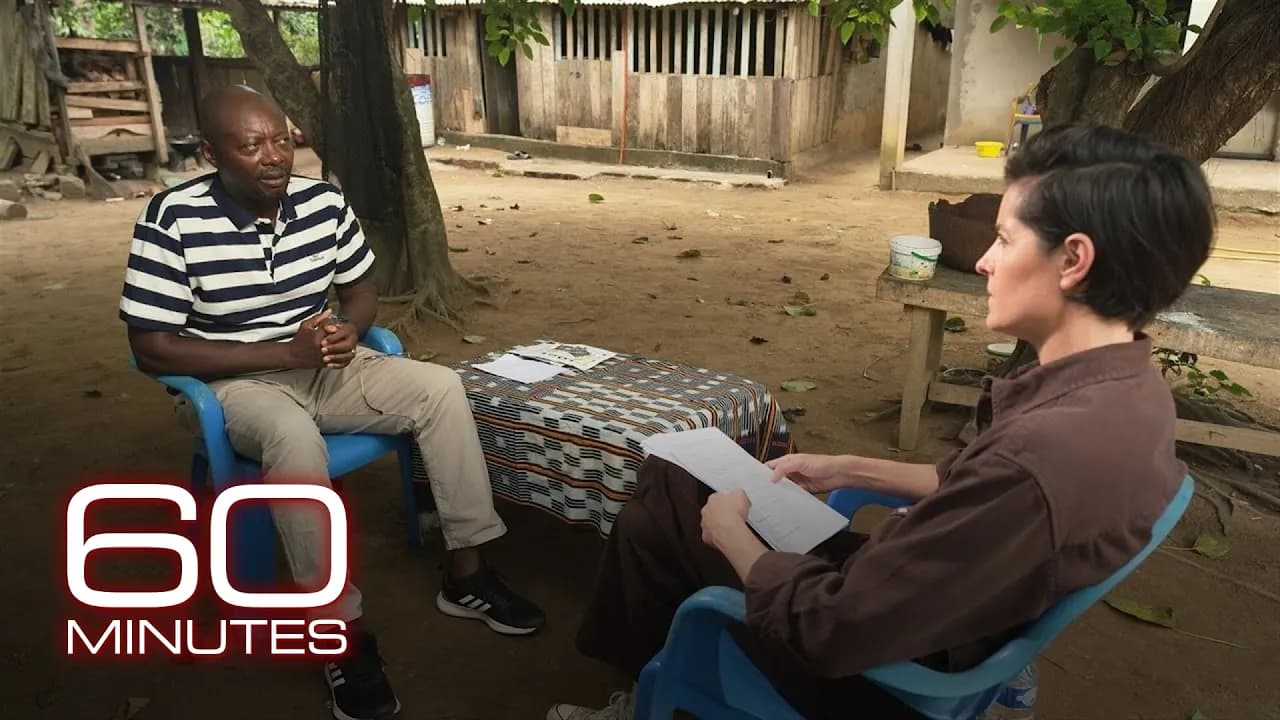
An eyewitness confirmed Ghanaian officials were pulling Rabiatu Kuate, a nurse who lived in the US for 30 years, onto her deportation flight to her home country where she had a withholding of removal. Diawara showed a document US officials gave him on the deportation flight with his medication that said "destination SHRC Mali." SHRC stands for special high-risk charter. His DHS issued bag tags also said destination Mali. After the interview, DHS sent a statement saying the bag tags were produced by contractors who are not part of the process that determines the destination, and the medication form was a clerical error.
In Sierra Leone, when folks arrive, they receive a pamphlet that says Sierra Leone is serving as a temporary transit location while arrangements are made to return them to their country of origin. Immigration attorney Meredith Yun says the US government was warned about Ghana's conduct in a lawsuit last year. Despite this, the US sent 10 more flights to Ghana, which Yun believes is a violation of international law.
Of the 63 people on Diawara's flight to Africa, a criminal charge or conviction was found for 19%, including theft, assault, drugs, and weapons possession. For everyone else, there were either traffic violations or no criminal record at all. Perl stated that third countries like Eswatini and South Sudan have agreed to accept deportees with criminal records for first-degree murder, armed robbery, kidnapping, and sexual assault when their home countries refuse to take them back.
Last month, a federal appeals court upheld a ruling in a class action lawsuit that found the Trump administration's third country policy unlawful because it denied deportees due process. However, the Supreme Court has allowed these deportations to continue until it hears the case in December. Diawara's attorney has asked a federal judge in DC to order his return to the US.
Back in Texas, Diawara's family is waiting for him. His wife Barbara works full-time as a registered nurse. Their son Corey is 16 and their daughter Chloe, 12. The children report that it feels really empty without him and that Chloe worries about her mom a lot.
On the eve of the midterms, President Trump has gone to extraordinary lengths for Tina Peters, an election official convicted of helping breach the voting system she swore to protect. Peters, once Mesa County, Colorado's top election official, used her office to pursue the president's claim that rigged voting machines cost him the 2020 election. A Colorado jury convicted her, and a judge sentenced her to 9 years. Mr. Trump wanted her freed.
In August 2025, one of the worst wildfires in Colorado history, the Lee Fire, scorched nearly 138,000 acres. It left almost all of Kathleen Kelly's 2,000 acre ranch in ashes. Even though the fire met the requirements for a federal disaster declaration, the Trump administration denied Democratic Governor Jared Polis's plea for federal aid. This was the first time Colorado had been turned down for federal disaster aid in decades.
Critics say the denial of wildfire aid was connected to President Trump's fixation on Tina Peters. Last year, as the Lee fire raged across northwest Colorado, the president warned on social media that if Peters was not released, he would take harsh measures. The White House insists denying wildfire aid had nothing to do with Peters. Spokesperson Lauren Bis said there's no politicization to the president's decisions on disaster relief.
The fire aid denial was only the beginning. The Trump administration threatened to withhold food aid from the state's neediest families, cancelled $109 million in transportation funding, and moved to dismantle the National Center for Atmospheric Research in Boulder. These actions were described as a series of independent agency decisions. Governor Polis is suing the president, claiming the president is using bullying and threats to take away Colorado's sovereignty.
Peters helped an election conspiracy theorist pose as a county employee, gave him access to secure voting equipment, and allowed him to copy its proprietary software. She ordered her video surveillance cameras to be turned off and then took images of the voting equipment and shared it with a network of election deniers. Colorado's Democratic Secretary of State, Jenna Griswald, discovered the breach when copies of the data surfaced at a conference devoted to claims of election fraud where Peters spoke. Peters was charged with obstruction for refusing to cooperate with an investigation into the voting machine breach and was indicted a month later on 10 criminal counts.
After a two-week trial, a jury found Peters guilty of state charges: three misdemeanors and four felonies. Mesa County District Court Judge Matthew Barrett sentenced Peters to nearly 9 years in prison, stating he was convinced she would do it all over again if she could. President Trump called Peters a hostage being held in a Colorado prison by the Democrats for political reasons and called her a patriot. He issued a pardon for Peters, but it had no legal effect since she was convicted on state, not federal charges.
In May, after Peters had served less than 2 years, Governor Polis commuted her sentence and set her free. The county clerks said they were furious and disgusted, calling it a complete betrayal of the election community. Critics question the timing, as the courts were in the middle of reconsidering her sentence when Polis stepped in. Since her release, Peters is back on the election denial circuit, attending a fraud fighter summit in Las Vegas, going on Alex Jones's podcast, and meeting with President Trump at the White House.
When interviewed in August, Peters was unapologetic and argued the ends justify the means. She claimed her place was to protect election records according to 52 USC 70201, which is a federal mandate to preserve election records. She stated that election records were wiped from the system. However, the wiping she speaks of turned out to be part of a routine system update of voting machines across the state. County Clerk's Association Director Matt Crane, a Republican, says all election results were preserved and that her staff had already backed up every record required under federal and state law for retention.
Peters was asked why she turned off the security cameras and gave an outsider fake credentials. She stated it was not against the law. When asked if she broke the law, the interview was cut off mid-question.
Tina Peters was prosecuted by a Republican district attorney in a Republican county. She believes her conviction was unjust because she maintains that voting machines can be breached. She describes herself as a woman of faith and states she plans to do whatever needs to be done to save the country. Following her release from prison, delayed federal funds began flowing to Colorado again, including $47 million in water projects that were unfrozen, and the Trump administration approved federal wildfire aid for the state.
Australia became the first country in the world to force many social media platforms to prevent children under the age of 16 from having accounts. Roughly two-thirds of people on the planet use social media, and many cannot stop scrolling. The dangers for children are well documented, including mental health problems, bullying, and sexual predators. In the US, social media companies have settled lawsuits totaling billions without admitting any wrongdoing.
Social media companies covered by Australia's new law must take reasonable steps to stop users under 16 from opening or holding accounts, and may face hefty penalties for non-compliance. When attempting to open accounts on platforms like Snapchat and TikTok, users under 16 receive immediate messages stating they are not eligible.
A US surgeon general advisory reported that more than 3 hours of social media use a day can double the risk of mental health issues like depression and anxiety in children. In the US, tech executives have been brought before Congress to face families whose young relatives were exploited, abused, or killed through social media use. At a 2024 hearing, Mark Zuckerberg apologized to victims.
Peter Malinowskis, premier of South Australia, announced a plan to ban children from using social media in his state of under 2 million people. The plan originated in his home, with his wife Annabelle West urging him to take action after hearing stories from other parents about teenagers' inability to stop using phones once given access. He believed the overwhelming majority of Australian parents would support the measure.
When Malinowskis announced his state would legislate, the Australian national government quickly followed suit with bipartisan support. He acknowledged kids would find ways around the ban, comparing it to a 16-year-old sneaking a cigarette or beer, but argued it would happen less with a community standard in place. He described social media as the ultimate form of social engineering, dictating who sees what when, unregulated and driven by profit motive, and argued government has a role to play in stopping corporate social engineering.
Malinowskis explained that asking a 14-year-old to give up social media once platforms become central to communication is almost impossible, making early intervention to stop usage before patterns become established a key objective.
In the first 3 months of the ban, the number of 10 to 15 year olds holding at least one account on age-restricted social media fell by around 20% according to research from Australia's online safety watchdog. At St. Ignatius school in South Australia, teachers reported the ban has freed at least some children to have healthier childhoods. Principal Wayne Holdsworth stated the goal is for young people to master technology, not be mastered by it, teaching students to use tools ethically, safely, and responsibly.
Wayne Holdsworth visited over 100 Australian schools to discuss social media hazards. In 2022, his teenage son Mac received a nude photo on social media from someone he believed was an 18-year-old woman. When Mac responded with an intimate photo, he discovered he was communicating with a criminal in his 40s who blackmailed him, threatening to share the photo publicly and then sending it to Mac's friends and family. Mac died by suicide on October 24, 2023. Holdsworth stated that Australia, as the first country to introduce such legislation, acted to prevent tech giants from damaging children.
Three months after the social media ban took effect, 50% of children under 16 who still held accounts said they hadn't been asked to confirm their age. Australia's independent e-safety commissioner Julie Inman Grant stated she hasn't seen the level of compliance hoped for from social media platforms, noting they have the technology to enforce age restrictions. Her office is investigating several platforms for potential non-compliance, with penalties of around $70 million each if cases are proven.
Noah Jones, who was 15 when the ban went into force, reported that one platform scanned his face with AI and determined he was old enough to keep his account, while others allowed easy circumvention by simply changing birth year by two years. Jones became the public face of opposition to the law, serving as a witness in a legal challenge in Australia's High Court on grounds that the ban violates the right to political communication. He argues social media is the one town square where information is passed and everyone uses it, and blocking access puts young people at a disadvantage.
The UK's law should take effect next year, and Norway, Spain, and Canada are working on similar legislation. Australia's e-safety commissioner claims platforms may not be enforcing the law fully because they want to stop it from succeeding, having lobbied other governments to say the Australian approach is a failure. Meta stated it's complying with Australian law but claims blanket bans are ineffective as they push teens to unregulated corners of the internet. Snap stated it's taking the law seriously and rejects claims its product is designed to addict children or prioritizes profit over safety. TikTok stated its platform is built with safety at its core.
Peter Malinowskis argued that tech companies have demonstrated they are among the most innovative, clever, and well-resourced companies in human history, and if they can track personal details like breakfast cereal preferences and morning running routes, they should be able to determine who is 13 versus 16 years old.
Keep 60 Minutes in your library
Save the videos and channels worth coming back to, and find them again in one place.