Does the World’s Most Profitable Drug Damage Muscle?
These notes were generated by AI and may contain inaccuracies.
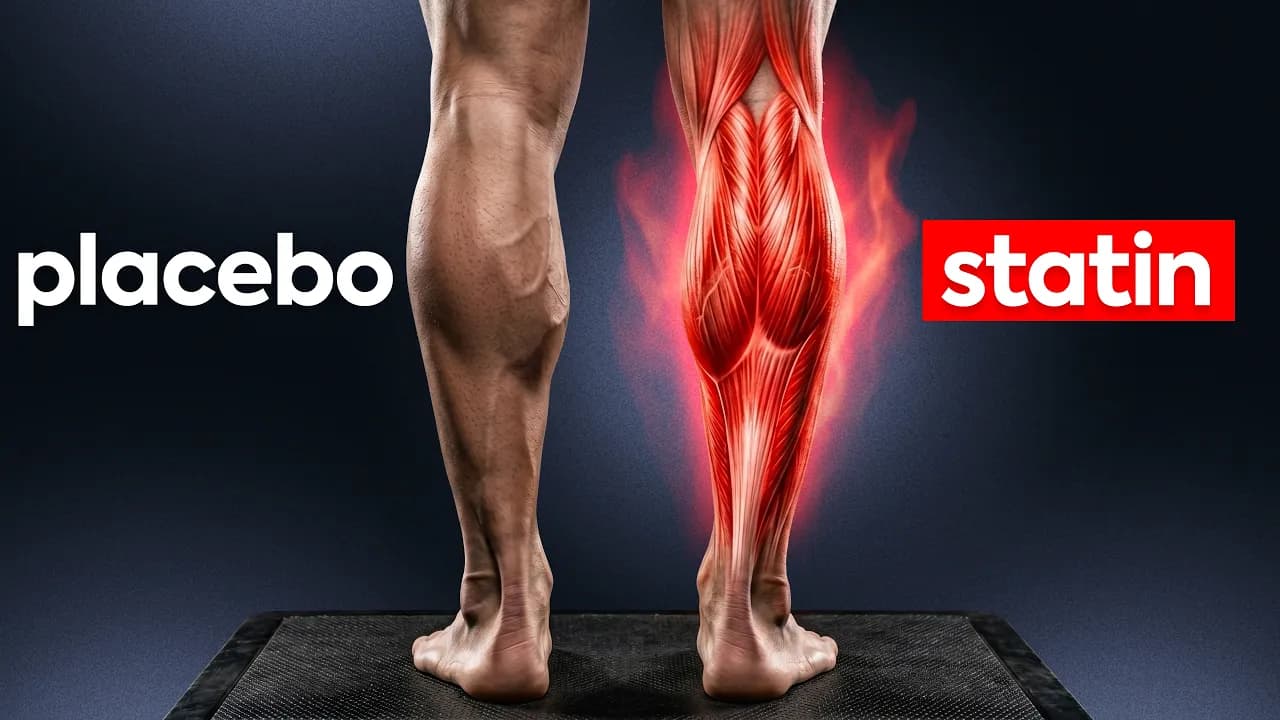
A doctor friend texted: "I'm stopping my statin." Responded with curiosity: "Interesting. What compelled you to make that decision and why now?" He replied, "Haven't you seen this new paper? It scared the sarcomirs out of me." Shared paper analyzing data from 300,000 participants, some followed over a decade. Concludes continuous statin use associated with decline in muscle function and mass over time, with as much as 73% decrease in lean mass compared to non-statin users. Statins are one of the most prescribed drugs on Earth; muscle loss is one of the strongest predictors of disability and mortality.
Continuous statin use significantly associated with accelerated declining grip strength and declining lean mass. Even stronger people declining faster, becoming weaker. Graph initially seemed mistaken due to odd pattern. Five chapters: 1. Study design and main findings. 2. Unexpected results, especially in those who exercise most. 3. Biological mechanisms of statin impairment on muscle. 4. Balanced pros and cons of statins. 5. Protective strategies and supplements for muscle health with age, on or off statins. Check associated Stay Curious Metabolism newsletters below, grounded in data, covering this paper, statins, and other lipid-lowering medications.
Cross-sectional (single time point): In fully adjusted model (adjusting for age, sex, education, smoking, BMI, activity score, diet quality, high blood pressure, diabetes, etc.), statin use associated with lower grip strength and lower appendicular lean mass (arms and legs). Multiple analyses confirmed robustness: inverse association consistent. More statins, lower grip strength, less lean mass.
Longitudinal Analysis
Followed subset (~10 years average): Continuous statin use significantly associated with accelerated declining grip strength and lean mass. Steeper slope = faster decline. Statin use linked to faster muscle decline. Graph showed odd pattern: statin users start with higher lean mass and grip strength.
Longitudinal cohort (35,557 of 300,000): Statin users started higher due to higher proportion of men (greater strength/mass generally). Over time, crossover: continuous statin users declined faster, ending with less mass/strength. Strengthens findings: even stronger people decline faster. Takeaway: don't ask grandpa to open the pickle jar, ask grandma.
Interaction with Physical Activity
Highly active statin users exhibited much faster decline in lean mass over time vs. low activity. Opposite of expected. Suggests more exercise could accelerate negative statin impacts on lean mass (assuming causality). Possible indirect (impaired exercise function/intensity) or direct (metabolic challenges compounding with exercise, overstressing muscles). Anecdotes: "Statins annihilated my workouts. It lowered gym time." Data correlative, not RCT, no causation proven. Plans blinded RCT: 80mg atorvastatin vs. placebo.
- CoQ10 (Co-enzyme Q10): Vital for mitochondrial energy; statins inhibit synthesis.
- Mitochondrial dysfunction: Inhibit complex 4 of electron transport chain; disrupt intracellular calcium metabolism (critical for muscle physiology).
- Myotoxicity: Muscle fiber damage explains pain, elevated creatine kinase (experienced personally with rosuvastatin).
- Insulin resistance: Long-term use worsens it, increases diabetes risk, indirect negative effects on muscle.
Data correlative, not definitive, but ignoring with plausible mechanisms misses slow harms.
Pros:
- Lower LDL and ApoB, reduce risk in some patients.
- Reduce inflammation, improve endothelial function/vascular health.
Cons:
- Impair muscle function/mass.
- Decrease CoQ10 synthesis.
- Lower GLP-1 levels.
- Increase insulin resistance/diabetes risk.
- Cross blood-brain barrier (variable effects).
- Harm mitochondria.
TUDCA: Mitigates statin-induced decreases in GLP-1, insulin sensitivity, diabetes risk; direct anti-inflammatory on blood vessels (pre-clinical, RCTs outstanding).
General muscle support supplements:
- Creatine monohydrate: 5g+ with meals; supports function, activates muscle stem cells with resistance training.
- Urolithin A: Postbiotic from ellagitannins (pomegranates' white part, walnuts); enhances mitochondrial health, muscle function/performance.
- Sarcosine: Amino acid derivative; aids methylation, glycemic metabolism; fights age-related muscle loss.
- CoQ10: Use phytosome phospholipid complex for best mitochondrial bioavailability.
Other cholesterol-lowering options with less muscle impact (master class linked). Goal: Examine data with nuance on long-term muscle health. Statins not benign. Bias toward benefits, underplaying side effects. Rebalance: discuss trade-offs honestly.
The real question isn't whether statins are good or bad, it's whether we're honest enough to talk about trade-offs. Are we?
Keep Nick Norwitz in your library
Save the videos and channels worth coming back to, and find them again in one place.