50% of Heart Attack Victims Had “Normal” Lab Results
In a Nutshell
Over 50% of heart attacks occur in people with normal LDL, and standard tests fail to distinguish between harmless large buoyant LDL particles and the small dense particles linked to arterial damage. The video argues that high LDL itself is not proven to cause heart disease, citing flawed Mediterranean diet studies, the difference between relative and absolute risk reduction, and the inability of RCTs to establish causation for diet or LDL. It recommends advanced lipid testing (including ApoB) over standard cholesterol panels and warns that statins deplete CoQ10 and impair hormone and vitamin production without meaningful absolute benefit for most people.
These notes were generated by AI and may contain inaccuracies.
Your LDL is dangerously high. What do you do? Recently, my wife had her blood test and she showed me the results and her LDL was super high and she was concerned and she was wondering, do I need to go on statins? And today, I'm going to tell you what I told her and what many people are never told about LDL. LDL is not cholesterol. LDL protein is made by your liver. It's a normal thing and the liver is packaging this cholesterol in a way so it can actually be delivered to the cell. Why? Why does it go into the cell? Because this cholesterol is necessary to help you build hormones, testosterone, estrogen, the stress hormone called cortisol. Cholesterol is the raw material that helps you make vitamin D, helps you make bile. The membranes in your cell are made from cholesterol. And what's really interesting is inside this cargo is not just cholesterol little particles, but you also have 45% of all your vitamin E is in there. You have 76% of all your carotenoids, like beta-carotene for example, is in this LDL. You also have coenzyme Q10, which supports the heart and the mitochondria as a powerful antioxidant. You also have vitamin K in here to help prevent bleeding. So, if LDL was so bad, why do you have all these key antioxidants in there?
Over 50% of all heart attacks have normal LDL. When you get your test back and it says LDL, it'll usually say it's the total amount of LDL cholesterol you have, okay? And when we're talking about the total, we're talking about the weight per volume. What it's not measuring is something way more important because inside this little cargo, you have these little particles of cholesterol. And there's two different kinds. There's the small ones, they call them small dense, and there's the large ones called the large buoyant. Now, let me tell you why that's important. Because the small dense are the ones that really can be a problem and they're small so they can penetrate the inside of the artery wall and create problems. I am going to show you what causes more small dense versus large buoyant, but you need to know there's two types of LDL that are not going to be seen on your regular cholesterol test. You have to get a special test for that. It's called an advanced lipid profile test. And just you know, the high LDL that my wife had was not the small dense. She did not have the bad kind. She had a higher amounts of the large buoyant. I'll explain why. This is actually not a problem, but if you don't differentiate that, people freak out and they get scared and they're put on something called statins, which I'm also going to talk about.
There's one additional thing. I'm not going to get too far into it, but I don't know if you've ever heard of something called apoB. Basically, what that is it's the number of particles. So, it's kind of like an indirect way of measuring if you have more of the small dense because if this number is high, that means you're going to have higher amounts of these little particles in this little cargo truck right here. Because if you had large particles, you would have less number of them because they're larger, but you can fit a lot more small particles. So, when you have a high apoB, that tends to mean that you probably have more small dense particles of cholesterol in that LDL cargo unit. So, is apoB a good indicator? Yeah, it's another good indicator to kind of help you understand what's happening inside that little cargo unit.
Now, let's get to one of the biggest studies that was ever done on the diet. It's called the Mediterranean diet. PREDIMED. This is the study that a lot of doctors and the news will tell you that you will reduce your cardiovascular events by 30%. So, you want to get on this diet because they proved it. They will use it to tell you that this diet proves the prevention of heart disease. And we're talking about over 7,000 people in Spain. This was published in the New England Journal of Medicine, the biggest intervention trial ever run. And you see this online all over the place. The Mediterranean diet reduces cardiovascular events by 30%. Well, I want to just tear that apart because it does relate to LDL indirectly. The first big question on this diet is what are they comparing this diet to? They had one group where they basically gave them free olive oil, and they gave them free nuts and dietary counseling. Okay? So, that was one group. The other group were told to follow a low-fat diet. That's it. That's what they compared. A lot of the other details and things that they did and ate were kind of filtered out. They called that adjust lifestyle factors, which basically is kind of let's just filter those out cuz that's like background noise. Really, they were comparing two groups. One group that consumed more olive oil and nuts, and the other one was supposed to kind of generally follow a low-fat diet. And what was interesting about that, this group here, the control group, didn't follow a low-fat diet. Their fat amount, if we look at all their calories, ended up to be 37% fat, okay? The Mediterranean group had 41% fat. So, that was actually more fat. That's a 4% difference, okay? I mean, this is a landmark study that compares people who got free food and coaching against people who got advice that they didn't follow.
Then it was retracted. In 2018, the New England Journal of Medicine pulled the study because 21% of the participants never properly were randomized. At one site, the entire group was assigned to the same diet instead of individuals. It was then republished to reanalyze the data, but it could no longer call itself a properly randomized trial. And here's why this matters, because studies that adjust for lifestyle factors, they're actually removing the very things that might be causing the disease. Because the real problem is you can't double-blind people in a diet study. Because everyone knows what they're going to be eating. It's going to be in front of them. So the whole setup, the system of doing randomized control studies, never was designed for diet or food because there's too many variables. Okay, so that's one aspect.
The next thing I'm going to talk about in this diet was this claim that it reduced cardiovascular events by 30%. Now, if someone told you that, you're going to look at that and go, "Wow, it's going to reduce my heart attacks by almost a third. I'm going to get on that diet, right? Makes sense. But that's not actually what that means. Picture two classrooms, okay? 100 people in each classroom. Classroom A over here, they don't get the Mediterranean diet. They're getting the low-fat recommendation. And over five years, roughly four people in this group have a cardiovascular event. Then we go over here in the classroom B. This is the Mediterranean diet group. Over five years, roughly three people have a cardiovascular event. One fewer person out of 100. That is called absolute risk reduction. We're comparing four on this side to three on this side. Relative risk is just looking at the difference between the control or the sugar group to the actual group that is tested, either the diet or a drug or whatever. So, if we look at the absolute risk on this study, this 30% relative risk comes down to like a little over 1%. One out of 100 people will benefit from this diet. And we're just talking about adding more olive oil and nuts compared to following a low-fat diet, but you're not actually lowering your fat very much. So, there's a lot of issues with research in the area of nutrition and diet and foods because there's too many variables. RCTs were generally designed for drug research to make sure that it's effective enough and it's safe enough. So, remember that the next time you look at a study, are they talking about the relative risk or the absolute risk? And on top of everything, the Mediterranean diet didn't even show cardiovascular events being reduced at all. It was actually a stroke event reduction. There was no data on the study that showed that going on this diet would reduce heart attacks or even heart attack deaths. This is the best evidence that we have on any diet on planet Earth, and we can't even prove that this works in any significant way.
If your environment is off, everything else struggles. It's like a fish tank. Pollute the water and the fish gets sick. You could feed them the best food, you can treat every single symptom, but if the water stays toxic, nothing recovers. The body runs on 10 signals like insulin, cortisol, inflammation, sleep quality, gut function. Every one of them affects how you feel. But there is always one signal that is more broken than the rest, and until you fix that one, everything else stays stuck. I built a free 2-minute quiz that finds it for you. It tells you which one of the main signals is holding your body back right now. Click the link in the description, take the quiz, and stop guessing.
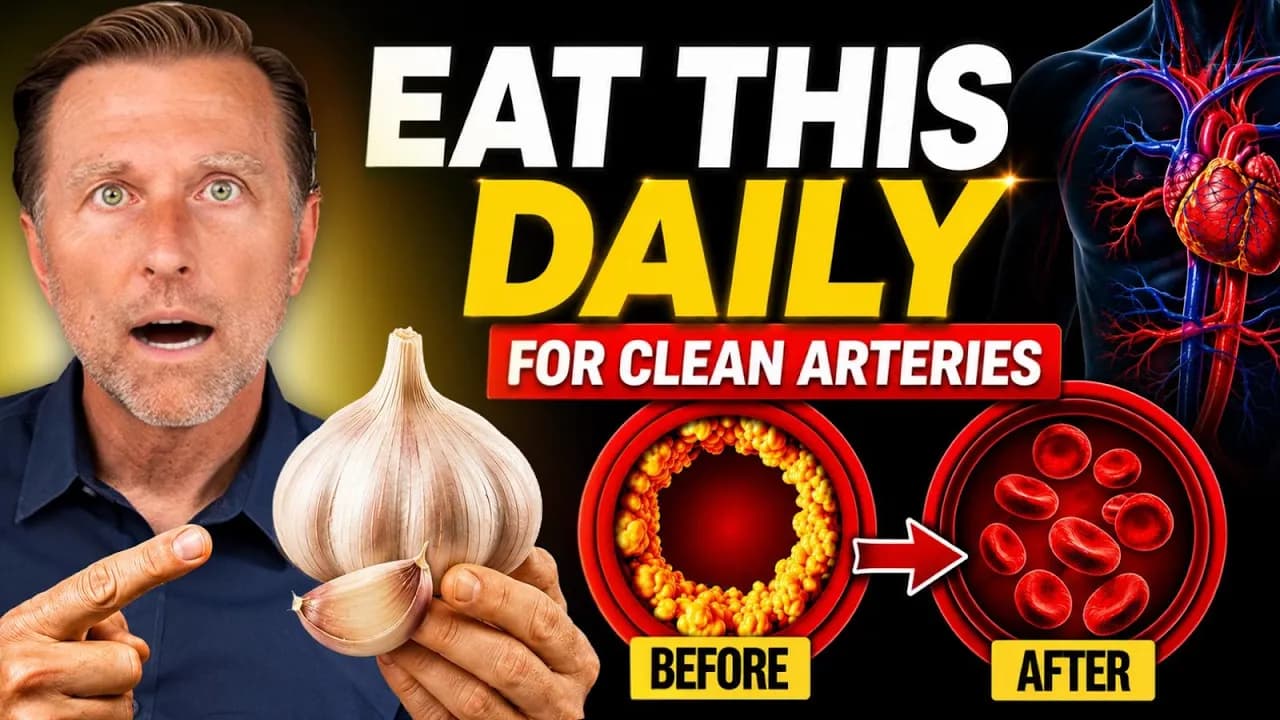
And so, getting back to this LDL, when people try to scare you and say that LDL causes heart attacks, or they cause heart death, or they cause stroke, realize they can never say that because RCTs involving research on LDL has never proved causation. What they instead talk about is association, statistical association, which is very different than causation. Association is it was found parallel or next to something. I mean, there's actually studies that show that owning a television puts you at risk for heart disease. But, nobody thinks that TVs emit heart attack rays, right? The TV correlates with sitting, which then correlates with metabolic dysfunction. So, the TV is involved in the scene, but it's not the criminal. Same thing with baldness. Baldness is a risk factor for heart disease, but nobody prescribes Rogaine to prevent a heart attack. Why do you over 50% of people with heart attacks have a normal LDL? And in over 12 studies involving the elderly, they found an association of living longer with higher levels of LDL. When we think about LDL, we're thinking about this grease that is plugging up our arteries and clogging arteries and obstructing blood flow. But, that's not how it works. Plaque in your arteries is between 60 and 87% made up of fibrous tissue and calcium. The cholesterol involved in a plaque actually comes from dead white blood cells that have oxidized the cholesterol. The dietary cholesterol that you're eating is not ending up in the arteries like you think. The cholesterol is coming in later as a band-aid in a different way.
And coming back to my wife's situation, she had a buoyant LDL, and that's totally non-pathogenic. The small dense LDL show up when you have inflammation, when you have insulin resistance because you're consuming too many carbs and refined sugars, or you have too much stress. And without evaluating whether they have the small dense or the large buoyant, they're put on something called statins. Let me just mention a couple things about statins. In 21 trials for statins, the relative risk in reducing heart attacks was 29%. Now, when you see that number, it's significant. Less than 1/3 out of 100 will be saved, right? No. Because if we look at the absolute risk, it comes down to 1.3. So, almost 99% out of 100 people will have no benefit from statins. But, for me, that's not the issue. The issue is that statins block your production of cholesterol. And with statins, you start depleting your coenzyme Q10, which you end up having all sorts of side effects with your muscles, and reduce your ability to make things out of that raw material cholesterol. So, your sex hormones suffer, like testosterone. You can't make the cortisol stress hormones to defend against stress. You're not making the cholesterol to make vitamin D. And now, without enough cholesterol, you can't make the bile salts. So, then how are you going to be able to absorb the fat-soluble vitamins from the food? You can't.
So, a lot of people ask me, what supplements do I recommend? Now, of course, I'm not biased of my own high-quality supplement line, but if you go to Amazon and type Dr. Berg supplements, you'll find more information. One last point that's very important, there are people that go on a low-fat diet. They go on the ketogenic diet, okay? And then their LDL goes up. There is something called lean mass hyper-responders. That is like this group of people that's an exception to the rule. They're lean, they're metabolically healthy, but their body tends to respond by making more LDL. But specifically, it's the large buoyant type. Okay, this is why you need to get an advanced lipid profile test. But these lean mass hyper-responders usually have normal triglycerides. And I also hope you understand that the massive limitations on the randomized controlled trials, and also the difference between relative and absolute risk, and that association or correlation is not causation. And most importantly, it's virtually almost impossible to do a study on diet, to really use the system that they use in medicine to be able to figure out what diet is good or bad for a person, unfortunately. So, in the meantime, until they figure it out, I think it's important to try different diets to see what works for you. Personally, I do the healthy version of the ketogenic diet, and if you're not on that diet, you can learn about it right here. Check it out.
Keep Dr. Eric Berg DC in your library
Save the videos and channels worth coming back to, and find them again in one place.