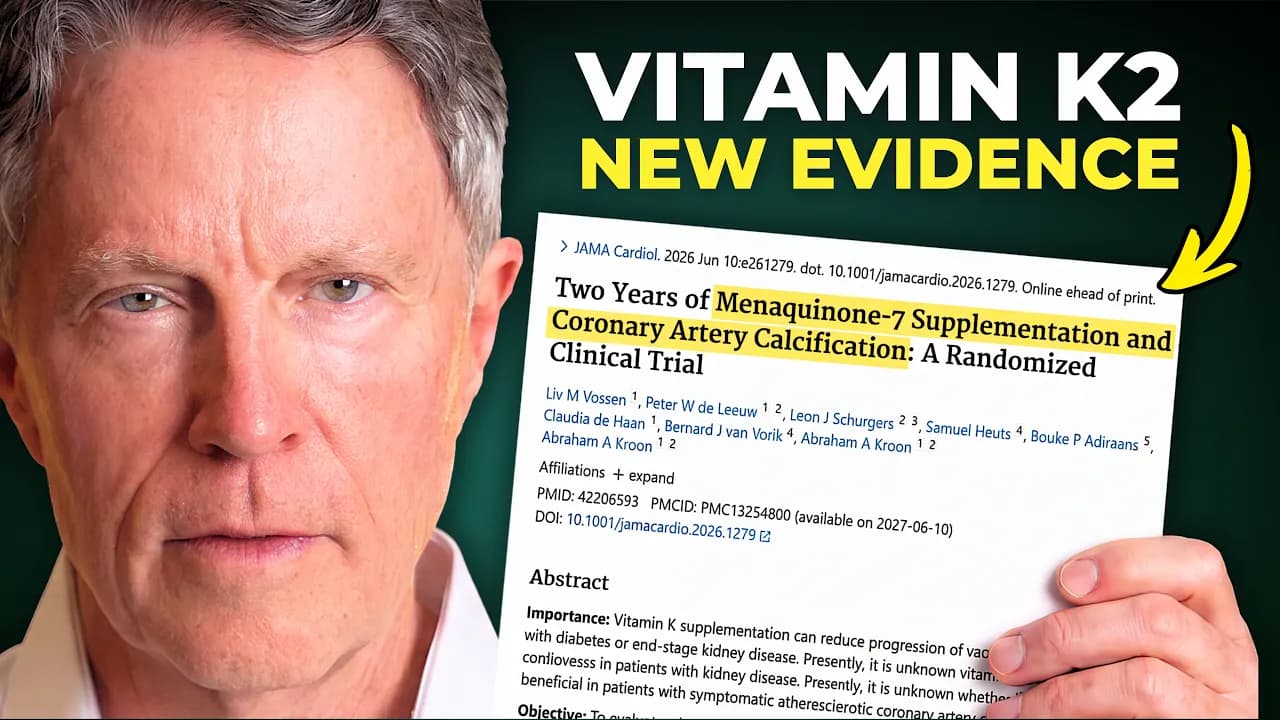
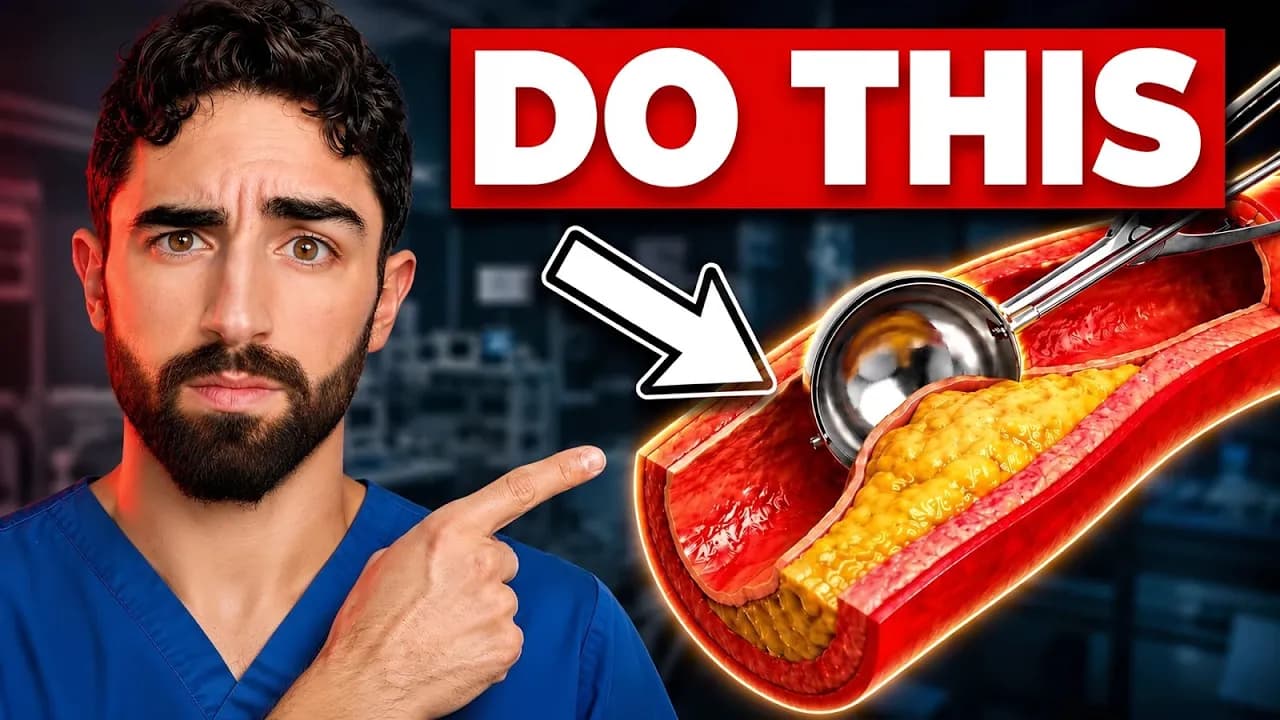
The ONE Supplement Every Senior Should Take
In a Nutshell
CoQ10 is the critical supplement for seniors because age-related decline impairs heart energy production, raises oxidative stress, and reduces nitric oxide, increasing heart attack risk. The Q-SYMBIO study showed ~50% fewer major cardiovascular events with supplementation; seniors over 65 should use the active ubiquinol form at 200–300 mg daily, split with fat-containing meals. Statin users need higher doses since these drugs deplete CoQ10, and warfarin patients should consult a doctor due to potential INR interactions.
These notes were generated by AI and may contain inaccuracies.
As a senior, there is one supplement you must take to keep your heart healthy. While most people on YouTube would say vitamin D, the truth is even vitamin D isn't necessary for everyone. If you're really committed to avoiding a heart attack, there's another supplement that's even more important. Even when people find out about it, most of them take it wrong.
The supplement is CoQ10. Before deciding whether to buy it, you need to understand what it actually does. CoQ10, short for coenzyme Q10, is a molecule your body produces naturally. It lives inside the mitochondria, the power plants of every cell. Its job is to help convert food into usable energy. Specifically, it shuttles electrons through the process that produces ATP, the fuel that cells run on. Every high-demand tissue in your body depends on it, including the heart, skeletal muscle, and liver.
Your body makes less CoQ10 every year. Production peaks in your 20s and declines steadily from there. By the time you're 60 or 70, or 68, your heart and muscles are running on a fraction of what they had even at age 40, let alone age 20. This is a massively neglected problem, and that alone is still not a reason to take a supplement. You need to understand what that deficiency is actually costing you.
The heart runs almost entirely on mitochondrial energy production. It doesn't have a backup fuel system. When CoQ10 drops, the heart is the first to feel it because it burns more energy than almost any other organ in your body. When CoQ10 falls short, the heart muscle starts working harder for less output.
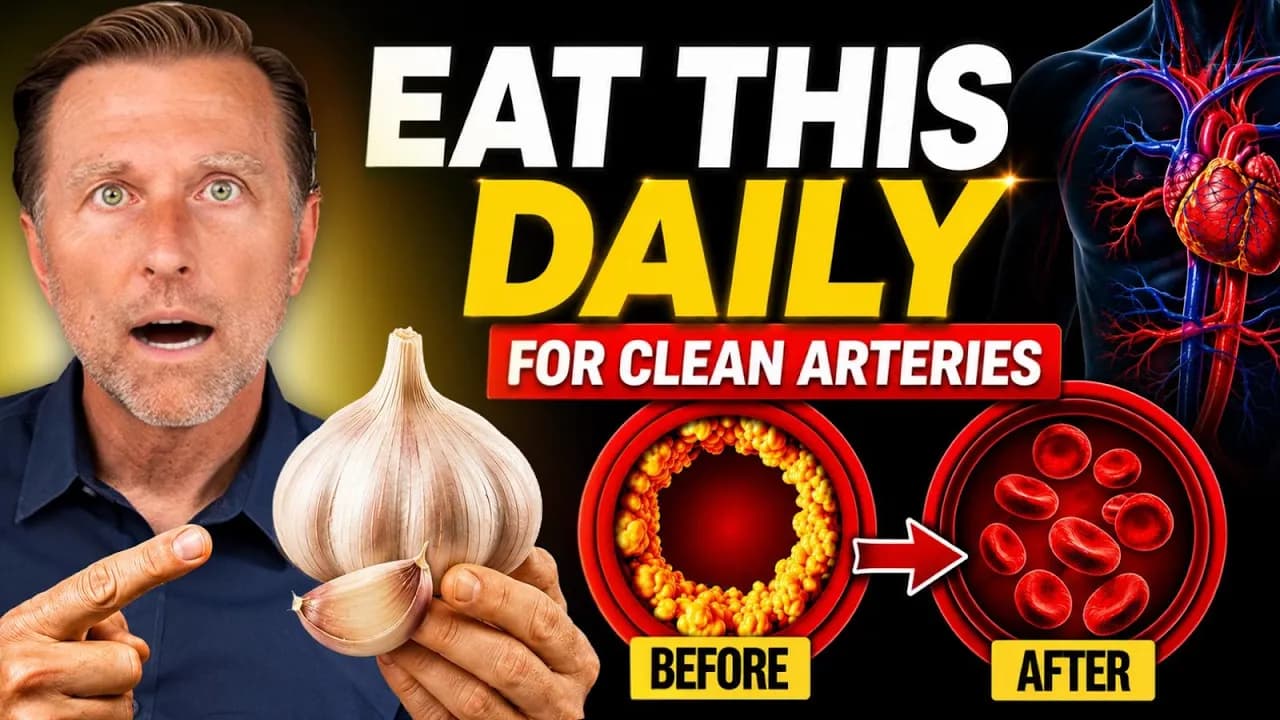
CoQ10 also buffers oxidative stress, the process that damages the lining of your arteries and triggers plaque buildup. Oxidative stress is slow, chronic damage to the walls of your blood vessels. If left unchecked, it leads to inflammation, plaque, and eventually blockage from a clot.
CoQ10 also helps preserve nitric oxide, which keeps your arteries flexible and blood flowing freely. When nitric oxide drops, arteries stiffen. Stiff arteries are a direct path to high blood pressure and cardiovascular events.
The strongest clinical evidence is in heart failure, blood pressure reduction, and endothelial function. The Q-SYMBIO study showed roughly a 50% reduction in major cardiovascular events with CoQ10 supplementation over a 2-year period. CoQ10 isn't just an energy supplement. It's protecting the tissue that keeps you alive.
There are two forms of CoQ10 on the market, and most people are buying the wrong one. The forms are ubiquinol versus ubiquinone. Standard CoQ10, called ubiquinone, is what you'll find on most pharmacy shelves. It's cheaper. It's the oxidized form, and your body has to convert it or reduce it before it can use it. That conversion works reasonably well if you're a 20-year-old or even 40-year-old, but when you're older, it becomes more difficult and less efficient. By your 60s, you're absorbing significantly less from the same dose.
Ubiquinol is the reduced active form. Your body does not have to convert it. It raises blood and tissue levels more directly, and the research backs that up, especially in older adults. If you're over age 65, ubiquinol is the form worth paying for.
For general cardiovascular support, the recommendation is 200 to 300 mg per day. If you're just starting out, 100 mg is a reasonable baseline. Above 200 mg, split the dose. Take it in two doses with meals rather than all at once. That improves absorption and reduces any GI discomfort.
CoQ10, like vitamin D, is fat soluble. Take it with a meal that has fat in it. Eggs, avocado, olive oil, anything like that works. Without dietary fat, absorption drops and you're wasting a big portion of what you paid for.
Ubiquinol is an expensive supplement. Don't judge it on the first 2 weeks. Take 4 to 6 weeks for tissue levels to plateau and stabilize. Give it time before you decide it may or may not be working. The protocol that actually moves your levels is ubiquinol 200 to 300 mg split with fat-containing meals.
If you're on a statin, this becomes even more important because statins have a mechanism that directly depletes CoQ10. Statins work by blocking the mevalonate pathway, the metabolic route your body uses to produce cholesterol. It's also the same pathway that your body uses to produce CoQ10. Blocking one blocks the other. That depletion can reach 16% up to even 54%, depending on the statin and the dose. Most seniors are on doses higher than they need, which makes the depletion worse than it has to be.
Muscle pain is one of the common reasons people stop taking their statin. Muscle pain on statins is directly tied to CoQ10 depletion. Some patients are suffering a side effect that could be partly addressed, and no one told them. If you're on a statin, bump the dose to 300 mg or more per day. Still split it with fat-containing meals. Ubiquinol remains the preferred form.
Even though CoQ10 is one of the safest supplements out there, it can still have side effects. The most common issues are GI-related: nausea, loose stools, and reduced appetite, usually at higher doses. If you experience any of these, stop taking it and reintroduce it slowly at a lower dose with a larger meal. If the symptoms come back, you can try reintroducing it at a lower dose with a larger meal.
If you're taking warfarin, a blood thinner, talk to your doctor before starting CoQ10. There is some evidence that it can affect how warfarin works and your INR, the clotting measure that indicates how fast your blood clots. That may need closer monitoring. For most people, none of this is going to be an issue, but you deserve to know it before you start.
Nothing beats lifestyle when it comes to healing arteries. Growing old is not for sissies, but it's a lot easier with healthy arteries.
Keep Thomas Fordham Brewer MD MPH in your library
Save the videos and channels worth coming back to, and find them again in one place.