Don't Buy Oracle Stock Until You Watch This! 🚨
In a Nutshell
Oracle is burning cash on AI data centers it can't afford, with $600B+ in future revenue offset by massive spending and debt. It declared force majeure on its New Mexico project to dodge payments to Blue Owl amid permitting delays, while Larry Ellison collateralized $49.5B of his Oracle shares to fund his son's $100B Warner Bros. Discovery acquisition instead of selling stock. The combination of poor funding versus peers, rising bond yields, and this collateral arrangement signals significant downside risk despite a 21.5x P/E.
These notes were generated by AI and may contain inaccuracies.
Seeking Alpha currently shows Oracle down 52.94% from its all-time high of 341 in late 2025, now trading as low as 138. Oracle is described as an ultra-wide company with revenues growing rapidly and over $600 billion in guaranteed revenue for the next five years. However, the company is expected to spend far more than it plans to earn. The current concern centers on Oracle's significant debt levels. Despite a relatively low price-to-earnings ratio of 21.5, momentum remains poor.
Oracle declared a "force majeure" event regarding its New Mexico project, which some interpret as preparation to default and postpone payments. The project involves building a large data center called "Project Jupiter" in partnership with Bloom Energy for energy provision. Blue Owl is the entity fully funding the project. When Oracle announced the force majeure, shares of both Blue Owl and Bloom Energy declined.
The end user for this data center is OpenAI, with Oracle building first and expecting payment from 2027 to 2028. The project has encountered permitting problems and obstacles from the city and state. Bloom Energy faces similar challenges in providing power to the data centers. An upcoming appointment on November 23 will determine if the project receives approval or faces further delays.
The force majeure clause allows Oracle to defer payments to Blue Owl if delays are beyond their control, specifically citing city and state permitting obstacles. This protects Oracle from making payments when work cannot proceed according to plan due to external factors.
Oracle maintains huge contracts with OpenAI valued at more than $64 billion over the next three to five years. However, the company is spending more than it earns during this period. Oracle ranks as the worst-funded among cloud computing companies when compared to Meta and others. This funding disadvantage explains why Meta, Microsoft, and similar companies trade near record highs while Oracle trades near its 52-week lows.
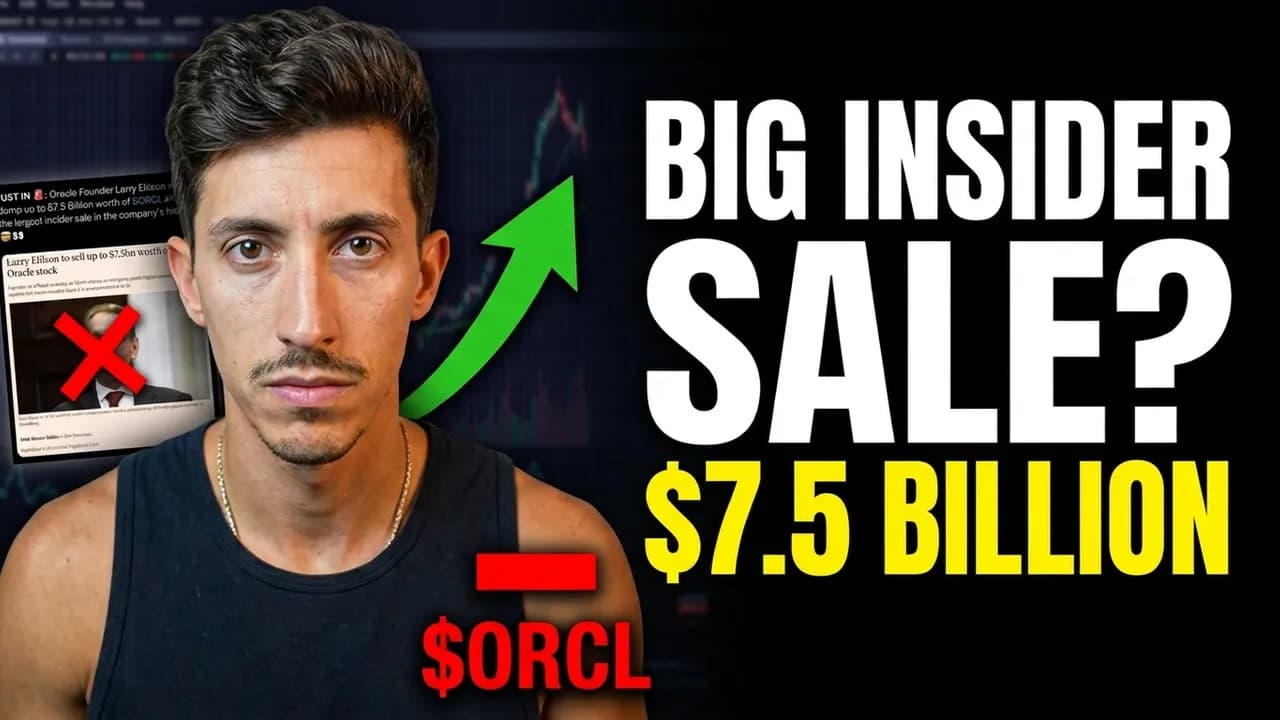
Larry Ellison, Oracle's CEO who owns a 40% stake in the company (valued at approximately $165.6 billion of Oracle's $414 billion market cap), was expected to sell $7.5 billion worth of Oracle shares last month but did not complete the sale. This was initially viewed as a positive signal.
However, new information reveals that Larry Ellison used his Oracle shares as collateral to secure financing for his son David Ellison's acquisition of Warner Bros. Discovery through Paramount. The deal is valued at approximately $100 billion. Originally, $40 billion of Larry Ellison's Oracle stake was put up as collateral, with an additional $9.5 billion added later. This arrangement allows him to borrow against his shares rather than selling them outright to fund the acquisition.
Oracle bond yields continue to rise, creating questions about why investors would choose U.S. Treasury bonds when Oracle bonds offer significantly higher yields. Major cloud computing companies like Meta, Amazon, and Microsoft currently offer yields around 7%, late 6%, or 8%. This competition with corporate bonds from major tech companies may explain why U.S. Treasury yields are trading at higher levels.
Oracle faces uncertainty due to aggressive AI infrastructure investments, poor funding compared to competitors, and Larry Ellison's personal financial arrangements using Oracle shares as collateral. Historical comparisons have been made between Oracle and Enron during the dot-com crash period.
Oracle currently shows no demand problems, but if contracts with companies like OpenAI begin to deteriorate, the situation could deteriorate rapidly. The speaker notes that other major companies like Meta might adopt similar force majeure clauses if they encounter comparable permitting or external obstacles.
The speaker is not currently an Oracle investor but has considered the position. The situation remains uncertain, with companies attempting to be proactive about protecting their interests when external factors create delays beyond their control.
Keep Ricky Gutierrez in your library
Save the videos and channels worth coming back to, and find them again in one place.