Dr. Berg: Why You Can't Stop Eating Junk Food
In a Nutshell
Ultra-processed foods spike dopamine faster than real food, creating addiction where desire keeps rising even as pleasure fades. The fix is environmental friction: remove junk food from your home, avoid delivery apps, and cook protein-rich meals from scratch to slow consumption. Prioritizing protein and designing barriers against instant access breaks the cycle more effectively than willpower alone.
These notes were generated by AI and may contain inaccuracies.
The problem encountered with keto is addiction. Felt like being in a constant state of flux, negotiating with oneself and calculating how many handfuls of nuts could be eaten to replace with something else. Ultimately unable to control this addiction. Many people appear addicted when looking at the world.
Pleasure decreases, but dopamine increases. This creates intense desire without pleasure, leading to obsession where the behavior continues just to feel normal. 15 million subscribers. Over 3.7 billion views. Dr. Eric Berg is one of the most-watched health educators on YouTube.
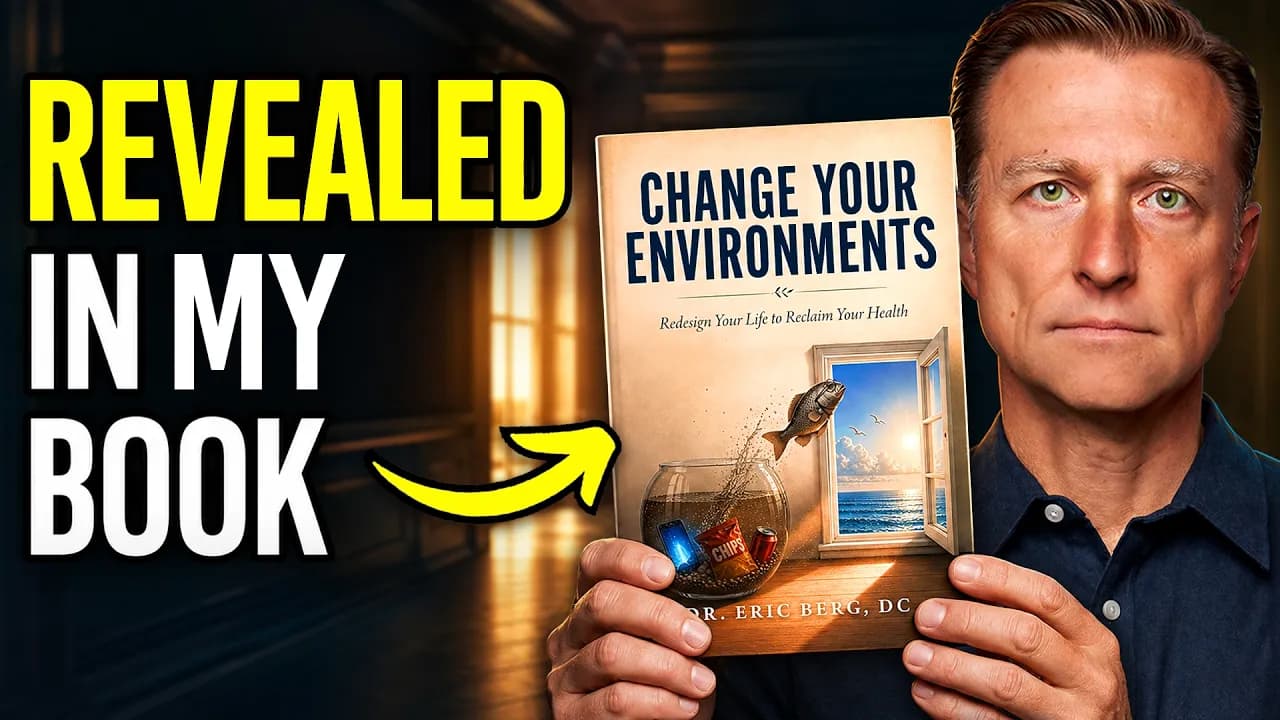
Must go through aisles of ultra-processed food marketing to reach real food in the back of the grocery store. Book written on the subject called "Change Your Environment," dealing with how it's almost impossible to live in a world full of potential addictions unless environment is the focus.
A strict rule was set through diet adherence. This applies to the home environment as well - no donuts found in the refrigerator. The moment tiredness, hunger, or intense craving occurs, things fall apart and get out of control. Living in an environment rife with addiction includes food, mobile phones with diverse entertainment, pornography, and other elements.
Different environments have made existence very comfortable but at the cost of very poor health, with the illusion of having choices that are actually artificial and not real. When suffering from addiction, level of a chemical called dopamine increases. Dopamine is responsible for stimulating desire to obtain something - it's motivation to strive toward something specific.
Other things give a feeling of pleasure. When addictive behavior is repeated over and over again (gambling, pornography, alcohol, or drugs), the mechanism is exactly the same: drive toward pleasure increases, but pleasure diminishes while dopamine continues to rise. Wanting it badly without getting pleasure leads to obsession where it's practiced only to feel normal or for relaxation.
Personal example of addiction to Doritos chips: after eating one and experiencing "wow, amazing," the amazement would disappear, leading to trying another one, then another, eventually finishing the whole bag.
With smoking, taking one puff trains the brain because nicotine reaches the brain within seconds through the lungs, bloodstream, and directly to the brain. Nicotine patches don't create addiction because they require 30 minutes for absorption. Addiction is really about the speed at which a substance can get into the brain.
Ultra-processed foods are broken down into powder (such as modified food starch) and reach the brain very quickly, making addiction more likely. Real food requires digestion and takes longer for the body to absorb.
If addiction relates to speed, the cure is to add the time factor - adding a kind of "friction" between oneself and the addictive substance. No snacks kept at home, requiring a half-hour drive to obtain something. Living in an isolated place where Uber Eats is unavailable, with no restaurants within a 45-minute drive.
Multiple obstacles added, including no TikTok or Instagram apps on mobile phone despite having large channels on both platforms dedicated to education rather than entertainment. The recommendation is to change and structure the environment to make it really hard to give in to addictive behaviors.
The problem in society is deciding that the next generation needs to be more comfortable with less stress. Making things better comes as part of a complete package: more comfort, more choices, and less stress lead to more illness because bodies have not evolved for this pattern. Not suggesting living in a cave, but recommending examination of ancestral contrast with current environments and starting to change them to thrive, preventing existing addictions from affecting control over health.
The real common denominator in fast food is absence of protein, specifically high-quality protein - never finding steak in fast food. Meat-based diet was therapeutic for addiction repair because it fulfilled the missing element. Animals (horses example) will continue eating until they get enough protein. Actual animal meat is the most satiating food.
Every time food is wanted, there's an obstacle in the form of cooking a steak, which takes time. This creates natural friction in the process.
Previously taking nearly 15 medications, many causing side effects requiring additional medications. This created a series of problems. Metabolic health was corrected, allowing safe discontinuation of all medications. The response to health problems was often "we don't know the cause, but take this medicine" - seeking quick solutions that seem legitimate due to packaging, insurance companies, doctors in white coats, diagnostic codes, and years of study from universities.
Questioning whether treating symptoms with poison or medicine, suggesting looking for root causes instead. The question becomes what the drug actually does and whether root causes should be investigated.
When someone takes advice and their life changes forever, giving them a second chance at life, it feels like therapy. Current addiction is helping - not just any help, but effective help. When someone mentions a video made 10 years ago helped them, the response is amazement that they just saw it now. Effective assistance is the key - it's a cure, and nothing is more therapeutic than that.
Keep HomeSteadHow in your library
Save the videos and channels worth coming back to, and find them again in one place.