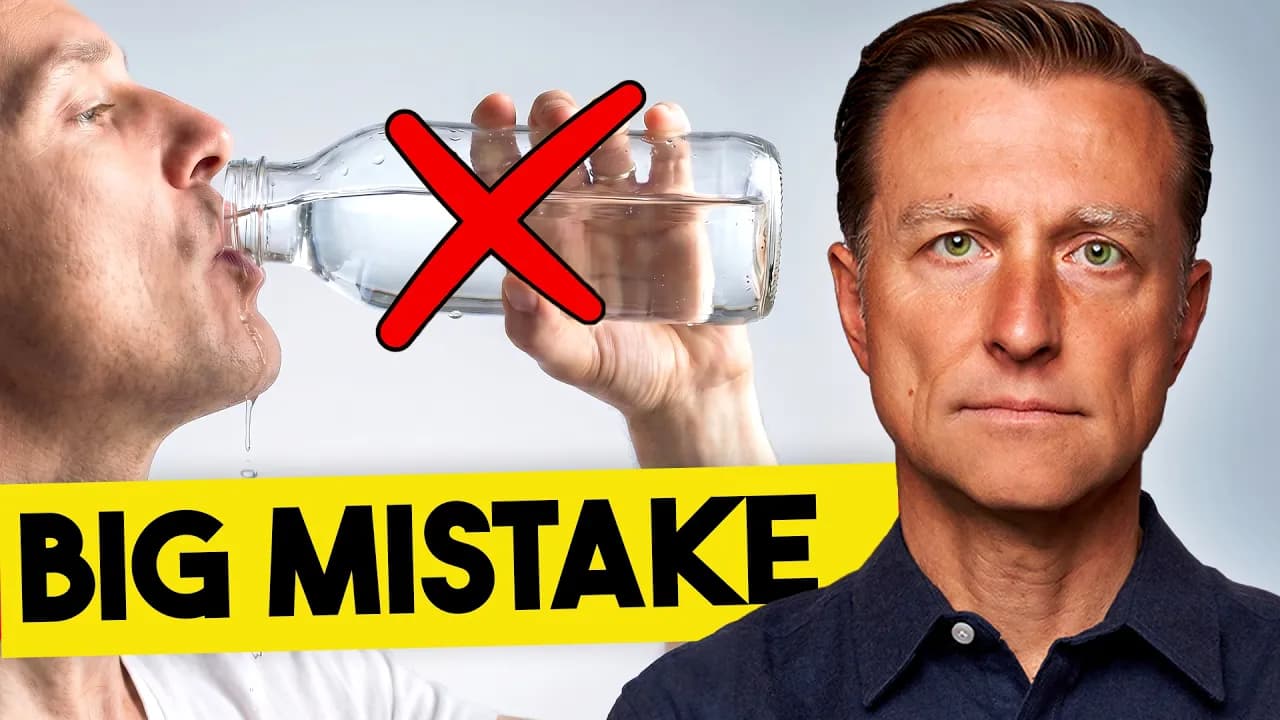
Drinking More Water Is Making Your Thirst Worse
In a Nutshell
Low blood volume, not dehydration, is the usual reason people stay thirsty despite drinking water; the body needs 3–4 g of sodium daily to retain fluid in the bloodstream. Plain water without enough salt simply passes through, diluting sodium and worsening symptoms such as dizziness, fatigue, cramps, headaches, and poor sleep. Adding adequate salt (≈1½ tsp) triggers appropriate thirst, restores blood volume, and resolves these issues within minutes.
These notes were generated by AI and may contain inaccuracies.
Many people experience days when they drink large amounts of water yet never feel satisfied or properly hydrated. They may feel something is missing, experience fatigue, or get dizzy when standing up. These symptoms indicate either a lack of fluid or more commonly, low blood volume. Drinking additional plain water can worsen the situation when blood volume is already insufficient.
Blood volume is the more common issue than simple dehydration. The body requires salt to retain fluid in the bloodstream and tissues. Most people consume far less salt than needed to maintain proper fluid retention. Hospital IV treatments use saline solution rather than plain water, demonstrating that blood itself is salty and requires sodium to maintain proper hydration.
Several symptoms commonly occur with insufficient blood volume that people may not connect to low sodium levels:
- Dizziness or instability when standing up quickly, such as getting up from gardening
- Persistent thirst especially at night, as the body attempts to store fluid for overnight needs
- Fatigue, weak muscles, or cramping
- Poor sleep quality, as low sodium elevates cortisol levels
- Headaches
- Feeling cold throughout the day
- Constipation due to insufficient fluid in the colon
- Darker urine or reduced urine output
- Dry mouth and dry eyes
Drinking plain water without adequate salt dilutes existing sodium levels in the blood. People often force themselves to drink more water based on conventional advice, but this water passes through without proper retention. The body cannot effectively hydrate tissues without sufficient sodium to hold the fluid in place.
An average person needs 3,000 to 4,000 mg of sodium daily, equivalent to approximately 1.5 teaspoons of salt, to maintain adequate fluid volume. Most people consume only 1,000 to 1,500 mg daily, roughly an eighth to half teaspoon. Athletes or those who exercise and sweat may require 4,000 to 5,000 mg, while football players wearing heavy equipment can lose up to 6,000 mg of sodium during practice.
Increasing salt intake creates thirst that prompts appropriate water consumption, resulting in greater fluid volume and blood volume. This addresses the root cause rather than treating symptoms. People typically notice improvement within minutes of proper sodium consumption.
Individuals following ketogenic or low-carbohydrate diets lose additional sodium along with fluid when reducing carbohydrates. This sodium loss increases further when combined with exercise and sweating. All electrolytes including potassium should be considered alongside sodium for complete hydration support.
Keep Dr. Eric Berg DC in your library
Save the videos and channels worth coming back to, and find them again in one place.