Using Salt to Optimize Mental & Physical Performance | Huberman Lab Essentials
In a Nutshell
Salt, or sodium, is essential for regulating fluid balance, thirst (osmotic and hypovolemic), blood pressure, and neuron action potentials via brain regions like the OVLT, which signals the kidneys through hormones like vasopressin to retain or excrete water. Optimal intake varies by individual—2-4g sodium/day for most to minimize cardiovascular risks, higher (6-10g salt) for low blood pressure, orthostatic issues, or intense exercise/hot environments, using the Galpin equation (body weight in lbs / 30 = oz fluid every 15 min) and monitoring BP. Avoid excess water (hyponatremia risk) or processed salty-sweet foods that exploit taste pathways to drive overconsumption; prioritize unprocessed foods and balanced electrolytes (sodium, potassium, magnesium) for mental/physical performance.
These notes were generated by AI and may contain inaccuracies.
Welcome to Huberman Lab Essentials, where we revisit past episodes for the most potent and actionable science-based tools for mental health, physical health, and performance. Andrew Huberman is a professor of neurobiology and ophthalmology at Stanford School of Medicine. Today we discuss salt, also referred to as sodium. Salt has many important functions in the brain and body. It regulates fluid balance, how much fluid you desire, and how much fluid you excrete. Salt also regulates your appetite for other nutrients, like sugar and carbohydrates.
We all harbor small sets of neurons called nuclei, little clusters of neurons that sense the levels of salt in our brain and body. There are a couple brain regions that do this. These brain regions are special because they lack biological fences around them that other brain areas have. That fence is the blood-brain barrier (BBB). Most substances circulating in the body do not have access to the brain, especially large molecules. The brain is a privileged organ. However, there are regions in the brain with a weaker fence. The areas that monitor salt balance and osmolality (concentration of salt) reside in these little sets of neurons just on the other side of these weak fences. The most important for today's conversation is the OVLT (organum vasculosum of the lamina terminalis). Neurons in the OVLT pay attention to what's passing through in the bloodstream and detect if sodium levels are too low, if blood pressure is too low or too high. The OVLT sends signals to other brain areas, which release hormones acting on peripheral tissues, like having the kidneys secrete more urine to get rid of excessive salt.
Let's discuss the function of the OVLT and its circuitry in the context of thirst. Neurons in the OVLT detect changes in the bloodstream reflecting global changes in the body. In response, the OVLT sets off events making you want to drink more fluid or stop drinking. There are two main kinds of thirst: osmotic thirst and hypovolemic thirst.
Osmotic thirst relates to salt concentration in the bloodstream. If you ingest something very salty, like a big bag of kettle potato chips, salt levels rise in the bloodstream, causing thirst. Neurons in the OVLT sense osmolality. When salt concentration is high, it activates specific OVLT neurons, sending electrical signals to other brain areas. This leads to release of a hormone from the posterior pituitary called vasopressin (also antidiuretic hormone). Vasopressin restricts urine secretion or, when off, increases it.
High salt concentration evokes cascades: OVLT detects changes, communicates to the supraoptic nucleus, which releases or shuts off vasopressin. Antidiuretic means anti-release of urine; shutting it off allows urine flow.
Low sodium concentrations evoke similar pathways.
Hypovolemic thirst occurs with a drop in blood pressure. The OVLT has baroreceptor mechanoreceptor neurons that respond to blood pressure changes. Causes include losing blood, vomiting, or extensive diarrhea.
Both types of thirst involve seeking water and salt. Sodium helps retain water; sodium and water work together to retain water or inspire urination.
Before specifics on using salt for performance, drill deeper into fluid balance, focusing on the kidney. The kidney retains or releases substances. Blood enters the kidney, goes through tubes like the loop of Henle. It responds to hormonal signals like vasopressin to hold fluid.
About 90% of absorbed stuff from blood is reabsorbed early in the tubes. Example: low on fluid, walking on a hot day—OVLT senses increased osmolality (higher salt relative to fluid), signals cascades, releases vasopressin, which acts on kidney mechanically and chemically to hold water, reducing urination desire.
Opposite: ingesting lots of water, not hot, low salt—lower osmolality, OVLT doesn't signal supraoptic nucleus, no vasopressin, kidney excretes water freely.
Know your blood pressure—crucial for health outcomes, informs exercise and salt intake. No one-size-fits-all; not giving medical advice, but spelling out research.
Many papers show high-salt diet bad for organs including brain. High intracellular salt draws fluid into cells, causing swelling, especially neurons. Low salt shrinks cells as water pulls out.
At ~2 grams sodium/day, fewer health risks; risks decline to 4-5g/day, then dramatically increase. Most consume more via processed foods. 2.3g sodium is recommended cutoff for low incidence of cardiovascular events, stroke.
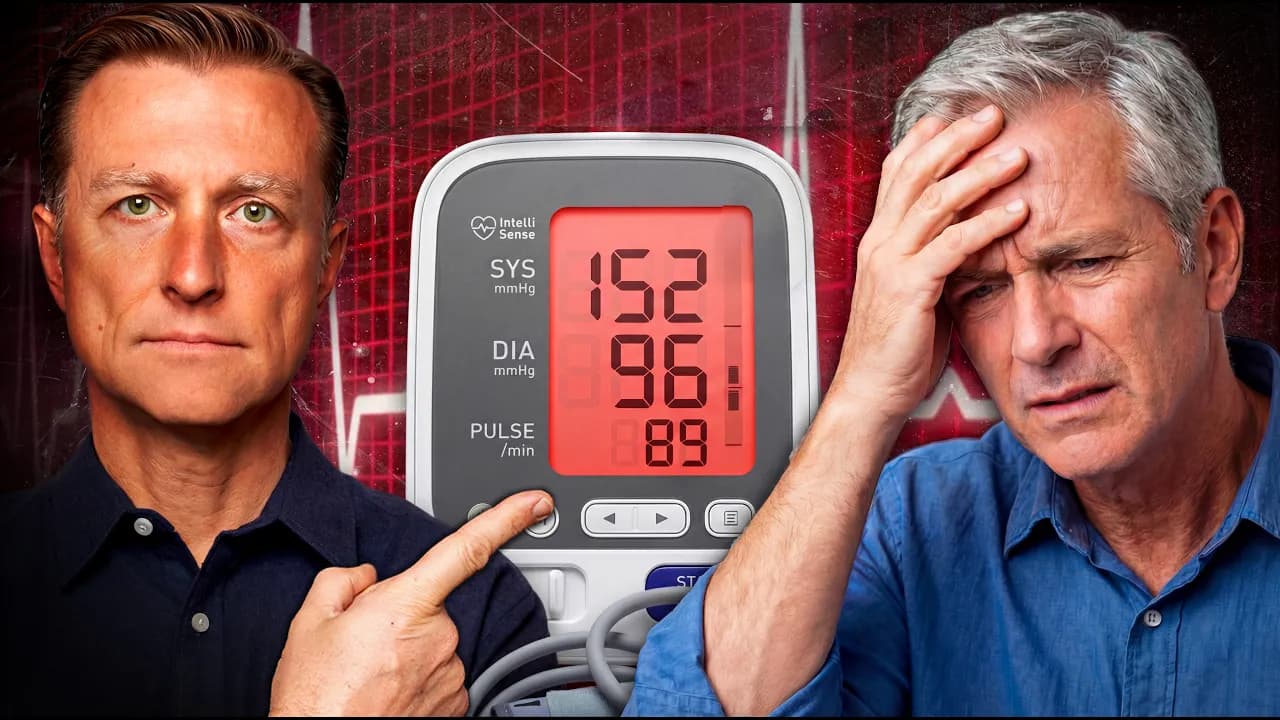
Know blood pressure: high/prehypertensive be cautious; consult doctor. People with low blood pressure (dizzy on standing, fatigued) may benefit from more sodium to increase blood osmolality, drawing water into bloodstream, filling vessels.
For orthostatic hypotension, POTS (postural orthostatic tachycardia syndrome), idiopathic orthostatic tachycardia, syncope—often told to increase salt. American Society of Hypertension recommends 6-10g salt/day (~2400-4000mg sodium).
Context vital: high BP needs less salt, low BP more. Evaluate for optimal function. If exercising a lot, in cold/dry or hot environments, ingest sufficient salt/fluid.
Galpin equation (named after Andy Galpin, exercise physiologist): body weight in pounds / 30 = ounces of fluid every 15 minutes. For exercise, but good for mental tasks too. Ensures hydration entering activity. Most underhydrate water and electrolytes (sodium, potassium, magnesium). Water loss (1-5 lbs/hour) impacts mental/physical performance via cell volume changes from sodium.
Excess salt bad for BP/heart/brain, but too little causes nervous system problems. Kidneys regulate salt/fluid; adrenal glands make glucocorticoids like aldosterone, impacting fluid balance and salt craving.
Stress response (elevated heart rate/BP, movement) impaired if sodium too low. Natural craving for sodium under stress.
Discuss magnesium: many get enough; some supplement. Magnesium malate reduces muscle soreness. Magnesium threonate promotes sleep transition/depth. Magnesium bisglycinate similar for sleep. Magnesium citrate laxative.
Potassium works with sodium; kidney regulates both. Ratios vary (2:1 potassium:sodium or reverse). Low-carb diets cause water/sodium/potassium loss; adjust intake. Carb-rich/moderate may need less.
Salt as taste: salt receptors (neurons firing on salty detection), like sweet/bitter/umami, throughout digestive tract. Robust effect on brain for craving or satiety.
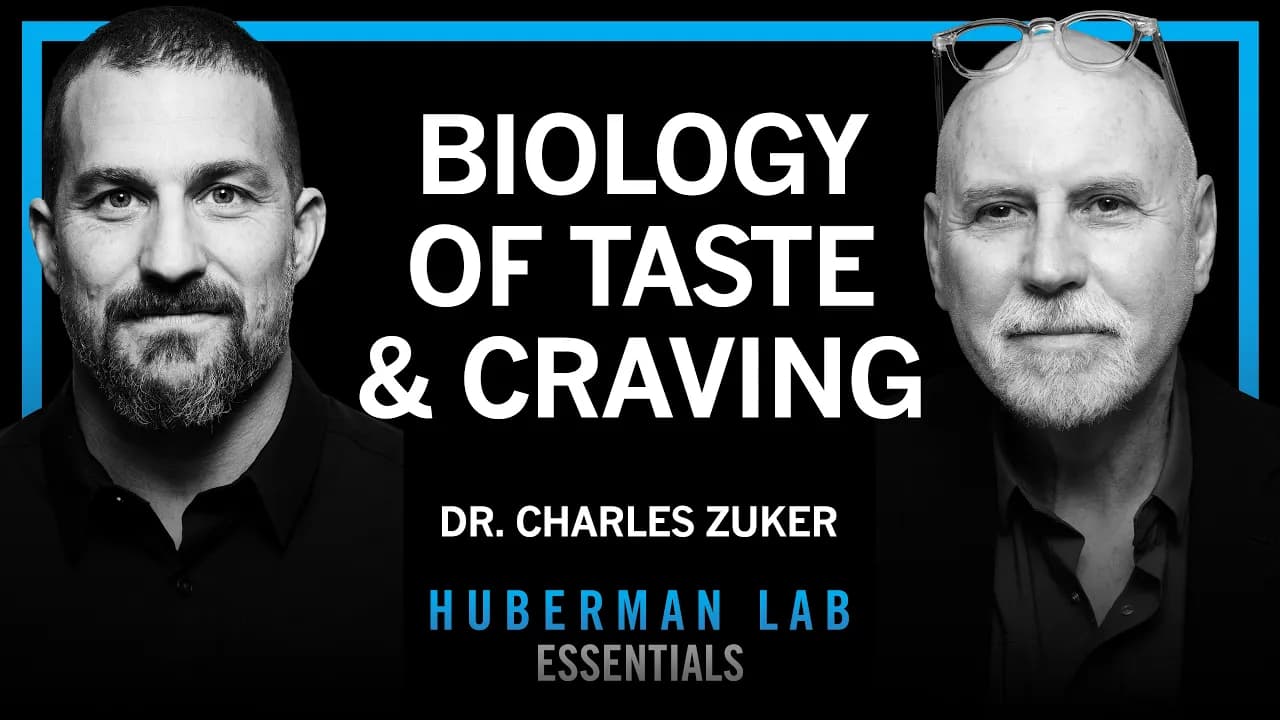
Brain registers salt intake to adjust craving. Zuker lab (Columbia) defined parallel pathways for tastes (sweet, salty) from mouth/gut to brainstem, neocortex for perception.
Pathways interact, relevant to food choices/sugar craving. Processed foods have hidden sugars (caloric/artificial sweeteners) to bypass sweet homeostasis—dopamine release, more craving. Perceiving sweetness leads to less consumption.
Many foods combine salty-sweet, leading to more consumption than single taste, as each has homeostasis. Salt masks sweet perception, or vice versa.
Ingesting salt with sweet foods masks some of the sweetness, leading you to indulge more in those foods. Salty-sweet interactions can be diabolical, inspiring overconsumption beyond homeostatic salt or sugar balance systems. The brain represents pure tastes (salty, sweet, bitter, etc.) and their combinations. Food manufacturers exploit this to a large degree.
To explore increasing or decreasing sodium intake for health or performance benefits, use a background of fairly pure, unprocessed foods—whether keto, carnivore, omnivore, intermittent fasting, or otherwise. Foods close to their basic form and taste, without large combinations of ingredients or highly processed items, allow quicker honing in on specific salt appetite and needs. These vary by nutrition, activity, and hormone status.
Monitor blood pressure to determine appropriate sodium levels. Increasing salt intake can reduce anxiety, offset postural syndromes causing dizziness, or improve sports and cognitive performance. Many find, as reviewed in The Salt Fix, that increasing salt with unprocessed foods vastly reduces sugar cravings, due to salty-sweet neural pathway interactions.
Sodium is crucial for neuron function via the action potential, the fundamental way neurons communicate. Sufficient salt allows the brain and nervous system to function at all.
Drinking too much water, especially quickly (hyponatremia), causes rapid sodium excretion, disrupting kidney function and potentially stopping brain function, which can be fatal. Examples include endurance athletes becoming disoriented near the finish line after excessive sweating, hot environments, or insufficient fluids and electrolytes (including sodium), leading to severe mental and physical issues post-exercise.
The brain monitors salt levels, relating to thirst and drives for fluid or salty fluids. Brain hormones regulate kidney water retention or excretion. The kidney's function was discussed. Salt intake relates to health parameters, with optimal ranges depending on hypertension, pre-hypertension, or normal tension contexts. Fluid and electrolyte (sodium, potassium, magnesium) intake supports athletic performance and cognitive function.
- Galpin Equation: Adapt to body weight and circumstances; increase fluid/electrolytes for exercise or hot environments, decrease if sweating less.
Stress and salt craving systems interact; increasing salt via healthy means may benefit those with anxiety or stress. Increasing salt can offset low blood pressure and postural syndromes causing dizziness—explore individually with a doctor.
Salty and sweet taste perceptions interact, driving increased sugar intake unconsciously. Salty-sweet combinations bias toward craving processed foods, best avoided. Salt is critical for the action potential, essential for nervous system function.
Consider: What salt intake is best for you, in context of fluid intake and electrolytes (sodium, potassium, magnesium). The brain and organs beautifully regulate sodium balance. Neurons tuned to body salt levels detect and drive intake of salt, fluid, and other electrolytes, allowing environmental adaptations.
Thank you for your interest in science.
Keep Andrew Huberman in your library
Save the videos and channels worth coming back to, and find them again in one place.