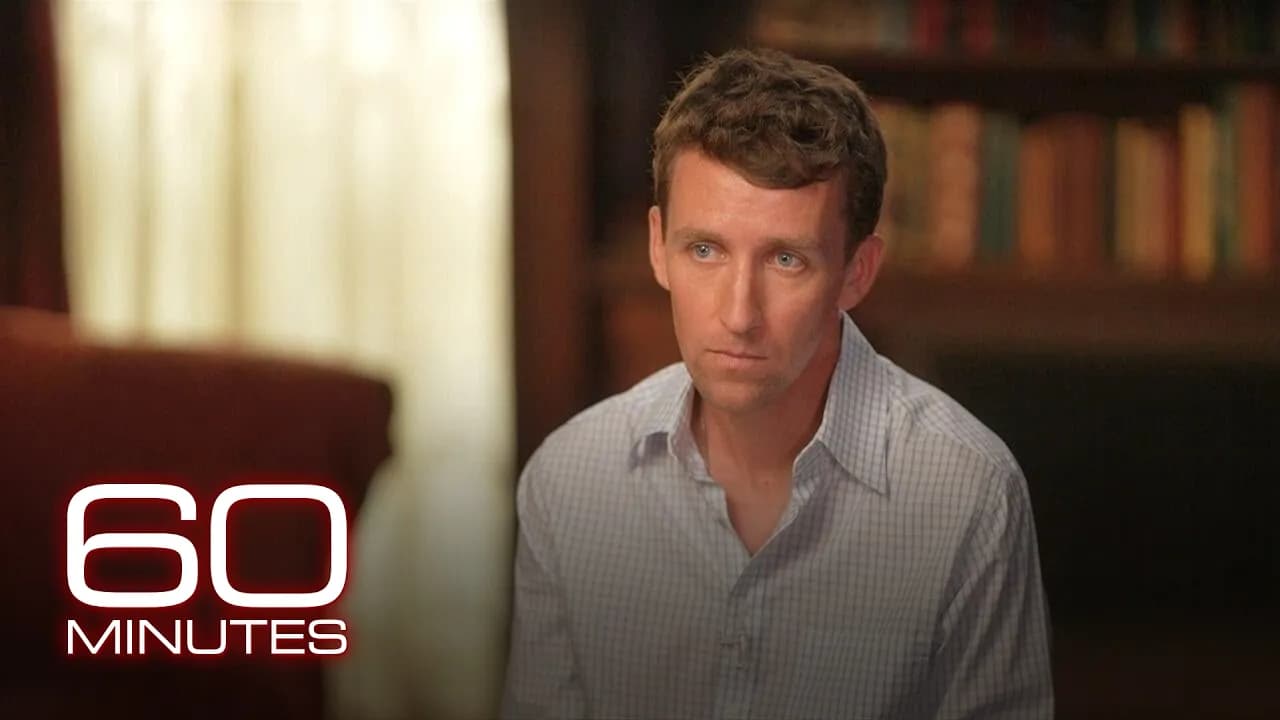
Extended interview: Patrick Clancy
In a Nutshell
Patrick Clancy's wife Lindsay killed their three children in January 2023 while suffering from postpartum psychosis, and he publicly forgives her while fighting online conspiracy theories that falsely accuse him of the murders. After losing his family, Clancy moved to New York City, found love again with Rachel Danis, and is now remarried and starting a new family while preserving his children's memory. He advocates for better recognition and treatment of perinatal mental illness, stressing early detection and compassionate accountability without eliminating justice.
These notes were generated by AI and may contain inaccuracies.
Patrick Clancy was a married father of three living in Duxbury, Massachusetts. On January 24, 2023, he returned from an errand to find his three children killed by his then-wife Lindsay, who had also attempted suicide. Lindsay Clancy's murder trial became a national focus, sparking conversations about mental health, criminal fault, and medical system failures regarding mothers. Her lawyers argue she was suffering from postpartum psychosis and could not be held responsible, though this has not stopped online speculation that Patrick murdered the children.
Patrick and Lindsay first met in the summer of 2013 in Boston. She was described as a fun-loving, outgoing person. On one of their early dates, they flew a kite on a beach in Boston. They shared the same life goals of wanting families and children. After two and a half years, they were engaged.
Lindsay was very hands-on as a mother. She reached a point in motherhood that she had dreamed of. Their youngest child, Callen, was born on May 26, 2022.
Approximately five months after Callen's birth, in October, Patrick noticed something was wrong when Lindsay went several nights without sleeping. She came downstairs one morning stating she had not slept at all. Patrick offered to take the kids to school so she could catch up on sleep.
Lindsay went another night without sleeping and went to the hospital. They tried to give her medications to help with sleep, but she entered a spiral over the next month and a half. She experienced severe depression, significant anxiety, and continued sleep difficulties.
Patrick had no prior knowledge about postpartum mental illness before this experience. He could understand anxiety and depression conceptually but did not know how to manage a postpartum illness. He acknowledged that mental illness can be tragically deceptive, and there were likely things he did not see.
Both sets of parents tried to help as much as they could. Friends in town dropped off meals. Lindsay was open about her struggles, and people at the children's school were aware and trying to be helpful. Patrick felt the support was helpful at the time.
Patrick struggled to help his wife navigate the medical system. Lindsay made repeated emergency room visits. She admitted herself to a program for patients with postpartum depression and was discharged after a day of treatment. She was prescribed an escalating number of prescription drugs.
December was a significant struggle for Lindsay, marked by severe lack of sleep, deep depression, and intrusive thoughts. At the end of the month, she went to the hospital again.
On New Year's Eve, Lindsay checked herself into McLean's psychiatric hospital. She was treated for depression and released days later. The family celebrated Cora's birthday on January 7.
Lindsay asked Patrick to run an errand and pick up dinner after taking Cora to a doctor's appointment. When Patrick returned home, he found Lindsay lying in the backyard with cuts to her throat and wrists, paralyzed after jumping from an upstairs window. In the basement, he found his children strangled. Cora and Dawson were dead. Callen survived initially and was airlifted to Boston Children's Hospital.
Patrick initially thought there was a chance Callen would live, having been told they got a heartbeat back. He held onto hope that he could raise at least one child and tell them about their siblings. However, when he arrived at the hospital, the doctor's expression indicated a poor prognosis.
Callen's heart kept beating for four days. Patrick expressed gratitude for those four days and that Callen held on. He spoke to Callen, saying "I'm so sorry," held him, and lay next to him. Callen died in Patrick's arms.
During the hours with Callen, Patrick wrote tributes to each of his three children, typing with one hand while holding his baby's hand with the other. He was afraid if he did not write about them, they would be forgotten.
Patrick publicly forgave Lindsay, stating that headlines calling her a "killer mom," "baby murderer," and "monster" were inaccurate. He believes her mental illness caused the tragedy. He shared that if he did not reach forgiveness, he would be consumed by it.
Patrick asked Lindsay if she remembered the events. She said it was like a dream and remembered it the way one remembers a dream after waking up.
Patrick believes he did the best he could with what he had at the time and lives with the outcome every day. Lindsay has never asked for his forgiveness, but he gave it to her.
Patrick emphasizes that postpartum mental illness does not discriminate and can happen to anyone. He has met with other victims and fathers who lost children to the disease. He stresses that early detection is crucial.
Patrick believes a compassionate approach can be taken in these tragedies without eliminating accountability. This involves recognizing the suffering and stigma while working to prevent future occurrences.
After the tragedy, crowds of mourners dispersed and Patrick's world emptied. There was no family routine, no bedtime stories, no purpose. Everything came to a screeching halt. One day he drove by the children's school at pickup time and realized he could not be there anymore.
Patrick experienced suicidal thoughts and did not think he would live to see his 35th birthday, feeling completely fine with that prospect.
In April, unable to stay in Duxbury, Patrick moved to New York City seeking anonymity. Five weeks after moving, on May 26 (Callen's first birthday), he went to St. Patrick's Cathedral, lit a candle, and said "I love you, buddy." Walking out on Fifth Avenue, he cried, and nobody cared, which he found comforting.
Before moving, Patrick emptied the house in Duxbury. He kept some toys, personal items, and things that reminded him of the children. In his Manhattan apartment, he has placed reminders including a baby sloth that Cora carried everywhere, a photo of Callen wearing an oversized bow tie, and Dawson's beloved and battered helicopter. The children's real handprints are also preserved.
In Duxbury, a new playground was built featuring touches for each child: sloths for Cora, a firefighter for Dawson, and a toddler's playpen for Callen.
Patrick still has close friends and family in Duxbury, and his children are buried there. Coming back to the town is difficult despite loving it.
Patrick says his children live within him. He talks to them and asks for help, believing they help him. This is how he stays connected to them. He dreams about them frequently, describing one dream where Cora walked into the kitchen and gave him a hug.
Cora was cautious and shy but good at making friends. She loved princesses and art more than sports. At one point, she convinced her teachers her name was Sophia because she loved Sophia the First so much. Patrick had to clarify her actual name was Cora when picking her up.
Dawson was adventurous and daring, funny and smart. At one and a half years old, he counted from 1 to 20 and then counted from 1 to 10 in Spanish. He loved trucks and working-class people. Patrick took him to Home Depot and fire stations. They had a special bond and drove everywhere together.
Callen was one of the happiest babies. His birth was easygoing, occurring in the middle of the day. Patrick mourned Callen differently, feeling he did not get to know him as well as his other children.
Patrick thinks about his children every day, all day. He has many reminders and does things to keep their memory alive. Sometimes grief makes him quiet, and people do not realize the scenes from that night playing repeatedly in his head.
Patrick avoids thinking about the traumatic scenes but does not avoid good memories. He misses traveling with Cora, including a trip to San Francisco. He misses having Dawson by his side during projects, wearing his tool belt. He misses putting Callen on his knees and having him kick his stomach, or sitting in his playpen.
EMDR therapy was most helpful for Patrick. It involves putting someone back in the traumatic place they've been avoiding and facing it directly. Though unpleasant, it helps process trauma. After sessions, the waking up screaming and horrible dreams mostly stopped.
In July, Lindsay Clancy went to trial for killing her three children. Her lawyers argued she was suffering from postpartum psychosis and could not be held responsible. The trial ended with a hung jury, resulting in a mistrial.
Patrick faced intense online scrutiny from TikTok sleuths and influencers who developed theories portraying him as uncaring, unfaithful, and even the murderer of his children. He states these theories are deeply harmful to his children's legacy and distract from perinatal mental health issues.
Testifying was very difficult. On the second day, focus was on the night of January 24. Before the 911 call was played, Patrick had a traumatic panic attack requiring an ambulance. He refused medication so he could return and finish testimony.
Patrick reached out to Postpartum Support International and psychiatrists to understand what happened. These conversations helped him come to terms with the events.
Dr. Rachel Danis, a fertility doctor, met Patrick in January 2024 at a run club in New York. They got to know each other over coffee. When Rachel noticed photos of children on Patrick's phone and asked about them, he told her they had died.
The relationship remained platonic initially. The switch occurred when Patrick met Rachel's sister with Down syndrome at a half marathon. Rachel noted Patrick's warmth and friendliness with her sister, which revealed what mattered to her.
When people learned about the relationship, they paused, understandably. Rachel told people that Sundays finally felt like Saturdays with Patrick, and life became calmer.
Patrick and Rachel got married in April in Central Park. Rachel tries to help carry Patrick's grief, though she acknowledges she cannot fix it or bring his children back. She wants to honor them and allow Patrick to grieve while continuing their legacy.
Patrick and Rachel are starting a family. Patrick wants to tell their future child about their brothers and sister, emphasizing that all children are equally valued regardless of different relationships.
Rachel states she does not understand how the story has been twisted. She describes Patrick as the most selfless father and supportive partner. She emphasizes they are carrying forward the children's legacy together.
Patrick and Lindsay have each brought lawsuits against healthcare providers who treated Lindsay, alleging medical malpractice. Lindsay Clancy is being held at Tewksbury Hospital in Massachusetts, waiting to learn whether she will be retried for the murder of her children.
Keep 60 Minutes in your library
Save the videos and channels worth coming back to, and find them again in one place.