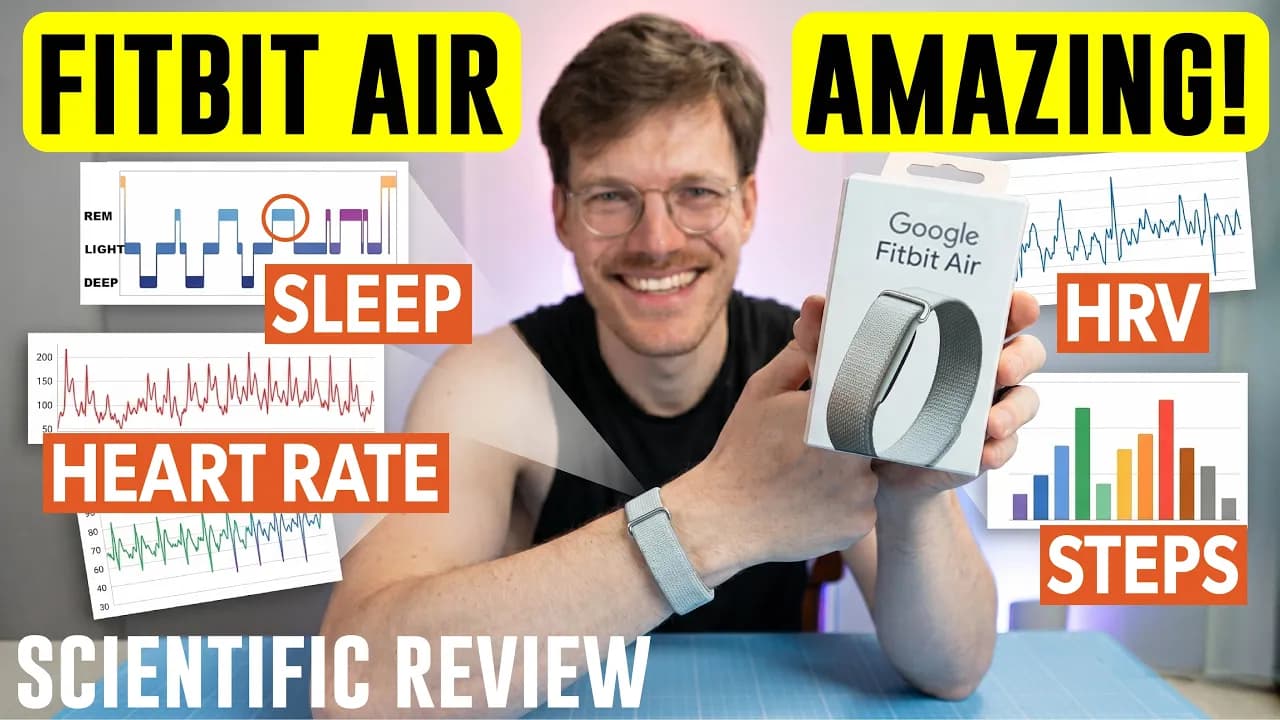
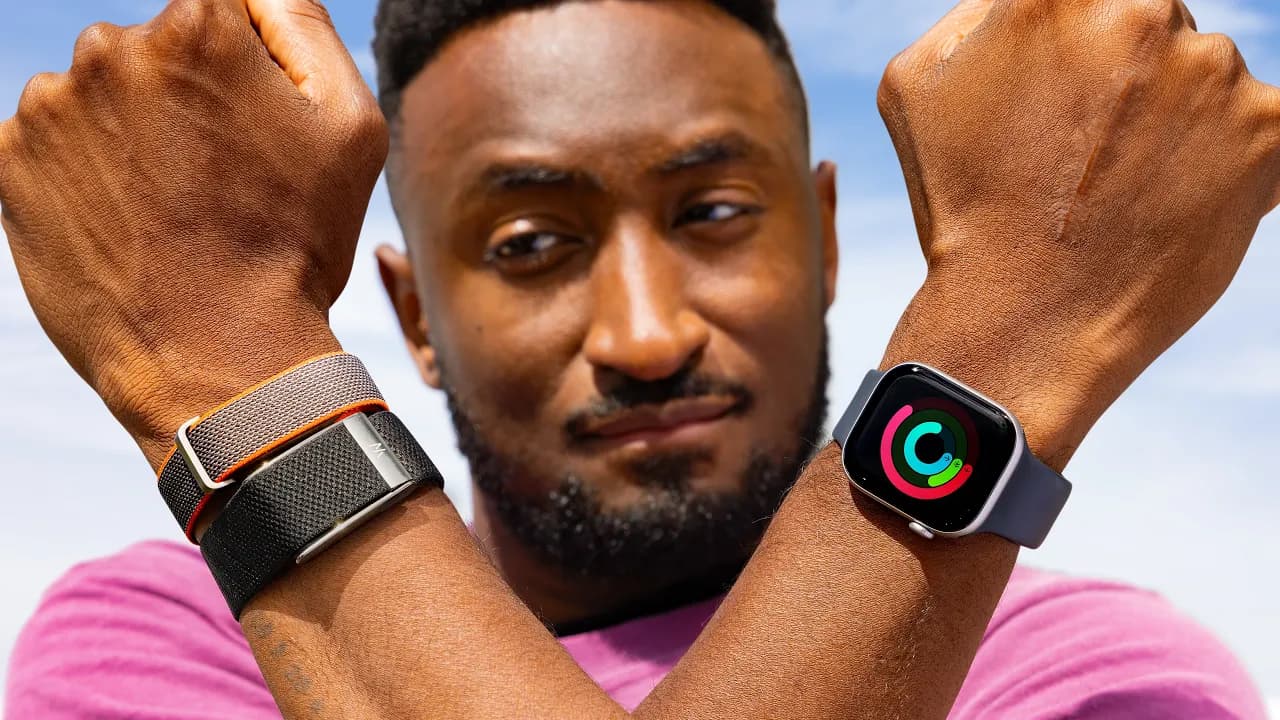
Fitbit Air vs WHOOP | Scientific Test!
In a Nutshell
Both Fitbit Air and Whoop Strap deliver strong sleep stage accuracy (Fitbit slightly edges out) and solid heart rate tracking for cardio, but both struggle with weightlifting and outdoor cycling. Whoop offers superior app simplicity, biceps band flexibility, and motivational features like biological age, while Fitbit provides better value at $99 with no subscription required for basic use. The choice depends on budget and preference for straightforward tracking versus coaching insights.
These notes were generated by AI and may contain inaccuracies.
This video provides a scientific and systematic comparison of the Fitbit Air and the Whoopstrap, evaluating both data-driven performance metrics and user experience factors including features, app experience, price, and battery life.
Both devices display key scores immediately upon opening their apps. The Whoopstrap shows sleep score, recovery score, and strain score. The strain score includes an optimum target bar that users aim to fill. The Fitbit Air displays readiness score, total steps, and sleep score. The Fitbit Air also provides a weekly cardio view rather than a daily view.
The reviewer prefers daily views due to high exercise volume, noting that weekly views may suit those who exercise less. The Fitbit Air contains a large block of text at the bottom of the morning screen stating "My sleep quality was great, but my timing was shifted." The reviewer suggests this could be condensed to just the title with two lines of text.
Both devices indicate the user is relatively ready to work out, aligning with subjective feelings. The Whoopstrap provides more upfront metrics in its morning view.
The Whoop app includes a health monitor with five basic metrics to check if values fall within expected normal ranges. Outliers may indicate illness, overtraining, or high training load. The metrics shown are respiratory rate, oxygen saturation, resting heart rate, heart rate variability, and skin temperature.
The Google Health app has a similar vital status feature with the same five metrics in the same order. Both devices showed all metrics in range on the test day.
The Google Health app is described as very text-heavy, likely due to integration of a large language model. The reviewer prefers graphs over text. The Whoop app uses less text and focuses more on actionable information. One example cited is Whoop noting "lower heart rate variability" which the user wants to be high, providing direct insight without excessive text.
Sleep stage tracking was compared against the Zmax EEG headband, which measures brain waves and eye movements as a reference standard. The Whoopstrap data was reanalyzed to include four months of data from 2025 to 2026, providing more nights of data than available for the Fitbit Air.
Using a confusion matrix format with the reference device on top, the Whoopstrap achieved 82% agreement for deep sleep, 60% agreement for light sleep, and 83% agreement for REM sleep. The device tends to detect too much deep sleep and too much REM sleep while under-detecting light sleep.
The Fitbit Air showed 87% agreement for deep sleep, 80% agreement for light sleep, and 72% agreement for REM sleep. The device tends to under-detect REM sleep compared to the reference.
Performance was evaluated using average sensitivity across the three sleep stages on the horizontal axis and the worst individual sleep stage performance on the vertical axis. Both devices rank among the top five performers. The Fitbit Air scored slightly higher on average sensitivity, while the Whoopstrap's worst stage (light sleep at 60%) was lower than the Fitbit Air's worst stage (REM at 72%).
The top five sleep stage tracking devices identified are Whoop, Google/Fitbit, Apple, Oura Ring, and the Eight Sleep Pod. The Eight Sleep Pod is described as a cooling and heating mattress and cover system with independent temperature control for partners and non-contact sleep tracking.
Both devices perform well for sleep stage tracking and would likely be sufficient for most users. The Fitbit Air appears slightly better at sleep stage tracking overall, though both have distinct strengths and weaknesses.
Heart rate tracking was tested during a run and across multiple exercise types. The Polar H10 ECG chest strap served as the reference device.
Both apps include AI coach features. For a marathon training run, Whoop recommended a 10-13 km conversational run, with 6-8 km as an alternative. Google recommended approximately 10 km. The user decided on a 14-15 km run starting at a slower pace.
During a hot, sweaty run, both devices tracked heart rate well with only minor deviations. The Fitbit Air showed one instance of detecting too high a heart rate with some small deviations later. The Whoopstrap showed some minor deviations throughout.
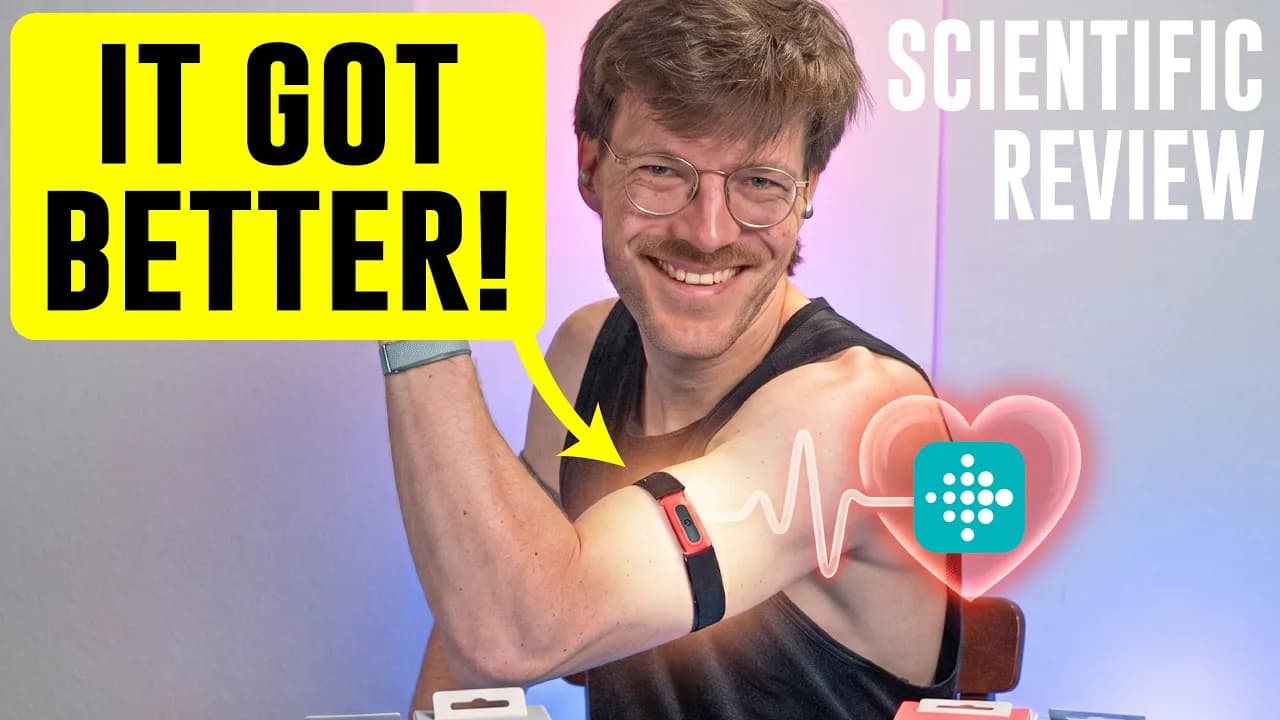
Heart rate data was compared across the same time period for both devices. The Whoopstrap was worn on the biceps while the Fitbit Air was worn on the wrist, reflecting typical usage patterns. A biceps band option does not exist for the Fitbit Air and is not officially supported.
For indoor cycling, the Fitbit Air achieved a correlation of 0.99 with the reference device. The Whoopstrap achieved a correlation of 1.00, though it occasionally measured slightly too low by a few BPM. Both performed well.
Across multiple runs, both devices achieved a correlation of 0.98 with the reference. Performance was considered good enough to trust for running.
Both devices struggled more with outdoor cycling due to wrist tension. The Fitbit Air achieved a correlation of 0.93. The Whoopstrap achieved a correlation of 0.90, with slightly more frequent underestimations. Performance was described as okay but not great.
Weightlifting proved challenging for both devices due to wrist tension. The Fitbit Air achieved a correlation of 0.87 with notable underestimation at higher heart rates. The Whoopstrap achieved a correlation of 0.95 but still underestimated at the highest heart rate ranges. Neither device performed adequately for weightlifting.
The Fitbit Air ranked at the 63rd percentile for spinning, 63rd percentile for outdoor biking, 74th percentile for running, and 50th percentile for weightlifting.
The Whoopstrap ranked at the 81st percentile for spinning, 50th percentile for outdoor biking, 67th percentile for running, and approximately 80th percentile for weightlifting.
Both devices are solid heart rate trackers for cardio exercises but struggle with biking. Weightlifting is not recommended for either device. Better dedicated heart rate trackers exist for high-accuracy needs. The Whoopstrap benefits from biceps band compatibility, which improves performance and allows wear under clothing.
The Whoopstrap offers approximately 14 days of battery life. The Fitbit Air offers 7 days of battery life but charges quickly.
The reviewer prefers the Whoop app for its simplicity and usability, noting it provides needed information quickly. The Fitbit/Google Health app offers greater versatility, allowing data imports from other sources and more flexibility.
The Whoopstrap's biceps band allows hidden wear under clothing and improved heart rate tracking performance. The reviewer notes that if a biceps band existed for the Fitbit Air, performance would likely improve further, though sleep stage tracking might be affected.
The Whoopstrap's biological age feature is a primary reason for continued use. It predicts a biological age of 25.7 years for the reviewer, indicating fitness level comparable to the average 25.7-year-old male. The feature incorporates sleep consistency, sleep hours, time in heart rate zones, strength training frequency, step count, VO2 max, resting heart rate, and lean body mass.
The reviewer describes this as semi-scientific gamification rather than rigorous science, noting it functions as a rough estimation that provides motivation. The feature has encouraged maintaining at least two weekly weightlifting sessions.
The Google Health app's coach and AI features are expected to receive more frequent updates with better models due to Google's ownership of the Gemini model.
The Fitbit Air costs $99 as a one-time purchase without requiring a subscription for basic tracking. The Whoopstrap has three tiers: Whoop 1, Whoop Peak, and Whoop Live. Whoop Peak is recommended as the sweet spot. The device costs approximately €264, potentially lower with discounts such as Black Friday sales.
For premium features on Fitbit, an additional $100 annual subscription is required. Even with premium features, the Fitbit remains cheaper overall. The reviewer notes that for basic tracking without premium features, the Fitbit Air offers significantly better value.
Personal preference leans toward the Whoop Strap if budget allows, but the Fitbit Air is recommended for users seeking basic tracking without additional insights or coaching. Those who want to view their metrics and make their own decisions will find the Fitbit Air offers strong value. This choice means missing certain features, but for day-to-day tracking the speaker relies primarily on Whoop and plans to continue using it.
Whoop pricing at approximately $250 per year may feel substantial or modest depending on location and income level. In New York with a decent job, the cost may not seem significant. In Europe the price feels more substantial but remains affordable for many. In lower-income countries the Fitbit Air presents a much stronger value proposition. Even in higher-income countries the Fitbit Air suits many users well.
Data quality between the two devices is very similar. The decision ultimately comes down to personal preference regarding app layout, usability, and amount of text. Google Health offers more detailed text while Whoop provides a simpler interface. Budget and intended frequency of use are important factors in choosing between the devices.
Google sent information about planned updates not yet implemented. Google Health Coach will receive more concise messaging while maintaining detail and balancing positivity with objectivity. Additional visuals including charts, maps, and glanceable stats are planned. These changes appear on Google's roadmap to address reviewer and community feedback.
Don't judge a product by its promises but by its current features.
For those considering the Fitbit Air, alternatives include the Whoop Strap or the Amazfit review coming soon. The speaker's favorite sleep improvement device is the Hleep Pod. Affiliate links are available for viewers wanting to support the channel while accessing the best discount. These links allow users to try the products and determine personal preference.
Viewers who watched the full comparison between the Whoop Strap and Fitbit Air may also enjoy the main Fitbit Air review or the video on the HD Pod.
Keep The Quantified Scientist in your library
Save the videos and channels worth coming back to, and find them again in one place.