"Friendliness mutations" in dog DNA | 60 Minutes Archive
In a Nutshell
Dogs evolved from wolves around 20,000 years ago through "survival of the friendliest," where less aggressive wolves that approached human camps for scraps gained advantages, leading to domestication. Geneticist Bridgett von Hold identified friendliness mutations on chromosome 6 unique to dogs, mirroring genes linked to extreme sociability in human Williams syndrome. This parallels human evolution, where Homo sapiens thrived as the friendliest species among multiple human groups 100,000 years ago, emphasizing cooperation over raw strength.
These notes were generated by AI and may contain inaccuracies.
Many viewers have a dog nearby. Dogs evolved from wolves, but how and when remains a mystery. Intriguing clues in DNA of dogs and wolves provide better understanding of how they and humans evolved.
Survival of the fittest is a misconception; it suggests biggest and strongest always win. Dogs exemplify survival of the friendliest. There are an estimated billion dogs on the planet, integrated into every corner of human lives: living with us, working with us, loving us.
Brian Hare, evolutionary biologist and author at Duke University, has studied animal evolution for 25 years. He summarizes the link between dog and human evolution as survival of the friendliest.
"What is it you're trying to understand about dogs? I'm really interested in where dogs come from. And I think it teaches us a lot about where humans came from."
Sweet dogs started as wild predatory wolves. Evolutionary story began at least 20,000 years ago when humans were hunter-gatherers. Wolves chose humans: a population became attracted to humans, gaining advantage by eating garbage and scraps left around camps. Wolves that gave up hunting, were less aggressive, and friendliest toward humans had a huge advantage, leading to domestication over time.
At Wildlife Science Center in Minnesota, run by director Peggy Callahan and her 23-year-old daughter Meg, both skilled at handling wolves. There are 110 grey wolves, some rescued from wild, most hand-raised by Peggy and Meg, divided into packs by chainlink fences.
One pack named after 80s horror movie Children of the Corn because they attacked and killed their father, then tried to kill their mother—"opportunity."
Peggy is viewed as dominant pack member, essential for safety given wolves' capability to kill with enormous jaw pressure. Wolves constantly assess dominance: "Could I take this person?" They are incredible opportunists. Peggy demonstrates dominance by howling:
Wolves howl to mark territory and at intruders to make them leave.
Dominance starts early: Meg hand-raises pups like one-month-old Pho, even taking him on morning coffee runs, correcting with pinches, growls, whines, and belly rubs—mimicking mother wolf behavior.
MJ, dominant female, hand-raised, tolerates belly rubs until she doesn't.
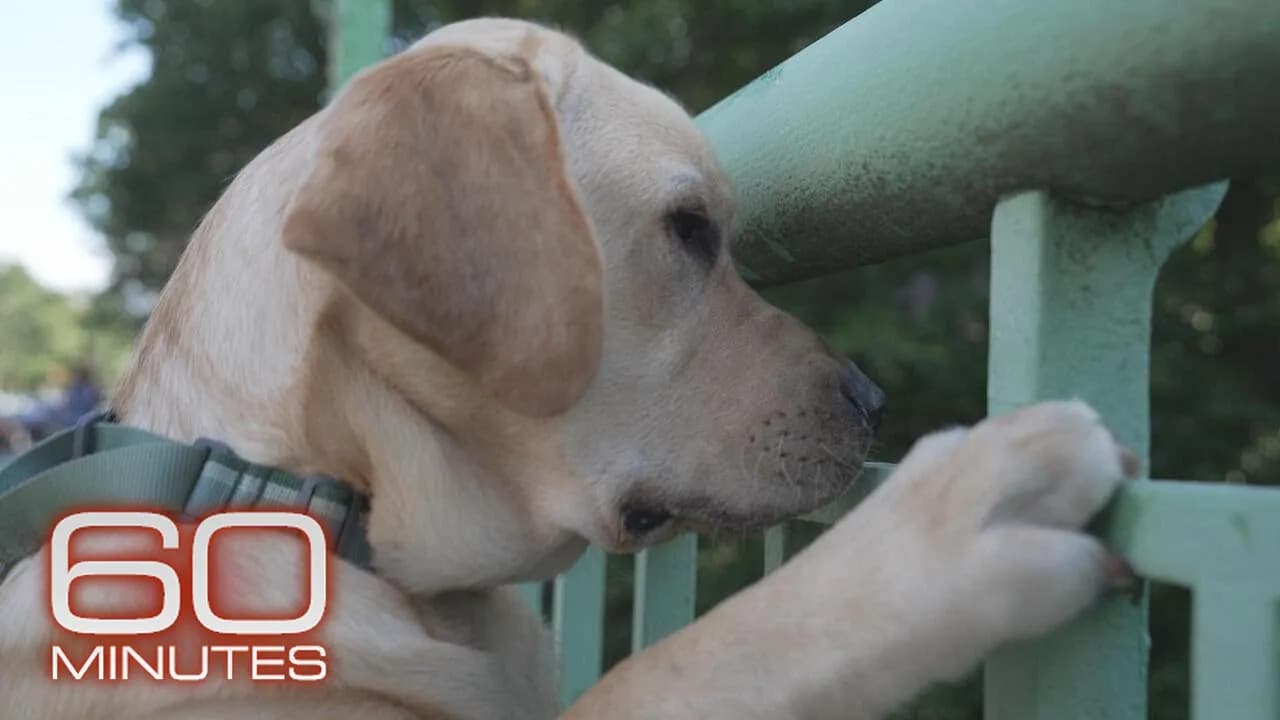
Brian Hare's puppy kindergarten at Duke University: students raise Labrador puppies for K9 Companions service dogs. Puppies tag along to quad, basketball practice, track team photo shoots.
Behavioral tests compare dog puppies to hand-raised wolf pups. Dog puppy immediately follows researcher's point to bowl, looking back and forth. Wolf pup Pho does not follow the point.
"Dog puppies come into the world kind of prepared to understand us in a way that wolf puppies are not because of domestication and interacting with us."
After months with wolf puppies, they remain uninterested in new people, preferring wolves. Dogs are xenophilic: attracted to new things and new people.
In 2010, Brian Hare's colleague Bridgett von Hold, geneticist at Princeton, compared DNA of dogs and wolves. Found hot spot of mutations on chromosome 6 only in dogs, leading to friendly behavior.
"You can actually pinpoint genetic mutations in dogs that make that dog friendly to humans in a way that wolves are not."
These friendliness mutations likely evolved as some wolves made dens closer to human settlements, carrying one or two such mutations.
"Does my dog really love me or is my dog just acting out on its genetic code? She absolutely loves you. She has the genetic predisposition to wholeheartedly love you more than she probably can handle."
Friendliness mutations in dogs correspond to same genes that, when deleted in humans, cause rare Williams syndrome (announced 2017). Provides one of first genetic links in behavior between dogs and humans.
Ben Mona, 36, has Williams syndrome. Featured on 60 Minutes in 1997 at age 11 by Morley Safer. People with Williams syndrome are unusually outgoing and friendly (cocktail party personality), but condition causes serious medical problems and intellectual disabilities.
Ben at his favorite pub jumps up mid-dinner to join the band:
"What makes me unique is my way of giving happiness to people. My friendliness, my kindness. When people are happy, it makes me feel like I've achieved something."
Ben missing 25 genes on chromosome 7 (one-tenth of 1% of genetic makeup).
"Ben, what do you think about that? About that there might be a link friendliness in dogs, there might be a link to friendliness in humans. It just makes me feel so happy and proud that dogs and people have similarities."
Ben's mom Terry Mona, former head of Williams Syndrome Association:
One parent said, "Are you kidding? You know, I'm sure that if a tail was put on my son, it would be wagging all the time."
Dog evolution shows getting ahead involves evolving new ways to be friendly, leading to new forms of cooperation.
100,000 years ago, Homo sapiens not alone—4 to 5 other human species existed. Humans survived as the friendliest species among them.
"Survival of the friendliest, a successful evolutionary strategy many humans today would be wise to remember."
Keep 60 Minutes in your library
Save the videos and channels worth coming back to, and find them again in one place.