Harvard Professor: “I Tried Every Diet. This Is By Far The Worst.” - Daniel Lieberman
In a Nutshell
Harvard evolutionary biologist Daniel Lieberman concludes that no single "optimal" diet exists—every approach has trade-offs, and the best evidence supports traditional Mediterranean-style eating patterns with whole grains, legumes, vegetables, olive oil, and minimal processed foods. He emphasizes that human physiology evolved as ultimate omnivores capable of thriving on diverse diets, and the modern obesity epidemic stems primarily from hyper-palatable ultra-processed foods engineered with combinations of fat, sugar, and additives that bypass satiety mechanisms. While restrictive diets like carnivore or raw food provide temporary structure, they're unsustainable long-term, and the real solution requires both individual agency in avoiding processed foods and systemic changes like better food labeling.
These notes were generated by AI and may contain inaccuracies.
Harvard evolutionary biologist Daniel Lieberman spent years researching every major diet and trying many of them himself while working on a book about the evolution of diet. He and his wife tested various diets on and off as he wrote the book to gain participant observations and firsthand experience rather than just studying them.
Lieberman's primary research focuses on physical activity, including the evolution of running, walking, and throwing. He also teaches nutrition, digestion, and physiology. He became confused by conflicting literature, noting that the same year the New England Journal of Medicine published articles claiming saturated fat is both good and bad for you, and that various amounts of salt are either too much or perfect.
Lieberman integrated an evolutionary perspective with biomedical, cultural, and anthropological data. He cites Theodosius Dobzhansky's 1972 statement that "nothing in biology makes sense except in the light of evolution." Evolution answers "why" questions, which leads to different thinking about "how" and "what" questions. Diet is no exception to this principle.
Lieberman agrees that nutrition and diet function like new religions with dogma, tribalism, and resistance to evidence. He attributes this to the breakdown of traditional cultural eating patterns. For millions of years, people ate according to their culture. Now people eat similar foods globally while institutions crumble, leading people to search for identity through what they eat or don't eat. Some diets function like cults with online nutritional theology and groupthink.
When someone disagrees with your diet, it feels like a threat to your existence because diet relates to longevity. If another person is right, it implies you might die sooner or are wrong. This isn't abstract - it has real-world implications. Lieberman notes that diet requires leaps of faith because effects take many years to manifest. Whether following the Mediterranean diet or another approach, you won't know the true outcomes for 30-50 years.
Lieberman tries not to be judgmental, noting that every diet, including the carnivore diet, contains some grain of truth. However, meta-analyses and large-scale studies show plant-based diets have better health outcomes. He emphasizes that not all plants are equal - eating sugar and highly refined grains isn't healthy just because they're plant-based.
Meat has played an important role in human evolutionary history and is nutritious. However, studies show a dose-response effect between meat consumption and cancer risk. One serving (85 grams) increases cancer risk by 13%, and doubling that serving doubles the risk. Mechanistic studies reveal that meat contains carnitine, which gut bacteria transform into TMAO, an inflammatory molecule associated with atherosclerosis and increased blood pressure.
Red meat contains a glycoprotein called Neu5Gc that triggers an inflammatory response in humans due to a gene called CMAH. This may explain the relationship between meat dosage and cancer risk. Saturated fat content in meat is also controversial, with genetic variation determining individual susceptibility to its effects on cholesterol and heart disease risk.
Studying nutrition is complicated because eating one thing means not eating something else. No study will ever randomize 100 sets of twins to all-meat versus all-plant diets while controlling for exercise, smoking, and other factors. This makes isolating the effects of specific foods extremely difficult.
Lieberman finds the carnivore movement's recent popularity somewhat mysterious. He notes meat's association with manliness and masculinity may explain some appeal. He recounts how singer James Blunt went on an all-meat diet expecting it to make him more manly and ended up getting scurvy. Some people are attracted by podcast claims about meat's benefits. Others on unhealthy diets may feel better on any structured diet compared to eating McDonald's and drinking soda, though this doesn't mean carnivore is optimal.
For weight loss, the best diet is the one you can stick to. The National Weight Loss Registry tracks people who lost weight and kept it off for an average of 5.6 years. Their diets vary widely but share the characteristic of avoiding junk food, sugar, and added fats. Many diets fail because people can't tolerate them - Lieberman tried a low-fat diet and found fat makes food tasty, making adherence difficult.
Protein is essential - you cannot live without it. While the body can convert fats and proteins into sugars, certain amino acids must come from diet. Two fatty acids (omega-3 and omega-6) are also essential, but protein is uniquely required. Protein is filling and takes more energy to digest. However, the body cannot store excess protein - it converts surplus into fat. Massive protein intake isn't beneficial and can cause kidney damage at extreme levels, though Lieberman hasn't seen strong evidence for the "one gram per pound of body weight" recommendation.
Protein needs vary based on age, activity level, muscle mass changes, and whether someone is menstruating or pregnant. Older adults need more protein to prevent muscle loss. Lieberman rejects the medicalized approach of prescribing exact doses, noting diet doesn't work with simple prescriptions. Every culture has figured out how to get adequate protein by combining grains with legumes - rice and beans, corn and beans represent solutions worldwide.
People often associate protein exclusively with meat, but plants provide substantial protein. Beans, legumes, whole grains, quinoa, and nuts all contain protein. Soy is a complete protein allowing a meat-free life. The equation of meat with protein has been exaggerated - meat is rich in protein but not the only source.
The Mediterranean diet has more scientific evidence supporting it than any other diet, partly due to Eurocentric research patterns where Europeans and Americans conduct most studies. Lieberman isn't certain it's necessarily healthier than traditional Asian or other diets, but epidemiological data currently favors it. Randomized controlled studies, including a major Spanish study with over 7,500 participants, showed such strong beneficial effects that researchers stopped the trial after 5 years, considering it unethical to continue denying the Mediterranean diet to the control group.
People's dietary choices are often idiosyncratic and influenced by culture and occupation. For example, an entire industry of personal trainers may overeat meat, but this is confounded by their lifestyle. Cultural factors also play a role, such as red meat being eaten by individuals from the deep south who may engage in other behaviors like smoking. Vegetarians tend not to smoke, and physically active people tend to eat healthier diets. This creates a selection effect that is difficult to account for in studies.
When examining death certificates that list causes such as cancer or heart attack, epidemiologists attempt to determine the underlying causes. Many studies struggle to statistically separate the effects of exercise and diet because these factors are highly correlated. People who exercise tend to eat well, and vice versa. This covariation bias makes it statistically challenging to isolate individual variables.
Epidemiological studies cannot establish cause and effect but remain valuable as one form of information among many. Randomized controlled trials are considered the gold standard but are impractical for studying diet effects over 50-60 years while controlling for all variables.
The hedgehog and the fox analogy originates from a 7th century BC poem by Archilochus of Paros. The fox knows many things and employs various strategies when chased, while the hedgehog knows one big thing and simply rolls into a ball. Isaiah Berlin used this to distinguish between two types of thinkers.
Hedgehog diets are single-idea, big-fix approaches such as "protein is the answer," "meat is the answer," or "never eating meat is the answer." Fox approaches recognize nuance, trade-offs, and complexity. Every food choice means not eating something else. The hedgehog approach is problematic because human physiology is complicated, people vary, food effects are complex, and there are always trade-offs. Oversimplification leads to errors.
For millions of years, human ancestors needed extensive knowledge to obtain food. Hunter-gatherers required skills in tracking animals, understanding their environments, butchering, and locating seasonal plants. Finding plants was particularly complex, requiring knowledge of locations and digging techniques. People had to be naturalists with substantial information to survive.
Modern environments present a completely novel challenge. Individuals can walk into stores like Whole Foods or Sainsbury's confronted with 40,000 different food items. The question has shifted from "how do I get food" to "how do I choose food." This represents a fundamental change from historical patterns where people ate what was available or grown.
In remote parts of Kenya where Lieberman has worked for 15 years, meals are consistent and predictable. A typical meal consists of ugali (cornmeal porridge) with sakuma wiki (sauteed collard greens) or occasionally beans. People eat what they grow without asking what's for dinner.
Hunter-gatherers similarly eat whatever they successfully hunt and gather without choice between options like Italian, Chinese, turtle, or kudu. Only elites like the king of England historically had food choices. Modern environments are unprecedented in offering abundant options while simultaneously presenting over 50% ultraprocessed foods designed to be appealing, addictive, convenient, and inexpensive.
The Mediterranean diet outperforms others for several mechanistic reasons. It emphasizes whole grains rather than refined flour, which removes protein and fiber from the outer layers and germ. The diet features a healthy balance of fats, notably olive oil as a monounsaturated fat associated with health benefits. It includes substantial fruits, vegetables, and fish providing omega-3 fatty acids.
The diet eliminates or minimizes added sugar, refined carbohydrates, and excessive saturated fat. It provides diversity and richness in phytochemicals, antioxidants, and other beneficial compounds while limiting red meat consumption. The diet has demonstrated effectiveness in preventing weight gain and reducing risk across a wide range of diseases, though no diet guarantees perfect health.
Separating dietary effects from lifestyle factors like sociality is challenging. The Spanish PREDIMED study controlled for lifestyle by randomizing participants who presumably shared similar social behaviors. However, health and longevity involve factors beyond diet alone.
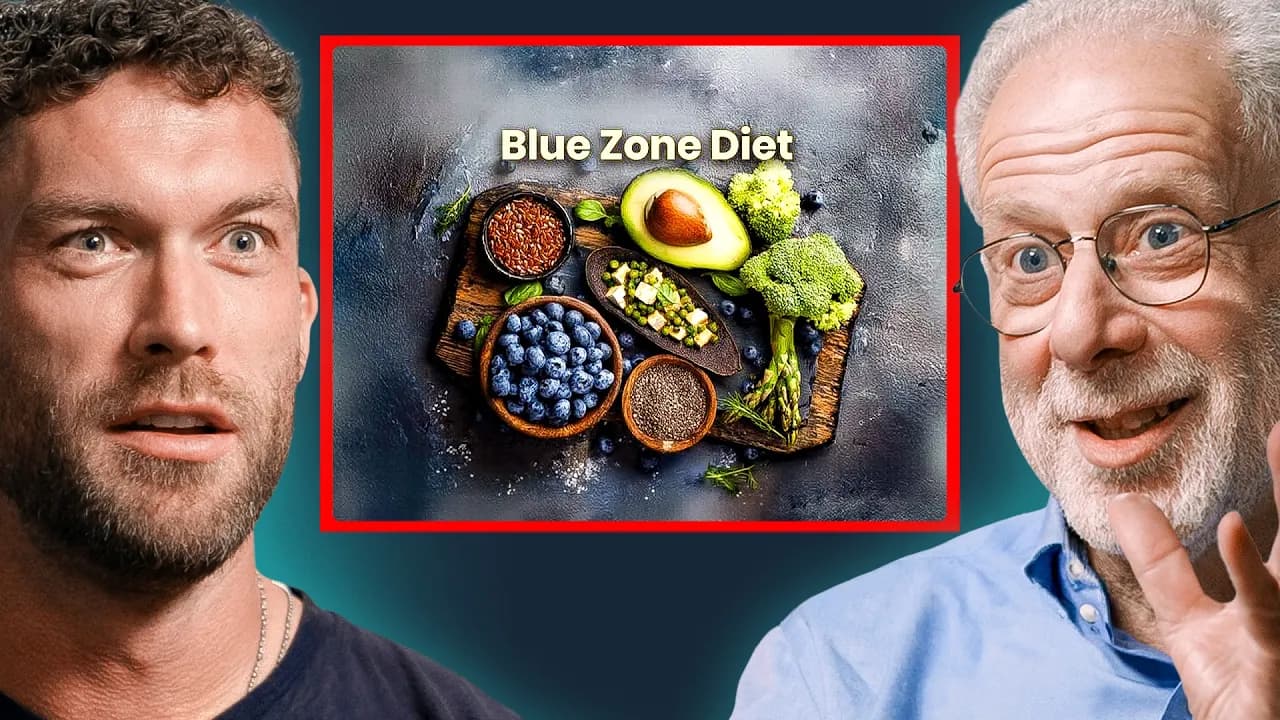
Blue zones refer to five regions purported to have higher concentrations of centenarians: the Nicoya Peninsula in Costa Rica, a village in Sardinia, an island in the Mediterranean, Okinawa, and Loma Linda, California. The concept suggests these areas have twice as many people living to 100 compared to other regions.
Statistical concerns include the low base rate of centenarians (six per 10,000 versus three per 10,000 in the United States), making small changes appear as massive proportional differences. These represent statistical outliers irrelevant to most people. Oxford demographer Saul Newman published research showing only 18% of people in these blue zones had birth certificates, with ages based on self-reporting. This raises questions about data accuracy and potential insurance fraud.
Geographic inconsistencies are notable. A small area in Sardinia shows high centenarian rates, but adjacent areas 20-30 miles away do not, despite presumably similar diets. Loma Linda, California, is a blue zone primarily because it is home to Seventh-day Adventists who do not smoke, exercise regularly, and many follow vegetarian diets. The Blue Zones diet recommends eating at least half a cup of beans daily, consuming lots of vegetables, and limiting certain foods, though these suggestions are not rigidly defined.
No diet is optimal because optimal for one person differs from optimal for another based on genetics, background, age, muscle mass, and individual health concerns such as heart disease, Alzheimer's, or arthritis. Environmental considerations also factor into dietary choices. Claims of optimal diets represent marketing and salesmanship rather than science.
Both low-carb and low-fat diets can facilitate weight loss. Low-carb diets demonstrate slightly higher efficacy for weight loss, though effectiveness in real-world conditions is only marginally better due to sustainability challenges. Lieberman co-authored a paper on the carbohydrate-insulin model published in the American Journal of Clinical Nutrition.
The biological mechanism involves glucose regulation. When carbohydrates are consumed, they break down into glucose, which the body maintains within a narrow range of approximately a teaspoon and a half in the bloodstream. Excess glucose triggers insulin release from the pancreas. Insulin facilitates glucose uptake by cells and promotes energy storage while preventing fat release from cells. Low-carb diets keep insulin levels low, reducing fat storage and retention.
The model is complicated by glucagon and physical activity effects. Low-carb diets prove difficult to sustain long-term, with carbohydrate intake often creeping upward over time. Low-fat diets can also achieve weight loss successfully for many individuals.
Low-fat, high-carb diets were among the biggest diets in the country, including the Pritikin diet and the Ornish diet. DASH stands for Dietary Approaches to Stop Hypertension. Originally developed by NIH for blood pressure, it turns out to be a low-fat diet and is probably the second most studied diet after Mediterranean. There are a lot of randomized control studies for the DASH diet, and people who stick to it lose weight.
The impact on insulin depends on the kind of carbohydrate consumed. Refined carbs with lots of sugar cause insulin levels to go sky high. Unrefined carbs like kale do not cause glucose levels to spike because the fiber slows the rate of digestion. There are plenty of foods that have carbohydrate that are not high glycemic.
The idea that all carbs are poisonous and cause blood sugar levels to rise ridiculously is not true. For most of human existence, people have eaten mostly carbs, including farming diets in the Mediterranean and Asia. These populations ate corn, rice, and wheat, yet very few were obese or overweight until recently.
High-carb diets can work if high in fiber and not high in sugar or highly refined. These are not high glycemic diets.
In areas of Rwanda and Kenya, people get at least 65% of their diet from carbs, representing a high-carb diet, yet overweight or obesity does not exist in those areas. The combination of the kind of foods eaten, high-fiber low-glycemic foods like agali, sukuma wiki, and beans, plus physical activity contributes to this outcome.
When people are physically active, it changes the insulin sensitivity of their muscles so they produce less insulin for a given amount of carbohydrate.
Complex multifactorial things should not be oversimplified. The plea is to stop oversimplifying and to educate ourselves to make sense of the diversity of diets and the people making money off various diets.
There are kernels, even larger than kernels, whole cobs of truth to all diets. There is no need to pick between low-fat versus low-carb versus low-calorie. The best of all can be taken together.
The best of low-carb diets comes from eliminating or not eating too much refined carbs that raise insulin levels. The best of low-fat diets comes from not eating too much highly caloric saturated fat, which either increases risk of cardiovascular disease or doesn't lower risk. Polyunsaturated and monounsaturated fats are risk-lowering fats. Calories do matter.
Combining the best of all diets results in the Mediterranean diet or essentially any traditional farming diet. Traditional Asian, African, Mesoamerican, and Mediterranean diets share the same basic characteristics: lack of highly refined carbohydrates that raise insulin levels, not too much saturated fat, not too much food, diversity of foods, and a mixture of whole grain cereals combined with legumes that give complementary protein.
People have been eating these for thousands of years. They are not optimal diets guaranteeing living to 100, but they have been shown over time plus in recent studies to be generally healthy and prevent weight gain.
Calorie restriction is often cited as the only reliable intervention for extending lifespan, but evidence in humans is lacking. Not even in primates has evidence been established.
A 20-year Wisconsin study on macaques showed that the calorie-restricted group was healthier than the non-restricted group. However, the non-restricted macaques were fed a crap food diet with lots of sugary foods and became obese. When the NIH redid the experiment with both groups on the same monkey chow diet, one with 30% less food, there was no difference in health and longevity.
Mice have totally different life histories, metabolisms, growth trajectories, and microbiomes than humans. For some mouse lines but not all, caloric restriction has been shown to improve lifespan. It is certainly true for yeast and fruit flies, but evidence for humans is mixed.
Calorie restriction causes metabolic switching. After a meal, the body enters growth mode, turning on the mTOR gene, which causes growth of muscle and production of proteins, but also causes damage including reactive oxygen species and misfolded proteins.
AMPK is the repair gene. When going through intermittent fasting or calorie restriction, mTOR is turned down or off and AMPK is turned up, turning off growth and turning up repair.
Many Americans and Europeans are constantly in growth mode because food is constantly available. Snack machines make it so people never have to be hungry. This means some people are constantly in the on mode and not turning on the repair mode.
Intermittent fasting or calorie restriction turns on the repair mode. The evidence so far does not exist for increased longevity, so taking another leap of faith is involved. It is generally healthy, but whether it helps live to 100 is beyond the evidence.
People are drawn to simplicity because it is seductive. The question of what to eat today is an evolutionarily novel question that humans have never had to ask or answer before. Constraining diets help because they provide a tight set of guardrails.
After living in a house with toxic mold causing inflammation and brain fog, a carnivore diet helped one person feel human again for the first time in 6 months. LDL went into the 400s, and plaque progression was visible on a coronary calcium scan over 18 months. Everything is a trade-off.
Constrictive diets help because they make it very easy to follow with simple rules. The simplicity makes people feel good and look good, but there are long-term trade-offs to consider.
Intermittent fasting moves the body in and out of positive and negative energy balance, turning on and off mTOR and AMPK. This is called metabolic switching.
There is a difference between grazing to calorie restriction versus fasting to calorie restriction. No studies comparing OMAD versus grazing to similar calorie restriction are known.
Intermittent fasting is more tolerable than traditional diets because people get hungry, tired, exhausted, cranky, and hangry on diets. Skipping breakfast is one form of intermittent fasting that is much more tolerable.
The benefit of intermittent fasting is the metabolic switching. Nobody in their right mind would think being in a constant state of negative energy balance is good; that is called starvation.
Every food, every diet, everything has benefits and costs. There are trade-offs in everything. Natural selection did not put humans on earth to live to be 100. Humans evolved to maximize reproductive success, not to be long-lived and healthy.
Many adaptations are there to improve reproductive success, not health, which adds to the trade-offs.
Some aspects of the paleo diet make sense, like not eating a lot of sugar or saturated fat. However, the paleo diet says never to eat legumes, grains, or dairy, arguing ancestors did not eat them.
This is not true. Hunter-gatherers do and did eat legumes and grains. Paleontological evidence includes Neanderthals with grain starch on their teeth. Hunter-gatherers in the Kalahari consume the morama bean as their second most consumed food.
A study during COVID analyzed high-quality data on hunter-gatherer diets from the tropics. There are 12 hunter-gatherer groups with excellent data where people measured carefully what they eat. They are all over the place. Some eat pretty much all plants with almost no animal food. Some eat tons of animal food. Everything in between exists.
Humans evolved to eat anything. Humans are the animal kingdom's ultimate omnivores, evolving through cooking and fermentation to eat whatever helps make babies. The idea that humans evolved to eat some particular diet is not true.
The paleo diet is based on the naturalistic fallacy that if ancestors ate it, it must be good. By that logic, people should not brush their teeth or sleep on mattresses.
The paleo diet is also based on the idea that legumes and cereals are filled with anti-nutrients, compounds that bind to vitamins and
Anti-nutrients are compounds that bind to vitamins and minerals, preventing absorption. These compounds are eliminated through cooking or fermenting food. Japanese populations with the greatest longevity cook their food and show no signs of malnutrition despite consuming foods that contain anti-nutrients. Many diets are based on elimination and stoking fears about these compounds. The concerns are not completely wrong but not completely right.
Lectins, oxalates, and phytates are anti-nutrients. Raw beans contain high levels of lectins that can cause problems, but cooking beans eliminates these concerns. These compounds bind to minerals and vitamins, preventing absorption and potentially causing malnutrition. However, healthy vegetarians who cook their beans show no signs of malnutrition.
"It's the dose that makes the poison."
Even cooked spinach is not a concern for most people, though individuals with certain kidney issues may need to avoid it. For the majority, spinach remains a healthy food.
The raw food diet was the worst diet tried. Cooking increases energy extraction from food and releases nutrients. On a raw food diet, enormous quantities of food must be consumed just to get adequate nutrition. Constant hunger was an issue, with excessive time spent thinking about food. Typical foods included zucchini noodles and smoothies. Raw fish like sushi could be eaten, but rice had to be avoided since it requires cooking.
Humans evolved to cook, with cooking becoming extremely common among ancestors by 400,000 years ago. Cooking changed human digestive systems and enabled large brains, high body fat levels, and high metabolisms. Without cooking, humans could not support their current physiology. Cooking is crucial to human development and would not have occurred as a species without it.
Cooking breaks down cell walls, making food more digestible. Cooked corn versus raw corn demonstrates this difference in digestion. Cooking also makes food safer by killing pathogens that would otherwise require significant energy to fight if contracted.
No animals regularly use temperature to moderate food. Chimpanzees prefer cooked food when given the choice, despite not cooking themselves. They have been observed eating food after brush fires, taking advantage of natural barbecues but not creating them.
Farming presents a mixed picture. While farming diets showed less nutritional diversity and more grains, leading to health declines in the archaeological record, the primary cause was infectious disease rather than nutrition. Living with domesticated animals exposed humans to new diseases. Farming produced way more calories, enabling larger families and population growth from a few million to about a billion people in roughly 590 generations.
However, farming created sedentary villages with higher population densities, poor sanitation, and increased disease transmission. Farmers became vulnerable to famine since they couldn't relocate during droughts. Farming also led to complex civilizations, armies, and large-scale warfare, with peasants suffering the consequences.
Traditional Mediterranean farming diets included whole grain sourdough bread with lentils, chickpeas, and other legumes. These were healthy diets, not insulin-spiking. The industrial revolution in late 19th century Hungary introduced milling processes that removed germ and bran from flour, creating white flour instead of brown flour. Whole grains contain fair amounts of nutrition and are not the poison some claim, especially when combined with legumes.
Gluten intolerances and autoimmune diseases have increased dramatically, along with peanut allergies. The hygiene hypothesis suggests immune systems evolved to be very active against germs and worms, but modern sterile environments with dishwashers, bleach, and sanitation leave immune systems with nothing to attack. This leads to attacks on self rather than non-self. Children growing up with dogs show reduced autoimmune disease rates.
Antibiotics represent another factor, affecting gut microbiomes, breaking down mucous barriers, and potentially predisposing people to conditions like celiac disease. Antibiotics given to animals mean exposure occurs even without direct consumption.
Obesity has become a bigger global health issue than malnutrition. The dominant factor is processed food engineered to be hyper-palatable, loaded with sugar and fat combinations that hit bliss points and encourage overeating. Physical inactivity contributes, though exercise is more effective at preventing weight gain than losing it. Antibiotics and other factors also play roles.
Humans never evolved to lose weight, developing adaptations to hold onto fat. Once fat cells are created, they can only empty rather than disappear. When fat cells get sufficiently large, they split, making future weight gain easier. More fat cells signal the body to store incoming nutrients, potentially causing hypoglycemia and increased hunger even when eating the same amount of food.
Once fat cells exist, they produce less leptin when emptied, signaling the brain that energy stores are low and prompting increased eating. Becoming fat at any point makes maintaining leanness more difficult for life. Prevention of initial weight gain is more important than subsequent weight loss efforts.
In the United States, approximately 25-30% of teenagers are now classified as obese, creating lifelong weight management challenges.
Food industry uses orification - designing texture and flavor combinations to bypass normal satiety mechanisms. Natural foods high in both sugar and fat are virtually nonexistent except for milk, which is rich in both. This combination activates reward pathways intensely. Hunter-gatherers eating cheesecake for the first time displayed reactions similar to taking MDMA, demonstrating how humans naturally prefer energy-rich foods combining sugar and fat.
Modern processed foods combine fat and sugar in ways that balance each other to maximize pleasure. Adding salt creates a highly stimulating effect on the brain. Texture development adds another layer of appeal through combinations of fluffy and crunchy, hot and cold. A McDonald's Big Mac contains nearly every flavor profile except spicy, including hot and cold elements, crunchy and smooth textures, sweet and salty tastes. Doritos contain over 30 ingredients, carefully balanced so the brain doesn't detect any single flavor as too intense.
Michael Moss's book Salt, Sugar, Fat documents how food companies use serious testing to create foods that keep consumers reaching for more. These are precision-engineered products, not accidental formulations. M&Ms use different colors to increase consumption, even though all colors taste identical. The variety stimulates the brain to eat more. Food companies add chemicals to these products, contributing to current obesity statistics where 40% of American adults have obesity, 35% are overweight, and only one in four Americans is classified as normal weight by BMI.
Diet consumption is the primary driver of weight gain compared to decreased physical activity. Physical activity affects metabolism beyond just calorie expenditure. Exercise changes how the body processes calories, including reducing insulin production from meals. Physical activity helps prevent weight gain even when moderate amounts are performed, partly through metabolic changes rather than just calories burned.
Calorie labels use a formula created by Wilbur Atwater over 100 years ago. The formula separates carbohydrates, fats, and proteins, then applies 4.1 calories per gram for carbohydrates, 4.1 calories per gram for protein, and 9 calories per gram for fat. These numbers represent what an average person would extract, not actual absorption. Food processing increases caloric availability. Ground peanuts provide 25% more energy than whole peanuts. Blended bananas yield more energy than whole bananas. Steven Seor at the University of Alabama studied diet-induced thermogenesis using boa constrictors, finding that ground food requires less energy to digest than whole food.
Nutrition labels do not account for energy from the microbiome. Bacteria in the colon break down fiber into short-chain fatty acids that are absorbed into the bloodstream. Approximately 10% of energy from food may come from microbiome activity for some people. Studies measuring calorie intake are estimates, not precise measurements, creating problems for calories-in-versus-calories-out research.
Meal replacement products like Huel and Soylent contain emulsifiers and other ingredients with unknown long-term effects. Soy products may be processed using hexane, a neurotoxic solvent. Studies detect hexane in urine of people not in the petroleum industry, likely from soy products or non-expeller pressed seed oils. Expeller-pressed oils avoid hexane processing.
Omega-3 fatty acids from fish are beneficial for brain, nervous system, and immune function. Omega-6 fatty acids were rare in ancestral diets. The concern that omega-6 fatty acids convert to arachidonic acid and inflammatory prostaglandins has not been supported by research. Studies giving people omega-6 fatty acids show no increase in inflammation. Epidemiological studies, including the Nurses Health study with hundreds of thousands of participants over decades, show that people consuming more omega-6 fatty acids have lower risks of heart disease and cancers.
Dried fruit contains refined sugar despite being marketed as a healthy snack. Fruit juice provides minimal nutrients while delivering high amounts of sugar, essentially functioning like soda. The most successful long-term weight maintainers avoid junk food, foods with added sugar, and foods with added fat. They cook most meals at home, exercise regularly, and weigh themselves consistently, rather than following specific prescribed diets.
Approximately 75% of people eventually abandon standard diets. Most diets show high efficacy in controlled conditions but low effectiveness in real-world settings due to difficulty maintaining them in the current food environment. The body fights weight loss through hormonal signals including leptin, peptide YY, and ghrelin that increase appetite when weight decreases.
GLP-1 medications are highly effective, with some users losing 25% of body weight by reducing appetite. Concerns include muscle loss along with fat reduction, similar to effects seen with bariatric surgery. Sarcopenia, the loss of muscle mass with aging, creates a cycle of increasing frailty. A study published in JAMA by Lieberman and colleagues highlighted these muscle loss concerns. Approximately 60% of GLP-1 users discontinue treatment after one to two years, leading to weight regain primarily as fat rather than muscle. GLP-1 medications do not address underlying dietary choices or prevent obesity development.
GLP-1 medications represent what Lieberman terms a disevolutionary process. Disevolution occurs when symptoms of mismatched diseases are treated without addressing their underlying causes. Lieberman first proposed this concept in his book The Story of the Human Body approximately 13 years ago. The medications effectively suppress appetite and alter gut motility, allowing people to continue consuming calorie-dense, hyper-palatable foods like frozen pizzas, fried chicken, and donuts while avoiding weight gain. This approach perpetuates the same problematic food system rather than fixing it.
The modern food environment is described as predatory, engineered, and capitalistic, specifically designed to hook people. Two primary responses emerge when confronting this system: systemic change versus aggressive personal agency. Systemic approaches involve government intervention such as restricting SNAP payments, banning certain food dyes, and implementing top-down regulatory measures. The agency approach emphasizes individual responsibility, with recommendations to shop only in outer supermarket aisles or select stores without hyper-palatable processed foods.
Lieberman identifies several robust principles for maintaining a nutritionally complete diet that aligns with evolutionary biology. Avoid processed foods including refined items like white flour, foods with substantial added sugar, and foods combining added fat and sugar. Steer clear of products containing unrecognizable ingredients, particularly chemical additives like maltodextrin. Maltodextrin functions as an emulsifier that prevents food particles from separating, extends shelf life, and creates creamier textures, but it evades normal sugar detection mechanisms and disrupts metabolism. Lieberman treats maltodextrin as a warning indicator of ultraprocessed food and avoids any products containing it.
Current educational systems fail to teach practical food knowledge. Medical schools provide minimal nutrition training, while Lieberman claims his undergraduate lectures deliver more nutritional education than medical students typically receive. He advocates integrating food chemistry into existing chemistry curricula, teaching students about saturated versus unsaturated fats through real food examples rather than abstract molecular concepts. This knowledge gap leaves people vulnerable to making poor dietary choices despite good intentions.
Lieberman proposes several practical interventions. England employs a simple green-yellow-red labeling system on supermarket products that provides quick nutritional guidance. He suggests implementing similar clear labeling in the United States to inform consumer choices without restricting freedom. Another approach involves taxing junk food similarly to cigarettes, acknowledging that society has accepted cigarette taxation as a public health measure. Lieberman describes himself as a libertarian paternalist who supports helping people achieve their stated health goals without mandating specific behaviors.
Food advertising frequently misrepresents nutritional value. Fruit roll-ups exemplify this problem, marketed as made with real fruit and filled with vitamin C despite containing no fiber and functioning essentially as candy. Most children are not vitamin C deficient, making such marketing claims misleading. Lieberman argues that products like fruit roll-ups deserve red labels to inform consumers about their actual nutritional status.
Major food companies operate on both sides of the weight management equation, selling unhealthy products while also offering weight loss solutions through subsidiary brands. This creates an inherently unfair battle where consumers face sophisticated marketing from the world's largest corporations targeting fundamental survival instincts related to food and starvation avoidance. Lieberman notes that McDonald's French fries in the United States contain 18 ingredients compared to only three in the United Kingdom, with salt being optional in the UK version.
Lieberman's book Fed Up was scheduled for release on August 11th. He designed it to be accessible and readable while containing comprehensive references and endnotes allowing readers to verify the underlying data independently.
Keep Chris Williamson in your library
Save the videos and channels worth coming back to, and find them again in one place.