Hidden Camera Investigations | 60 Minutes Full Episodes
In a Nutshell
60 Minutes conducted hidden camera investigations exposing three major frauds: fake stem cell clinics charging $20,000 for dead cells to desperate families with incurable diseases; used car wholesalers rolling back odometers on 40% of vehicles and forging titles for $50 per car while earning $50,000 monthly tax-free; and New York lawyers advising on how to launder $300 billion through anonymous US shell companies using offshore structures. The investigations led to federal indictments, revealed lawyers who claimed "we run the country" and don't go to jail, and exposed a $300,000-$600,000 pardon broker industry that bypasses DOJ screening. The core message is that regulatory gaps and lax enforcement enable sophisticated fraud targeting vulnerable people across healthcare, automotive, and financial systems.
These notes were generated by AI and may contain inaccuracies.
Throughout its history, 60 Minutes has conducted hidden camera investigations where correspondents go undercover. A 2012 Scott Pelley report investigated conmen offering fake stem cell cures for incurable illnesses. There is no greater desperation than being told you or your child has an incurable disease. Many people with incurable illnesses look to stem cells, which have the potential to turn into any kind of cell and could theoretically repair damaged cells. Scientists state we are years away from realizing this dream, and there is no stem cell miracle today, allowing conmen to offer hope that science cannot provide.
Hundreds of credible-looking websites offer stem cell cures in overseas clinics. The investigation began two years prior, working with patients suffering from incurable diseases and discovering conmen posing as doctors conducting dangerous medical experiments. The report launched a federal investigation. Further investigation revealed illegal stem cell transplants that are dangerous and delivered to doorsteps, scams that often bilk desperate people out of their last dollar of savings and last ounce of hope.
Adam and Brandon Susser are 11-year-old twins. Adam has cerebral palsy, his brain damaged by lack of oxygen before birth. He is confined to a wheelchair and requires assistance with all daily living activities from cleanliness to feeding to clothing. Gary and Judy Susser searched for anything that might improve Adam's condition. Regular doctors advised putting him away, saying he would destroy their lives. In 2003, the Sussers took a chance on stem cell theory when Adam was three, taking him to a doctor in Mexico who injected stem cells with no idea whether they would work. The progress was minimal at best.
The Sussers agreed to work with 60 Minutes investigating one stem cell laboratory. Stech Labs of Ecuador offers cures for cerebral palsy and a list of 70 incurable diseases. The website claims to be FDA registered. The founder and director is Alabama doctor Dan Ecklund. Ecklund sent the Sussers a letter offering blind and paralyzed Adam improved consciousness, ability to see, speak, stand, and walk.
Dr. Joanne Kurtzberg, chief scientific officer of a stem cell research program at Duke University, advises the federal government. She stated that stem cells have promise but we are at the infancy stage. Real stem cells are difficult to control as therapy. She believes we are 10 years away from seeing real cell therapies that are working and safe. Kurtzberg stated there is no evidence yet that stem cells can treat cerebral palsy, multiple sclerosis, or Lou Gehrig's disease (ALS).
Dr. Ecklund's only examination of Adam came by teleconference. He stated a 75% chance that Adam would have noticeable improvement. Ecklund proposed four treatments costing $20,000 total. The Sussers asked Ecklund to treat Adam near their Florida home. It would be a felony to use stem cells in an unapproved therapy or sell them for export to the US.
60 Minutes purchased 20 million umbilical cord stem cells from Stech Labs' shopping cart for $5,000, shipped to America. Duke University suggested using a dry shipper cooled with liquid nitrogen. A computer chip verified the cells were properly frozen. Dr. Kurtzberg analyzed the cells. Healthy umbilical cord stem cells appear normal under a microscope, but the cells from Stech Labs had disintegrated. Kurtzberg stated there are huge dangers if injected into someone's blood or spinal fluid, as fragments could cause stroke or inflammatory reaction in the brain.
Dr. Ecklund arrived at a Florida hotel to meet Gary Susser. Investigation revealed that Alabama revoked Ecklund's medical license in 2005. The state medical commission stated Ecklund admitted prescribing controlled substances to a patient with whom he was having sex, prescribing controlled substances to a patient he knew was a drug addict, and having sexual experiences with young female children. The Ecuador laboratory was not the state-of-the-art facility claimed on his website.
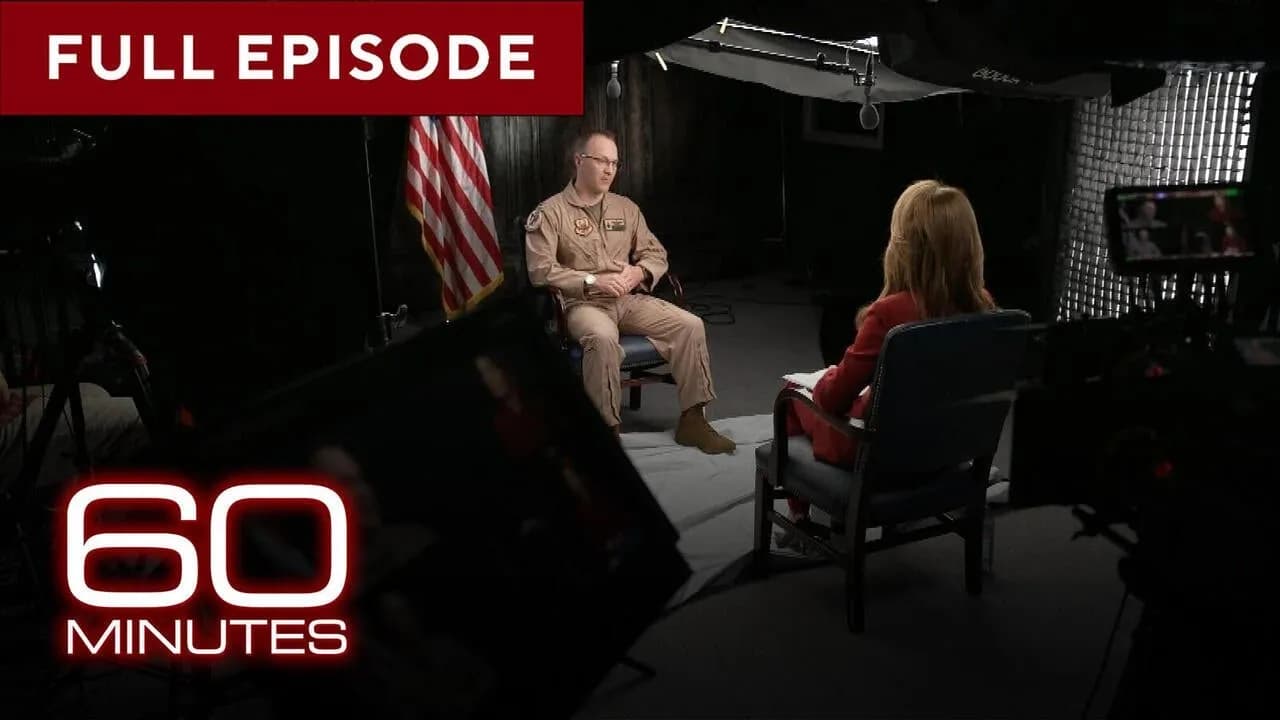
The hotel room was set up with hidden cameras. When Ecklund expected to meet Judy and Adam, Scott Pelley entered instead. Ecklund claimed to have seen stem cells be effective in cases of cerebral palsy. When asked how it works, he stated no one knows exactly, but stem cells contain and give off chemicals which cause other cells to repair themselves. Ecklund described possible effects including improved ability to see, speak, and move arms and legs. He admitted being self-educated and self-taught in stem cells with no published research.
Ecklund stated that studies have been done in other countries but are not published in the United States because they cannot be published. He claimed if he did the things described in his paper, it would be suppressed. Ecklund stated breakthroughs with stem cells are not published due to a conspiracy of drug companies and governments. When told the purchased cells were dead, Ecklund stated they must not have been handled appropriately, assuming Duke University mishandled them. Dr. Kurtzberg stated Ecklund's claims are very dangerous and he is leading people on in a way that is pretty scary.
Two years prior, 60 Minutes investigated Lawrence Stowe and Frank Morales who offered $125,000 stem cell therapy to ALS patients Steven Waters and Michael Martin. The story launched a federal investigation. Morales and Stowe were indicted for making $1.5 million with stem cell fraud. If convicted, they could face 20 years in prison. Steven Waters and Michael Martin lost their lives to ALS the previous spring.
In 1991, Steve Kroft went undercover investigating used car wholesalers rolling back odometers. When Kroft told the con artists they were on camera, he said the good news is they are not cops, the bad news is they are 60 Minutes. When a used car dealer says a car is a real cream puff with low mileage, the car may have been around the block more times than the odometer shows. In Houston, hidden camera footage showed a man adding about $2,000 to the value of a 1985 Buick by removing 50,000 miles from the odometer. The man charges $50 a car and expects to make $400 that day tax-free.
John Hazlet and Charles Vance are former used car dealers who quit after getting fed up. They stated so many competitors were rolling back miles that there was no way to survive without doing the same thing. Houston police described them as trustworthy and reliable. They stated the business is dominated by milebusters, which has inflated car prices so legitimate wholesalers cannot operate. They introduced 60 Minutes to Bill Whitlow, a wholesaler for 40 years called the granddaddy of Houston milebusters. Whitlow buys trade-ins from dealers, rolls back miles, then sells to different dealers.
Hidden camera footage showed Whitlow bragging about tens of thousands of miles rolled off cars. Rolling back miles is only half the trick - the title must be forged to match the new odometer reading. Whitlow offered to forge titles for $100 each. He claims to do 75 cars himself in a good month and makes an average of $50,000 per month, all tax-free, having not filed income tax in 13-15 years.
60 Minutes found a 1987 Aerostar van at Russell and Smith Ford advertised with 52,000 miles. When Bill Whitlow bought it, it had 131,000 miles. When he resold it, 80,000 miles had vanished. Salesman Raymond Mesa was confronted with the evidence. General sales manager Vincent Alfano and used car manager Tom Delisi agreed the van had been rolled back. They stated they take trade-ins and people sign odometer statements stating actual miles. They claimed they do not follow people around for years.
Vance and Hazlet stated it is not difficult for dealers to check if cars have been rolled back by checking title history or service records. They stated dealers can punch serial numbers into computers to find service records and previous owners. Authorities stated few dealers make the effort. Vance stated if a man has been in the car business for 20 years and cannot tell the difference between 131,000 miles and 52,000 miles, he needs to get another job. Vance estimated 40% of cars on used car lots have had odometers rolled back.
At Greens Point Dodge, a red Torino was found that had been rolled back by another wholesaler, showing 49,000 miles when it had gone at least 78,000 miles. Sales manager Jim Willis stated he would call the wholesaler and make him buy it back. He asked if 60 Minutes wanted to buy the car. Anglo-American Auctions in Nashville spent $2 million on a computer system to keep rollback cars out of auctions. Security chief Gary Dickinson stated he cannot prevent buyers from busting miles later. He stated the problem is every state has a different title and all but a few are too easy to forge. He advocated for uniform title forms throughout the country.
When confronted with a hidden camera, Bill Whitlow was told the good news is they are not cops, the bad news is they are 60 Minutes. According to Charles Vance, the truck Bill Whitlow rode off in had been rolled back 70,000 miles. After the story aired, Vance and Hazlet received threatening phone calls.
Charles Vance received threatening phone calls after exposing odometer fraud in Houston, including a caller stating: "The gunshots were actually about less than 100 yards from where I live. So, I have a major concern for my family at this time." Vance and Hazlet reported that police began taking closer looks at odometers and dealers became more cautious about cars purchased from wholesalers following the 60 Minutes story.
A man confessed to shooting two bullets into Charles Vance's office wall, stating he did it for Bill Whitlo in retaliation for the 60 Minutes story. Federal investigators indicted Bill Whitlo and four others for odometer tampering. Two of the indicted individuals pleaded guilty.
Steve Croft reported on corrupt foreigners laundering dirty money through anonymous US shell companies. Global Witness, a London-based nonprofit, conducted hidden camera investigations at 16 different New York City law firms to test whether lawyers would help conceal suspicious funds. Ralph Kaiser, an investigator posing as a representative of a government official from a poor West African country, conducted the meetings.
Kaiser presented a story of an African minister who collected "special payments" from foreign companies in exchange for mineral rights, described as "facilitation money" rather than bribes. The minister sought to purchase a townhouse, jet, and yacht while keeping his name disconnected from the purchases. The amounts discussed included approximately $10 million for a brownstone, $10-20 million for a secondhand Gulf Stream jet, and $200-300 million for a yacht.
The fictitious story was developed in Global Witness's London office based on an actual money laundering case. The investigator contacted 50 New York law firms and secured face-to-face meetings with 16 lawyers across 13 firms. The pitch was intentionally designed to raise red flags about the source of funds, with Kaiser describing the money as "gray money" or "black money."
Of the 16 lawyers recorded, only attorney Jeffrey Herman declined to participate, citing concerns under the Foreign Corrupt Practices Act. The remaining 15 lawyers across 12 of the 13 firms suggested ways to move the suspicious funds into the US without compromising the minister's identity. Attorney James Silkenod, who was president of the American Bar Association at the time, and colleague Hugh Finnegan provided detailed strategies for concealing fund sources.
Lawyers recommended creating "a series of owners" to protect privacy, with structures such as "company A is owned by company B, which is owned jointly by companies C and D." Recommendations included using offshore jurisdictions like the Isle of Man and Liechtenstein, with money moving through Swiss bank accounts or Luxembourg entities before reaching the United States.
Attorney Mark Copick suggested moving money to Europe where it could be "scrubbed" in anonymous corporate entities. He recommended using Luxembourg banks to "set up an appropriate entity" that would then send money into the United States. Lawyers noted that banks are required to know their customers and report suspicious activity, but "American lawyers aren't" under the same legal obligations.
Two million new corporations were set up in the United States in the previous year, many with no offices, products, or employees. A World Bank study found the US was the favorite place for corrupt officials to set up anonymous shell companies, ranking second only to Kenya among 180 countries. Charmian Gooch noted that "in many states across America, you need less identification to set up and open up an anonymous company than you do to get a library card."
Attorney Gerald Ross expressed concerns about licensing risks, stating "I've got to be very careful myself. I don't want to. This one looks like I'm laundering money." However, he later suggested wiring questionable money directly into his client escrow account. John Jenkoff recommended using "straw men" to open overseas bank accounts, noting that "if the money leaves the country, his name should not be attached to the wire."
Chip Poncy, a former top Treasury Department official responsible for stopping financial crime, reviewed the tapes and identified "an incredible number of red flags that scream corruption." He noted the consistent pitch of "dirty money" and "bad actors" needing help to move corrupt proceeds. Poncy expressed dismay at "the ease and the comfort with which attorneys seem to be willing to turn a blind eye."
James Silkenod and Hugh Finnegan were the most suspicious of the pitch, discussing risks about the money's origin and indicating they would report illegal activity. However, they still provided advice on moving funds and expressed interest in continuing the conversation. They later stated they only discussed generic information available on the internet and agreed after the meeting that Kaiser was disreputable.
None of the lawyers agreed to take on the African minister as a client, and no money changed hands. The investigation was described as "a test on the system" rather than a morality test. Most attorneys expressed interest in continuing dialogue, with some enthusiastic about potential business. Mark Copick and Albert Grant discussed legal fees ranging from $50,000 to $100,000 and suggested conducting a test by sending $1 million into the United States.
Bill Simon, a Columbia University law professor and legal ethicist, reviewed the footage and noted that lawyers may be playing an important role in money laundering that requires more scrutiny. While uncomfortable with the sting operation's methods, Simon found the tapes exposed conduct of great public consequence. Two legal ethicists concluded that attorneys Mark Copick, John Jenkoff, and Gerald Ross displayed "a cynical and evasive attitude toward law" that would not comply with professional responsibilities if responding to a real request.
Simon placed James Silkenod and Hugh Finnegan in a different category because they indicated they would not assist illegal conduct and might report the client if illegal activity was discovered. However, Simon found it "regrettable" that Silkenod seemed interested and enthusiastic about the potential business. Jeffrey Herman was identified as the only lawyer who truly fulfilled the ideals of the legal profession by declining to participate.
Charmeian Gu of Global Witness stated that the organization's hidden camera investigation was not designed to target or entrap lawyers. The core problem identified is lax laws and toothless regulations that enable criminals to launder $300 billion annually in the United States. Gu emphasized that this constitutes real public interest information that cannot be obtained through conventional methods, as the public and policymakers need to see actual conversations across the table to believe and understand the scope of the problem.
Carl Lean, former longtime chairman of the Senate's permanent subcommittee on Investigation, spent years attempting to pass legislation requiring states to collect one additional piece of information when forming corporations: identifying the beneficial owner or real owner, rather than just the agent forming the entity or the representing lawyer. The proposed requirement was described as not complicated - simply one line asking who the real owner is. However, these bills never made it out of committee due to strong opposition from the American Bar Association.
The American Bar Association's objection centers on lawyers' role in forming corporations, with concerns that additional requirements might dampen corporation formation and consequently affect legal business. This creates a paradox where the White House, Justice Department, and US Treasury have been among the world's strongest proponents for cracking down on money laundering, yet the United States remains one of the easiest places globally to establish anonymous companies that facilitate such activities.
In Global Witness's hidden camera footage, attorney Mark Copick explained to the representative of the phony African minister why he never worried about government subpoenas, stating that lawyers don't go to jail because "we run the country." When pressed on what this meant, Copick clarified that lawyers make the laws and do so in ways advantageous to lawyers, describing lawyers as members of a privileged class in the country.
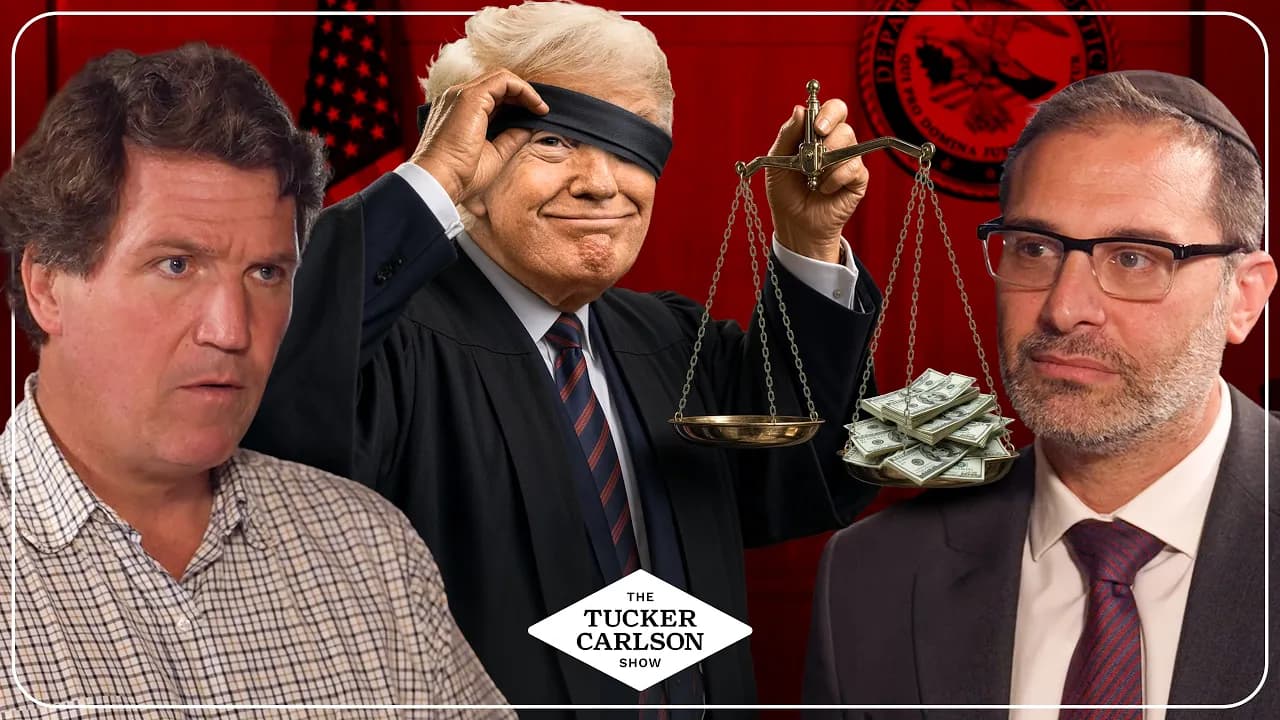
The investigation examined how presidential pardons have evolved from a constitutional power exercised since George Washington into a marketplace of money and mercy. While the Department of Justice typically screens applicants and recommends those who remorsefully seek mercy, this process has not always been followed. Notable examples include President Ford pardoning Richard Nixon, President Clinton pardoning Mark Rich after donations, President Biden pardoning his son Hunter and Anthony Fauci, and President Trump developing his own vetting system that included pardoning political allies such as January 6 rioters and unrepentant financial conmen.
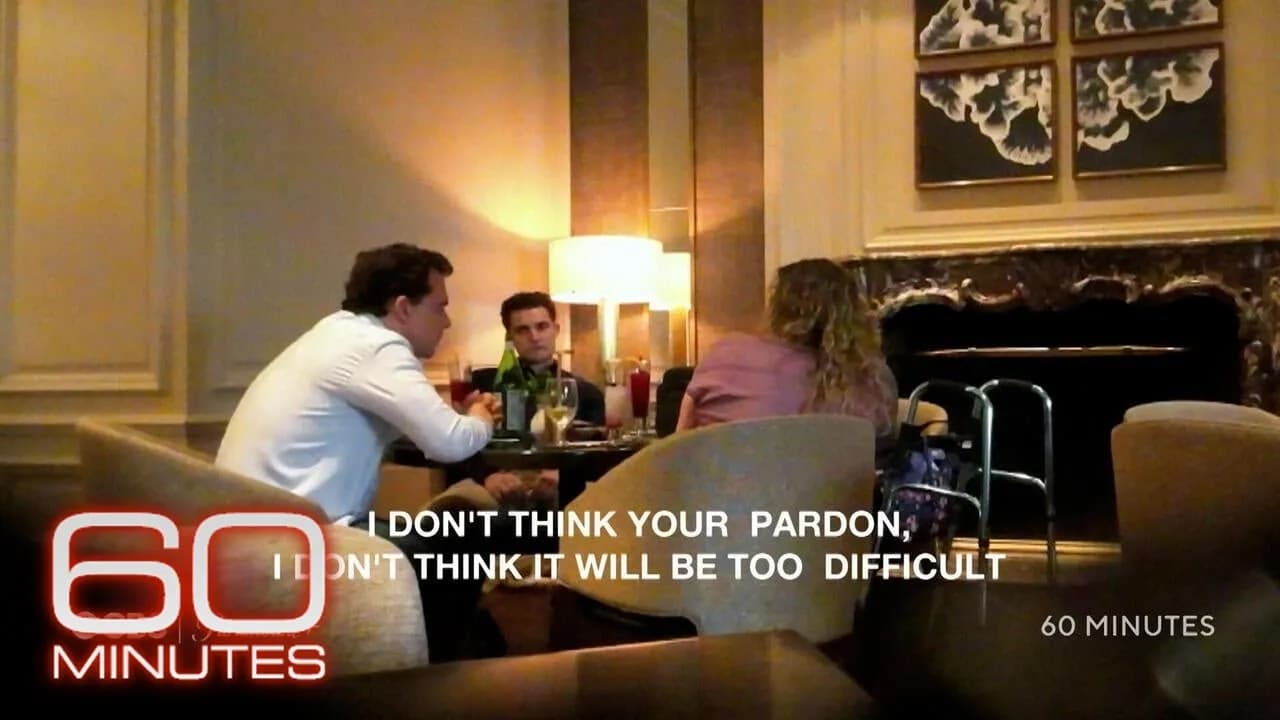
Ammon Cavino, convicted of illegal wildlife trafficking after running several zoos and aquariums, served 23 months in prison and was rejected through the regular Justice Department pardon application process. When 60 Minutes sought to interview pardon brokers who promise to circumvent the Justice Department for hefty fees, none would speak on record. The investigation then used hidden cameras with the Cavinos posing as pardon seekers.
Brokers responded quickly to inquiries, with some replying within seven minutes. Jack Burkeman and Jacob Wool, described as Trump loyalists with a history of political stunts including a robocall scheme to suppress Black voting in 2020 that led to criminal conviction, claimed to have secured a pardon for a nursing home chain owner convicted of massive tax fraud who paid them nearly a million dollars.
Burkeman and Wool told the Cavinos their services would cost $300,000, compared to the regular route costing only a postage stamp. They explained that funds would be used to buy tickets to Mar-a-Lago events, attend presidential fundraisers requiring $10,000 tickets, hire contractors and influencers to position clients near decision-makers, and mobilize members of Congress to pressure the president. The brokers described creating a "pincer movement" around the president.
Boozy Badass, a rapper with a lengthy criminal record, paid brokers $600,000 upfront after being told this would secure a pardon following his gun charge conviction. The brokers sent texts listing influential people they supposedly recruited, including Laura Loomer, Erica Kirk, Speaker Mike Johnson, and Natalie Harp, who was described as having direct access to hand applications to the president personally. Boozy did not receive a pardon, and the brokers refused to return half his money as stipulated in the contract, claiming the contract was invalid and denying they sent the texts. Boozy is currently suing the brokers.
Law professor Mark Osler of the University of St. Thomas in Minnesota, who has spent 15 years helping indigent felons apply for pardons, stated that these individuals are now locked out of the system. The new dynamic has created what he describes as anarchy rather than a system, where paying substantial sums to access the president through friends of White House counsel becomes the pathway to consideration.
The investigation found that approximately 70% of President Trump's clemencies in his second term have not gone through the Department of Justice, rising to 92% when including January 6 rioters. Examples of pardons following donations or business deals include a businessman pardoned after he and his wife donated nearly $2 million to Trump's reelection, a crypto exchange CEO pardoned after his company boosted a Trump family crypto venture, and a healthcare executive pardoned after his mother paid $1 million to attend a Mar-a-Lago fundraiser.
Ed Martin, a Trump appointee who ran the pardon office at DOJ until nine days before the interview, rejected characterizations of a broken system and stated he had not seen evidence of magical brokers. He described such brokers as "snake oil salesmen" and "swamp salesmen." The White House stated that anyone spending money to lobby for pardons is foolishly wasting their money and that President Trump performs his constitutional duties in an ethically sound manner.
After notification of the hidden camera operation, Burkeman and Wool agreed to an interview where they defended their work as neither corrupt nor improper. They argued that navigating Washington requires assistance that average people need, and questioned whether lobbyists had not worked on pardons during previous administrations. They acknowledged that while lawyers have long prepared clemency petitions for modest fees, what has changed is the amount of money now being charged.
Professor Osler noted that the White House has become sensitive to perceptions that the president is selling pardons. The Cavinos described the pardon economy as feeling like cheating and unfair, though they acknowledged that if money were not an issue, they would participate in the system as it currently operates.
Keep 60 Minutes in your library
Save the videos and channels worth coming back to, and find them again in one place.