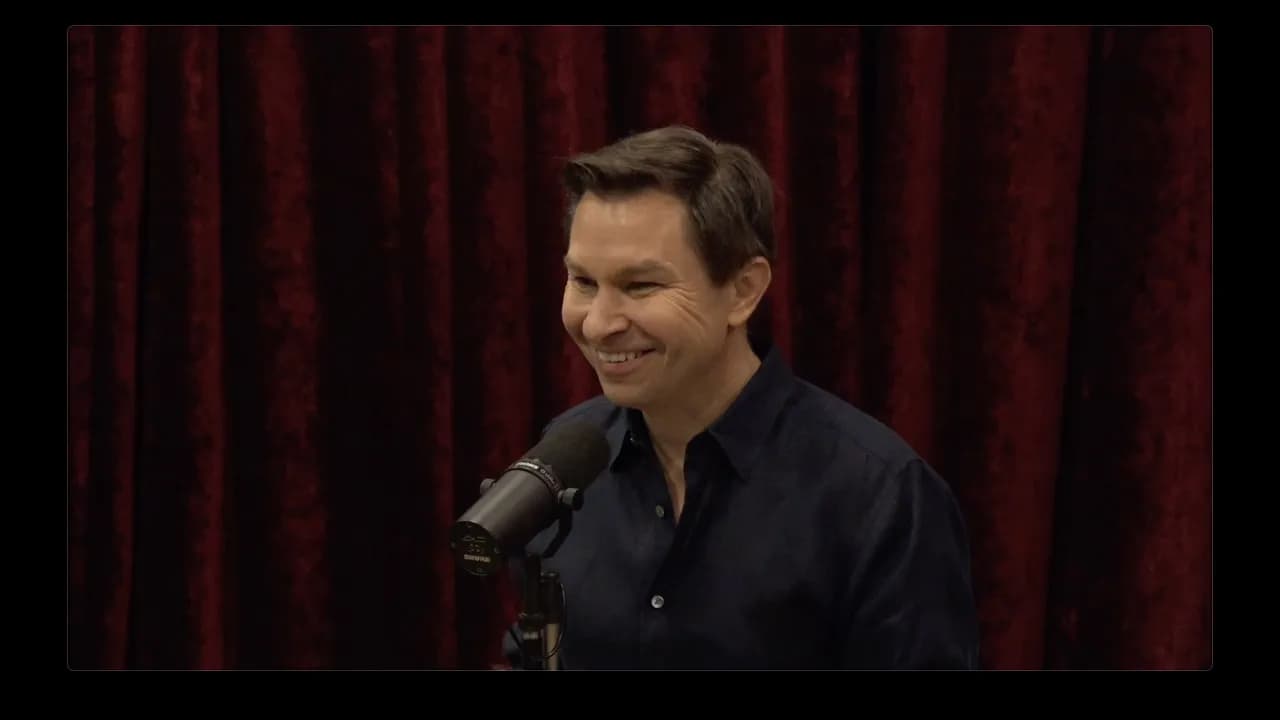
How Genes Shape Your Risk Taking & Morals | Dr. Kathryn Paige Harden
These notes were generated by AI and may contain inaccuracies.
There is a reward visible in the brain when people see someone suffer if that person is portrayed as a wrongdoer. Normally, seeing someone shocked activates the anterior insula, as if you are being shocked. But if the person violated a moral or social norm, dopamine release occurs, providing reward from seeing them punished. This is a lust, similar to lust for substances or sexual partners—a desire to see people punished.
Welcome to the Huberman Lab podcast, discussing science and science-based tools for everyday life. Andrew Huberman is a professor of neurobiology and ophthalmology at Stanford School of Medicine. Guest is Dr. Kathryn Paige Harden, psychologist and geneticist, professor at University of Texas at Austin. She studies how genes shape life trajectories, interacting with adolescent life events to impact long-term mental and physical health.
Discussion covers nature-nurture interplay in addiction, criminality, trauma susceptibility, and themes of sin, sociopathy, empathy, forgiveness. Dr. Harden defines how biology, psychology, and life's randomness drive choices. Topics include male-female differences, hormones, hormone-independent influences, and role assumptions based on power structures. Direct conversation on genes, environment, biology (genes, neurotransmitters, hormones) driving available choices and tendencies.
Dr. Harden researches with exceptional rigor. She is clear, direct, compassionate, believes in self-improvement regardless of genes, and improving the world, all backed by data. New book: Original Sin: On the Genetics of Vice, the Problems with Blame and the Future of Forgiveness, available for pre-sale anywhere books are sold.
Podcast separate from Stanford teaching/research, aims to provide zero-cost science information. Includes sponsors.
Dr. Kathryn Paige Harden, welcome.
Few things interest people as much as genes and behavior (genotype-phenotype), adolescence, puberty, home environment, and gene-choice interactions. Dr. Harden works at this intersection.
Why Study Adolescence?
Dr. Harden did PhD at University of Virginia, trained as clinical psychologist. Mental illness risk increases in adolescence: most substance use disorders/addiction begin then; depression risk rises; psychotic episodes in late adolescence/early adulthood. As lifespan developmental psychologist, early life reverberates through lifespan. Individual differences emerge and canalize in adolescence—life trajectories become apparent. Research focuses on late childhood/teenage years: puberty, sexual behavior, rule-breaking, aggression, alcohol/drug risk. Genes and family environments combine to shape lives by end of teenage years, entering adulthood on different trajectories.
Adolescence begins with puberty's physical changes (10-13 years), transition to reproductive/social maturity. End is controversial—historically when taking adult social roles, now pushed back economically/socially. Studies 10-25 year-olds: 10-year-old is child, 25-year-old faces adulthood (kicked off parents' insurance, can rent car, take adult roles). Long period of body/brain changes.
Kids hit puberty 10-13/14, but duration varies greatly. Puberty is major milestone: brain/hormone changes, perceptual shifts, secondary sex characteristics at different rates. Andrew Huberman hit puberty by 14 but didn't shave until near college graduation, had grown though. Others transformed over summer—looking like grown men, dominating soccer. Now, quick-puberty individuals seem to age faster.
Puberty Timing, Tempo, and Lifespan
Question: Is puberty rate a clock predicting longevity?
Working on this. Pubertal differences: timing (when starts), tempo/pace (how long changes take).
- For girls: early pubertal timing predicts mental/physical health problems, earlier menopause, shorter lifespan.
- For boys: more affected by pubertal pace/tempo. Study found boys changing overnight struggle assimilating changes (cognition lags height/musculature/hormones).
Recent work on epigenome (affects DNA usage; DNA sequence/genome unchanged). DNA methylation (chemical tags on genome). Epigenetic clock (DNA methylation) ticks from infancy; faster aging predicts shorter lifespan, worse health, earlier mortality.
Trained epigenetic clock on pubertal development (physical maturity), not age. Works—clock ticks with physical maturity, correlated with age clock. Faster puberty linked to faster aging later. Reproductive development tied to lifespan molecularly. Across species: mice engineered for early puberty die earlier. Trade-off between reproductive maturity and lifespan.
Andrew had protracted puberty, grateful retrospectively—stuck in middle distribution athletically, but changed markedly from 20 to 30 without effort. Some appear 'frozen' in adult look earlier.
Animal studies (e.g., Eric Knudsen on barn owls): puberty onset correlates with end of critical neuroplasticity period (puberty plasticity order of magnitude greater than adult). Experiments delaying puberty (overactivating, removing testicles) don't extend window.
Puberty and Brain Plasticity in Humans
Complicated: depends on plasticity/brain aspect. Can't manipulate puberty like animals. Executive functions (shift attention, update; IQ-tested) more age-related. Peer learning vs. parents, risk sensitivity, emotions more tied to pubertal development than age. Confounded in human observational studies.
BetterHelp: Online therapy with licensed therapists. Therapy like workouts—insightful, beneficial. Easy matching, switch anytime, time-efficient. betterhelp.com/huberman for 10% off first month.
Lingo: Continuous glucose monitor for metabolic health, clarity, energy. Glucose impacts brain, mood, energy, tenacity, willpower. Tracks real-time food/action effects. Spikes/crashes cause fog, fatigue, irritability, hunger. Individual food responses vary. Helps habits. 10% off 4-week plan for US listeners 18+: hellolingo.com/huberman. Not for insulin users/diagnosis.
Mouse data: pre-pubescent mice exposed to older males enter puberty earlier. In humans?
Controversial. Girls raised with nonbiological father go through puberty earlier on average. Hypothesis: environmental cue on resource stability—absent dad signals less stable provisioning. Evolution favors early puberty if resources scarce/unpredictable (childhood costly).
Confound: family structures not random. Moms with early puberty genes have earlier sex, non-marital childbearing, daughters without biological father.
Is it father absence or mom's genes causing early puberty in structured families? Both—standard nature-nurture answer. Strong genetic effect on timing for both sexes; environment pushes it. Age of puberty falling across cohorts.
Language delicate. Biological father presence has 'protective effect' against early puberty with nonbiological father—but implies early puberty bad. Humans pathologize: girls pubertying at 10 vs. 14 due to absent dad. Tied to mom's genes/choices.
How navigate without fueling agendas (adolescence, genes, sexual promiscuity, sin)?
As scientist, mother, professor teaching intro psych: what does science say? Explain to 13-year-old/undergrads with awe for human body/brain integrating signals (resources, stress, body weight, light) to time puberty. Communicate with clarity, empathy.
Hypothalamus (drives hunger, sex, thirst, aggression) as seat of seven deadly sins (wrath, envy, lust, greed, sloth etc.). Circuits interact.
Genetic Programming and Behaviors
Doesn't focus on hypothalamus specifically. Seven deadly sins: short-term pleasurable actions with negative consequences to self/others (envy: seeing others' pleasures, wanting them—opportunity cost, clue to unadmitted desires).
Wrath/lust useful emotions, become sins when harmful to others. Clinically: impulsive, immediately pleasurable, long-term harmful behaviors.
- Substance use disorders: ingesting feels good, costs self/others.
- Conduct disorder (childhood): aggression hurting others/parents/teachers/schools/law, despite consequences.
Scientifically: are there genes affecting
Scientists are investigating genes that affect the likelihood of developing disorders like addiction, as well as genetic overlaps between addiction to substances, having many sexual partners, and impulsive aggression. Genes associated with these behaviors have crosscutting effects across them. Research aims to identify these genes, their locations in the brain, and when they are expressed in development. This work has been ongoing for eight years, building on twin and adoption studies showing genetic influences. These genes are broadly distributed throughout the brain, not just in the hypothalamus.
Genes that vary between individuals predict addiction, impulsivity, and other behaviors. There is overlap between genes predicting addiction and impulsivity in various behaviors. These genes encode for protein systems, neural circuits, and hormone systems downstream.
Adoption and pedigree studies from large data registries in Scandinavian countries like Sweden show that the seven deadly sins run in families. If an adoptive parent is addicted to alcohol, the child is more likely to have many sexual partners, be diagnosed with conduct disorder, or be arrested for a violent crime, even if never raised by that parent. A family history of any of these behaviors increases likelihood of manifesting any one of them, indicating genetic commonality.
Many genes affect all these behaviors; it is massively polygenic, distributed throughout the genome. These genes are most expressed during neurodevelopment in utero, in the second and third trimester, during cortical development. They affect the brain's balance of inhibition and excitation. The GABA system (inhibitory) and glutamate system (excitatory) are tuned during this period. Pre-term birth negatively affects psychological development partly by disrupting this balance.
Substance use disorders, ADHD, and conduct disorder (characterized by impulsive aggression) are all neurodevelopmental disorders. The genes causing them affect early brain development patterns and the inhibition-excitation balance.
Disruptions in excitation-inhibition balance during fetal brain wiring may set up probabilities for behavioral disorders or choices. It is unclear if impulsive behaviors or substance use attempt to restore balance or express an imbalanced system.
People with substance use disorders sometimes describe self-medication narratives: substances make them feel normal. However, addiction is heterogeneous, and motivations vary. Anna Lembke notes that many with behavioral or chemical addictions crave intense peak experiences (or troughs with sedatives) to feel life is happening.
Chronic engagement in behaviors like drug use, aggression, or risky sexual behavior despite negative consequences involves three temperament dimensions:
- Sensation seeking: drive for intensity ("I want it, and I want a lot of it").
- Disinhibition: failure of self-control ("I can't stop myself").
- Antagonism/callousness: indifference to negative consequences for others ("I know it hurts others, but I don't care").
Combinations vary: some deliberately seek highs, planning meticulously; others act impulsively; others are indifferent to harm caused.
Trauma plays a role in addiction, but genes from parents can be primary. Parents with genetic risks pass them on and may provide suboptimal caregiving. Kids needing firm, warm, stable nurturing are least likely to get it. Genes and trauma/early experience are interwoven like warp and weft in cloth, building the brain, body, and personality.
Access to genomes before adolescence or for children could inform friend choices, situational buffers, and environments to counter predispositions to impulsive, addictive, or promiscuous behaviors, which interact with situational factors.
However, people vary in wanting this information (deliberate ignorance). Polygenic scores for risks like alcohol use disorder are improving but not highly predictive for individuals (correlation ~0.4-0.5, like altitude predicting city coldness, not specific weather). They indicate group risks, not individual outcomes like a pregnancy test or Huntington's test.
Risks include telling someone they have low genetic risk, potentially acting as a permission structure to engage more (e.g., drink more). Not everyone wants more information; a Berlin study post-Wall showed some preferred ignorance about Stasi files.
People already use family history intuitively (e.g., alcoholic father/grandfather prompts caution). Parents observe temperament differences in children (e.g., cannabis risks differ for son vs. daughter) to shape environments.
Genetic information should not be treated in isolation from phenotypes observed in family, mates, children. Need meta-science on responsible delivery to enable best choices.
More data from family traits improves decisions, but can create mental constraints. U.S. culture emphasizes anyone can achieve anything with effort; other cultures silo people early.
Genes are not special data like heart rate variability; essentialist views see them as revealing "truest selves." Companies like 23andMe's tagline "welcome to you" promotes this myth, risking misuse without context.
23andMe revealed unexpected relatives or non-biological fathers for many, causing major psychological shifts. A writing professor learned via 23andMe that the man who raised him was not biological father; fertility doctor was, with ~26 half-siblings from practice. This upended his family narrative and identity, highlighting genetic lineage's role in sense of self.
People learning negative parental traits can internalize badness, especially children. Badmouthing ex-partners tells kids they come from badness.
Movies like Star Wars depict genetic origins from previous generations frightening people about themselves.
No one is bad or all good; humans and behaviors are complicated and cannot be reduced to one thing done, one gene, or one phenotypic aspect. Common perception: genetics reveals something essential about ourselves that might be bad. Example: letter from man in prison since age 16 for sexually violent crime committed at 15 in Texas (tried as adult). He read about behavior genetics lab in Texas Monthly, wrote: "I've done this thing... What do you think makes a child go bad? Nature or nurture?" Technical answer: nature and nurture both influence all behaviors. But he feels inherently horrible, possibly due to genetics. This story lacks scientific basis but permeates culture, making discussion difficult. Genetic variants expressed prenatally increasing behavior probabilities ≠ "born bad or broken."
The bad seed, bad to the bone, natural born killer.
English idioms reveal cultural thinking about behavior, morality, self, and biology.
Common idea: puberty and testosterone turn sweet kids bad—not true. Examples in literature: kids pre-puberty destructive in sociopathic way. Biggest predictor of life-course persistent antisocial offending: onset before age 10, including property destruction and aggression against children/animals. Distinguish provoked vs. proactive cold aggression. Worst prognosis: male child aggressing before age 10 without guilt/remorse (cold callousness)—poor predictor of well-regulated adult behavior. Of kids with conduct disorder before 10 with callous emotional features:
- 50-75% have substance use disorder in adulthood
- Non-trivial percentage meet criteria for antisocial personality disorder or another personality disorder
Heavy genetic and nurture components; neurodevelopmental origins in early brain development. Few effective treatments, partly because biology interpreted as "born bad" vs. neurodevelopmental liabilities needing intervention. Moral failing view reduces biomedical approach.
Sex ratio for these kids under 10: 2:1 to 4:1 male:female—cannot be post-utero testosterone (pre-puberty). Possible: in-utero organizing effect or Y chromosome susceptibility. Ongoing research on X chromosome (most studies focus on autosomes). Male guinea pigs more vulnerable to preterm birth effects (disrupts GABA-glutamate balance, seen in genetic research). Human observation: male fetuses more vulnerable during labor/delivery.
"No bad dogs, just bad owners"—but for humans, not "no bad people, just bad parents." At ~18, people responsible for actions regardless of past or genes (earlier in Texas for some crimes). Don't assume all dogs trustworthy or would never harm. New book titled Original Sin spotlights this. Author raised evangelical Christian (Protestant Reformed Calvinist): taught original sin—humans born bad, depraved, broken. Not true scientifically, but foundational to culture/institutions. Not coincidence: no bad dogs but people inherently bad; some religious traditions teach inherent depravity (e.g., Calvinist elect vs. non-elect). Science on genes affecting bad behavior + ancient thinking = thorny debates on science application without lapsing into "proof we're broken."
People do horrible things. Man who wrote letter did horrible thing; likely had horrible luck (parents, genes, birth, childhood). Hold responsibility for/to each other while no one creates self from scratch. By adulthood, he was imprisoned for child actions. Book wrestles with this.
True story (Bill Newsome, former Stanford neurosciences director): Charles Whitman climbed UT Austin tower, shot/killed people; security guard stopped him. Knew something wrong, thought brain issue, asked for brain check/help. Post-death autopsy: tumor in amygdala. In school shooters/massacres (e.g., Vegas), unique because he sought help. Like angel-devil neural circuitry debate.
Texas autopsy labeled incident as catastrophe/natural disaster, taking objective view: not moral agent but machine gone haywire (wouldn't have done without tumor). If no autopsy request/knowledge? How many others have undiagnosed issues explaining behavior?
Dutch family: women functioned ok; half men severely aggressive (raped sister, stabbed boss with pitchfork, arson, multiple imprisoned). Woman prompted investigation: rare MAOA gene mutation on X chromosome (enzyme degrades monoamines regulating neuron communication). Women: 2 X chromosomes (bad version buffered); men: 1 X (50/50 from mom). Single DNA letter change massively affects behavior. All men in criminal justice, not flagged as biological/mental illness. Another group found same in impulsively aggressive boys. Paper ends hauntingly: is this rare, or do we not look for organic/genetic/neurobiological causes in horrible acts?
Challenge: integrate genes + environment + behavior science with human moral outrage/blame. Hold both truths.
Once harmed, empathy shifts to victim(s), eluding care for perpetrator (e.g., Whitman killed innocents walking to class). Healthy response: outrage ("glad they killed him").
Genes upstream from behavior. Rabies example: clear connection (hits amygdala, causes aggression); imagine person sans rabies. Tumor/rabies: daylight between self and cause. Genes: essential to self, hard to imagine alternate genotype/self, harder to rescue from condemnation.
Speculation: unconscious notion genes inheritable; "good riddance" stops bad gene propagation (eerie re: IVF doc seeding eggs with own genes vs. sociopath eliminated). More hardwired to think about inheritance/propagation than aware. Childhood message: date someone, meet parents (genetic implication).
If prison guy had 4 kids pre-prison, worry? Dandelions/orchids (or sunflowers/orchids): some kids resilient across environments; others high-needs (like dogs: some fine with lazy owners, others need skilled loving care due to size/temperament/breeding). Example: rescue dog (possible fighting breed)—not bad puppies, need good homes.
Whitney Cummings rescues pitbulls: "no bad dogs, just bad owners"; many sweet pitbulls from fighting camps. Easier to think objectively about dogs than humans. Even if personality/temperament heritable and parent did terrible things, offspring not bad—higher-needs needing skillful care.
Evolved to matter morally as social cooperative species. Cooperation requires enforcement (e.g., bacteria colonies punish freeloaders). Evolutionary history explains intense moral outrage when harmed.
Moral concern for each other is as deeply human as sexuality. Humans have agency, so they deserve blame and punishment for horrible acts. But genes, brain, trauma, or childhood make them victims needing rescue. This creates the rescue-blame trap. People oscillate between blame and rescue, even with their own regrets—listing good intentions but still shocked by actions.
Bad luck doesn't negate responsibility: it might not be my fault, but it's still my responsibility. Accountability doesn't require harsh punishment or making someone suffer. Holding both ideas allows pushing through the rescue-blame trap.
Hypothesis: people desire to stop the progression of the bad seed—if stuff happened because parents were bad, and they were bad because their parents were bad, they're a bad seed at extremes. With dogs from fighting parents, appropriate love and care can rescue them, but we can choose if they have puppies.
Seeing children in horrible circumstances triggers hardwired desire to rescue the lineage. Transgenerational trauma exists (genes or experience, probably both). But in one generation, a child of severe alcoholics can quit drinking and pair with someone with healthy alcohol relationship—they're cycle breakers. No need for Mendelian genetics class to understand family lines can start or stop traits in one generation.
Family lines aren't small tribes anymore (e.g., Succession propagates sociopathic/narcissistic traits). They weren't cycle breakers; they maintained cycles that fed them.
People think genetics makes you like parents, but genes recombine. You're a random draw from parents' genotypes. Even with same parents, siblings differ (e.g., three kids with different personalities, risks for addiction/conduct disorder).
Mistake to see lineage as unbroken genes—genes recombine novelly each generation. Andrew Solomon: never say "reproduce" (lulls parents into thinking they're copying themselves); every child is produced, a new unpredictable product.
Andrew Solomon's Far from the Tree: children different from parents (deaf children of hearing parents, savants with normal parents, Dylan Klebold's mother—Columbine shooter from normal suburban parents). Horizontal vs. vertical identities: vertical from parents, but you're not a reproduction; they produced you with separate identity.
Humans have selfish wiring but are inherently good, drawn to goodness, can direct toward beneficial paths, learn from mistakes, be benevolent.
Stepping from severe psychopathology/sociopathy (some mercenary, favored in careers). In neuroscience, "New York neuroscience mafia" (some Nobel winners) held court at meetings—hierarchical, picked favorites, decided drinks. Every scientific field is like this. West Coast cryptic; Southerners hide mercenary under softness.
"Axe mean is mean; axe nice is mean (South); Pacific Northwest axe nice is nice."
Meetings required not letting guard down. Invitation came by jabbing back harder at a jab—status dominance signaling confidence, no cowering/submitting. Scientific fields/men like mice with rigid hierarchies established through aggression; biting back establishes hierarchy position.
Doesn't feel good; prefer ascending without aggression. But impulsivity/desire for intensity can be adaptive (e.g., surgeon callous to pain, focusing on body).
Successful entrepreneurs by age 30: white men (social advantage), high IQ, adolescent delinquency history (manifests risk tolerance, sensation seeking). Good for not tolerating bosses, risking business starts. Academia full of such people: think what they want, no bosses, don't care if useful, competitive for resources (taxpayer dollars).
Thought experiment: all babies via IVF, select lowest antisocial behavior/substance use strains—generation most puritanical, risk-intolerant, nonsensation-seeking, controlled/inhibited. Is that good? Don't want sociopathy (salient dark examples like Dahmer, Night Stalker Richard Ramirez—sociopath with horrible childhood: tied to gravestone overnight at 3-5 by father).
Mental imagery: Ramirez with pentagram on hand in court. Removing such people risks pure passivity.
Jocko Willink: 90% of being a dude is making fun of friends to their face, cheering behind backs. Inverse: nice to face, backstabs. Don't want society without fun-making but with encouragement.
Girls can be mean (relational aggression). Same genes predict physical aggression in boys, relational (destroying reputation/social standing, isolation) in girls—equally/more painful (ancestral death risk). Relational more covert, bewildering to adults.
Started at 4 years old: preschool girls make relationship conflict, repair daily—less bewildered by repair than teenage boys. Boys: dirt clod wars, can't throw rocks; scrap, forget in a day max.
Study (possibly misremembered): married partners diary interactions, cortisol samples. Men's cortisol spikes post-argument, drops (Trier curve); women's elevated 24 hours. Men: fight over; women still amped—sex differences in arousal, conflict styles, timelines.
Evolutionary benefit to not forgetting some interactions. Some fights feel vital, but day later forgotten—conveyor belt moves.
Pathology in boys: aggressive violence. In girls: social dynamics can be benevolent (conflict/repair healthy). Genes predisposing addiction consistent across sexes (twin/adoption/DNA studies). No strongly sex-typed manifestations (not always promiscuity in women).
Prescription drugs equalize addiction (less seedy, different social opportunity). Underlying liability (disinhibition, self-regulation problems) manifests as alcohol, aggression, antisocial—consistent across sexes. Mean differs: higher rates in men.
Sensation seeking/novelty seeking similarly distributed; men slightly higher, same genes (fraternal twin boy predicts sister's as well as twin sister). Adolescence: similar trajectories; differ in inhibitory control maturation—girls faster.
Study: men reach impulse control of average 15-year-old girl at ~24 (decade gap). Men develop slower: later puberty, testosterone rises through teens/20s; die earlier but healthspan difference less. Slower uterine development, later reproductive maturity, adult personality levels. Men require more patience.
Zimbardo at Stanford: orient toward rewarding everyday heroes of life. This was kind
Psychology splits into dark and light aspects, with positive psychology emerging in the early 2000s. Society spends time considering punishment, obvious at extremes like the legal system but complex in middle ground: boxing people, social isolation, rewarding or placing people in leadership. Currently salient with assigning psychopathology labels by unqualified people.
Punishment defined as applying an aversive stimulus to reduce behavior frequency, like shocking a rat in a Skinner box, child timeout, or spanking. Decades of evidence show punishing bad behavior works less well than rewarding desired behavior. Rewarding a rat for lever pressing makes it press all day. Giving alcohol then switching to shocks: some rats stop, others increase pressing hoping "maybe this time."
Children spanked do not behave better, if anything worse. Dr. Becky Kennedy influential: use consequences, not harshness. Harshness losing strategy on average. In criminal justice, increasing penalties does not reduce crime; likelihood of getting caught and other reward opportunities predict declines.
Applies to dogs: best training rewards desired behavior with firmness, boundaries, trust-building, not harsh punishment or pain.
Luck doesn't obviate responsibility. We are responsible despite factors beyond control.
Punishing harshly satisfies retributive itch but does not achieve desired outcomes. Slide from responsibility/agency to deserving suffering mistaken. Hold accountable via reward opportunities for wanted behaviors.
As mother, strategy influenced: punishment not most effective. Household has rules, consequences, accountability, boundaries, but space to reflect, plan behavior changes, create growth environment. Pretty anti-punishment, pro-responsibility for holding accountable.
Helix Sleep customizes mattresses and pillows to unique sleep needs via 2-minute quiz (sleep position, temperature). Great sleep foundational for mental health, physical health, performance. Helix matched speaker to Dusk mattress, best sleep ever for over four years. Up to 27% off at helixsleep.com/huberman; HSA/FSA eligible via TrueMed.
Shift in holding teens accountable with cameras/social media. Examples: unearthed teen text threads with racist comments; decision not to ruin life if apologized. Calls to forbid government jobs. Plays out quickly in court of public opinion, not courtroom.
Kanye anti-Semitic remarks, SWAT swastika t-shirt, later apology citing mental health; largely forgiven, brings valued music. Value addition/subtraction in punishment vs. anonymous person easier to punish.
Public examples template for everyday: drunk dorm party stupid remark—kick out of school or sensitivity training? Racism bad but not murder: keep or isolate?
America incredibly punitive retributive culture. Brain reward (dopamine) seeing wrongdoer suffer, unlike empathy (anterior insula) for ordinary shock.
Nietzsche observed: monetary terms for punishment ("pay debt to society," scot-free—scot means tax). Theorized repaid with pleasure of seeing human hurt; cruelty currency, primitive desire to punish.
Seen in cancel culture mobs, politics, American lust to make others suffer, finding guilt to entitle punishment pleasure. Both political sides.
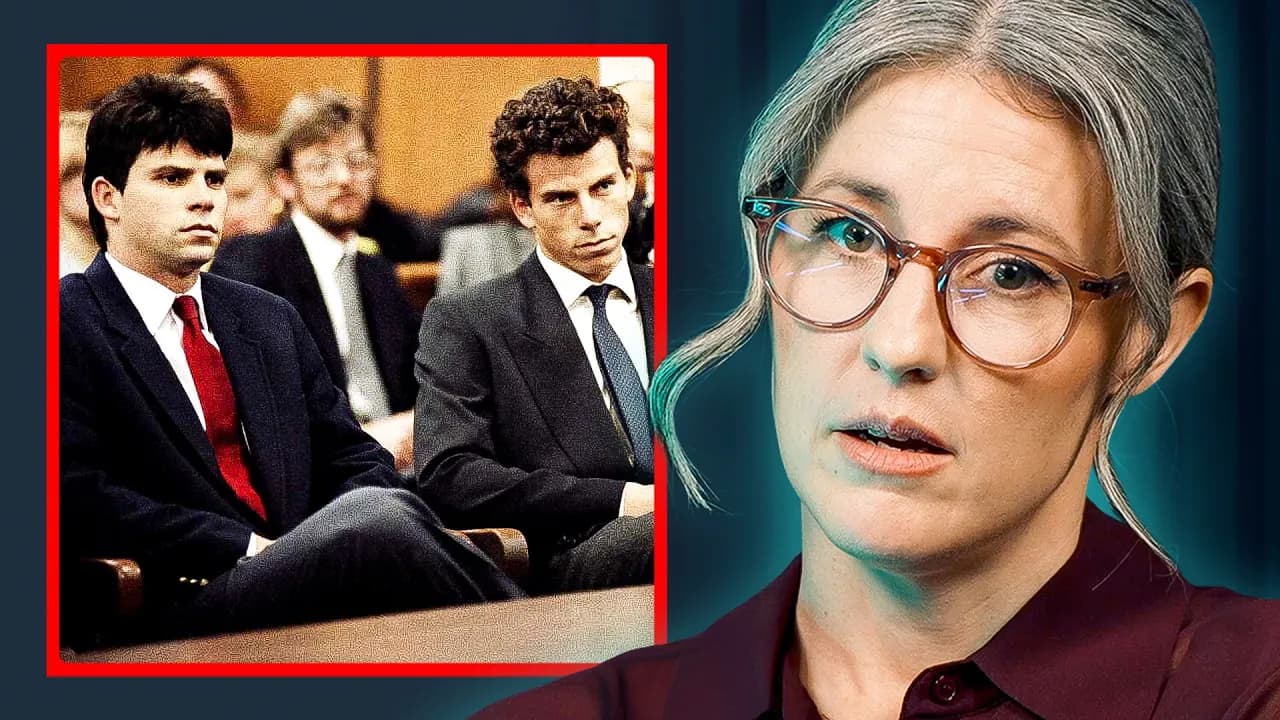
One of Us book on Norwegian mass shooter (summer camp children): terrible luck—temper, socially odd, unstable mother, nature/nurture. Trial debated insanity. Psychologist: "he's one of us," deal without exiling. Examples decide who to keep (enough value) vs. exile and enjoy suffering.
Fundamentally inhuman to exile; society includes even terrible actors as God's creatures in human circle.
American original sin: delight in punitiveness.
Caution on evolutionary just-so stories. Observing harm activates empathy brain areas, hormones/neurotransmitters feeling bad; perpetrator flips to good feeling, inverse.
Dopamine universal reward currency. Punishment removes from play: hockey penalty box, cancel, jail—takes out of society. Ties to propagation: genes/personality affect partnering; IVF doc cheated creating life.
Dopamine about energy/opportunity to create life ("life energy"). Reward hard work; punish lying (Bernie Madoff admitted lying for money, robbed currency/life energy). Shame/regret reduces running. Punish by taking deserved life energy/resources for family/kids.
Reward energy-givers (song, art) with money (opportunity). Evolutionary game for energy/gene propagation.
Punishment/enforcement in species reduces punished fitness: block mates, eat eggs. Fig trees rot lazy wasp-pollinator eggs, denying reproduction.
Human punishment robs fitness opportunities (evolutionary through line). Penalty box: hockey player out of game, not beaten.
Confusion: retributive punishment vs. boundaries protecting society. Not against prison (timeout for reflection), but not suffering-focused. Scandinavian prisons (vs. London hotel) purpose: protect via penalty box, surveillance.
Danes embody morality, decency, social contract. Northern Europe low violent crime vs. America/Texas, despite criticisms of leniency.
Esalen (counterculture, Joseph Campbell, human potential): Hunter Thompson security guard at 20 (had gun). Made homophobic remarks; gay Venice bodybuilders held him over 300-400 foot ocean cliffs until renounced homophobia, then back to work—"cured."
Everyone participated; he adjusted behavior. Today: lose job, no apology rescues. Lost opportunity to convert thinking, evolve morals.
Backward-looking justice: blame trap, weighing deserved punishment vs. extenuating circumstances.
Forward-looking: maximize protection from future harm, behavior change given brain/body/harm. House rule: own actions, plan future, prevent arguments.
Avoid abyss of "how much deserve to hurt." For self-regrets: focus future improvement, safety signals (penalty box). Punishment not past scales, but future betterment.
People integrate perceptions of what others deserve against the backdrop of past treatment, pain, and frustration endured, influencing forgiveness for screw-ups, jerk behavior, or outright awfulness. This is challenging to address except at extremes. Feeling victimized, accurately or inaccurately, amplifies retributive urges—a human trait where hurt prompts desire to hurt back, maintaining a ledger of power and victimhood. Emotions need not dictate responses.
Punishment signals social roles structured by power, seen in non-human animals, trees, and bacteria. Example: Alpha queen wasps eat some eggs of beta queens, but sisters bite her if she eats too many, enforcing power limits. Societal punishment debates are about who holds power and to what degree.
Language of choice justifies punishment: people say the punished "chose" their fate rather than framing it as preventing harm or adjusting power structures. American culture's focus on choice entitles punishment. Airplane example: Airlines frame bag checks as "you chose to bring more than one bag," not "airline overbooked."
Childhood anecdote: At rare dinners out, sister drank less soda to always have more than brother, a primal sibling competition evoking parental love comparisons. Dogs (bulldog mastiff and pitbull) compete for food first, attending to portion sizes at high speed. Humans track others' rewards beyond personal gain.
Cooperative species evolution makes freeloading toxic. Economist study: Online societies (villages) where participants get digital money and decide donations to collective pot. Self-interest: Contribute nothing, benefit maximally if others max out. Freeloading problem destroys common good if universal.
One village allowed viewing donations and paying to punish low contributors (punishing society). Other was anonymous (non-punishing). Initially, most pick non-punishing, but it collapses in three rounds due to non-contribution. Punishing society establishes norm: "If you get a lot, give a lot," no asymmetry between taking, keeping, and contributing. Everyone migrates there, highly attuned to freeloading.
Sister example parallels: Ensures more soda than brother. Parent example: Threatens uneven chocolate chips to teach unfairness. Seeing punishment for wrongs releases dopamine—foundational for cooperative survival via enforced norms. Unfair rewards trigger freeloader alert.
Paul Bloom: People prefer inequality to unfairness—dislike unfair inequality.
Online behavior shows who gets money, attention (life rewards) vs. penalties. Fairness provides rest. Injustice activates people, draining life energy. Media/algorithms monetize outrage, trapping users in anger treadmill without change.
Currently, rewards feel more controlled than punishment; bad actors seem beyond control, so focus shifts to denying rewards. Influential players in thriving village engaged in public punishing/rewarding early, asserting power over rules.
We live in massively connected networks of one-time stranger interactions, not small tribes with reciprocal kin ties. Psychology evolved for small communities to set norms via reward/punishment now clashes with no cohesive group—people argue rules mid-game, yelling into void (e.g., X/Twitter not real community).
Opting out hard, especially for youth. Sphere of visibility key. Oliver Burkeman's The Imperfectionist advises local energy/heart: Stay tender to injustice/vulnerable but direct to neighborhood actions like winter coat drives or preschool Christmas stockings—more satisfying than social media yelling.
Balance: Online for world awareness with emotional buffer to avoid losing minds. New tech forces morality re-evaluation; hardwiring unchanged in tens of thousands years, softwiring adaptable. Smartphones took 10 years to prompt usage reflection. Benefits (book writing, podcast, friendships) when tool for real connections; harmful when displacing real life.
Q: How can identical twins be so different?
Seen in genetically identical animals: inbred mice, armadillo quadruplets, clonal fish via developmental noise—initial chaos and path-dependent development creating individuality, neither nature nor nurture.
Inbred mice in identical environments, then vivarium: Random variability in activity, aggression, location stabilizes into personality differences via experience-responsive nervous system paths.
Twins: One with schizophrenia, other has 50% concordance (vs. 1% base rate)—not destiny. Fiction: Wally Lamb's I Know This Much Is True—unaffected twin narrates life with identical twin having paranoid schizophrenia, exploring viruses, maltreatment, phenomenology.
Q: Specific developmental periods for strongest genetic influence? How does it shift vs. environment across lifespan?
Genetics critical in fetal development (brain wiring groundwork). Heritability estimates (identical vs. fraternal twins):
- Cognition/IQ peaks ~age 12, stays high.
- Personality increases to ~age 30.
Heritability rises with age as people pick experiences matching genetically shaped temperament/personality/neurobiology. Identical twins converge over time. Genetics most predictive of adult phenotype after self-selected experiences.
Q: Environmental factors (puberty pheromones/odor, sunlight/day length) impacting gene expression? E.g., twins at equator vs. North Pole?
No sunlight expertise (focuses social environments). Hypothesis: Equatorial ancestors in cold climates activate schizophrenia risk genes. Humans resilient/adaptable; genotype flexibly responds to inputs. DNA inert until environmentally triggered transcription/expression.
New book: Original Sin: On the Genetics of Vice, the Problem of Blame, and the Future of Forgiveness (March 3rd). Excited for conversations.
Buy the book to support and to read. Amazing. Okay. Awesome. Fantastic. Well, thank you. We'll have to have you back again. I would love to. Thank you for joining me for today's discussion with Dr. Kathryn Paige Harden. To learn more about her work and to find a link to her new upcoming book, Original Sin: On the Genetics of Vice, the Problem of Blame, and the Future of Forgiveness, go to the link in the show notes captions.
If you're learning from or enjoying this podcast, subscribe to our YouTube channel. That's a zero-cost way to support us. Follow the podcast by clicking the follow button on Spotify and Apple. On both Spotify and Apple, leave up to a five-star review and comments. Check out the sponsors mentioned at the beginning and throughout today's episode. That's the best way to support this podcast. For questions, comments about the podcast, guests, or topics for the Huberman Lab podcast, put them in the YouTube comment section. I read all the comments.
I have a new book coming out, my very first book, entitled Protocols: An Operating Manual for the Human Body. I've been working on it for more than five years, based on more than 30 years of research and experience. It covers protocols for sleep, exercise, stress control, focus, motivation, with scientific substantiation. Available by pre-sale at protocolsbook.com with links to various vendors.
Follow me on social media: Huberman Lab on Instagram, X, Threads, Facebook, and LinkedIn. There, I discuss science and science-related tools, some overlapping with the Huberman Lab podcast, much distinct. Subscribe to the Neural Network newsletter, a zero-cost monthly newsletter with podcast summaries and protocols as 1- to 3-page PDFs on optimizing sleep, dopamine, deliberate cold exposure, foundational fitness protocol covering cardiovascular and resistance training. Go to hubermanlab.com, menu tab top right, scroll to newsletter, enter email. We do not share your email.
Thank you once again for joining me for today's discussion with Dr. Kathryn Paige Harden. Thank you for your interest in science.
Keep Andrew Huberman in your library
Save the videos and channels worth coming back to, and find them again in one place.