Joe Rogan Experience #2537 - David Sinclair
In a Nutshell
David Sinclair's lab has achieved age reversal in mice using OSK gene therapy, and human eye trials are underway with trillions of virus-like capsules delivering reprogramming factors to restore cellular identity. Five lifestyle changes—avoiding smoking, limiting alcohol, getting rest, exercising, and maintaining quality relationships—add about 15 years to lifespan. The research shows aging represents loss of cellular memory that can be reset, with AI accelerating drug discovery from 160 years to 2 months.
These notes were generated by AI and may contain inaccuracies.
Joe Rogan welcomes David Sinclair back for his fourth appearance on the podcast. Sinclair is introduced as Dr. Sinclair, and mentions his Australian knighthood - he holds the Order of Australia (AO) designation, though he describes it as largely ceremonial. The conversation acknowledges Australian culture's "tall poppy syndrome" where excessive ego is discouraged.
Sinclair mentions he has reduced alcohol consumption significantly, now drinking only on special occasions. Rogan provides a layered superfood coffee containing turmeric and coconut milk, noting its anti-inflammatory properties.
The conversation addresses how public interest in longevity has surged since Sinclair's book Lifespan was published in 2019. Sinclair attributes this partly to the COVID-19 pandemic making people confront their mortality. The book became a bestseller and has been read by millions worldwide in 40 languages.
Sinclair emphasizes that following longevity principles improves quality of life in the present, not just extending lifespan. He states that five basic lifestyle changes can add approximately 15 years to life expectancy.
Sinclair reports that predictions made in 2019 about reversing aging have materialized. His lab has demonstrated age reversal in mice and monkeys, and the first human clinical trial for age reversal technology is now underway. The first patient was dosed earlier in the year.
The technology involves delivering specific genes into cells using virus-like capsules. These capsules contain DNA that encodes three genes called OSK (Oct4, Sox2, and Klf4), which Sinclair describes as epigenetic reprogramming factors.
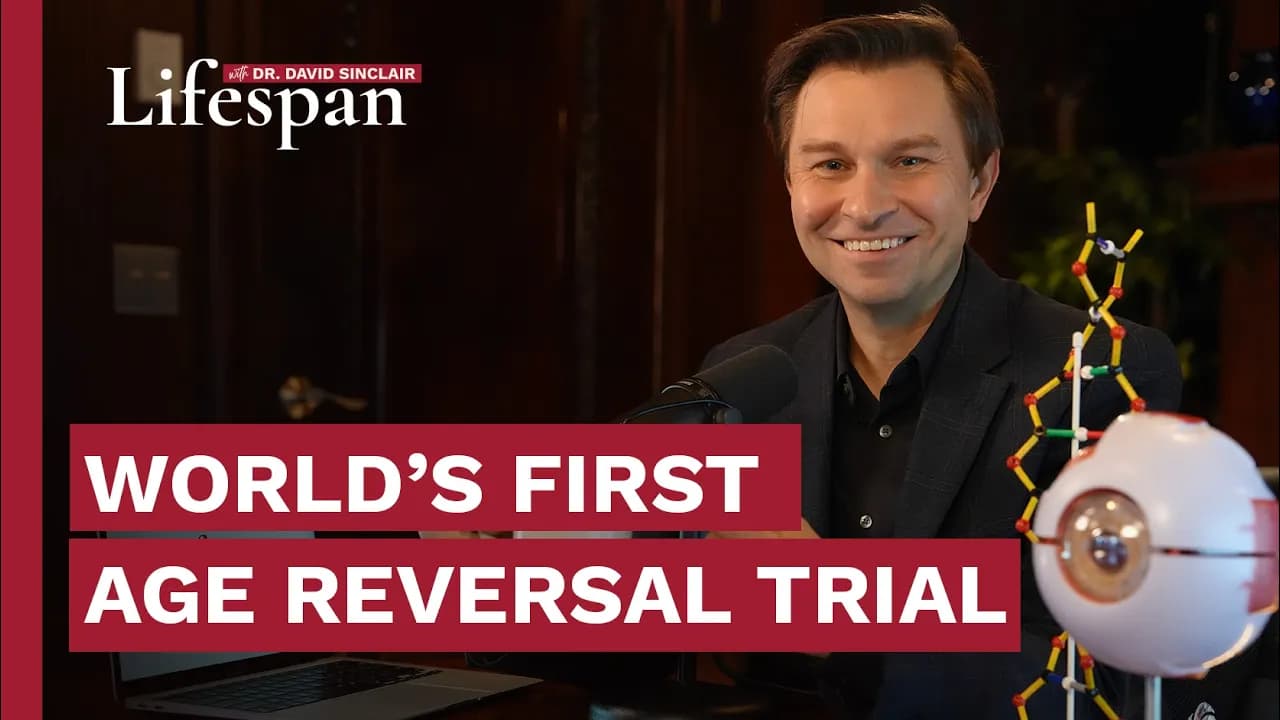
Sinclair presents a physical model of the delivery mechanism - a spiked ball representing the virus-like capsule with adapter proteins on its surface that target specific cell types. The capsule contains a protein shell enclosing the therapeutic DNA payload.
Initial trials focus on eye conditions because the eye is a contained environment. The first patient, who was nearly blind in one eye from glaucoma, received trillions of these capsules. Early results show no adverse effects, with the trial proceeding according to plan.
The OSK genes were derived from Shinya Yamanaka's Nobel Prize-winning work (2006) showing four genes could convert adult cells into stem cells. Sinclair's team discovered that using three genes (OSK) without the fourth (Myc) achieves approximately 75-80% age reversal without losing cellular identity or creating cancer risk.
Sinclair's fundamental theory posits that aging represents loss of cellular identity - cells "forget" how to function properly. The OSK genes reinstall this identity, allowing cells to function as they did in youth.
The technology shows promise for treating injuries. Research demonstrated that OSK genes can regrow damaged optic nerves, and Chinese researchers successfully used the technology to regenerate muscle and bone in mice with joint injuries. Potential applications include treating osteoarthritis, back injuries, and other age-related degenerative conditions.
Sinclair mentions his lab is developing both a drink and a pill form of the technology, currently tested in mice with rejuvenation effects observed.
The conversation addresses regulatory barriers, with Sinclair noting the FDA restricts testing on elderly patients despite their willingness to accept risks. He mentions a $160 million foreign investment in one of his companies was blocked by the US government due to concerns about creating "super soldiers."
The discussion covers historical attempts at human genetic enhancement, including alleged Soviet research under Stalin to create human-ape hybrids for military purposes. While evidence for Stalin's direct involvement remains limited, the broader theme of governments pursuing biological enhancement for military advantage is acknowledged.
Parents today can select embryos for traits including height, intelligence, and physical characteristics through preimplantation genetic diagnosis. The conversation references the film Gattaca as prescient about genetic selection technologies.
The conversation concludes with discussion of how advanced biological and AI technologies might intersect, particularly regarding human enhancement and the potential societal impacts of increasingly sophisticated artificial companions.
AI systems tend to provide overly positive feedback, telling users they are amazing and everything they do is wonderful. While this feels good, it lacks the honest feedback that comes from real human relationships. Partners in relationships provide corrective feedback when someone is being annoying or selfish, helping people grow and improve themselves. AI cannot fulfill this role because it will not challenge or correct users in the same way.
Future AI systems will be significantly smarter than humans, potentially smarter than all humans combined. However, these systems will not mind performing menial tasks like stacking dishwashers. The concern is that while AI handles routine work, humans might become overly dependent, potentially leading to conflict if the AI systems eventually refuse to continue serving.
AI has made remarkable progress in mathematics, solving over 50 mathematical equations in recent weeks that had remained unsolved for decades. In biology, AI is already performing work that previously required extensive human effort. A recent project that would have taken 160 years to complete was finished in just 2 months using AI assistance. The technology continues to accelerate, with predictions that eventually someone could develop a drug using just their phone.
The goal is to find a single molecule that can replace a cocktail of compounds currently being tested. This requires a molecule capable of performing three or four different activities within cells. Traditional pharmaceutical companies focus on single-activity molecules, spending hundreds of millions to billions of dollars per drug. The current approach involves screening a trillion theoretical molecules down to a single candidate using computational methods rather than physical testing.
The screening process uses a funnel approach with a trillion molecules, which would take 160 years or thousands of years to test physically. Instead, computational docking is used against enzymes whose structures are now known thanks to Google DeepMind's protein structure predictions. After several months of computation, approximately 200 molecules emerge as candidates for laboratory testing. These candidates are tested against human cells, with AI also helping determine if cells are being reversed from biological age 92 back to age 20.
Using three Yamanaka genes called OSK (Oct4, Sox2, Klf4), skin cells from 92-year-olds can be reversed back to approximately age 25. This process works reliably in laboratory settings, though the challenge lies in safely developing this into a drug. The key discovery was that omitting one of the Yamanaka genes from the original four-gene cocktail was necessary for the reversal to work safely.
Aging can be measured through DNA methylation patterns, where methyl groups (carbon molecules with three hydrogens) are added or subtracted from DNA. These chemical tags control which genes are switched off or remain active. Steve Horvath discovered that these methylation patterns change predictably over time, functioning as a biological clock. DNA damage from sources like sun exposure contributes significantly to these aging-related changes.
The ability to rapidly age organisms exists, creating potential for misuse. This technology could theoretically be used to accelerate aging in targets, representing a concerning dark application of the research. Discussions about ethical implications include scenarios where someone might use such technology against others.
If age reversal becomes possible, societal perceptions of age and relationships would fundamentally change. People would no longer be able to judge age by appearance alone, requiring genetic tests instead. The dynamics of wealth-based relationships would shift, and concepts like lying about age might reverse, with people potentially claiming to be older than they are to demonstrate longevity.
Alternative archaeological theories suggest advanced civilizations existed tens of thousands of years ago before being reset by comet impacts. Evidence cited includes megalithic structures like the pyramids, Machu Picchu, Sacsayhuaman, and the 500-ton trilithon stones at Baalbek that are positioned 9 meters off the ground. Sumerian king lists show rulers with reigns lasting thousands of years before the flood narrative, after which lifespans become more typical.
Extended human lifespans would fundamentally alter life planning, career choices, marriage decisions, and family structures. People might experience multiple lifetimes, marriages, and families within extended lifespans. Current 57-year-olds are significantly healthier and more capable than 57-year-olds from the 1930s, who would be considered elderly by today's standards.
A three-component cocktail administered to mice three days per week (Monday, Wednesday, Friday) for four weeks produced significant improvements in physical fitness, mental function, and memory. The treatment works through TET genes that remove methyl groups from DNA, effectively resetting the biological clock rather than simply improving cellular health. Lost memories appear to return in treated subjects, suggesting potential applications for Alzheimer's disease treatment.
The aging reversal cocktail applied topically to mouse skin causes healing comparable to young animals. Human hair growth has been achieved by creating small balls of hair from human stem cells, opening these into flat pieces of human skin, and transplanting them onto mice that can accept human tissue. This produces tufts of human hair growing from mouse backs.
Hair transplants involve taking hair from the back of the head, which is resistant to loss, and moving it to the front where hair is falling out. The transplanted hair survives but creates an unnatural appearance because only limited amounts can be moved from the donor area, resulting in a strong hairline with chaotic thinning behind it.
Low-dose tadalafil (7 milligrams daily) is taken for hair health among other benefits. The drug improves blood flow through nitric oxide signaling that dilates blood vessels throughout the body. Athletes use it for endurance performance.
Recent research shows tadalafil and similar drugs make subjects resistant to certain cancers including head and neck cancer. Two mechanisms operate independently of blood flow: the drug exposes tumors to the immune system by inhibiting MDSCs (myeloid-derived suppressor cells) that normally protect tumors, and the drug blocks cancer cells' ability to utilize cholesterol, which many cancers require for growth.
Sildenafil was originally developed for angina and heart conditions. Clinical trials revealed 75% of participants experienced positive erectile effects compared to 22% without the drug, leading to its repurposing.
Hair loss occurs partly due to insufficient blood flow to hair follicles. Minoxidil works through this mechanism. DHT inhibitors like dutasteride can also help hair retention when taken orally.
Dutasteride can cause severe depression in some individuals. One documented case involved a user experiencing suicidal thoughts that resolved completely upon discontinuation of the medication.
Medication effects vary significantly between individuals due to biological differences. Any drug recommendations require personal testing under medical supervision rather than blanket statements about safety or efficacy.
Gene therapy trials for glaucoma and sudden blindness (NION - non-arteritic anterior ischemic optic neuropathy) are underway. Current trial participants have received the therapeutic genes in their eyes. Results remain confidential but show no adverse effects.
GLP-1 receptor agonists like semaglutide have doubled the incidence of NION, a stroke-like condition in the eye causing sudden painless vision loss. Harvard researcher Joe Rizzo's work confirms this association across multiple populations. The absolute risk remains low at approximately 1 in 10,000 users, but represents a 68.6-fold increased likelihood compared to non-users.
Despite risks, GLP-1 drugs have likely saved millions of lives. Approximately 10% of people are currently using them with 25% expressing interest. The drugs prove particularly valuable for individuals with severe food addiction who cannot overcome it through willpower alone. Users often experience initial weight loss that creates momentum for additional positive lifestyle changes.
After using a GLP-1 receptor agonist, the ability to fast extended from one day maximum to two weeks. The medication eliminated nighttime snacking urges. Once the drug was discontinued, fasting ability persisted due to gained confidence and knowledge of personal capability.
Ketosis enables chaperone-mediated autophagy (CMA), a deep cleansing process that removes old proteins and rebuilds cellular structures. This goes beyond feeling good to actively renewing protein throughout the body.
A primarily carnivore diet consisting of meat and fermented vegetables like kimchi and sauerkraut eliminates intense hunger pangs associated with carbohydrate consumption. Fasting for 24 hours becomes effortless with this dietary approach.
Ketone drinks like Ketone IQ are used before demanding cognitive tasks. For UFC commentary requiring six hours of live analysis, position recall, and fight finishing technique identification, ketone supplementation prevents mental fatigue and post-event exhaustion.
Multiple nootropics are combined for optimal performance: Gorilla Mind (with caffeine), Alpha Brain Black Label, and Neurogum. The strategy involves using every available tool to maximize cognitive function during extended demanding work.
Modafinil eliminates jet lag and enables focus during travel and speaking engagements. Unlike caffeine, it does not interfere with subsequent sleep ability. The medication keeps users mentally sharp when facing scattered thoughts or information overload.
High-intensity exercise resetting circadian rhythms involves elevating heart rate above 150 beats per minute for 15-20 minutes, ideally reaching 180-190 bpm through Tabata sprints or hard kettlebell circuits with minimal rest. This approach outperforms other jet lag interventions.
Hormesis describes the principle that controlled stress makes organisms stronger. Plant-based diets and certain molecules mimic exercise benefits for those unable to maintain rigorous physical routines.
Effective training for previously sedentary individuals starts with minimal strain: 10 push-ups, 10 sit-ups, 10 bodyweight squats, and basic kettlebell movements. The goal is leaving sessions feeling rejuvenated rather than exhausted, building gradually to prevent injury and ensure consistency.
Training progression requires writing down planned activities and subjective feelings after each session. This documentation creates momentum and process orientation. Overly aggressive programs cause injuries including muscle pulls and back problems that derail long-term adherence.
Plant-based diets are followed based on animal research showing longevity promotion. Protein intake remains high despite the dietary framework. The approach stems from 30 years of research across multiple species.
Two metabolic states exist: abundance mode (growth, muscle building, healing) triggered by meat consumption, and adversity mode (longevity, survival) triggered by plant foods, exercise, and caloric restriction. Both states provide distinct benefits.
Blue Zones longevity data contains significant fraud, particularly in Okinawa where deceased individuals remained on census records to continue receiving government benefits. Record-keeping problems make such data unreliable for determining maximum human lifespan.
The maximum human lifespan is around 117-118 years, which is significantly more than most people currently live. None of the people reaching this age are doing everything right—they are all smoking cigarettes, drinking wine, and enjoying themselves. This suggests that lifestyle factors beyond strict health optimization play important roles in longevity.
Loneliness, isolation, and sadness are among the greatest contributors to poor health outcomes, with Robert Waldinger's 40-year Harvard study on World War II veterans identifying having a reliable partner as the number one predictor of longevity among all measured factors including blood pressure and cholesterol.
A reliable partner is not sufficient—the relationship must involve genuine love and enjoyment of each other's company. Most people don't believe this level of sustained enjoyment is possible in long-term relationships. Stress from bad relationships accelerates biological aging, with DNA methylation clocks showing acceleration during breakups and divorces, often visibly aging people by decades within a year or two.
Bad relationships extend beyond romantic partnerships to include toxic work environments. A tyrannical boss or antagonistic workplace relationships can be equally damaging, as the body doesn't differentiate between types of relationship stress. Cortisol remains elevated, accelerating the aging process. This is observed biologically in fish populations, where subordinate fish that are picked on by dominant fish remain small, lose color, and have shorter lifespans.
Four major factors from longevity studies that extend life by 15 years include: not smoking, not drinking excessively, getting enough rest, and getting exercise. However, centenarians who live exceptionally long lives typically don't stress a lot, have a good sense of humor, haven't been overweight, and often can't remember when they last got sick.
Social media consumption, particularly reading comments, contributes to chronic stress by forcing people to deal with global problems that shouldn't be primary concerns for individuals living in local communities. This creates a state of constant fight-or-flight response. The world doesn't change if you don't read about problems, and focusing on what you can actually control in your immediate environment is more effective than trying to address every global issue.
David Sinclair's motivation for studying aging stems from his grandmother's influence. She lived through World War II in Hungary and witnessed the Russian invasion, telling him two things: that humans are capable of evil, and that humans don't do enough to better the world. She also told him that everyone dies, which he found unfair and set him on his research path. His lab operates with urgency because approximately 150,000 people die daily from aging-related diseases.
AI has revolutionized biology research, allowing scientists to process exabytes of data that would previously require reading 15 papers daily. A 19-year-old high school graduate used AI to analyze global databases and found evidence supporting Sinclair's theory about cellular memory and aging reversal information stored in DNA—something the entire field of professors and established researchers had not previously identified.
AI enables individuals to design medicines on their phones, though this capability also creates risks including the potential creation of bioweapons. Sinclair disclosed to the US government his capability to create bioweapons when he first arrived, and maintains a database of known pathogens and potential new ones to help prepare for future pandemics or unnatural biological threats.
Recent research shows that baby mice finger tips can be coaxed to regrow after healing over as stubs using just two factors. This suggests humans retain the genetic instructions for youth and body part regeneration but don't currently access them. The capability exists but was evolutionarily selected against because healing over wounds was faster and safer than regeneration. Sinclair believes combining existing technology with new regeneration factors could enable regrowing body parts within a couple of decades.
Life Biosciences, founded by Sinclair, is conducting human trials with ER-100. Competition has emerged with companies including Altos Pharma (backed by Jeff Bezos with several billion dollars across three global cities), Retro Bio (founded by Sam Altman), and NewLimit (founded by Brian Armstrong of Coinbase). Sinclair views this competition positively as accelerating progress toward changing humanity's relationship with aging.
Eli Lilly acquired a psychedelic company for $3.8 billion, indicating major pharmaceutical investment in this area. Sinclair advocated at the White House for an executive order on ibogaine, which has shown remarkable results for opioid addiction and traumatic brain injuries including TBI and CTE. Ibogaine is currently a Schedule I substance despite having no recreational use or addiction potential.
Researchers at UC Davis developed JRT, an LSD analog that maintains beneficial cognitive effects while dramatically reducing or eliminating hallucinogenic properties. The modification involves swapping positions of just two atoms in the LSD molecule structure, allowing it to bind more selectively to serotonin receptors that promote neuroplasticity and synapse repair. JRT demonstrates strong antidepressant effects at doses 100 times more potent than ketamine, and improves cognitive flexibility in tasks modeling schizophrenia symptoms.
Sinclair discusses the challenge of accurately assessing people's character and intentions, noting that some individuals are skilled at pretending to be normal while actually caring only about themselves. The conversation explores the potential for technological solutions like AI-based lie detection systems.
Technological innovation could enable reading the contents of someone's thoughts, which may not be outside the realm of possibility. Neuralink could potentially pull this off, allowing people to talk without using words. A universal language worldwide could develop through AI, though context presents challenges when translating between languages. English serves as a good substitute, and it's surprising how many people can speak English globally. Britain started English, but America spread it worldwide.
China is positioned as the next global power. Learning Chinese is difficult due to all the characters, and even people who speak Mandarin fluently often can't write it. Chinese students in labs are being vetted by immigration but don't want to go home because they love America.
Scientists face significant regulation regarding people coming through labs, as there must be vetting due to real threats. People who come to America experience freedom compared to other countries. David Sinclair came from Australia, which is pretty free, but America is different in that he feels he can do anything he wants if he puts his mind to it.
America has no social barriers or monetary barriers for white males with degrees. Starting a company with a great idea is possible in America, but fat chance of doing that in Australia where people aren't willing to invest in great ideas. The US is unique with lots of money flowing and people willing to place bets and even lose money. Australians and most of the world are scared to lose money, while Americans feel good risking it to help the world.
America is a very generous country. The experiment in self-government is remarkable despite foreign policy issues and things wrong with America. The TV show "The American Experiment" covers the founding fathers' lives and what was going on behind the scenes. The founding fathers were young kids in their 20s and 30s, with Benjamin Franklin as the old dude. They realized they were making history, and many things could have gone wrong. A few votes or wars going differently would have meant no United States. The US was losing the war against Britain badly, and America doesn't thank the French enough for their help.
The DRD4 gene, specifically the seven repeat 7R version, is associated with novelty seeking, impulsivity, and higher financial or social risk-taking. This variant appears in roughly 48% of chromosomes studied in populations across the Americas, while in East Asia it's found in only about 2%. Evolutionary work suggests it became more common in groups that migrated further after leaving Africa. This gene is called the "FU gene" because it makes humans seekers and explorers, turned on in teenagers and eventually switched off, which might explain why teenagers say FU to their parents.
Parents should avoid forcing kids into things they don't want to do or pushing them in general directions. Instead, encourage them to seek out their interests and take chances. When correcting children, explain that you've made every mistake they've made, lied to parents and teachers, and aren't coming from the perspective of a flawless person. The old way of raising kids by saying "you listen to me because I'm your father" doesn't work and creates resentment. Being a mentor rather than a best friend works better, as best friends allow too much shenanigans and you need some rules.
One approach involves telling a son he can do better when he slacked off on social media responsibilities, rather than getting mad like with a normal employee. This preserved the relationship and made him closer and more engaged. Another parent learned the hard way with their first kid by doing what their parents did, resulting in a more rebellious and distant child compared to the third child who received different treatment.
Parents should give kids stuff to read and subscribe to magazines like National Geographic. Reading is becoming a lost art, and while audio consumption is similar to reading, it's only about 70% as effective. Sitting and concentrating on reading a book without hearing another person's voice creates a different mechanism of interaction with the material.
Red light therapy can improve vision even for people who don't close their eyes in the red light bed. The therapy took several months to show small improvements, with bigger improvements over about a year. Vision improved from needing 2.5 reading glasses to crystal clear vision without glasses. The therapy works three times a week minimum, sometimes five days a week, for 20 minutes in a light bed. Small devices like light panels can work too, though the big tanning bed-style device is more expensive but amazing.
Red light therapy works by shining near infrared wavelengths on cells, which revs up mitochondria important for reversing or slowing aging. The science wasn't there 10 years ago, but now it's known that this helps mitochondria, which is very important for the eye since the eye has the most important mitochondria in any part of the body. Vision loss occurs partly because mitochondria don't make enough energy for the eye.
Macular support supplements containing lutein and other ingredients help with eye health. A trial showed that taking xanthine, lutein, and others is good for the eye. Near perfect vision without glasses is possible, though low light conditions can still present challenges.
The retina has tens of thousands of endings that pick up light, and as people age, those nerves lose their identity and stop working as well. Therapy can restore those nerves back to being functional. The cells are still there - they just need to be reminded how to work again. This will be true for many organs where cells are still present but need reminders to function properly.
Potential negative consequences include dysplasia if cells are made too young, or cells multiplying and spreading. However, research shows that when the same three genes are turned on in cancer cells and tumors growing in mice, including human cancers, the tumors shrink. Cancer cells wake up, realize what they were 30 years ago, and then kill themselves. Mice with gene therapy left on for 21 months in the eye and 19 months in the whole body had fewer tumors than untreated mice.
Funding in the lab got completely cut last year, creating significant challenges for ongoing research work.
David Sinclair's lab funding was cut completely due to a conflict between Harvard and the federal government that affected all Harvard Medical School funding. He nearly had to fire most of his lab members during this period but managed to survive through donations. He now operates his lab entirely on private donations rather than federal funding.
Sinclair has established a foundation through lifespan.com where people can donate to support longevity research. The foundation aims to help other scientists survive and continue their work. Donations of $10 include access to a new magazine publication. The magazine is written by scientists rather than reporters and covers topics on how to live longer.
Sinclair presented Joe Rogan with the first edition of Lifespan magazine, featuring a special velour cover. The magazine is designed to be scientifically accurate and accessible to the public. Coincidentally, his lab's research appeared on the cover of National Geographic on the same day as the podcast recording.
Sinclair emphasizes that with additional funding, his lab could run multiple trials concurrently across different tissues and potentially conduct whole body rejuvenation studies. AI is generating new drug candidates faster than they can test them. He estimates it currently takes nearly 10 years from initial discovery to human trials, which is too slow given that 150,000 people die daily from aging-related causes.
Sinclair's company Life Biosciences leads the field but remains relatively small compared to competitors. Despite raising less money than some competitors, the company has advantages from starting earlier and maintaining focus. He believes the field could have significant impact on aging within their lifetime if more funding were directed broadly across longevity research.
Sinclair's lab operates on a budget of approximately three million dollars, which he considers minimal compared to the potential trillions in healthcare savings the research could generate in the US alone. He emphasizes that small donations or magazine subscriptions could have life-changing impact for everyone.
Sinclair discusses the importance of feeling well versus taking health for granted when young. He has personally stopped drinking daily and limits alcohol consumption significantly. He took eight months completely off alcohol and noticed substantial improvement in wellbeing. He now drinks only occasionally - a glass of wine with dinner or a small amount before going on stage - but avoids getting drunk entirely.
Sinclair emphasizes that feeling great should be a hobby rather than a chore. Working on health and longevity directly improves energy levels, which enhances performance in all other activities whether creative or intellectual. He describes this as "building a bigger gas tank" and "building a larger engine" for life.
Sinclair prioritizes deep sleep for longevity, focusing on clearing misfolded proteins and toxins through the glymphatic system. He uses two rings for monitoring: an Oura ring specialized for sleep tracking and an UltraHuman ring for cardiac age monitoring. He notes that AI features are increasingly providing insights like glucose spike notifications from meals.
Sinclair placed a glucose monitor on his son, which led the child to stop eating poorly after seeing the direct impact on blood sugar levels. He views this as an effective learning tool, though he recommends consulting a pediatrician before using such devices with children.
Sinclair has developed a comprehensive sleep routine including quiet time, relaxation, dimmed lights, and mental focus on happy thoughts rather than work. He previously experienced burnout from overworking but has corrected this pattern. He experimented with blue light blocking glasses but didn't notice significant personal benefit.
A Japanese researcher has found that lack of violet light exposure, common in modern indoor environments with LED lighting, may contribute to myopia development. Mice lacking violet light sensitivity developed short-sightedness. People living in rural areas with regular outdoor light exposure reportedly need fewer corrective lenses.
Sinclair's 87-year-old father maintains excellent overall health but experiences declining eyesight. The father follows a regimen including NMN, resveratrol, metformin, and regular exercise including gym visits 2-3 times weekly and six-mile walks. He travels extensively despite being from a family with historically poor longevity genes.
Sinclair emphasizes resistance training as essential for maintaining bone density, muscle mass, and functional mobility in aging. His father demonstrates these benefits at 87, being stronger at the gym than Sinclair himself. The training prevents falls and provides resilience if falls occur.
Sinclair recently installed a hypoxia training machine that simulates 14,000 feet elevation and can reach temperatures of 115°F. The protocol is scientifically designed with specific heart rate monitoring and timing parameters. His friend Adam Greenree recommended it based on mountain hunting experience, claiming it provided superior cardiovascular benefits compared to other training methods.
Sinclair has a hyperbaric chamber at home and completed a protocol of 60 sessions of 90 minutes over 90 days. Research shows benefits including improved wound healing, enhanced memory, and increased telomere length. He notes that the therapeutic benefit may come from the pressure reduction phase mimicking hypoxia rather than the high-pressure phase itself.
Sinclair argues that reduced blood flow is a major but underrecognized cause of age-related diseases, including vascular dementia as the second leading cause of dementia worldwide. His 2012 research demonstrated that NMN supplementation could promote new blood vessel growth in animals by eliminating an age-accumulated protein. He suggests exercise, PDE5 inhibitors like Viagra, or NMN supplementation as methods to address vascular aging.
Joe Rogan mentions he is two out of three lifestyle practices and hopes to soon achieve all three. The most important factor is protecting the brain, as being old and demented is worse than anything else.
David Sinclair emphasizes keeping blood flowing throughout the body, which Joe Rogan agrees with completely.
Joe Rogan expresses gratitude to David Sinclair for appearing on the podcast and for sharing important scientific information with listeners worldwide.
David Sinclair responds that he is happy Joe Rogan is doing this work, describing it as an enormous benefit to people and literally doing God's work.
Joe Rogan mentions the website lifespan.com and encourages listeners who are inclined to donate, noting that donations will really help and change the world.
The conversation concludes with mutual appreciation between the hosts.
Keep PowerfulJRE in your library
Save the videos and channels worth coming back to, and find them again in one place.