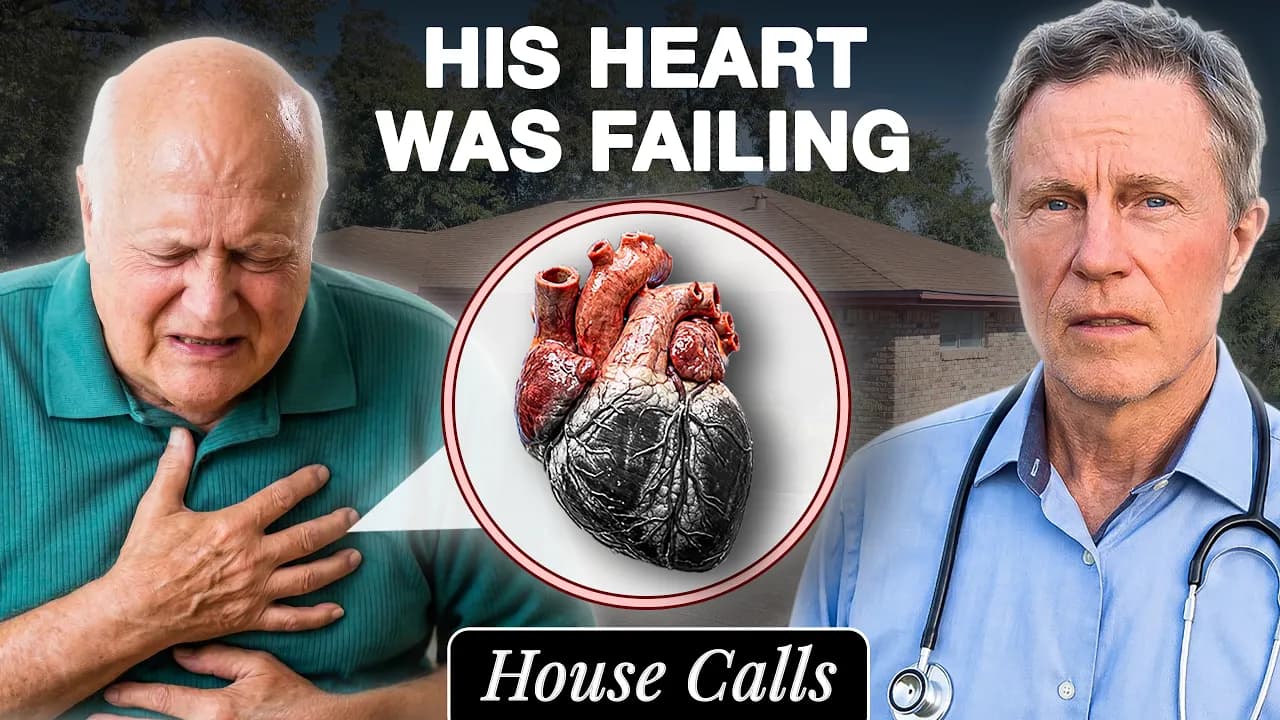
How Heart Disease Works & What Causes It | Dr. Andy Galpin
In a Nutshell
Heart disease stems from blocked coronary arteries causing tissue death (myocardial infarction), electrical firing problems triggering cardiac arrest through ventricular fibrillation, or chronic high blood pressure inducing vessel stiffening and cardiac fibrosis. Genetic conditions like hypertrophic cardiomyopathy and Wolf-Parkinson-White syndrome create structural or electrical vulnerabilities that can cause sudden death, especially during exertion. Atrial fibrillation poses stroke risk through clot formation, while early screening and blood pressure control are key to preventing long-term cardiac damage.
These notes were generated by AI and may contain inaccuracies.
If vessels that supply blood to the heart become blocked or damaged, a myocardial infarction results. When oxygen and nutrients are blocked to heart tissue, the heart becomes hypoxic and stops contracting. This leads to necrosis or death if severe enough because the heart cannot pump blood throughout the body. The health of the coronary arteries themselves is the first priority.
Firing issues involve the electrical signal that causes heart contraction. Cardiac arrest occurs when the heart stops firing and contracting due to electrical conductivity problems rather than oxygen delivery blockage. Ventricular fibrillation (Vfib) is the most deadly form where the ventricles misfire. The ventricles flutter instead of contracting strongly, relaxing, and refilling with blood. This prevents adequate blood output and causes blood to be shot into chambers in the wrong direction because valves open and close at incorrect times.
Atrial fibrillation (Afib) is much more common than ventricular fibrillation and less dangerous. Many people have Afib without knowing it or with minimal concern. Athletes who are sidelined for heart issues often have Afib that gets checked by a cardiologist and cleared for return to sport. However, Afib becomes dangerous when blood pools in the atria, forms clots, and these clots can move to the ventricles and be pushed into the system, potentially causing stroke.
Genetics play a significant role in sudden cardiac death. Wolf-Parkinson-White syndrome is a genetic condition that causes atrial fibrillation. While it can be deadly, most people manage it fine. Loeys-Dietz syndrome (LDS) causes connective tissue issues in heart blood vessels and leads to premature atrial aneurysms. This condition caused the death of Lucas during a cool-down swim after practice despite CPR attempts.
Hypertrophic cardiomyopathy is the most common cause of sudden cardiac death in young individuals. This condition involves an enlarged heart with reduced chamber size rather than just larger left ventricle walls. The hypertrophy occurs internally, making the chamber that holds blood smaller. During high physical exertion, the ventricle cannot refill with blood fast enough to match output needs, leading to sudden cardiac death. While genetic abnormalities cannot be prevented, screening is possible and medications exist for HCM cases.
Chronic heart disease results from maladaptations over a lifetime rather than genetic predisposition. Chronic high blood pressure mimics constant exercise on the aorta, causing it to stiffen and become less compliant. The left ventricle must squeeze harder to push blood through rigid vessels. This damages the vascular system through turbulence and can cause rupture. The heart tissue develops fibrosis (scar tissue equivalent), reducing contractile strength and creating a cycle where weaker contractions reduce blood flow further.
Keep Andy Galpin in your library
Save the videos and channels worth coming back to, and find them again in one place.