The EXACT Formula to Avoid a Stroke (Doctors Won't Tell You)
In a Nutshell
Strokes are largely preventable by catching soft arterial plaque early with a CINT ultrasound, screening for silent atrial fibrillation, and keeping blood pressure consistently under 130/80 at home. The root driver is insulin resistance and post-meal blood sugar spikes that inflame arteries and raise pressure; these are missed by fasting glucose alone and require CGM, OGTT, or post-meal tracking plus lifestyle changes like cutting refined carbs, walking after meals, and building muscle. For atrial fibrillation, a prescription blood thinner—not supplements—is the proven protection, while tight blood pressure control also guards against the rare but lethal pontine stroke.
These notes were generated by AI and may contain inaccuracies.
If you're over 40, and especially if you're over 60 or in your 70s, this is a video to watch before anything else, because strokes happen in your 60s and especially 70s. A stroke doesn't just threaten your life. Two out of three survivors of strokes are left with a disability. Difficulty speaking, a whole side that doesn't work. Some end up bedridden for the rest of their lives. Stroke is the number one cause of permanent disability. For many, that's the part that's scarier than dying. Becoming the patient instead of the person that your family counts on.
But a stroke is one of the most preventable things that can happen to you. If you know what to do, you can take that risk off the table if you know where to look and what to do. Learn how strokes actually happen, the causes, the fixes for each kind of stroke, and the deadliest kind of all.
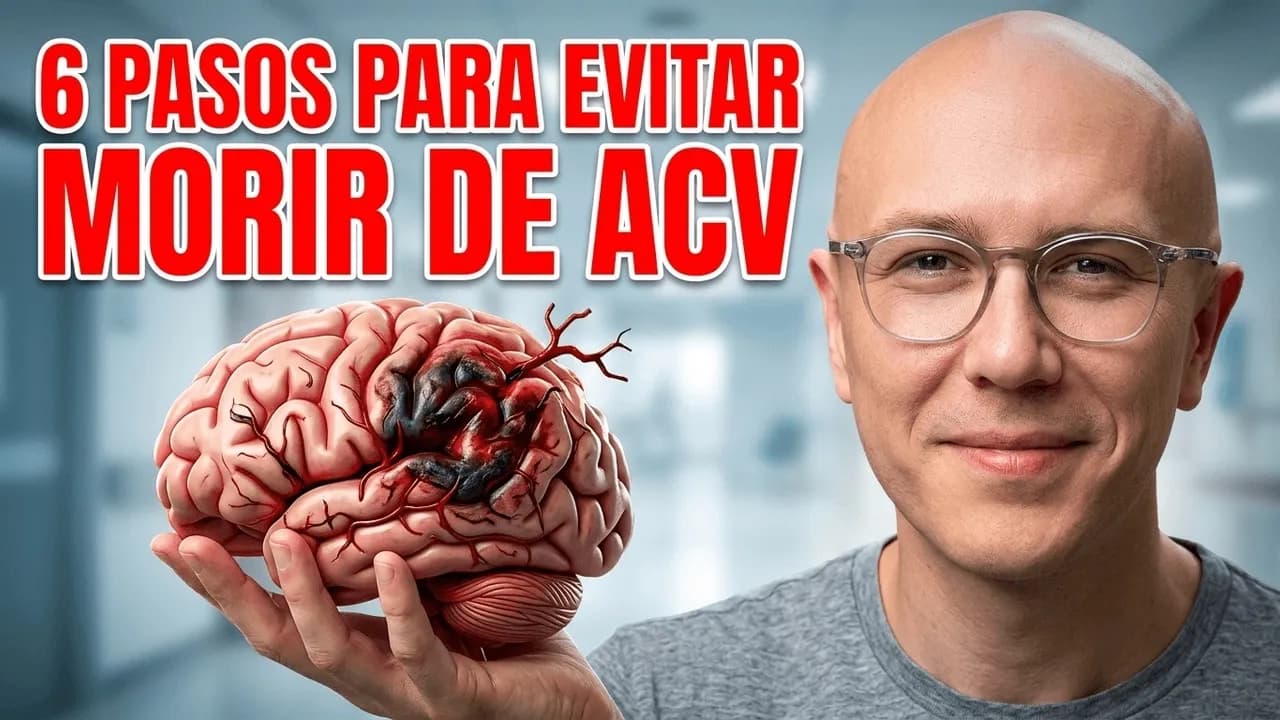
A stroke is what happens when part of your brain suddenly loses its blood supply. Your brain runs on constant blood flow and the moment that blood flow gets cut off, the tissue downstream, the brain tissue starts to die within minutes. There are two different ways this can happen.
The first is the clot kind, called an ischemic stroke. That's where a clot blocks one of the arteries feeding the brain. Everything downstream gets starved and dies. That's the common one, happening in the large majority of cases with a stroke.
The second is the bleeding kind, called a hemorrhagic stroke. That's where a vessel inside the brain actually ruptures and bleeds when it shouldn't have. That one's far more uncommon. Far more likely to kill you.
We're really talking about two different problems with two different causes and therefore two different fixes.
Let's start with the common one where the clot came from and the one test that catches that years early so you can prevent it from ever happening.
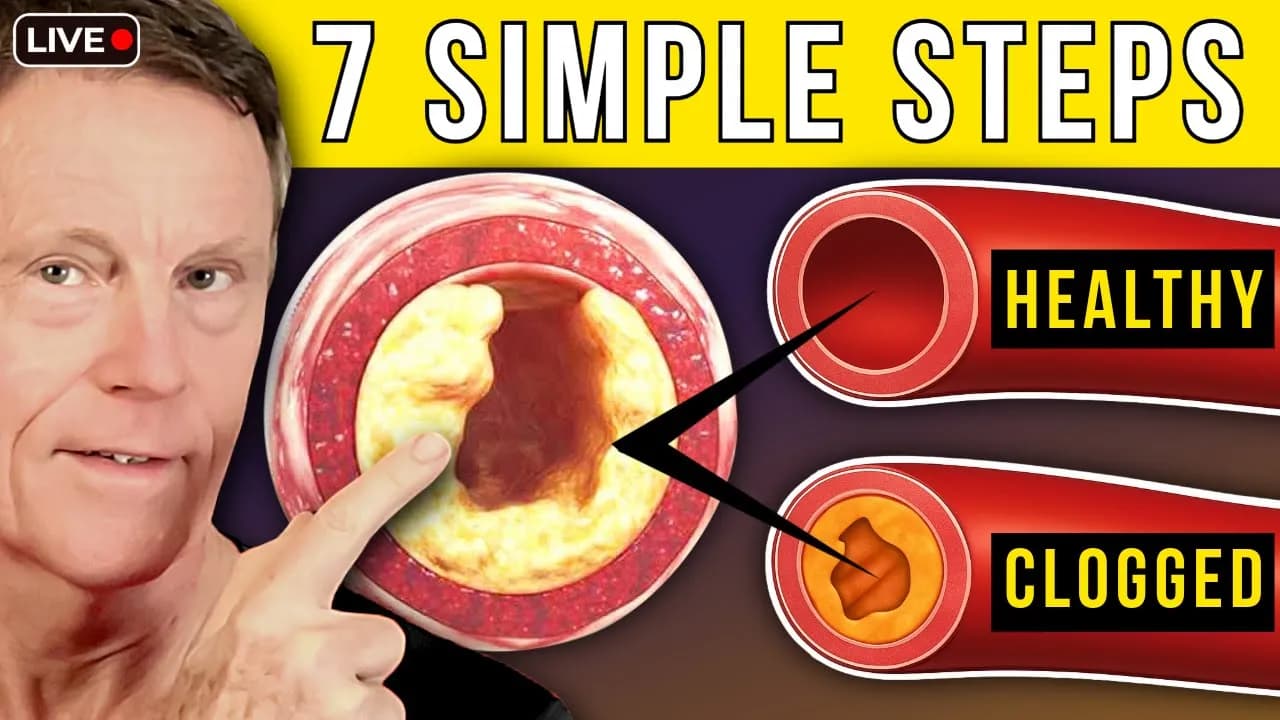
The most common stroke doesn't start in your brain at all. It starts way upstream in the pipes that feed your brain. And these pipes run right up the sides of your neck. They're called the carotid arteries. Over the years, they can build up plaque. But not all plaque is created equal or is the same.
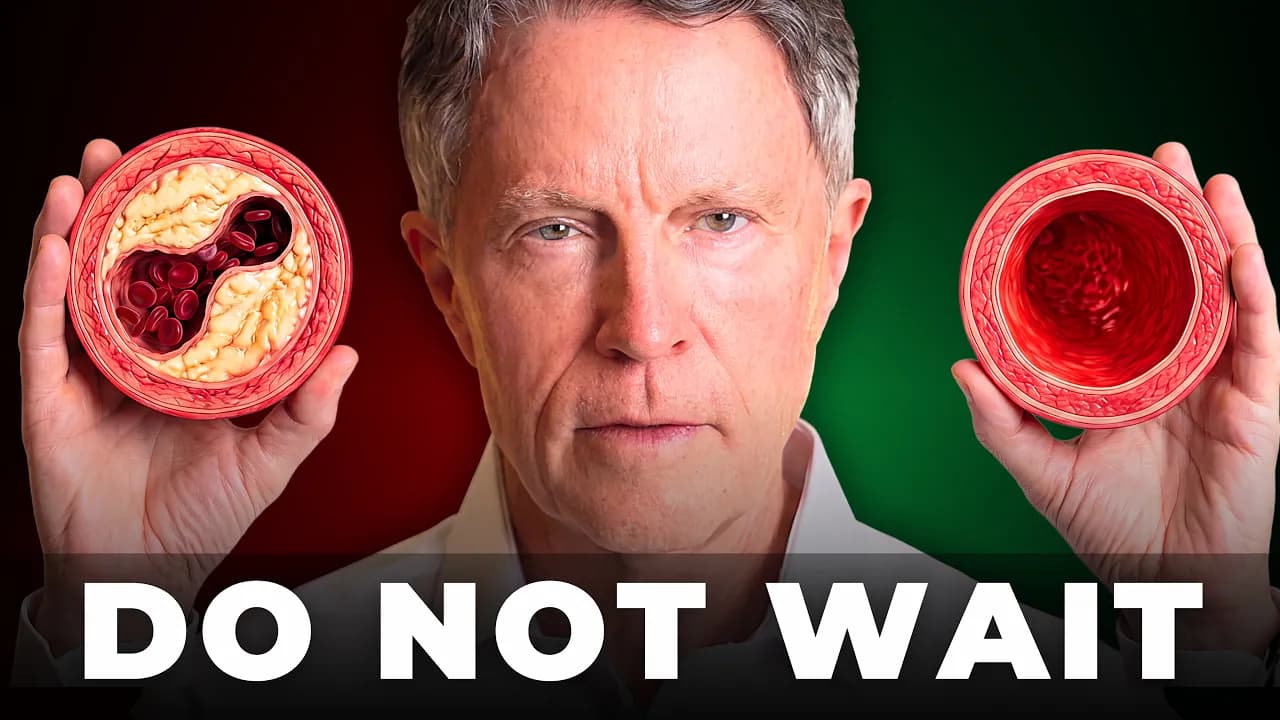
There's hard calcified plaque. It's older. It's more stable. And it's where your body has learned to calm that plaque down. There's very little risk more than actually having no plaque at all. Your body has walled it off with calcium and it's a sign of disease, but it's not what drops you tomorrow.
There's soft plaque. Soft plaque is unstable. It's inflamed. It can rupture. It's like a blister bursting and the second it does, your body starts throwing out clots to seal it. The clot breaks loose, travels up into the brain and blocks the blood flow. That's the stroke.
The danger isn't the artery that's slowly narrowing. That's what people think about strokes and heart attacks. They think that the artery is just slowly narrowing from plaque to where you don't have enough blood flow. If that were the case, we'd be able to predict when and where a heart attack or a stroke's going to happen. And we can't. It's because it's a sudden activity.
The danger isn't the artery that's slowly narrowing. It's the soft, unstable plaque that unfortunately nobody measured, but you can measure it.
There's a test called CINT. It's an ultrasound, so there's no radiation. You're looking at the neck. It measures the thickness of your artery wall, and it actually sees soft plaque building. A normal checkup is not going to catch that, but a CINT can see it coming years earlier.
Clogged arteries aren't the only place that that clot can come from. There is a second source, and this one you can't feel and won't find on any scan of your arteries. It's hiding in your heartbeat.
Your heart's supposed to beat in a steady, even squeeze. But a lot of older men have a thing called atrial fibrillation. The top chambers stop squeezing cleanly with a rhythm and they start to quiver instead. When those chambers quiver, blood doesn't really move out of them, get cleared out cleanly. It begins to pool and stays there. And blood that sits still starts to clot. That clot can get pushed out of the heart and travel straight up to the brain. Same result as the plaque, a blocked artery, and a stroke, but a completely different cause and completely different prevention.
Atrial fibrillation can be almost completely silent. Some men feel a flutter or a skipped beat. Plenty feel nothing at all. And unfortunately, a lot of men will feel a flutter sometimes or a skipped beat and think that they're feeling it all the time. That's not the case, especially when you're asleep. You can have this going on and not know it. The first sign that these men ever get is the stroke itself and the permanent disability that goes with it.
It's more common the older you get and more likely if you've already got high blood pressure or diabetes or sleep apnea all of which the speaker has. The speaker also has atrial fibrillation.
This is a rhythm that you might never feel quietly building the same clot that soft plaque does. And that's why it gets caught so late. And that's why past a certain age, it's worth looking for this on purpose instead of waiting to feel it because you can't reverse it if you do find out by having a stroke.
Both of these are still the clot kind of stroke.
There's another kind that's rarer and harder to survive. It's the hemorrhagic stroke. And it comes down to a single number you could be checking every morning at your kitchen table.
This is the one that people don't see coming because the thing that causes it feels like absolutely nothing. You don't feel it. When your blood pressure runs high year after year, it slowly goes up. You don't feel anything. It slowly wears down the smallest, most delicate vessels deep inside your brain. And one day under all that strain, one of them gives way and starts to bleed inside the skull and there's nowhere for that blood to go. So the pressure just keeps increasing very quickly. It presses on the brain tissue around it and the damage spreads fast.
High blood pressure is the number one cause of this kind of stroke, the hemorrhagic stroke. And it's the pressure itself that does it, running high but quietly year after year. Meanwhile, you're not feeling anything.
You're tired of the doc nudging you about your blood pressure or hearing these public health announcements. You feel fine. So, you go on. Meanwhile, you're setting the stage for a stroke. This is why the speaker keeps coming back to it because this is the damage that's happening right now in men who look perfectly healthy on paper. Men who still have a wife counting on a partner, not a patient, not somebody to take care of, an invalid stuck in the bed that they have to change the diapers and the sheets. Grandkids who need these men present and churches and companies that need these men contributing, a community that needs these men to show up.
The deadliest common driver of a stroke is a number you could measure every single morning in the kitchen at the table. And most people never take this seriously until it's already done the one thing that you just cannot undo.
Clogged arteries, a quiet rhythm, rising pressure. What's feeding all three of these underneath. The thing driving all three of these sits upstream of your arteries entirely. It's in how your body handles sugar.
When you eat a meal full of refined carbs, breads, rice, grain products, sugars, the stuff that breaks down fast, your blood sugar spikes. Every time it spikes, it drives inflammation. Your blood sugar, every time it spikes. Even every time insulin spikes, it can drive inflammation. Think of inflammation as a low, steady fire in the lining of your arteries. That fire damages the smooth inner wall and that damaged inflamed wall is exactly where soft plaque starts to form.
But it doesn't stop there. That same process stiffens your arteries and pushes your blood pressure up. So insulin resistance, your body slowly losing its ability to handle sugar, grain products, that's what feeds the clot kind of stroke and worsens the bleed kind at the same time. It's the soil all of this is growing in.
Most men are watching the wrong number, a fasting glucose reading, a cholesterol. But morning glucose is one of the last things to go wrong. Even the ADA, which recommends it, American Diabetes Association, it recommends it and it acknowledges that it misses over half of this problem. It can look perfectly normal for years. While the real damage is happening after your meals, not before breakfast.
The true picture comes from what your blood sugar does after you eat. So, if your fasting labs looked fine and you figured your metabolism was handled, that's exactly the gap this whole problem hides in.
Your labs can look fine while your arteries are being damaged. So, the first move is to measure what's actually going on. Don't assume that it's okay.
Think about getting a CINT to see the soft plaque in your neck. Inflammation markers, look at those. Most standard panels leave those off, too. The inflammation markers that tell you whether that plaque is actively dangerous. It means testing your metabolism the right way after meals, using a CGM, getting an OGTT, oral glucose tolerance test, an insulin response, a Kraft insulin survey.
The CGMs you wear for a couple of weeks instead of trusting one fasting number like the ADA tells you to do. It means tracking your blood pressure at home over time, not once a year in an office. The speaker does theirs four times a week. Past a certain age, it means checking your heart rhythm for that silent atrial fibrillation test.
Don't guess. When you know exactly what you're fixing, you can actually do something to prevent it.
For a lot of men at higher risk, the goal is getting it consistently under 130 over 80. And consistently is the key word here. Measured at home, not just at a checkup once a year.
Some people have to pull back sodium. If you're not watching your carbs, you have to watch your sodium. On the other hand, if you're watching your carbs, especially when you're working out or exercising out in these hot days of summer, you need to go the other way. Sometimes add more sodium.
Either way, you need to drop any extra weight. Decrease body fat, increase muscle, healthy muscle mass, moving your body, cutting alcohol, getting sleep, because untreated sleep apnea quietly drives your pressure up, too, and undoes everything that you're doing all that work for.
You're not going to know it when you have sleep apnea. Because you're asleep. You need to get tested. And if your wife or your husband is telling you you snore or you have sleep apnea, don't argue with them. Listen and get it fixed.
When lifestyle is not enough, the right medication earns its place at that point. The evidence for treating blood pressure to prevent stroke is about as strong as it gets in medical science.
If you've actually got atrial fibrillation and your doctor says your risk is high enough to treat, a prescription blood thinner is the proven protection. The speaker takes it.
The speaker discovered theirs long ago. They had noticed a couple of times that they got this feeling like there was a fish in their chest or something. It felt weird. And so they got one of these handheld telemetry devices. They're cheap. They're easy. And they woke up one night about 3:00 and again it felt like a big old bass was flipping around in there. And they got that thing. Yep. It was atrial fibrillation. Then they went to get proper care for it.
The speaker lost about 8 pounds when they did the right work. When they measured how much and how often they were having the atrial fibrillation, it did get up to 20% of the time. So when you get that high, you do need to consider having an ablation. On the other hand, what the speaker did was they lost about 10 lbs at that point, improved their lifestyle yet again, and that really backed the atrial fibrillation episodes down to a couple of times a year now, again using lifestyle.
The speaker takes medications too. When they first discovered it, they started taking Eliquis. There were some things that happened, changed over to Medicare, they had better access to rivaroxaban or Xarelto and so now they're on Xarelto even though they only have a brief episode every couple of months.
This is one place where a supplement is not a substitute for the medicine. Blood thinning, but it's not a replacement for a medication here for atrial fibrillation. Fish oil, same thing. Garlic, whatever you've read about, none of them have been shown to protect the brain from atrial fibrillation the way real anti-coagulation does. That's a decision to make with your doctor. Weighing your stroke risk against your bleeding risk. If it's indicated, take it seriously. Don't ignore it.
Keep working the things that feed it in the first place. Your blood pressure, your weight, your sleep, sleep apnea.
The target here is simple. Keep your blood sugar from spiking above 140 after your meals. You do that by pulling down the refined carbs that drive the spikes in the first place. Eating vegetables and protein before any starches. Consider taking starches off your diet anyway. Anything that's a glycemic carb. Glycemic just means something that raises your blood sugar. Any carb, anything that raises your blood sugar. Think about just taking it off your diet.
Taking a 10 or 15 minute walk after you eat is also a good way to deal with this. It's one of the most effective things you can do to flatten a spike if you decide, you know what, I'm going to take a carb vacation. And some people call it cheating and having a few carbs. Or you can do what the speaker did. One of their patients told them they were at a family event. They ate a few carbs for a birthday event. They excused themselves, went to the men's room, and did about eight minutes worth of squats, body weight squats, and the exercise in those thighs, hips, and calves, that brought their blood sugar right back down. You don't even have to disrupt what you're doing other than go to the men's room or the women's room.
Building that muscle helps because muscle burns through glucose. Metabolically active healthy muscle manages more blood sugar than your pancreas and your insulin receptors.
Sleep helps immensely. Lose the belly fat. That helps most of all. Not talking about fat on the front of the belly. Talking about fat inside. And the only way you're going to get a good handle on that is with a metabolic DEXA scan. They do that with all their patients. A glucose monitor turns all of this from guesswork into something you can actually see.
When lifestyle is not enough, medications like metformin or the GLP-1s or the SGLT2 drugs, these things can support your work. And again, they start to make sense as you get deeper and deeper into metabolic disease, even though you're doing the stuff you need to do from a lifestyle perspective. And that's what happens, especially when you get like the speaker's age. The speaker just turned 69. Drugs can support the work. They don't replace it.
When you do all of this, here's what actually happens to the plaque. You're not going to scrub your arteries clean. Some people have had some reversal, plaque reversal, and the speaker is one of them. But plaque reversal, you need to understand. So many people have seen that video of the speaker's and say, I want to reverse my plaque. It's not a practical goal. Even if you do all the right stuff, what and you can, you can take the risk off the table. That's really the practical goal here. The speaker wants to take their risk off the table. And that's what anybody should expect to be able to do.
If someone is promising you that they're going to give you a supplement or a drug or do a procedure and it's going to reverse and get totally clean out your arteries and get that plaque completely out, they're selling you something. But you can calm the inflammation. You can stabilize that soft plaque so it's not going to rupture. You can slow the whole thing down and caught early enough you can even improve it.
The deadliest kind of stroke you can have. Deep inside your brain stem at the base of your skull, there's a small structure called the pons. Some people call it the gator brain or the lizard brain. It runs the automatic things that keep you alive without you ever having to think about them. Your breathing, your heart rate, your blood pressure, and it's packed incredibly tight into your skull. There's no wiggle room here. Almost every signal between your brain and your body funneled through that narrow space with no room to spare.
So when a stroke hits the pons, even a small one, there's no room for swelling, no margin, no second chance. A pontine stroke is actually fortunately rare. But it's the one you least want because purely because of where it lands and what protects it more than anything else is the thing that runs underneath this whole video, your blood pressure. So that number you could check every morning at the kitchen table isn't just about the common stroke, it's about the deadliest one as well.
The good news is this, you don't have to do this alone. This is what their clinic does. They find what's actually driving your risk and then build your specific plan around your metabolism. It starts with a short no pressure call to see if they're a fit. Go to the link in the information below. If you'd like to do it, just book a call right there on the calendar. And if you're not ready for a call, that's your choice. They've got resources for you no matter what level of commitment you want to make. Even if it's just a free guide. Start with the free guide and it goes through numbers and markers that matter to help you manage your health. That's what they're all about.
If you want to keep thinking about your health this way, root causes, not just, oh, a stroke happened to the poor guy, not just numbers on a chart. Subscribe. Growing old is not for sissies, but it's a lot better with healthy arteries.
Keep Thomas Fordham Brewer MD MPH in your library
Save the videos and channels worth coming back to, and find them again in one place.