Inside The Boston Labs Building A Better Future
In a Nutshell
MIT researchers explore how flash freezing—first pioneered in Gloucester for seafood—now powers Cometeer's $100M+ coffee operation producing 200M cups yearly while preserving specialty roasts from around the world. Anduril's Dive LD autonomous submarines conduct seafloor surveys in Quincy using sonar and magnetometers, with capacity scaling to 200 units annually in Rhode Island. Boston biotech startups Bexon and Strand Therapeutics revive molecular function in deceased human brains for drug testing and program mRNA to selectively trigger immune responses in tumors, achieving complete remission in stage-four melanoma patients.
These notes were generated by AI and may contain inaccuracies.
MIT researchers have gathered data suggesting people have limited attention spans due to TikTok and dopamine-chasing behavior. The video opens at MIT, described as the Stanford of the East. The narrator states that the beautiful building likely does nothing for viewers anymore.
The team traveled to New England to create content including the world's fanciest coffee, drone submarines, cures for cancer, brains in vats, and lobster rolls. Gloucester, Massachusetts is introduced as a fishing city where movies like The Perfect Storm and Manchester by the Sea were filmed. Commercial flash freezing was invented in Gloucester.
Clarence Birdseye founded the General Seafood Corporation in Gloucester in 1925 with his double belt freezer contraption. Flash freezing remains crucial to the story as the team visits Cometeer.
Cometeer operates the first Brew in Flash Freeze coffee facility on the planet, located in a former seafood processing facility. Matt Roberts is co-founder and CEO of Cometeer. Alex Kaplan serves as head of coffee product. The facility required significant renovations after purchase.
Matt Roberts opened a coffee shop at Princeton, worked on a coffee farm in Colombia during summer, and obtained coffee tasting certification. He passed the certification at age 19 and was the youngest Q grader in the world at that time.
Alex Kaplan showed an early prototype to George Howell, known as the godfather of specialty coffee. Howell served him a single origin coffee from the Yirgacheffe region of Ethiopia. Kaplan then flash froze brewed samples with dry ice. Six months later, the melted flash frozen samples tasted like they were freshly roasted, ground, and brewed that week. This led to the discovery of flash freezing as the best way to preserve coffee.
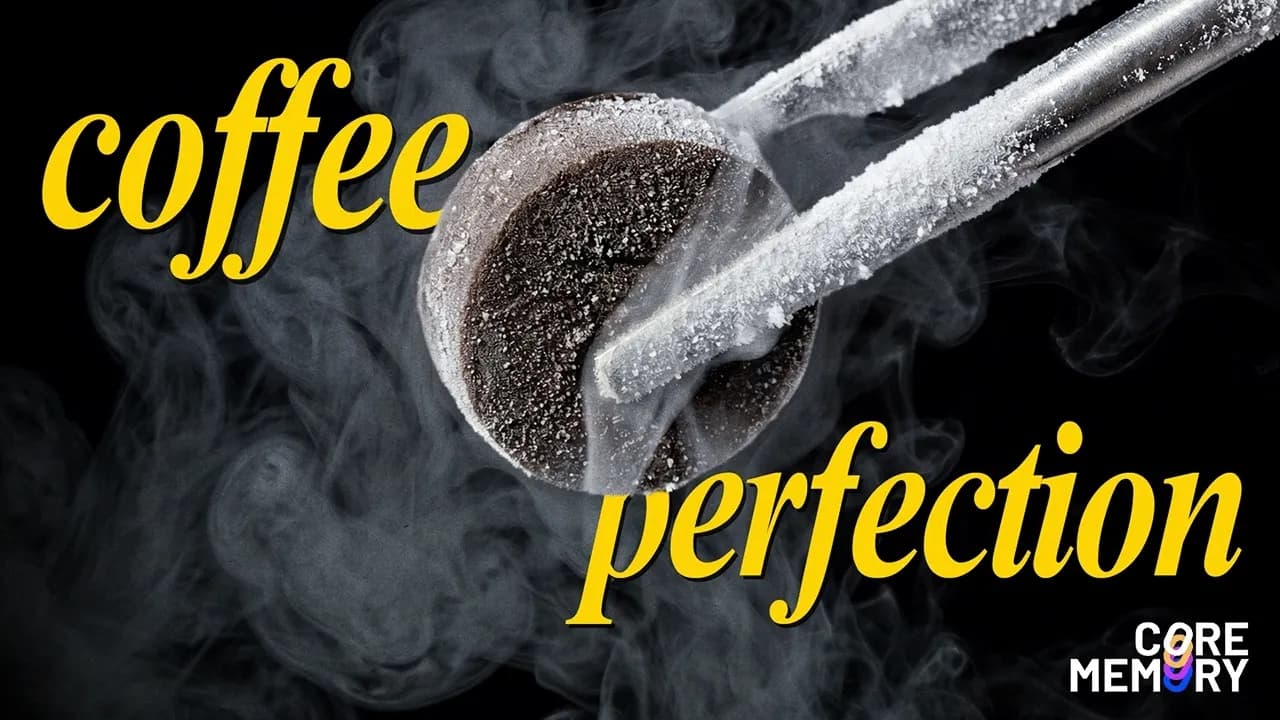
Cometeer uses beans from the best farmers and roasters worldwide. Approximately 900 pounds of freshly roasted coffee beans are processed. The beans are ground and brewed at 10x strength with advanced equipment. The coffee is flash frozen with liquid nitrogen at -321° moments later. This process locks in fresh flavor and aroma.
The frozen coffee puck functions like a super espresso shot that melts into 8 ounces of hot water. It can also create iced coffee, lattes, and espresso drinks. The capsules are fully recyclable. Spent coffee grounds are collected by Black Earth Compost for use as fertilizer. The capsules rinse clean and can be recycled with metal cans.
The first coffee tasted is George Howell's Alchemy, a medium roast blend from Brazil, Kenya, Costa Rica, and Ethiopia. A dark roast Guatemalan coffee from Huehuetenango follows, featuring fudgy dark chocolate notes. The El Salvador Santa Rosa is a single origin lightly roasted coffee described as tea-like, light, and delicate. The Finca Deborah Enigma Geisha from Panama is an extremely special coffee from a region known for highest quality Geisha coffees. The taster states they have never smelled or tasted coffee like the Geisha before.
Cometeer raised more than $100 million, with approximately $85 million invested in facility renovations. The facility can produce about 200 million cups per year. The secret room contains substantial stainless steel equipment.
Matt Roberts grew up in Gloucester. The team visits the Beauport Hotel, site of the original Bird's Eye plant. During the Saint Peter's Festival, the greasy pole competition occurs where third-generation Gloucester citizens attempt to run down a pole and grab a flag. People train for the competition in their backyards. A winner described it as a lifelong childhood dream.
Matt Roberts quit his job and started the company using a credit card while having four roommates. His roommates questioned his behavior as he spent time making iced coffee. The first four to five months before receiving angel funding were challenging.
Wetmore Hodges organized the General Foods Company and General Seafoods Corporation in Gloucester. He worked with Clarence Birdseye to develop the Birdseye process of freezing foods. Hodges negotiated the sale of his companies and the Birdseye process for $22 million before 1929, equivalent to approximately $451 million today. Kaiman Hodges, filming the segment, is Wetmore Hodges' great-grandson.
Jim Koch pioneered the craft beer industry and crowd funded the IPO for Boston Beer. Craft beer grew from non-existence 20 years ago to 27% of dollar sales. Specialty coffee is estimated to be about 15 years behind craft beer. Most people view coffee as brown bitter water requiring cream and sugar, similar to how beer was once viewed as water with foam.
Young people are drinking less alcohol. Caffeine is viewed positively for health and productivity reasons. The rise of the third space concept originated with Starbucks as locations between home and office. People drinking less alcohol are more interested in coffee. Cometeer is positioned to support this trend.
The Dive LD is an autonomous undersea vehicle from Anduril Industries, founded by Palmer Luckey. Anduril produces drones, planes, weapon systems, and software for autonomous systems. The Dive LD handles looking and listening tasks. The Dive XL is larger and handles classified missions.
Quincy, Massachusetts is outside Boston and has been an industrial hub for hundreds of years. It was a shipbuilding center in the last century. The US can barely produce ships currently. Anduril aims to produce modern autonomous ships without humans inside.
James helps run Anduril's submarine division and previously worked at Dive Technologies. Dive Technologies was acquired by Anduril in early 2022. The team works to ruggedize the original Dive LD concept. The mission occurs aboard the Encourager, captained by Jared.
The Dive LD panels are made of reinforced composite. Removing panels reveals small tubes protecting electronics and computers. The rest of the vehicle is flooded with water. The vehicle is manufactured in Quincy, with future production planned at a 150,000 square foot facility in Quonset Point, Rhode Island. The Rhode Island facility will have capacity to build up to 200 Dive LDs per year, compared to the current rate of approximately 12 per year.
The geophysical inspection suite includes five payloads. The side scanning sonar produces acoustic imagery of the seafloor resembling photographs, used to locate objects like undersea cables. The sub-bottom profiler identifies transitions between mud, gravel, and rock. The multi-beam echo sounder is used primarily for mapping. The magnetometer functions like a metal detector. A camera captures real pictures.
The Dive LD dives at 400 feet per hour. Lattice is Anduril's software platform that tracks autonomous systems with map information, hardware diagnostics, and mission tools. The vehicle operates at 20 meters altitude off the bottom, approximately 60 feet. Engineers and software developers can monitor the vehicle through Lattice.
The mission operated over a known feature showing rocks on the ocean floor. Acoustic imaging revealed two objects appearing to be old ship anchors on the seafloor. The data allows identification of new objects, investigation of specific items, and return to exact locations for closer examination or recovery.
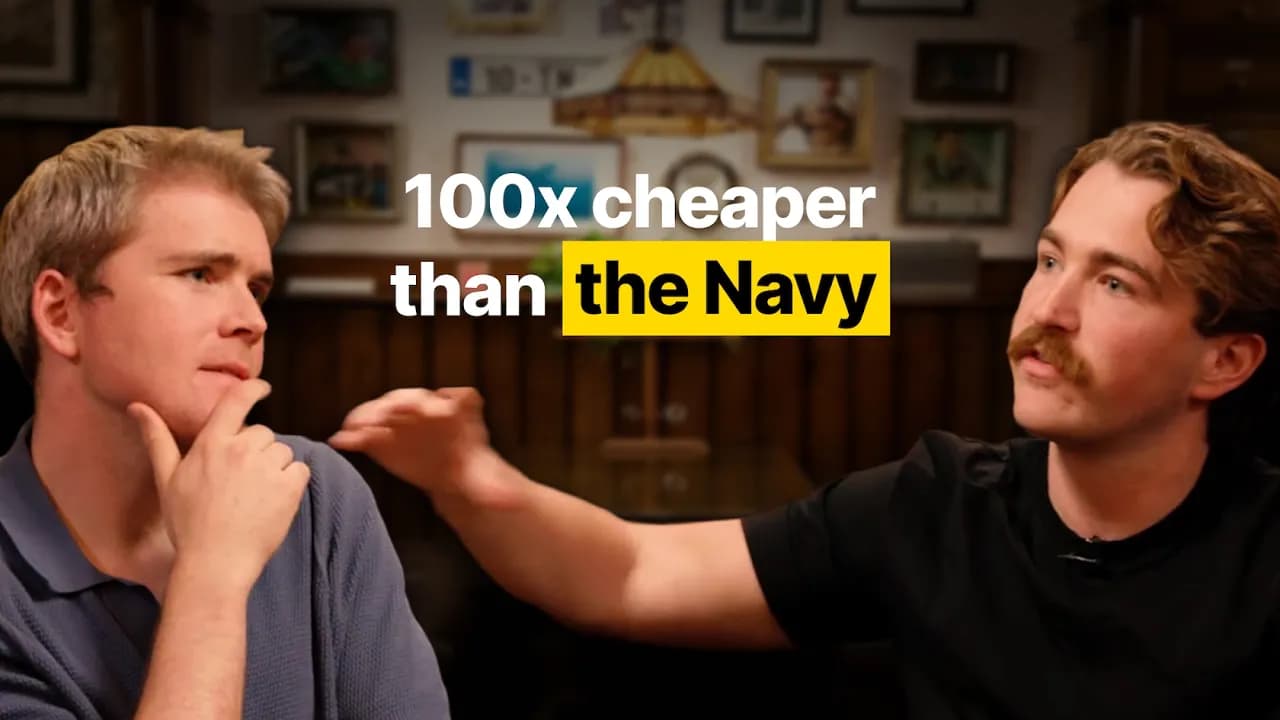
The Dive XL handles longer missions and carries more equipment. It was developed with the Royal Australian Navy as the Ghost Shark. China builds 200 boats for every one the US produces.
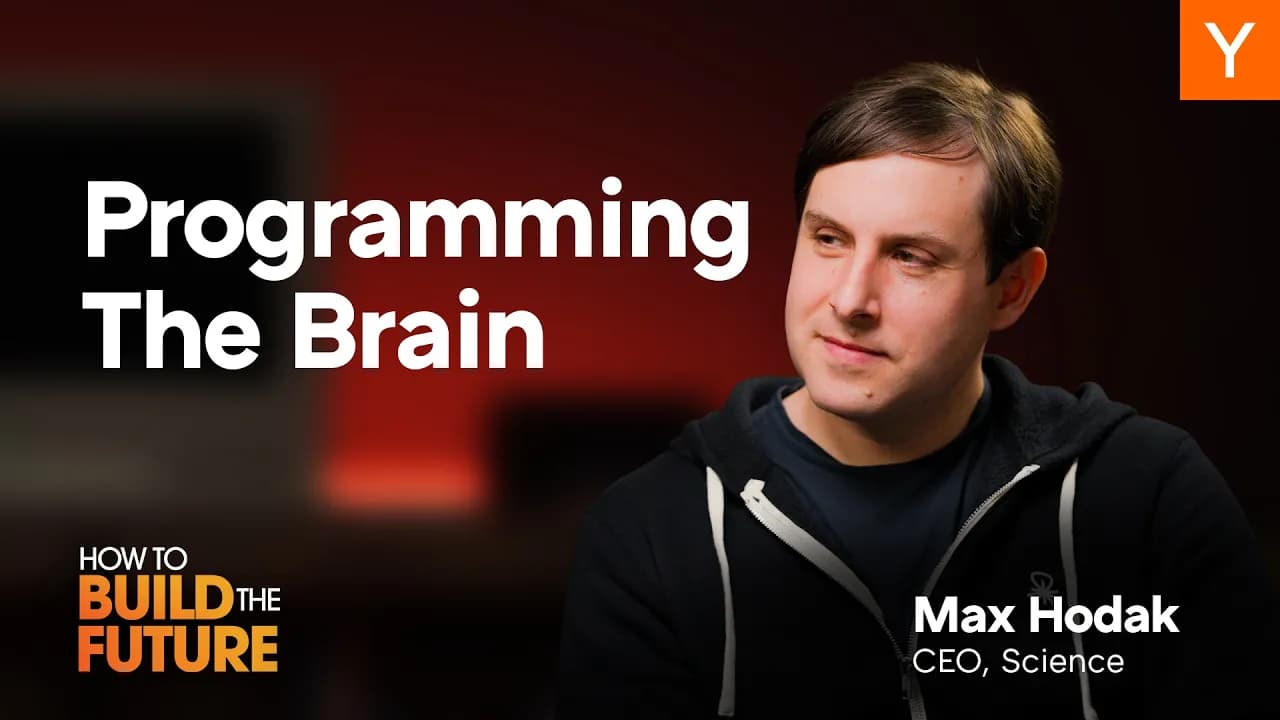
Vladimir Gavrilov is a physician scientist and CEO and co-founder of Big Search, the world's first intact human brain lab. He is from Croatia, holds a medical degree and PhD in neuroanatomy, and practices jiu-jitsu. Human brains are delivered to the startup's office for research.
Joseph Bocovich, called Joe, is a Croatian doctor preparing brains for a machine that restores molecular function. The brain will perform biological activities but will not be alive in a thinking or feeling sense.
Big Search aims to restore certain cells or molecular activity in dead human brains. The goal is to provide a new way to test drugs for brain diseases including Alzheimer's and Parkinson's. The approach addresses the translational issue of moving benchtop science into therapies. It is physically impossible to conduct experiments in living human brains.
Each brain requires individual vascular treatment. Infrastructure is inserted to interface with the brain's blood vessels. Artificial blood pushes fluid throughout the brain, providing nutrients, electrolytes, and oxygen. The team has artificial lungs, heart, and kidney in the system. No other entity is known to have a brain perfusion device.
Brains are named after superheroes. Three brains are present: one with Parkinson's, one with ALS, and one known disease brain named Tony. A drug against Parkinson's disease is being tested via syringe injection. The system records hundreds of data points per second including blood pressure, brain resistance against flow, and dissolved gases.
The equipment is constructed cost-effectively and appears scrappy but functional. The nutrient-rich fluid contains a concentrated protein solution extracted from Canadian night crawlers that carries oxygen. This worm blood is filtered and mixed to create final artificial blood for brain support.
These brains are clearly dead. They've been dead for hours. The brain is not firing and does not have EEG, so there's no consciousness. It's just the cells and molecules that are present in the brain doing their job. There's no higher-level thinking or consciousness—it's just the part of the brain that is doing the base functions of operation. The research starts from zero with brains that retain experimental capacity, which is now exploited for drug discovery.
Bexor grew out of research done at Yale. In 2019, famed neuroscientist Nenad Sestan, a Croatian MD PhD, stunned his peers with the release of a paper in Nature. It showed that he and Zvonimir could restore brain activity in pigs that had been dead for hours. Once the heart stops, brain cells don't instantly just die—it's a gradual process. The researchers discovered that if you take the isolated brain and put it in a particular environment context, you are able to harness that gradual decay and use it to do science that was otherwise impossible.
The work made scientists rethink their assumptions around how quickly brains deteriorate and the nature of death itself. There was a dogma that as soon as the heart stops, brain cells are gone. The team ventured into this new field and wanted to develop a tool, building the whole thing from the ground up.
In 2022, Nenad and Z started Bexon to take their research from the lab and turn it into the basis of a company. Nenad's parents didn't go to college and live in the same village. His mother received his Yale acceptance letter and asked whether she should let her son go to the United States because she didn't understand how good the school is. Nenad's mother would always say, "My Mercedes is in America."
The Mediterranean diet is misunderstood—people eat cheeses, sausages, and similar foods. It is a very family-oriented society. In Nenad's village, if you don't know how to play cards, you are finished and nobody will marry you.
Ten years ago, there were tons of people doing brain research, but nobody else had really bought into the idea that you could revive it in this way. Some of the most famous neuroscientists pushed Nenad aside and asked why he was doing that work when his other work was amazing. He wrote it because of the fear that if it doesn't work, everybody will be laughing.
Z stated that Nenad cried the first time they gave him blinded samples because he saw the cells coming back. For years, people on the team would cry and say this is never going to work and this is dumb, but they plowed through and kept on going.
When first starting this research, there were concerns about whether the brain is alive. The team spent a lot of time thinking before doing anything. If you have a chance to test a drug for Alzheimer's disease, where researchers cannot do pretty much anything, and you have a chance to speed up drug development and test safety and efficacy, who are you to deny people that opportunity? The key is to do it with a lot of thinking, reflection, and moral consideration.
Boston and Cambridge runneth over with biotech-minded humans thanks to their excessive number of top universities. It seems like everyone here has a PhD or two. Nerds are celebrated. Even the bike racks are shaped like molecules. The biotech startups here do not tend to move as fast or take as much risk as their Silicon Valley counterparts. The baggage of tradition can be self-defeating.
A few years ago there was a pandemic, and then there were mRNA vaccines that appeared out of nowhere. The speaker was a guy who did not want the COVID vaccine but does want research on mRNA.
This is Jake Becraft, the co-founder and CEO of Strand Therapeutics. His LinkedIn states making medicine move faster. He views mRNA as the future infrastructure of medicine. Founded in 2017, Strand was working on mRNA technology before the world knew it was a thing.
Jake moved to Boston to do his PhD starting in 2013. His PhD lab that he joined six floors up had a startup that had just come out of stealth called Moderna. mRNA is a very fancy way to deliver proteins into a cell. The M in mRNA stands for messenger because mRNA delivers instructions to your cells, telling them what proteins to make.
Becraft and his co-founders have long thought that they could use mRNA to create very precise medicines. If you have a cancerous tumor, they want to make a therapy that goes straight for the tumor and leaves the rest of your body alone. The goal is to get the mRNA to go into the tumors, have the tumors create a protein that the immune system will then recognize and come and kill those cells.
The tumors can be all over the body, deep inside the body, in the lungs, or in the liver, and the immune system should not attack any of the healthy cells. The approach is to program the messenger RNA to be able to say, "I'm inside of a cancer cell. I should actuate my program and cause this protein to be produced." But if it ends up in a liver cell or kidney cell, then nothing happens—the program is inert and no protein that causes the immune system to respond is going to be produced.
They spent 6 years before the company started working on that tech, and then spent the last 6 years really perfecting it and now taking it into patients.
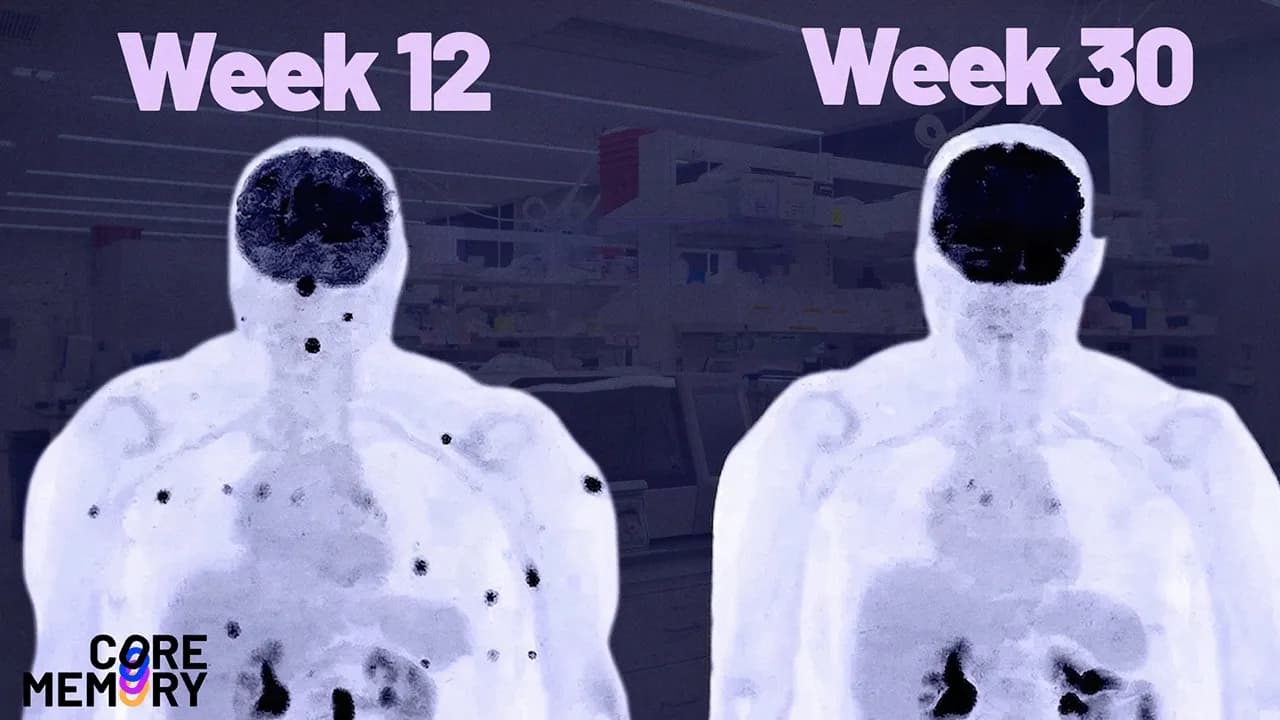
Strand's first program that's in the clinic right now has treated about 35 patients so far, most of whom have stage four melanoma resistant to existing therapies. One patient had stage four aggressive metastasis that started with melanoma on their skin and then metastasized into their bones, muscles, and lungs. The team injected the drug into a single one of these tumors.
Every 3 weeks the patient comes in. Between one of the injections, all of the tumors disappeared. When this patient entered the trial last summer, it was probably unlikely they were going to make it to Christmas. Instead, at Christmas last year, they had no detectable tumors.
Inside the labs, Strand is building the machinery that could make mRNA therapies mainstream. They use an unstained slide of a very thin section of a patient tumor biopsy. This is combined with a fully automated robotic slide stainer that dispenses dyes and special reagents onto the slides. The dyes identify key biological components in the tumor. The staining process can take 3 to 12 hours, but this is all automated.
Once the slides are stained, they use a high-throughput digital scanner. Different colors identify different regions in the tumor. This allows researchers to see where the drug is going in the tumor, which cells it is affecting, and if the tumor is shrinking in real time.
Since day one, Strand knew they needed to invest in manufacturing and figure out how to make these drugs scalable. If a drug costs $50,000 to manufacture to treat cancer, that will be hard to get to as many patients as wanted. For the current trial, the drug costs about $100 to $200 per dose. Manufacturing costs will hopefully come down even further with time. During the pandemic, mRNA vaccines were made at scale for about $100 and doses were built for billions of people.
Strand does not view itself as an oncology company but as demonstrating success in oncology to start in order to help develop this new era of medicine. Strand's early results are promising, and the company sits at the intersection of biotech's most important recent breakthroughs. The issue is proving that the early results can be turned into something lasting. With a bit of luck, the company will be a success and the rest of us will have personalized cures.
Keep Core Memory in your library
Save the videos and channels worth coming back to, and find them again in one place.