The company building underwater drones for $50,000
In a Nutshell
Ulysses is building modular underwater drones priced at $50,000—100x cheaper than the $5 million vehicles the US Navy currently buys—by vertically integrating expensive components like inertial navigation systems and sonar to scale production to thousands of units annually. The company pairs autonomous surface vessels with underwater vehicles to enable persistent ocean operations for seagrass restoration, offshore wind cable inspection, and naval mine countermeasures without relying on $300,000-per-day crewed ships. This cost reduction transforms ocean work from episodic, labor-intensive missions into continuous robotic operations across defense, energy, and environmental sectors.
These notes were generated by AI and may contain inaccuracies.
Ulysses builds robots to solve critical tasks in oceans. Will O'Brien is cofounder and president. The company started with seagrass restoration and now expands into seabed mapping and port security. O'Brien's goal is making ocean operations cheap and routine to support new industries. Saltwater and ocean environments are hostile to robots.
Guinness established an in-house research and development team in the 1890s. The team hired smart people to find problems to work on, similar to Xerox PARC. William Sealy Gosset developed the Student's t-test for small-sample statistics while working at Guinness. The test addressed quality control issues with lipids in hops. Gosset published under the pseudonym "Student" to avoid competitors learning about their research capabilities. The Student's t-test remains named after this pseudonym.
Project ACORN (Advanced Cans of Rich Nectar) developed the widget for at-home Guinness consumption. Initially called Project Dynamite, the name changed due to shipping concerns in the 1980s. The widget was voted above the internet in 1990s top-100 inventions of the 20th century.
Guinness created marketing campaigns in Nigeria, producing local films that made the brand popular. Nigeria became Guinness's top market. The company won more Cannes Lion advertising awards than nearly any other company. The iconic "Guinness is Good for You" campaign and toucan imagery remain notable.
Guinness quality standards include seven criteria: crafted presentation, consistent freshness, counter visibility, correct gas, correct temperature, clean lines, and clean glassware.
O'Brien comes from a family of entrepreneurs. His father is an entrepreneur, mother had her own business, and both grandfathers ran businesses including a pub and farming operations. Business was the primary topic of conversation at home. O'Brien appreciates technology companies like Stripe and homegrown businesses like Guinness.
Ulysses builds robots for critical ocean tasks. The company started three years ago based on the observation that autonomous systems and robotics would handle increasing shares of world GDP and critical work. After examining air, land, and sea domains, sea became most interesting, particularly undersea applications. Many valuable underwater jobs were either not being done, not done at scale, or not affordable.
The company began with seagrass restoration after one cofounder met a marine biologist during a surf trip. The biologist described manual underwater tasks including taking photos, planting seeds, and gathering water samples. This led to developing underwater equivalents of aerial drones for ecosystem restoration tasks.
Initial tasks included the full spectrum of ecosystem restoration: mapping the seabed, understanding existing conditions, collecting seeds from flowering plants, and planting them in restoration areas.
Current projections indicate many critical fish stocks could be wiped out by the 2040s. Billions of people rely on fish as primary protein sources or income. Overfishing and habitat loss drive these declines. Ecosystem restoration rates are 100 to 1,000 times slower than loss rates.
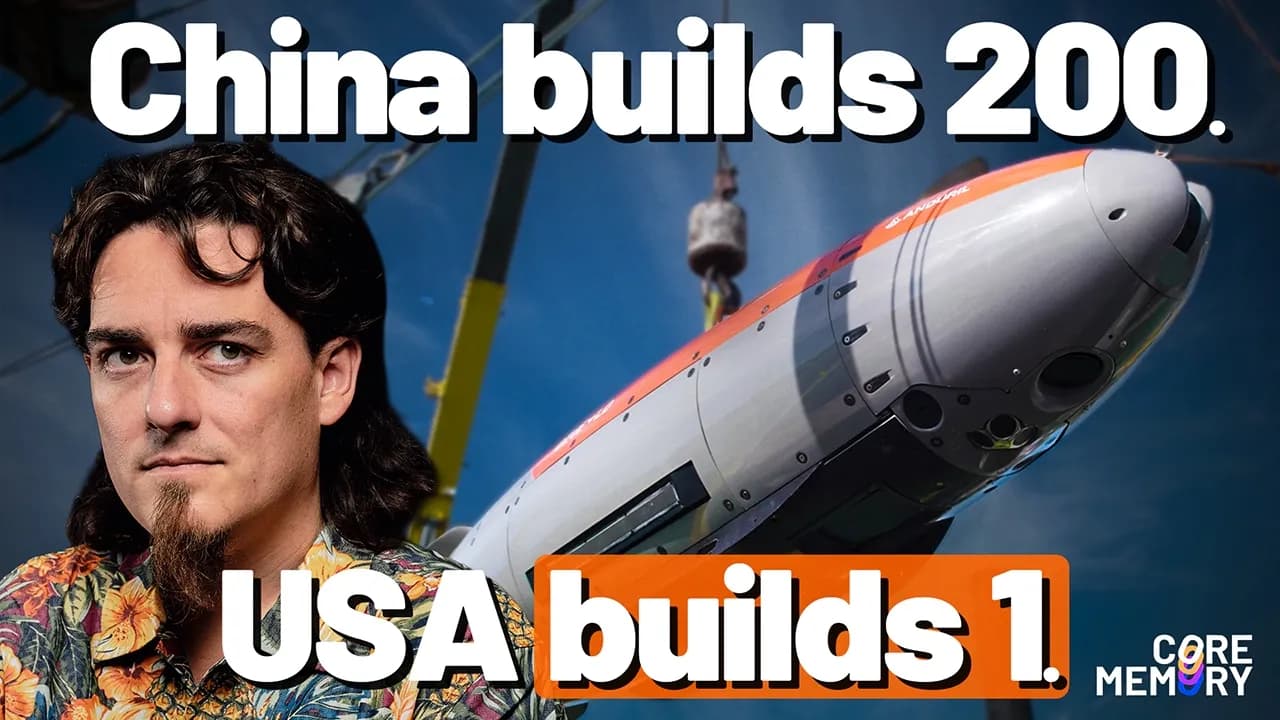
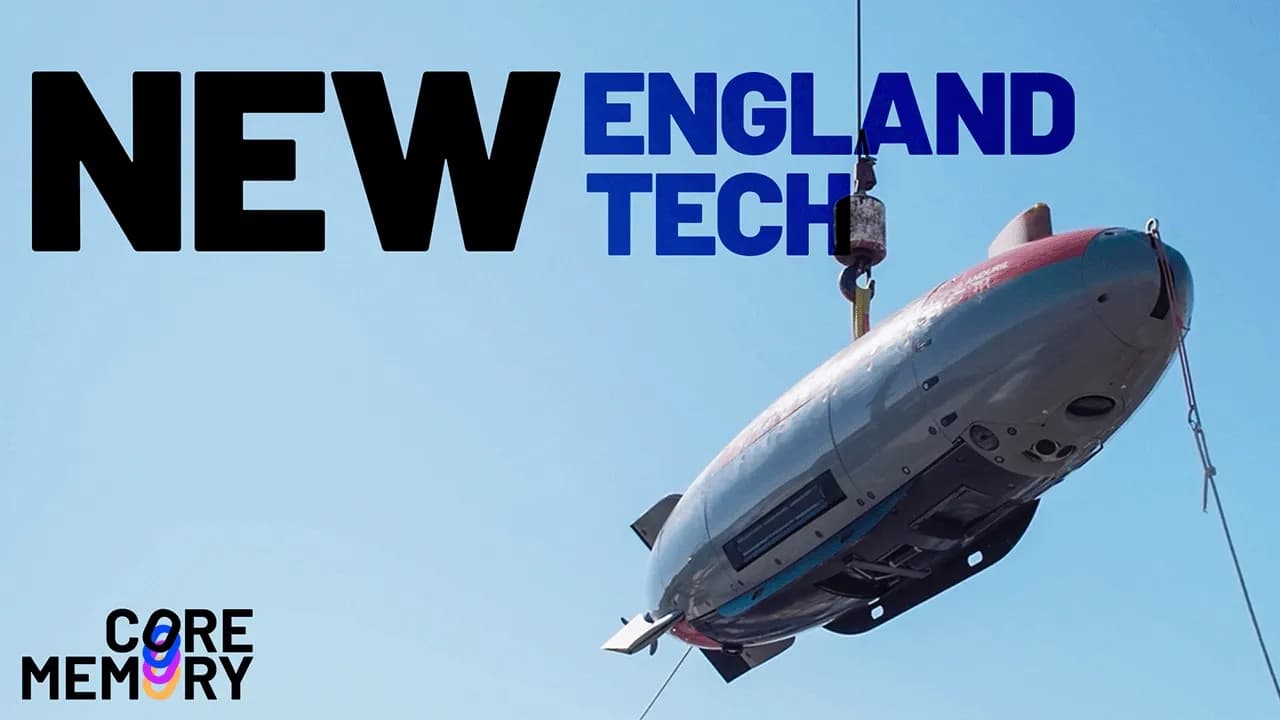
From first principles, building an ocean robot company requires full XYZ access. This needs a surface craft for transit due to lower drag, with underwater vehicles deployed for specific tasks. Ulysses developed the Leviathan autonomous surface vehicle with 2,000 nautical mile range. The Mako underwater vehicle performs scanning and robotic manipulation tasks.
Previous underwater vehicles primarily gathered data rather than performed robotics. Mako's design enables physical manipulation underwater. The vehicle uses modular "Lego building blocks" architecture allowing customization: extra battery packs for 150+ nautical miles endurance, different rear thrust modules for speed, stereo cameras for 3D imaging, and sonar modules for bathymetric mapping.
Seagrass covers 2% of seafloor but holds 20% of ocean carbon. The ocean is the world's largest natural carbon sink. About 20% of commercially important fish stocks rely on seagrasses as habitat. Seagrass grows along coastlines of Ireland, UK, California, East Coast, Australia, and Great Barrier Reef. Ulysses has projects in Virginia, Southern Florida, California (Sausalito), and other locations.
The technology platform built for seagrass restoration applies to other sectors without requiring new R&D. The core platform includes under-vehicle sensing stack, navigation stack, autonomy, and surface vehicle capabilities that serve energy and defense sectors.
Restoration requires mapping to understand where seagrass exists and doesn't exist. Habitat suitability models use depth, water clarity, and other features to identify good restoration areas. Seeds are collected from flowering plants and deposited in identified locations.
O'Brien grew up by the seaside with his mother putting him in a wetsuit and sending him to the beach as a babysitter. He describes himself as a pro-growth environmentalist and eco-pragmatist. His vision includes a growing economy supported by a thriving biosphere, with carbon removal as a core enabling technology.
The ocean represents a true frontier with more of Mars mapped than ocean depths. Less than 100 people work on ocean exploration daily. O'Brien's thesis parallels SpaceX: lowering costs enables new applications like Starlink. Similarly, reducing ocean operation costs unlocks new technologies and industries.
Frontiers develop through predictable stages. Initial expedition periods involve high-value activities (fur trading in American West, defense satellites in space). This progresses to persistent settlement with infrastructure development (railroads in American West, reusable launch in space). For maritime applications, persistent robotic systems enable new persistent operations.
Environmental regulations create significant barriers. A major seagrass restoration project in an endangered Australian location has been blocked despite potential to become the world's largest restoration effort.
O'Brien learned Mandarin in Shanghai at age 15-16. During a night market visit, he and companions were falsely accused of shoplifting in what appeared to be a scam targeting foreigners. They were taken to a police station and required to pay fines via Western Union, as instant money transfer wasn't available in the 2010s.
Ulysses pursues vertical integration with iterative development. The first vehicle contained 80% off-the-shelf pieces. Current generation five development brings more components in-house. The vehicle breaks down into mechanical, electrical, and software systems. Software development occurs entirely in-house from ground up rather than building on existing primitives.
The modular architecture requires custom development that differs from other underwater robots. Hardware actuation frameworks are largely eschewed in favor of ground-up development.
The vehicle contains sensors and internal components. Sonar systems are currently purchased off the shelf, though the company is hiring and building an acoustics team to develop in-house sonar systems for the following year.
The navigation stack includes inertial navigation systems, which are currently purchased off the shelf. The company has internal prototypes under development to build these systems in-house and replace existing suppliers. There are different approaches to building inertial navigation systems, including fiber optic gyros and MEMS sensors such as accelerometers found in smartphones.
The initial prototypes aim to deliver systems at a fraction of the price of the expensive, long lead time supplier currently in use, while building on a supply chain that can scale.
The decision to build inertial navigation systems in-house is driven by scale and lead time considerations. The company projects a need to build millions of underwater drones to fully manifest its vision. Currently, approximately 20 million aerial drones are built annually, while only 1,000 to 2,000 underwater drones are produced. This scale requires leveraging supply chains from electronic vehicle, drone, and consumer electronics industries that manufacture in the millions, rather than maritime supply chains.
The company plans to open a facility next year that could become one of the largest underwater drone factories in the world by number of units. Current demand exceeds supply capacity, with contracts being declined. The primary daily concerns are building a factory and vertically integrating components of the stack.
One supply chain example revealed a supplier producing only 100 to 200 components per year, which is insufficient for projected production of several hundred vehicles next year, potentially scaling to 1,000.
As companies scale, bottlenecks emerge in supply chains. The approach involves identifying these constraints as opportunities for vertical integration. The strategy mirrors patterns seen with Stripe and other companies, where initial prototypes may use components from existing suppliers, but scaling reveals intrinsic bottlenecks that create opportunities for resolution.
The investment thesis includes recognizing shortages such as transformers, leading to companies like Giga that developed manufacturing capabilities using YouTube resources and Chinese manufacturing methods.
Manufacturing is a core focus, with one cofounder dedicated primarily to manufacturing. This mirrors the approach at Anduril, where one cofounder focuses almost entirely on manufacturing.
Saltwater and the ocean present hostile conditions. Corrosion can be mitigated through coating and anodizing metal surfaces. Pressure is a significant challenge, with full ocean depth defined as 6,000 meters, though the ocean reaches approximately 10,000 meters at its deepest. Current operations are in the 1,500-meter range, with crush testing to 2,200 meters. Most economic activity currently occurs within the 1,500-meter range.
Communications represent the biggest operational challenge underwater. Acoustic communications provide very low bandwidth of approximately 10 kilobytes per second over about five kilometers. This necessitates significant local processing and autonomy, as the vehicle must operate independently for extended periods.
The surface vehicle serves as a critical component of the system stack. It enables pickup and deck placement for wireless charging, provides internet connectivity through Starlink for live diagnostics, and facilitates interventions when needed. Future plans include the surface craft performing repairs with replacement modules in a vending machine style.
The surface vehicle itself is autonomous and Starlink-connected.
The vehicles contain approximately 100 times more onboard compute than other autonomous underwater vehicles, including a full NVIDIA 5090 with an Intel CPU. This computing power is essential for the autonomy stack, enabling substantial local sense-making.
Current autonomy capabilities are relatively rudimentary, with tasks including mapping areas by drawing polygons that auto-generate lawnmower tracks, with basic obstacle avoidance for rocks or other objects. The system runs the full loop of sensing and deciding locally on the device's GPUs.
Success has been achieved in two primary domains. The first year focused on nature applications. In the second year, contracts were secured with the US Navy for mine countermeasures and with an offshore wind developer.
The offshore wind contract addresses concerns in California about floating offshore wind installations. Power cables in the water attract abandoned fishing lines that catch dolphins and whales. The system maps cables daily to assess structural integrity and detect caught lines, with plans to develop an implement for cutting fishing lines from cables.
Underwater vehicles sell for as little as $50,000 to navies, compared to the most common autonomous underwater vehicle currently purchased by the US Navy at approximately $5 million. Services are sold to the offshore industry rather than direct vehicle sales.
The surface vehicle costs between $500,000 and $1 million depending on configuration.
Primary customers are navies and offshore energy companies. Both involve lengthy procurement processes including health and safety requirements, master services agreements, contract vehicles, and clearances. Despite extended sales cycles, venture-scale companies are well-suited for these markets due to the ability to invest in R&D and the sticky nature of contracts once secured.
Previous experience selling to government through a scooter-sharing startup demonstrated that government contracts provide sticky customers and enable technology deployment for public benefit. The thesis is that public-domain technologies represent significant opportunities, as the shift of talent from government to technology companies means an increasing share of previously government-reserved functions will be handled by private companies.
The Department of Defense represents a reliable and bankable customer once contracts are secured. Decision-makers at operational levels are well-informed, and decisions are apolitical and sober. When the Navy identifies solutions at 1/100th of current costs, the contracting process, while lengthy, results in reliable revenue.
Current ocean work typically involves chartering surface ships at several hundred thousand dollars per day. Work is performed by crews operating tethered vehicles through remote operation. Labor constraints including eight-hour work limits, management overhead, ship captains, mates, cooks, and medical personnel result in massive crews and high daily costs.
Autonomous operations eliminate labor costs, enable 24-hour operation, provide Starlink control, and allow operation in worse sea conditions without crew seasickness concerns.
The focus is on building general-purpose underwater robotic platforms rather than weapons systems. This differentiates from companies like Saronic, which focus on surface vessels, and Anduril, which emphasizes weapons applications.
The technology that unlocks the ocean at scale transforms it from a $3 trillion economy into a $10 trillion-plus place for commerce.
Undersea cables represent a major vulnerability. This infrastructure is totally asymmetric and represents one of the most concerning weak points. There is work being done in the undersea cable domain, though details remain top secret.
The maritime domain needs to move away from episodic, singular campaign approaches toward creating permanent settlements, similar to the approach in space. A key component would be a persistent defense network around all critical waterways.
A critical choke point exists off the west coast of Ireland, where all cables running from the US into Europe cross. Similar choke points exist in Asia and the Middle East. These areas should be persistently monitored 24/7, but manual monitoring is much too expensive.
Data centers are fragile and fiber is even more fragile. A data center can be taken offline by cutting the fiber with garden shears. There are many fewer undersea cables than people assume.
Fiber maps are not publicly published. One method to locate cables is to drive along coastlines looking for "call before you dig" signs. In Oregon, a street called "Five Nines" indicated a data center location, as the name references the 99.999% uptime standard.
Until diverse providers like Starlink offer alternatives, cutting fiber remains a direct way to take infrastructure offline. Current undersea cable infrastructure is in a "Wild West" state requiring protection. In a potential AI "foom moment," there might be scenarios where individuals would need to target data centers.
There are approximately 200 undersea cables today. They are typically taken out by anchor draggings, mostly accidental though some are not accidental. Targeted demolition of many cables is not particularly difficult.
Undersea cables get snooped and tapped. It is not hard for China to listen to these cables and read the traffic. The cables are the least fortified infrastructure - much easier to access than hardened facilities in downtown San Francisco, but very easy to monitor on remote locations like Five Nines Street in Oregon. Patrols are needed at these cable locations.
Keep Cheeky Pint in your library
Save the videos and channels worth coming back to, and find them again in one place.