Inside the Tower; Unmanned; Wonder of the World | 60 Minutes Full Episodes
In a Nutshell
The 60 Minutes episode examines the preventable 2024 collision of American Airlines Flight 5342 and an Army helicopter near Reagan National Airport, killing 67, due to ignored controller warnings, congested airspace, and inadequate helicopter separation—prompting FAA reforms and ongoing close calls. It highlights Ukraine's drone revolution leveling the battlefield against Russia with cheap, innovative sea, ground, and air drones causing 80% of casualties, lessons US forces are adopting amid their own conflicts. The episode concludes with exploration of Vietnam's Hang Son Doong, the world's largest cave, discovered in 2009, spanning 5.6 miles and 65 stories tall, formed over 2.5 million years.
These notes were generated by AI and may contain inaccuracies.
Last year's collision of a passenger jet and Army helicopter in Washington DC killed 67 people. First time hearing from an air traffic controller who worked inside the tower. Pressure to get more planes in and out. Continuing problems at that airport. "Why do we always have to wait until people die to take action?"
It was a week of chaos at airports across the country. Gridlock in Washington left TSA workers without pay, triggering four-hour security lines in some of the nation's busiest airports. Last Sunday, a commercial jet crashed into a fire truck while landing on a runway at New York's LaGuardia Airport. Dozens were injured and two pilots were killed. Air traffic controller on duty said they were dealing with an earlier emergency and soon after the accident said, "I messed up."
Last year, American Airlines Flight 5342 and an Army helicopter collided over the Potomac River near D.C., the deadliest aviation disaster in almost a quarter century. Air traffic controller inside the tower saved the day of that collision. Controllers at Washington's busiest airport have been warning of danger for years. System pushed to the breaking point, shattered families left to pick up the pieces.
In Southern Maryland, seven widows whose husbands were on Flight 5342 agreed to share their story together for the first time. The men, all work buddies, met up with friends in Kansas for a week of duck hunting. The women shared photos and the excitement their husbands felt.
Kayla Huffman's husband, Alex, got home from work and said, "before you say anything, it's already paid for." She asked, "when do you leave?" He was so excited it looked like Christmas morning. Alex posed with the crew and their trophies.
Bridget Johnson was married to Steve for 19 years. Kylie Pitcher's husband, Jesse, owned a plumbing company. Ashley Stovall's husband, Mikey, was a steam fitter. So was Charlie, Heather McDaniel's husband. Heather met Charlie on the softball field; he said, "I knew I was going to marry that girl." She gave him a run for his money.
When the hunting was over, the men headed to the airport. Sarah Boyd's husband, John, texted when he boarded, "boarded bourbon. Boarding in hand." Right before landing, "about to land this bird."
Jill Claggett was tucked into bed with her young daughters, waiting for her husband, Tommy, when the phone rang. She slid out of bed, turned on the TV, and saw the explosion. "Fire command, the accident happened in the river."
Families raced to the airport as divers searched the icy Potomac. By morning, told the rescue mission was over. "I literally screamed, what am I going to do?" Friends called at 5 a.m.: "is he okay?" She said, "no, he's dead. He's gone. And it's no longer a rescue. It's a recovery, which means there's no survivors. None."
As wreckage was pulled from the river, federal investigators began a year-long forensic autopsy. Video shows American Airlines jet pulled up just before colliding with Army helicopter.
"There were obvious cracks in the system. There were obvious holes."
Emily Honoka, former air traffic controller at Ronald Reagan Washington National Airport (DCA), shift ended hours before crash. Speaking for first time about stress conditions.
"Frontline controllers ringing that bell for years saying, this is not safe. This cannot continue. Please change this. And that didn't happen."
For over a decade, controllers warned FAA that tempo of passenger jets and beehive of Army, police, and hospital helicopters near DCA was a problem. "It's a recipe for disaster."
NTSB confirms between 2021 and 2024, 85 near midair collisions between helicopters and commercial aircraft at DCA reported to FAA. 60 Minutes obtained documents: one day before fatal crash, two separate passenger jets took sudden action to avoid Army helicopters. Warning signs were there.
Firefighters not alone. Controllers formed local safety councils. Every safety report compiled with data to back recommendations. Many recommendations made, never went far.
DCA unique: owned by federal government, daily flights determined by Congress. Since 2000, lawmakers added at least 50 flights to already congested airport, approved another 10 in 2024. Some hours overloaded beyond capacity.
"Was there pressure to get more planes in and out? Yeah, there was definitely a pressure. If you do not move planes, you will gridlock the airport."
DCA moves 25 million passengers a year, 10 million more than intended capacity. Location near heart of DC popular but problematic. Restricted airspace shields White House, U.S. Capitol, government buildings, funneling planes and helicopters into same narrow corridor over Potomac.
Hinoka showed map: only three short runways, none parallel. Runways intersect, everything connected, no independent operation.
Main runway, Runway 1, busiest in country, over 800 flights a day, one every minute. Controllers relied on squeeze play: everything dependent on aircraft rolling, slowing; very close operation. One going up, one coming in at same time, common at DCA, not normal at other airports.
New controllers from other facilities say "absolutely not," withdraw from training; about 50% when she was there.
Year after crash, nearly one-third controller positions in DCA tower unfilled. Surprising how close aircraft were; accepted to make airspace work. Worked until it didn't.
January, NTSB determined midair collision preventable. 388-page report cited systemic failures: ignored warnings, helicopter route designed with only 75 feet vertical separation in some parts between helicopters and jets.
Tim Lilly, 20 years in Army flying Black Hawk helicopters down Potomac near DCA. "I flew these routes hundreds of times."
Night of crash, Black Hawk crew relied on visual separation: looking out window to avoid jets. Pilot must positively identify and maintain constant surveillance, impossible under conditions, especially with night vision goggles limiting view.
"Bright lights like in Washington DC area wash everything out through goggles." NTSB simulation showed green circle of pilot's view; hard to distinguish airliner from ground lights. Goggles limit peripheral vision.
Crew on training mission didn't see Flight 5342 until too late. Proper way: constantly scanning, moving head side to side.
Why training in busy airspace? Military: mission area, need to train. But training environments should be nowhere near commercial airliners.
Tim Lilly advocating changes. His son, Sam, first officer on Flight 5342, one of 67 killed. "Never thought to warn him about helicopters because didn't realize how far safety margins had slipped."
"This was a system that failed the people on the aircraft, on the helicopter, in the air traffic control tower."
Jennifer Homendy, NTSB chairwoman, suggested 50 safety recommendations.
"If everybody knows those close calls are dangerous, then why didn't anybody step in? The air traffic control tower was saying we have a real safety problem and nobody was listening. It was like somebody was asleep at the switch or didn't want to act. It is a bureaucratic nightmare."
Post-accident, FAA moved some helicopter routes away from DCA, ended visual separation. This month, expanded ban to busy airports nationwide. Transportation Secretary Sean Duffy secured over $12 billion to overhaul air traffic control system.
Since crash, at least four times aircraft and helicopters too close, triggering safety reports. "It is unconscionable that we are having to be here right now."
Families advocating for aircraft surveillance technology on Capitol Hill. Homendy: if FAA and lawmakers don't move quickly, clearing path for another disaster. "Most of them fly in and out of DCA. Why do we always have to wait until people die to take action?"
When America went to war with Iran last month, US military faced enemy using mass-produced drones. Same weapons used in Ukraine, some supplied by Iran to Russia. Unmanned, remotely controlled drones transformed Ukrainian battlefield, inflicting ~80% of combat casualties on both sides. Technology revolutionary, evolving rapidly. US military learning lessons from Ukraine.
Forget everything you think you know about warfare. Traditional front line expanded to 10-mile-wide kill zone; anyone spotted by drone hunted down.
Frankenstein tanks retrofitted with cages, mesh to deflect drone strikes. Netting covers roads to catch drones. Drones launched with miles-long fibre-optic wire spools to evade jammers, leaving digital spider's web.
Beside frozen lake, Ukraine's security service showed Sea Baby sea drone, like fishing boat with outboard motor. Payload: 2,000 kg explosives, enough to take out Russian warship. Costs ~$300,000; destroyed warships costing tens of millions. Ukraine used to sink/disable 11 Russian vessels.
"Which one is more useful, a warship or a sea drone? Sea drone... hard to destroy, smaller. Better to have 10 ships like this than one big one."
"Necessity is the mother of invention."
Oleksandr Komyshin, former CEO of Ukraine's railways, recruited by Zelenskyy to architect drone program. Boosted production from 2,000 to 4 million drones a year. Cheap, fast, efficient; levels battlefield for outnumbered Ukrainians.
Data-driven war, numbers game. Count drones used, efficiency, cost to kill per Russian: less than $1,000 now. "That's why they send so many people to die... They don't value them. Would you want to be in Putin's shoes? No. Strategically, he lost."
Ten retired US generals agree Russia not winning despite territorial gains; Ukraine drawn into stalemate with drone help.
Obstacle course for drones. Military set up drone training academies. Ground drone with 50-calibre machine gun held off Russian attack for 45 days. Three Russian soldiers surrendered to robotic drone.
"Main idea: send robot, not risk human life. Human life most important."
Ukraine makes >95% own military drones. Roman Tikhachenko, former brewery engineer, founded Tencor; developed armoured evacuation drones saving hundreds of lives. Works with end users (frontline soldiers).
Same drone base mounts 40mm grenade launcher, controlled from bunker hundreds of miles away. Innovation cycle: ~1 week from front line feedback to new version.
Russians innovating too; equilibrium in drone arms race.
Airlogix makes aerial surveillance drones; production at >20 sites (bombed twice by Russia). Secured >$1M from American fund run by former US Marines William McNulty and Lenore Karafa. Investors: wealthy Ukraine supporters.
"Service, patriotism, democracy. Mission. Ukraine takes all those boxes... fighting for what NATO was created for."
NATO exercise in Estonia: 1,000 personnel defeated by drone operators, some Ukrainian. "Revolution in warfare. In every war, innovation from horses to tanks... US, allies must learn from Ukraine. Risk of losing supremacy if not adapt."
US military not replicating Ukraine drones but tapping innovation passion. At Wiesbaden garrison in Germany, the Forge drone lab open to any service member.
"Adding culture of innovation... Unlimited innovation potential. If you can think of it, you can make a drone do it."
Captain Ronan Sefton deployed to Germany post-2022 invasion, trained 8,000 Ukrainian soldiers. Ukrainians taught Americans: more drones everywhere for realism.
Went to senior commanders: "changing warfare, implement now, scale it."
Now on Army's Ukraine Lessons Learned Task Force. New tech doesn't make traditional firepower obsolete; integrate drones with howitzers, Abrams.
"They learned through blood. We will learn additional lessons, perhaps through blood, but it will make us better."
Day after interview, US went to war; Iranian drones flying. First Americans killed targeted by drone. US learning in blood like Ukraine.
Next breakthrough: drone swarms like bees. "Pretty scary."
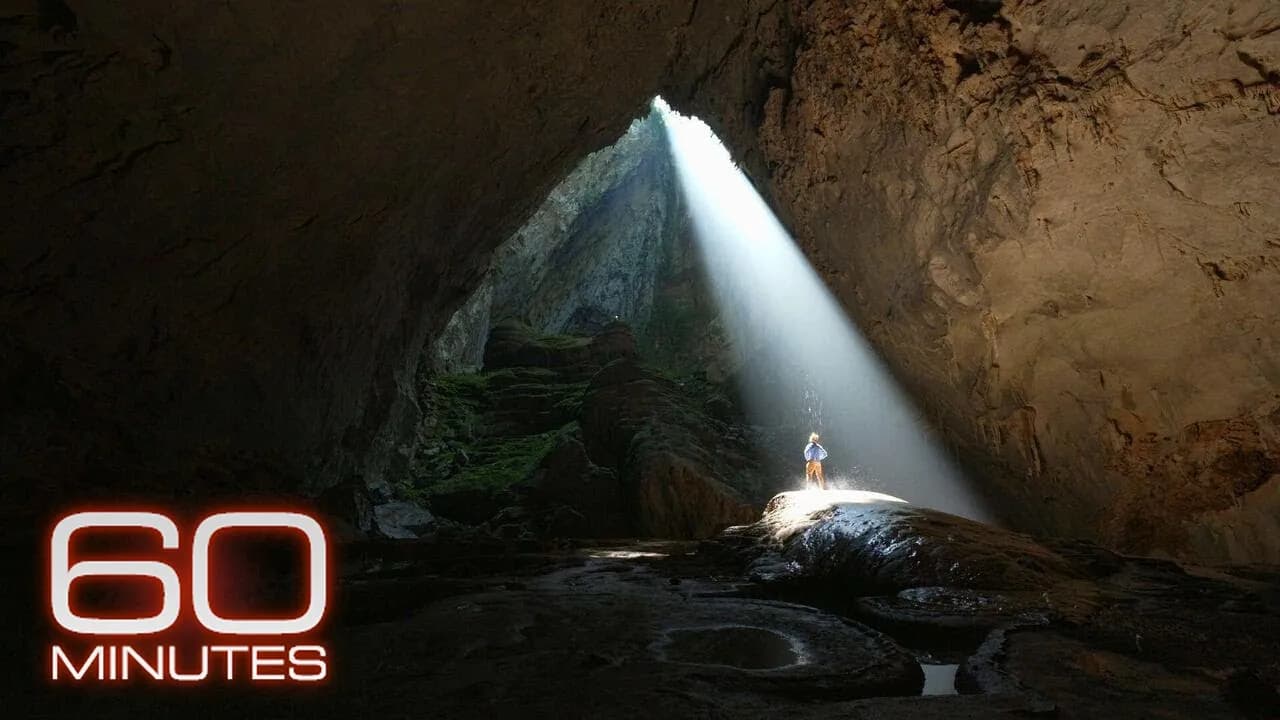
In 2009, revelation of largest cave passage in world in Vietnam: Hang Son Doong (Mountain River Cave). British explorer Peter McNabb led first team through epic underworld caverns height of skyscrapers. McNabb to caving as Armstrong to moon.
Showed preview: sunbeams cascading 120 stories from ceiling break, groundwater slipping like rain, rock reflecting sound.
Not many stood in space transcending time. Reward for journey beginning days before.
Only way to Son Doong: day-and-a-half trek on foot, party of 53 (mostly porters with camping/TV gear, safety/climbing experts). 20 river crossings through limestone, essentials for caves.
Slender center of Vietnam, Chu Son Range between Laos and South China Sea. Following Ho Chi Minh Trail through jungle with tigers, plentiful leeches.
Leading explorers were Howard Limbert, whose work in Vietnam over 30 years discovered 500 caves, and Peter McNabb, whom Limbert sent to be the first in Son Dong. I find it an adventure going exploring and not quite knowing what's around the corner and just sort of finding your way through. Things reveal themselves like big chambers, big passages or tight narrow bits, beautiful formations. There aren't a lot of places on Earth that you can discover for the very first time. No, you have to look pretty hard for them.
You have to look pretty hard for the entrance to Son Dong. You'd hardly notice but for the writing on the wall proclaiming the miracle of Ho Khan. In 1990, Ho Khan, a villager, discovered this entrance after he sheltered here from a storm. He told us, > I was collecting wood. I saw a sinkhole and I felt something strange. The strange feeling was wind blowing out of the ground. Cavers know that's the breath of a tremendous cavern.
In 2000, the British cavers asked young Ho Khan to show them, but it took eight years. He'd lost it in the trackless jungle. In 2008, I finally found it, he told us. In 2009, they started exploring. That exploration began here. We're just inside looking back toward the entrance above. The first obstacle is a spectacular 30-story wall that our climbing team showed us how to descend. Can you step to the left side? Darkness would be nearly total, but we lit it so you can see.
Peter McNabb was the first to do this. In 2009, he and four others on his team were dropping into darkness. There's an obvious big black hole where you're heading towards and you just sort of skirt around and look around and find this way's pretty good, this way works. Quite often you get stopped, can't get down here. You just basically feel your way through the cave by trial and error. You had no idea... None whatsoever. ...what was beyond the light on your helmet. Yeah, no, we didn't at all. Every corner you went round was completely new, completely exciting, and it just kept getting better and better as you went into the cave. It was absolutely spectacular.
Spectacular like the entrance we'd just rappelled down. Look at the two men. Halfway down holding lights. At the very top is the entrance and the last daylight we would see for a while. At the bottom of the climb, we met the architect of Son Dong, the Rao Tung River. Its waters are acidic, so it's really good at dissolving limestone.
Well, this is a pretty good setting for an interview. Yeah. In camp, we spoke to Purdue University geologist Daryl Granger, who came here in 2010 to figure out when the river started its project. We found a nice package of sediment further in the cave, and that dated to about two and a half million years ago. That's when the river first found a tiny crack in the limestone ridge. The width of a hair, maybe. Right? That's all it takes to make a cave. The water started flowing through it, dissolving it bigger and bigger and bigger. We still have water going through it today, so it's continuing to get bigger as we speak.
Our exploration of the cave took three days and two nights. The length is 5.6 miles. It's 65 stories tall and the width of one and a half football fields. The Great Pyramid of Giza would fit easily. A 747 could fly through the biggest passage and not scrape a wing. Sometimes the only way forward was the width of our shoulders. But we noticed in the broadest caverns, you often lose the sense of even being underground. What reminds you is the isolation. No cell phone, no satellite. We were cut off from the world.
Roughly halfway, there was a light ahead. There are two skylights where the roof collapsed. For us, a break from total darkness and a chance to show you the scale. Geologists call these holes... ...dolines. The word has European roots. It means sinkhole or depression. And this doline formed because the roof over our heads, the limestone, is a little bit thinner here than it is in the rest of the cave. Then, as the cave grew wider and wider and wider over millions of years, it was unable to support the roof above. It all caved in right here.
What's remarkable about it is that it allows light into this cave that would otherwise be utterly dark. And it allowed the jungle to come inside the cave. Like everything else about the cave, this doline is enormous. It's 450 feet above my head. In other words, about the height of a 45-story building.
We stopped here with Howard Limbert, who's explored Vietnam since the 90s. When my producer Nicole Young suggested this story, I turned her down. I said, Nick, it's a hole in the ground. Yeah. What was I missing? > You're missing the best adventure that happens in the world. Something no one's seen before. That's the beauty of caves. If you're climbing a mountain, you can see where you're going. But in a cave, when you go in, you don't know what it's going to do.
Your father was a caver. He was, yeah. So he was a caver in Scotland. The first in Son Dong has been caving since he was a boy. You grew up in a cave. Not quite, but within a mile of it. McNabb is a construction manager in New Zealand. Big projects like hospitals. But you get the sense he does that to pay for this.
In all the caving that you've done, what is the closest call you've ever had? I've been stuck. I've had rocks collapsed, and I've been flooded in. He was stuck a few years ago when he went headfirst into a crevice that cavers call a squeeze. McNabb couldn't back out. A partner found him and used a knife to rip away his coat to give him the spare half inch he needed. Did he pull you out by your feet? Pretty much.
You are still exploring this region? Yes, yes. We come back every two years. And we've barely scratched the surface of the caves in this area. There may be another biggest cave in the world. There could well be.
Truth is, McNabb's first expedition in 2009 never reached the end of Son Dong. Beyond this underground lake, he discovered a 30-story wall and ran out of time before he could scale it. Take in, take in, take in. We climbed it on our trek and understood immediately why they call it the Great Wall of Vietnam. Keep the line tight. Take in. Excellent. Take in on the lifeline. It's a 300-foot climb on slick rock with no foothold anywhere. Take in. Excellent, Scott. That's really good. Come right up to the corner.
It's challenging enough until you realize, of course, you're doing it in the dark, and it's essentially raining. The groundwater is coming from the roof. So with everything wet, you find yourself slipping back while climbing up. But our team got us up and over, drenched and a little exhausted. And that's all.
Well, we saved the best for last. We've made it all the way through nearly, all the miles of the cave over three days. And now we just have a little bit further to go. In fact, I can see the exit from here. We could see it, that light up there, but we still had quite a climb to make.
We learned by the end of our trek that Son Dong may be even larger than we know. Hundreds of feet below that lake behind us, the water is draining somewhere. There could be more caverns beyond. It's the work of millions of years, likely to continue for millions more. Unimaginable time. Measured by a pendulum of light, illuminating the splendor of one of the greatest marvels on or under the Earth.
The last minute of 60 Minutes is sponsored by UnitedHealthcare. Coverage you can count on for your whole life ahead. As America celebrates the 250th anniversary of independence, we wondered about a game plan for the country's future. So, Hall of Fame basketball coach Mike Krzyzewski drew one up for us.
To build a championship culture, you need talent and character. You then develop the values of that culture. The best teams have the best values. We had seven.
- Integrity, do the right thing.
- Respect, everyone is important.
- Courage, the courage to say or do what needs to be said or done in that moment.
- Selfless service.
- Loyalty.
- Duty.
- The dignity of work and trust.
Values-based organizations stand the test of time. Our country has great talent. And for 250 years, we have proven that we stand unshaken by the tests of history. Moving into the future, we must continue to teach, celebrate, and most importantly, live the values that have made America the best country in the world.
I'm Scott Pelley. We'll be back next week with another edition of 60 Minutes.
Keep 60 Minutes in your library
Save the videos and channels worth coming back to, and find them again in one place.