iPhone Duo: What We Missed!
In a Nutshell
Apple's iPhone Duo is a $2,000 foldable phone that functions as an iPhone when closed and an iPad Mini when open, with full Apple Pencil support arriving later this year. The device targets wealthy users curious about foldables who want to stay in the Apple ecosystem, while avoiding cannibalizing existing iPhone and iPad Mini sales. Software is purpose-built for the foldable form factor rather than simply stretching existing interfaces, with the device shipping in October.
These notes were generated by AI and may contain inaccuracies.
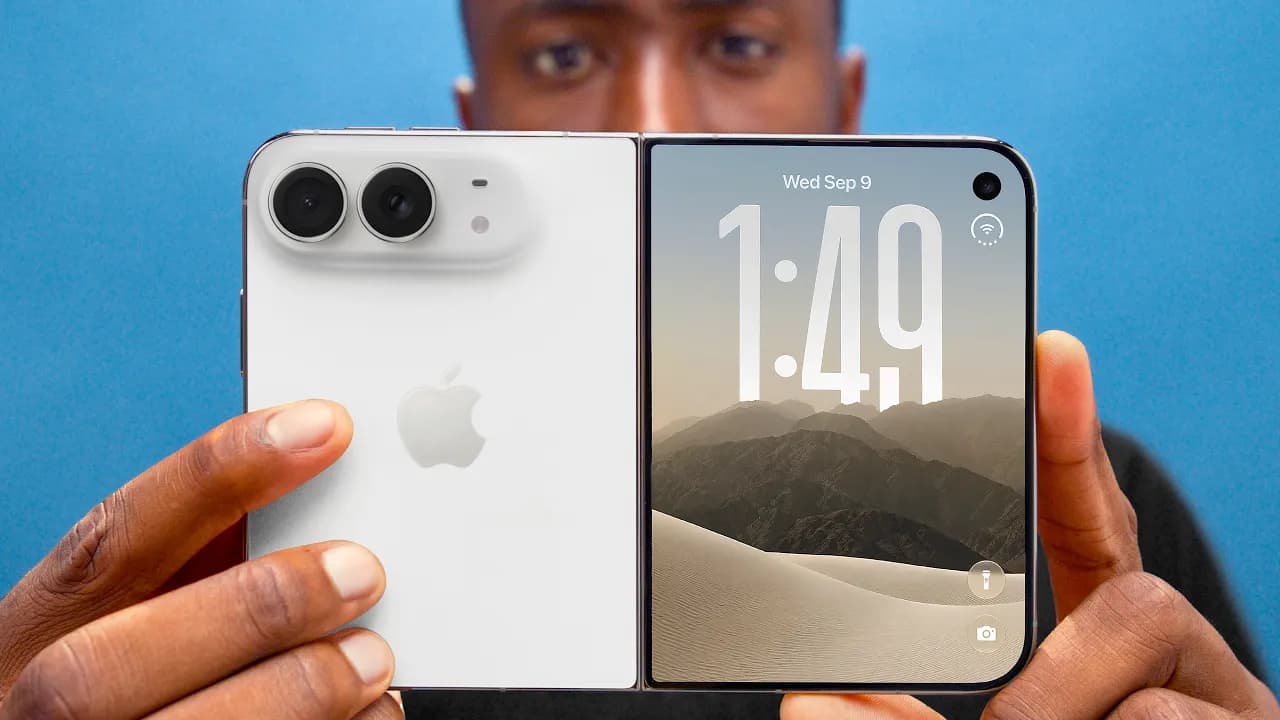
Apple unveiled the iPhone Duo, a folding phone combining iPhone and iPad functionality. The device presents a unique challenge for Apple as it merges two existing product categories that the company has historically kept separate to maximize sales across their ecosystem.
Apple has maintained a deliberate product hierarchy where the iPhone serves as the central hub, the iPad occupies the middle ground between phone and computer, and the Mac provides full desktop capabilities. The iPad has been positioned to offer a larger screen and more powerful media capabilities than the iPhone while remaining less powerful than a Mac to avoid cannibalizing Mac sales. This positioning has become more complex with the iPad Pro gaining MacOS-like features and M-series chips, prompting questions about potential merger of MacOS and iPadOS.
No, of course not.
Craig Federighi gave this response when asked about merging the operating systems.
The iPhone Duo functions as an iPhone when closed and behaves like a small iPad when open, with size comparable to an iPad Mini. The device will receive full Apple Pencil support later this year. Apple's TikTok account posted a video with the caption "The making of," showing the Duo as an iPhone combined with an iPad Mini.
Craig Federighi, Apple's global head of software, was interviewed about the device's positioning relative to existing iPhone and iPad products. He explained that usage patterns will develop naturally, similar to how people currently choose between iPad and Mac. When starting on iPhone and wanting to engage more deeply with content, users naturally open the device, often in portrait orientation for reading. The device can fill the same space as an iPad Mini for some users.
Standard foldable usage involves keeping the device closed approximately 70% of the time as a regular smartphone. Opening the device occurs when users want to be productive, write emails, or read for extended periods, making the opening action feel like an event.
The iPhone Duo is positioned as a $2,000 device in a category representing about 1% of smartphone sales. Three distinct user groups emerge:
- Users who already own both an iPhone and iPad Mini and like using both devices separately should not consider the Duo
- Users who prioritize the best camera hardware for photography and videography should choose other iPhone models
- Users curious about foldable phones for 8+ years who want to stay in the iPhone ecosystem, have significant disposable income, and want to try the form factor represent the target market
International pricing shows significant markup compared to US pricing, with approximately 10% higher prices globally:
- Canada: 2,999 CAD (approximately $2,160 USD)
- Taiwan: 74,900 TWD (approximately $2,370 USD)
- UK: £1,999 (approximately $2,700 USD equivalent)
This pricing inflation extends across the new Pro models and higher-priced older phones as well. The timing coincides with Apple's recently announced financing program at $35 per month.
Craig Federighi emphasized that Apple adapted the software experience specifically to the foldable form factor rather than simply stretching existing interfaces. The device was designed from silicon to enclosure to experience as a complete integration. When opened, users do not get an exact iPad layout but instead receive what Apple considers the optimal continuous experience for the specific form factor.
Different apps show varying levels of adaptation between iPhone Duo and iPad versions:
- Settings app displays dual-column layout similar to iPad
- Photos app appears identical to iPad version
- Home screen layout differs to maintain paginated continuity between closed and open states
- Camera app shows significant differences from both iPhone and iPad versions
Each developer has the opportunity to create device-specific versions of their apps rather than simply using iPhone or iPad versions. The device ships in October following the announcement.
Keep Marques Brownlee in your library
Save the videos and channels worth coming back to, and find them again in one place.