Is AI Making Companies More Productive? Not Yet.
In a Nutshell
Companies are seeing individual AI productivity gains but no overall output increases because they haven't redesigned workflows or addressed actual bottlenecks. Like Solow's 1987 computer paradox, AI tools are everywhere but won't drive real productivity until organizations restructure their processes around AI rather than layering it onto existing work. The solution requires zero-based organizational redesign—rebuilding workflows from scratch with AI as the priority—which temporarily reduces productivity before delivering gains, while premature layoffs typically backfire.
These notes were generated by AI and may contain inaccuracies.
Three separate conversations with companies of different sizes across diverse industries all revealed the same core issue: organizations need to build a foundation from which they can launch artificial intelligence initiatives. The speaker, who has spent 15 years in cloud IT infrastructure and automation and the last five years in artificial intelligence, works as a part-time chief artificial intelligence officer for clients.
Companies ranging from 5 employees to 40 employees to 700 employees all face the same AI-related challenge. The pattern observed over the past year shows companies progressing through skepticism, then surprise, then normalization, then iteration as they adopt artificial intelligence.
In 2025, the typical mindset was skepticism - CEOs saying "I've heard about this AI stuff, but I'm not convinced" and CFOs questioning whether AI was the best use of resources. The 2026 mindset has shifted to urgency: "Oh my God, we can't afford to be left behind." Skepticism gives way to surprise as companies discover AI capabilities, leading them to wonder what else is possible.
Companies reach a point where they become "qualified for artificial intelligence" and experience productivity gains - individuals becoming five to ten times more productive through chatbots, intelligent assistants, and tool use. However, despite this individual productivity increase, companies are not accomplishing more overall. They are not delivering code or products faster and remain busy responding to emails rather than increasing profits or reducing costs.
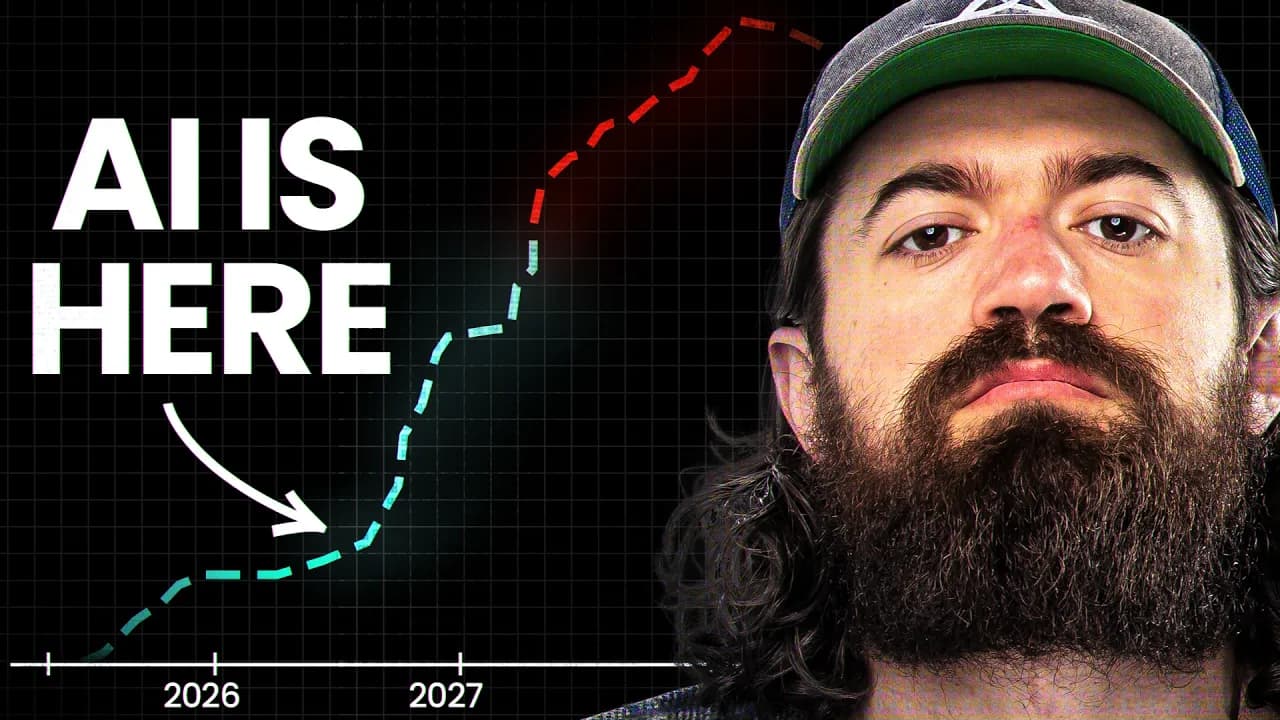
The situation mirrors Solow's paradox from 1987, when economist Robert Solow observed that computers were everywhere except in productivity statistics. It took another 10 years for applications, software, networks, and databases to mature enough to make a difference. Currently, everyone is using AI just as everyone was using personal computers in 1987, without seeing real productivity gains yet.
The solution requires redesigning how work is done, which is the most difficult aspect of change. Organizations must take their hands off the steering wheel and accept that attempting to do things differently carries risk. The productivity curve indicates that companies will actually lose some money and productivity while restructuring their business, organization, and workflow because no one knows how to do it properly yet.
The approach involves restructuring value chains and pathways for every business, department, or value chain. This requires figuring out how to redesign workflows with AI as the priority. Private equity firms are particularly focused on this, using AI to potentially cut 50% of the workforce before reselling companies. However, most clients the speaker works with are in market sectors where success comes from not laying off employees.
Approximately 60% of companies that lay off employees due to AI do so prematurely and regret it. The vast majority of companies at the speaker's operational level that lay off employees because of AI regret the decision, either changing course or suffering losses.
The theory of constraints states that any improvement that does not occur at the actual bottleneck does not change the productivity of the system as a whole. Making everyone ten times more efficient doesn't matter if those improvements don't address the actual bottleneck - products won't reach market faster, operating rates won't change, and monthly or annual recurring revenue won't increase.
The speaker transformed their content production workflow using AI. Previously limited to one video per week due to time and energy constraints, they now produce daily videos. The breakthrough came from experimenting with Claude Opus for animated videos and practicing storytelling skills, leading to a complete content strategy overhaul. Monthly views increased from approximately 200,000 to 1.8 million.
The current workflow involves taking GoPro footage, downloading it to a local folder, having Claude extract the audio, uploading the audio to Adobe Podcast for audio isolation, then giving the restored audio back to Claude for video editing and processing. Claude functions as sound engineer, editor, and engine for the entire process.
The approach involves redesigning the business from A to Z with artificial intelligence as the priority, including human resources, technical skills, marketing, and everything from the ground up. The speaker now runs what functions as a content studio of ten people while working alone, with Claude handling operating manual reviews and standardization.
The consulting work focuses on guiding clients through moments of realization where they accomplish tasks in 5 minutes that they intuitively thought would take all day, with better quality than they would have achieved themselves. These tangible experiences help overcome mental barriers about what is possible with AI.
Keep David Shapiro in your library
Save the videos and channels worth coming back to, and find them again in one place.