Is Polygamy A Better Deal For Women?
In a Nutshell
Scott Galloway argues that modern dating deregulation has concentrated sexual access among top-tier men, creating "Porsche polygamy" where most men lose out. A paper claims polygamy could actually benefit women by giving them the choice to share high-status men rather than settle for lower-status partners. However, behavioral data shows humans still default to serial monogamy despite cultural changes, suggesting monogamy remains the stronger natural pattern rather than imposed social control.
These notes were generated by AI and may contain inaccuracies.
Merchandise is available at mwmursh.com with a bursting heart design featuring Japanese text. The products use upgraded blanks of higher quality than previous releases. Items are only available for 6 days and will not be reprinted in the future.
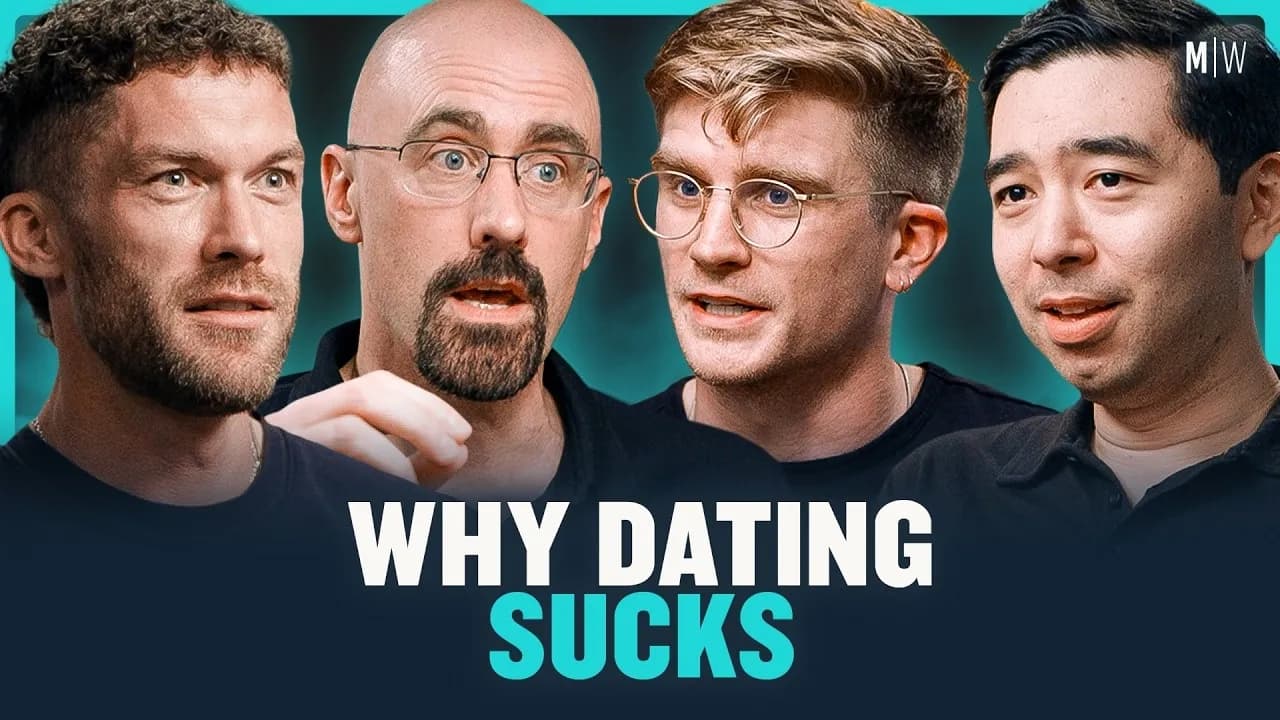
Scott Galloway describes current dating dynamics as "Porsche polygamy" - where attention concentrates on a small number of men in online dating. A recent paper suggested that monogamous marriage functioned as affirmative action for men by redistributing sexual access more evenly across the male population. The paper used the phrase "DEI for men" to describe this dynamic. Most men fall outside the top 10-20% in attractiveness, so monogamous norms served to pair men with women one-to-one.
Monogamous marriage represented a form of "sexual communism" that has been dismantled through deregulation of the dating market. This deregulation began around the 1960s and has reached late-stage consequences. The manosphere right has called for reintroduction of sexual norms, while some women are developing new frameworks to manage the unregulated marketplace.
Demisexual describes individuals who only sleep with people they have emotional connections with. Sapiosexual refers to attraction based on intellectual stimulation. Solopoly describes single people who sleep around, essentially a term for traditional Lothario behavior.
Women sometimes push back against reintroducing sexual norms because they appear restrictive and reminiscent of pre-1960s gender expectations. The implicit understanding is that monogamy benefits men more than women by redistributing access. In unregulated markets, women may be able to compete for higher-value partners by displaying traits that aren't immediately obvious, while men struggle more due to women's choosier nature.
A paper argues that polygamy can benefit women because they can choose to marry a high-status, already-married man rather than being limited to lower-status partners. This preserves choice for women who prefer high-status partners even when shared. Without this option, women must choose between no partner or someone further down the social hierarchy.
A controversial debate exists in evolutionary social sciences between two perspectives: whether humans are naturally polygenists that cultural evolution has constrained, or whether monogamy represents the default human state. Different evolutionary social scientists argue for different cases based on their backgrounds.
Despite deregulation allowing attractive men to pursue unlimited sexual partners with minimal judgment, data shows most people still engage in monogamous relationships. People fall in love and become interested in one person for extended periods. This behavioral pattern supports the argument that monogamy is the stronger default state for humans.
Ethnographic data from hunter-gatherer societies shows serial monogamy is common - people pair bond, have children, and then form new relationships when romantic feelings dissipate. Approximately 5% of first marriages last for life in these societies. Most people fall in love multiple times during their lifetimes, supporting serial monogamy as the dominant pattern.
When cultural guardrails are removed, relationships tend to be pair bonds that are largely exclusive, though switching between partners is not uncommon. A small level of polygyny and lifelong mating also occurs. Humans demonstrate a polygynous streak alongside the predominant monogamous pattern.
Keep Chris Williamson in your library
Save the videos and channels worth coming back to, and find them again in one place.