The Biggest Myths About Dating (debunked) - Psychology Roundtable
In a Nutshell
Women prefer natural beauty signals over artificial enhancement because it indicates good genes rather than vanity, and the "Chad myth" is largely an online dating illusion—most people have one or zero sexual partners annually, with promiscuity concentrated in small high-sociosexuality groups of both sexes. Monogamous marriage historically functioned as sexual redistribution for average men, but dating apps have shifted this toward "sexual capitalism" favoring top attractiveness. Women's desire declines faster in relationships due to mate retention strategies that secure commitment then reduce frequency, while men maintain stronger drives across contexts due to lower reproductive costs.
These notes were generated by AI and may contain inaccuracies.
A study at Northre University used motion capture technology on 30 male dancers, converting their movements into computer avatars. Women found the most attractive dancers were those who moved their head, neck, and torso the most while mixing up their moves creatively and showing more variation in rhythm. The best dancers used their whole body naturally instead of quickly repeating the same arm and leg movements.
The dance identified as most attractive was noted to be quite feminine. This mirrors facial attractiveness research where initial assumptions favor maximum masculinity, but in some areas with some traits, femininity is favored. A masculine dance might resemble throwing yourself around in a mosh pit or shadow boxing.
British guys are described as doing two things that give women the ick more than anything else: shadow boxing on the way to a night out, and football chants in the queue of a nightclub. Shadow boxing is seen as posturing how hard someone is - showing how formidable and aggressive they would be if they weren't fighting air. There is no opponent, and shadow boxers appear to be losing their shadow boxing fight.
Clavicular, the looksmaxing influencer, became popular through propagating the idea of looksmaxing, bone smashing, and optimizing. He told the New York Times that he is now sterile because he's injected himself with so many chemicals. The argument is that most of the attention clavicular receives from women is due to the fame he got through promoting looksmaxing, not the actual physical changes. For an ordinary man doing all the same looksmaxing protocols without the fame, women would find that kind of guy very vain and self-centered.
Looksmaxing signals narcissism, vanity, and a short-term oriented mating orientation. The person is more interested in being immediately attractive rather than forming a long-term bond. Bone smashing is described as odd. The first rule of looksmaxing on looks.org used to be "don't talk about looksmaxing," reflecting an understanding that looking good helps but being transparent about the methods probably won't improve your life.
The secrecy around looksmaxing methods serves to protect the competitive advantage. If everyone gets better looking, it becomes equivalent to everyone running faster. Women have been looksmaxing for decades with makeup, which has raised the minimum bar for what is considered presentable. If all men start doing the same thing, the minimum bar would also be raised.
Natural beauty is preferred over artificial beauty because it signals good genes, strong immune system, and natural attributes. A study by Zia and colleagues in China tested makeup and plastic surgery on real women's faces. Men assessed attractiveness and datability, finding that while these methods increased attractiveness, when men knew the woman had plastic surgery, the datability effect was reduced though still net positive. The attractiveness boost was attenuated when the effort was known.
The preference for natural beauty may stem from a general tendency to be wary of deception rather than an evolved tendency specifically about beauty signals. There may also be negative personality inferences made about people who use artificial enhancement - they may be perceived as insecure. The study showed that while looks were still elevated, personality perception was reduced, affecting overall datability.
A PhD student named Louisa Lee is researching the evolutionary psychology of the ick in terms of mate choice. Women on average are choosier and more prone to the ick. The research examines this through evolved disgust reactions, the behavioral immune system, and responses to sexual stimuli including disease-associated disgust and moral disgust.
The sex difference in the ick reflects different risk levels between men and women. For men, the biggest risk is missing a mating opportunity. For women, the biggest risk is mating with the wrong person. This creates a more visceral response where something pushes attraction below the threshold and the person is selected out. Women are more discerning and more adept at reading social cues.
The myth of the Chad suggests that a small percentage of men get the majority of female attention, with 20% of men getting 80% of the attention. However, data shows that about 18-20% of men report having three or more sexual partners within the past year, and this hasn't changed since about the year 2000. The same pattern exists for women, with 12-18% reporting three or more sexual partners a year.
The vast majority of men and women have relatively unexciting sexual lives. The most common response to how many partners someone had in the past 12 months is one, followed by zero. Most sex occurs in relationships, followed by people not having sex at all. A small fraction of men and women who are high in sociosexual orientation are very promiscuous and having a lot of sex with each other. The myth of the Chad is that one segment of guys are having all the sex with all the women, when actually there are women in relationships and women uninterested in dating, mirroring the pattern for men.
The myth originates partly from dating apps where swipe rates are easy to measure. On Tinder, something like 4% of men get the vast majority of the swipes. On Hinge, the top 10% of male users get 60% of the likes. These findings are easy to over-interpret, creating the illusion that some gorgeous guys are having tons of fun while others are excluded from the mating market.
Online dating data is frequently misinterpreted. A common misconception is that 10% of men receive 60% of female attention, or that women are only attracted to a small fragment of men while men assess women more evenly and fairly. These interpretations stem from outdated data and fail to account for the reality that viral stories about dating are typically anomalous and atypical experiences.
Stories of ghosting, women suddenly losing interest, or one-night stands that go nowhere spread rapidly because they are unusual. Normal relationship progressions, such as meeting someone and becoming engaged, receive minimal attention online. This creates a distorted view of dating dynamics.
There exists a small, highly promiscuous group of women who attract attention from very attractive men. Less attractive men observe these interactions and mistakenly assume this represents all women, when in reality a large cohort of women have had zero or one partner in recent periods. This reflects availability bias, where online chatter about sex and "chads" overshadows the "dark matter" of women not posting or engaging with dating apps.
Scott Galloway refers to the current situation as "Porsche polygamy," where disproportionate attention goes to a small number of men in online dating contexts. This raises the question of whether monogamous marriage historically functioned as affirmative action for men. A recent paper described marriage as a form of "sexual redistribution" or "DEI for men," since by definition most men are not in the top 10-20% of attractiveness.
Monogamous marriage paired men and women one-on-one, functioning as a form of "sexual socialism" that has been replaced by "sexual capitalism" following deregulation of the dating marketplace, arguably beginning in the 1960s.
New terminology has emerged around relationship preferences. Demisexual describes individuals who only sleep with people they are emotionally connected to, requiring special emotional connection rather than casual encounters. Sapiosexual refers to attraction based on intellectual stimulation. Solo poly describes one person sleeping with multiple partners, essentially equivalent to traditional "manwhoring" behavior.
Resistance to reintroducing sexual norms and regulating the mating marketplace sometimes comes from women who view it as restricting freedom and independence. However, women are often keen on having one partner exclusively rather than sharing a partner with other women. This creates a puzzle about why monogamous norms face pushback from women, given that traditionally they benefit from such arrangements.
The discussion borders on a controversial debate in evolutionary social sciences regarding whether humans are naturally maximally constrained polygynists restrained by cultural evolution, or whether monogamy represents the default state. The monogamy perspective appears stronger because even when attractive men have access to infinite sexual partners, data shows most people still engage in pair bonding and exclusive relationships.
Hunter-gatherer ethnographies reveal that serial monogamy is common, with people pair-bonding, having children, then forming new relationships when romantic feelings dissipate. However, 5% of first marriages in such societies last for life. Data indicates most people fall in love multiple times throughout their lifetimes.
A 2026 Kinsey Institute study of over 10,000 US adults found the average number of passionate love experiences is 2.05. The distribution shows 14% reported never having been passionately in love, 28% reported being passionately in love once, 30% twice, 17% three times, and 11% four or more times. This measurement focused on intense falling-in-love experiences rather than long-term attachment.
This aligns with data showing most people report having sex with one or zero people in the past 12 months, with a small fragment reporting three or more partners. The pattern suggests a tilt toward monogamy with a small percentage of people exhibiting more polygynous tendencies or higher sociosexual orientation.
A PNAS paper examined how mate preferences change when women become richer. The study addressed a 37-year debate about causes of sex differences in mate preferences, focusing on gender inequality and income as key variables. Men typically show stronger preferences for physical attractiveness, while women show stronger preferences for resources, and age preferences show men preferring youth while women prefer slightly older partners.
Cross-cultural studies found that when gender inequality decreases, age preferences and age gaps become smaller, though beauty preferences remain stable or move in the opposite direction. Individual-level studies show that when women have more money, they do not start preferring young, gorgeous men as social role theory would predict.
A 45-condition experiment varied participants' individual income and local gender economic inequality within virtual environments to test causal relationships. The study found that when people are poor individually or when the opposite sex is rich and their own sex is disenfranchised, they upregulate mate preferences for resources. This applies to both men and women and appears in ranked preferences, rated preferences, and hypergamous preferences.
Beauty preferences did not move in the experiment, which contradicts social role theory predictions. Age preferences also remained stable despite cross-cultural literature suggesting they would change. Resource preferences moved as expected since they represent the strategic variable being adjusted.
The findings could represent either conscious strategic thinking, which is itself an evolved ability, or a domain-specific evolved psychological module designed to detect scarcity and adjust resource preferences. The phenotypic gambit approach in evolutionary anthropology focuses on inputs and outputs rather than internal mental processes.
Scarcity was likely the norm throughout human evolutionary history, with communities sharing resources. Significant resource stockpiling only became possible after the agricultural revolution, raising questions about whether humans have evolved modules specifically for detecting scarcity versus abundance.
Modern hunter-gatherer studies may present a skewed picture of human history because agricultural societies displaced hunter-gatherers to marginal environments with poor soil, limited wildlife, and scarce resources. In contrast, some pre-agricultural environments may have featured abundant food sources like deer, rabbits, and berries, similar to a "Galapagos Valley" with no natural predators and plentiful fresh water.
Paleoanthropological evidence supports this view through massive kill sites indicating that some hunter-gatherer groups successfully hunted large numbers of animals. The existence of realistic depictions of obese individuals in prehistory suggests that some populations experienced periods of caloric surplus, allowing for body fat accumulation.
Research shows that men primed with scarcity cues—such as hunger, acute poverty, or exposure to local famine—shift their preferences toward larger women. This pattern appears across multiple study designs, including cross-cultural anthropological research and experimental studies.
Cross-cultural evidence reveals significant variation in beauty standards: among South African Zulu populations and in Jamaica and St. Kitts, women with BMIs in the 30s are considered highly attractive, while affluent populations in Singapore and Korea show different preferences. When men are experimentally made hungrier, they demonstrate a preference for larger women.
The "insurance hypothesis" proposes that fat serves as a literal caloric bank account. In scarce environments, larger women signal both provisioning ability and maintained fertility during famine conditions, as acute starvation causes female infertility.
The preference for thinness in abundance is more difficult to explain. The leading hypothesis suggests that thinness serves as a reliable signal of youth and nulliparity. However, the speed and magnitude of preference shifts observed in studies—such as the replicated dining hall study showing men entering versus leaving with preferences changing by approximately 10 pounds—suggests the mechanism may operate more subtly than expected.
Critics note that the small effect sizes in laboratory studies contrast with larger cross-cultural differences, and question why preferences would switch so rapidly based on momentary hunger states.
Body type preferences may function as status signals that vary by environmental conditions. In scarcity, larger body size indicates resource access and becomes associated with status. In abundance, thinness signals impulse control and the ability to withstand temptation—markers of conscientious personality.
This framework aligns with cross-cultural beautification research showing that in food-abundant environments, people restrict calories and increase movement, while some cultures employ "fattening huts" where women restrict movement and increase caloric intake before marriage to achieve desired body types.
Historical accounts from Mauritania describe men attempting to spy on women in fattening huts, indicating genuine sexual attraction to the resulting body types rather than mere social convention.
Contemporary technology creates an "arms race" around signal manipulation: makeup, FaceTune, cosmetic surgery, limb lengthening procedures, and height-enhancing footwear like cowboy boots all allow individuals to bypass evolved preference mechanisms. This raises questions about whether observed traits reflect genuine underlying qualities or artificial enhancement.
Women's feet typically enlarge after childbirth, which may contribute to the documented preference for smaller feet. Sex doll studies reveal supernormal stimuli with extremely small feet, suggesting this preference may represent a form of Fisherian runaway selection in reverse.
Recent data indicates that in major metropolitan areas including New York, Washington DC, Boston, Los Angeles, and Seattle, women under 30 are now out-earning men by approximately $1,000 annually, with the gap reaching 31-32% in some measurements. This economic shift may influence mate preferences, as women with greater resources show reduced preference for economically superior partners.
However, high-achieving women maintain strong preferences for partners who are at least equally successful. Research by Vincent Harinam suggests that highly ambitious career women actually show increased preference for similarly ambitious men.
Experimental research demonstrates that higher-income women show less interest in mating up economically, yet in real-world data, high-achieving, highly educated women still tend to marry men doing at least as well as themselves. Richer women exhibit stronger mate preferences overall—they want more attractive partners in addition to resource considerations.
The distinction between absolute and relative preferences is crucial: while richer women have stronger absolute preferences for resources, their relative preference (compared to other desired traits like attractiveness, shared values, and parenting ability) may decline. This suggests high-achieving individuals simply maintain elevated standards across all domains rather than specifically prioritizing resources.
Data from the Institute for Family Studies shows that women in the top income quintile are already dating down slightly on average, while men in the bottom two quintiles are dating up. This raises questions about whether survey responses accurately reflect actual behavior, particularly given the limited pool of available high-earning men at upper echelons.
Paul Eastwick's research on stated versus revealed preferences suggests that speed dating studies show smaller sex differences than survey data, with women caring more about physical attractiveness and men caring more about resources than their stated preferences indicate. However, speed dating methodology may not capture the full range of preference expression due to limited interaction time and homogeneous participant pools with similar career prospects.
Evolutionary psychologists often rely on dating app data, but this represents an evolutionarily novel context that differs significantly from real-world relationship formation. Speed dating research shows mixed results regarding predicted sex differences, with some studies like Rob Kurzban's finding standard differences while others show no effect. Real-world data consistently demonstrates that women are more likely than men to leave partners who become unemployed or fail to earn a decent living.
Revealed preferences data may be inaccurate because studies examine current couples who have already survived relationship dissolution processes. When looking at how important a man's earning capacity is among current couples, variance in ability to earn a living has been reduced through prior partner selection, weakening correlations. This methodological issue suggests that women may care more about resource provision than the data indicates.
A worldwide preference matching study had participants assess romantic partners on various traits and measured how these assessments correlated with overall romantic evaluations. The research found no sex differences in preferences, though it identified unusual findings such as "good in bed" being the top-rated trait. This data is complicated by the difficulty of separating preferences from the reality of being in relationships that require regular physical intimacy.
Nearly all sexual activity occurs within relationships rather than casual encounters. The global distribution of sexual activity resembles a galaxy where the vast majority happens inside committed partnerships, with casual sex representing only a small fraction of overall sexual behavior.
Keeper AI operates as a high-end matchmaking service charging men $50,000 for membership plus $5,000 per date, while women pay nothing. The service includes comprehensive psychometric evaluation and personality testing. Data from this platform shows women are significantly more likely than men to refuse partners who earn less (12 times more likely), are less intelligent (6 times more likely), or less educated (4 times more likely). Marrying down represents a near dealbreaker for women but a non-issue for men.
Traditional frameworks distinguish between stated preferences (what people say they want) and revealed preferences (what people actually do). Classified advertisements represent behavioral manifestations of preferences rather than mere expressions. Keeper AI represents a hybrid category where stated preferences carry real consequences and financial investment, making them closer to revealed preferences than traditional surveys.
Being successful at dating apps appears orthogonal to being a good spouse. Traits that enable success in online dating may actually work against relationship satisfaction and fidelity. Research on Tinder users found that current users scored significantly higher on dark triad personality traits (psychopathy, Machiavellianism, narcissism) with effect sizes around 3.4 compared to non-users.
Wealthier men are more likely to get married, stay married, have children, and remarry after divorce. Women's wages don't predict marriage outcomes nearly as well, while women's physical attractiveness is a better predictor of whether they marry and the wealth of their marital partner. Facial attractiveness was found to be 12 times more influential on swiping behavior than height in dating app studies.
A gamified dating app study without height filters found that facial attractiveness dominated all other factors in partner selection. Participants could include any information in their bio or any height specification without significant impact on selection, though the absence of height filters may have influenced results compared to typical dating app interfaces.
Height filters on dating apps use arbitrary cutoffs like six feet, while European users often use 180 cm as the threshold. These round numbers don't reflect actual preference distributions. The introduction of height filters may have changed user satisfaction, though this impact hasn't been systematically measured.
When given unlimited mate budgets, both men and women prioritize all desirable traits equally. However, when given limited budgets more representative of real-world constraints, sex differences become pronounced: men allocate more resources toward physical attractiveness while women prioritize partners with resources and status. Similar patterns emerge when individuals allocate resources to enhance their own mate value, with men emphasizing wealth and women emphasizing physical attractiveness.
Throughout the 1900s, particularly following women's financial emancipation, mate preferences between men and women converged significantly. Men have tripled their parenting effort since the 1970s, with college-educated men driving most of this increase. Male beautification behaviors have increased decade by decade since the 1990s, representing a documented trend rather than a recent phenomenon.
Women may use luxury handbags and similar items to signal resource investment from partners, potentially serving as mate poaching deterrence. When women have independent financial resources, they show increased preference for partners who provide parenting assistance. Men have responded to these preference shifts by increasing time spent with children, with educated upper-middle-class men showing the largest increases in paternal investment.
Luxury handbags may function as both status signals and mate retention strategies, communicating to other women that a partner is heavily invested. This differs from physical attractiveness signals, as handbags serve to deter rather than attract potential rivals. The time and financial investment required for both male muscle building and female beauty regimens signals resource availability and discipline to potential partners.
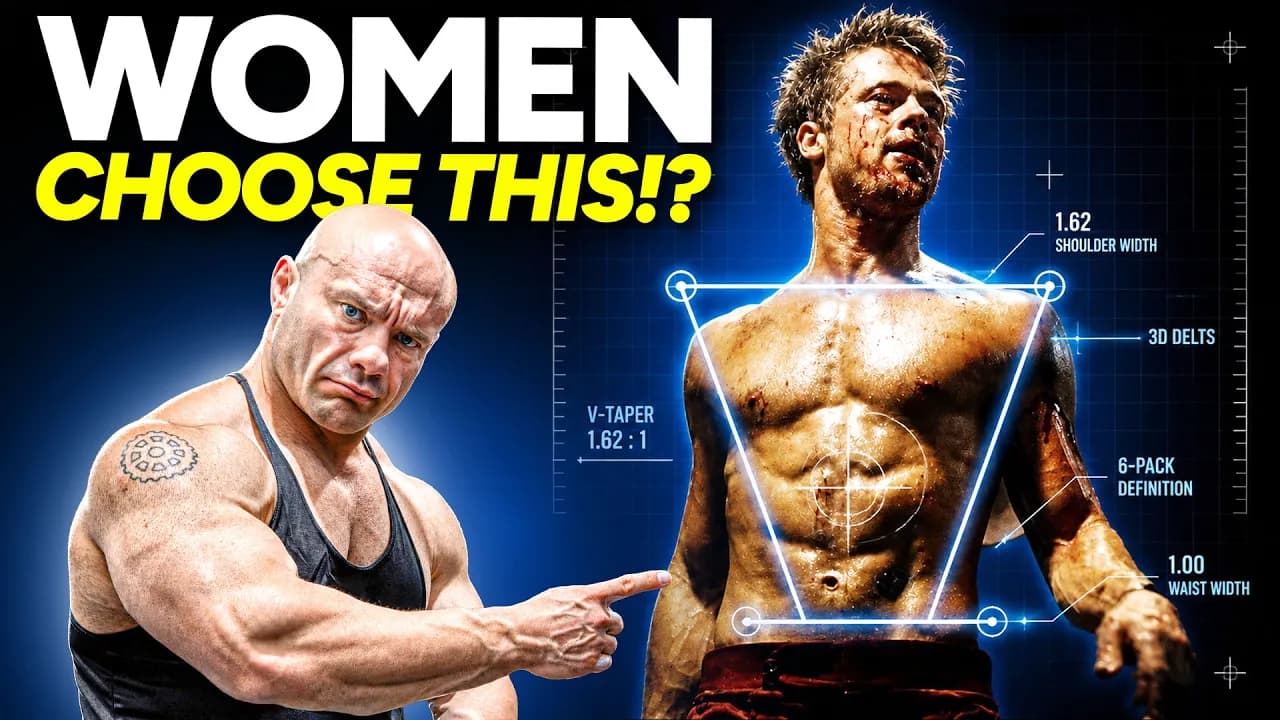
Men going to the gym as a form of beautification represents a significant increase compared to 100 years ago, potentially 4x to 10x the previous levels. Marco Wall's study on beautification found that in all except seven countries, women beautified more than men, with seven countries where men beautified slightly more. The weightlifting component was the behavior where men were more active in beautification.
Studies accounted for the distinction between going to the gym for health versus beautification purposes by asking specific questions about time spent bodybuilding. Among those who wear makeup, men who wear makeup spend significantly more time on it than women. This may be because men haven't grown up with the same exposure to makeup tutorials and techniques that women have.
The difference in makeup time among users appears to be driven by a specific subset of male beauty influencers who spend extensive time on makeup application. Among beautification behaviors studied, makeup showed the biggest difference due to this effect, while weightlifting was the second biggest difference.
Weightlifting's impact on attractiveness versus formidability remains an open question. Gaining 10 pounds of lean muscle mass could increase either attractiveness to women or formidability to other men, and both effects likely occur simultaneously. The hyper-masculinized face promoted in some circles is actually less attractive to women than average or slightly feminized male faces according to available data.
David Putt and colleagues conducted a study where men were recorded in short video clips and rated by other men on their likelihood of winning a physical fight. The same videos were shown to women who rated the men's sexual attractiveness. When researchers followed up with the men 18 months later, formidability ratings predicted how many sexual partners the men had, while women's attractiveness ratings had no relationship to sexual success.
The study was conducted on college students, specifically fraternity members. This finding aligns with Putt's other research showing formidability has significant effects on sexual success. The study suggests that formidability may be more predictive of mating success than physical attractiveness alone.
Female teachers who sleep with male students may be motivated by the supernormal stimulus of intense sexual attention from inexperienced teenage boys. An attractive 25-year-old woman showing herself to a typical 28-year-old man would receive a different level of attention than when showing herself to a 16-year-old boy experiencing his first encounter with a fully developed woman at peak fertility.
OnlyFans represents a supernormal stimulus for women similar to how porn functions for men. While men are excited by novelty and variety of naked women, women on OnlyFans receive massive amounts of sexual attention and praise from thousands of men, which can be extremely enjoyable and satisfying.
Male teachers who engage in sexual relationships with underage students are often driven by a warped version of typical male preferences combined with power asymmetry. Female teachers appear more motivated by the extreme level of attention and the power dynamic of providing a teenage boy's first sexual experience with a full-grown woman.
In Frieda McFadden's novel "The Teacher," the protagonist's husband had been grooming multiple underage girls starting at age 14. The twist reveals that the high school jock was sleeping with the teacher's wife behind the husband's back. The book's structure appears designed to create moral ambiguity around the female teacher's actions by establishing the husband's predatory behavior first.
A Twitter poll asked men and women whether they would rather sleep with someone they find intensely attractive but who is not attracted to them, or someone they find unattractive who finds them very attractive. Approximately 75% of men preferred the attractive person who finds them unattractive, while 75% of women preferred the unattractive person who finds them attractive.
Being desired appears to be one of the primary turn-ons for women, contrary to some relationship advice suggesting women need elaborate wooing. The response of being intensely desired can be more powerful than traditional courtship behaviors.
Some men engaging in extensive weightlifting appear to be focused on male-to-male status competition rather than attracting women. The term "mogging" originates from "alpha male of the group" and refers to dominating other men in the social hierarchy. Some men report that knowing they could have sex with women is more satisfying than actually having sex.
Minimizing or denying sex differences can lead to several problems: forcing people out of gender roles that might fit them naturally, failing to recognize sex-specific medical symptoms like different heart attack presentations in women versus men, and creating vulnerability when people don't understand average differences in areas like sexual aggression.
When young women believe men and women are essentially the same and lack understanding of average sex differences in sexual motivation, they may place themselves in vulnerable situations such as getting heavily intoxicated at fraternity parties without recognizing potential risks from the most aggressive, sexually predatory individuals who tend to be male.
Ryan Dobson and his party are rolling out research soon. When asked if the research becomes public once presented at a conference, the response indicates it was communicated that it would not be public, though this may reflect social intuition rather than formal policy. New academics may not face the same constraints as established researchers.
There's discussion of a "mafioso" dynamic in the human behavior and ecology world where junior researchers avoid stepping on toes. David Buss can freely present theories as an established figure, but new entrants at the bottom face different constraints.
The question posed is why women's sexual desire declines faster than men's in relationships. One hypothesis suggests that at peak fertility, women have the strongest desire for sex. The effect exists but is peculiar because desire increases again if women remate later.
The initial high sex drive may function as a mate retention strategy - boosting libido in new relationships to get partners "on the hook" with the promise of frequent sex. Once commitment is secured, the need for this strategy diminishes. The decline occurs within the first year, dropping by half initially, then continuing to decrease.
Men face lower costs from sex compared to women, particularly regarding pregnancy risks which increase with age. Women face higher pregnancy risks as they age, and menopause eliminates fertility entirely. The decline appears to be a within-relationship time span effect rather than purely age-related.
Humans engage in both conceptive and non-conceptive sex. The non-conceptive sex may serve a retention function early in relationships but later becomes a bargaining chip. A study by Roy Baumeister found that women report having approximately the amount of sex they want in relationships, while men report wanting twice as much, suggesting couples converge on the woman's preferred frequency.
Sex may initially serve as a retention strategy to lock in male partners and secure commitment, then function as a bargaining chip once commitment is achieved. The costs of sex are relatively low in the 20s and early 30s but increase with age due to pregnancy risks and menopause.
Studies appear controlled for age, though age effects are real with new data emerging. The decline within relationships is surprisingly quick and isn't solely attributable to fertility decline.
Men maintain stronger sex drives across all contexts - relationships, single status - due to error management theory favoring readiness at any time. The question remains how much decline occurs from time one to time two to time three in relationships.
Sex bonds both parties to each other, suggesting the dynamic is more symmetrical than simply women using sex to secure relationships. There's acknowledgment that sex differences typically exist but this particular aspect may be less differentiated.
Key questions include whether interest lies in how men differ now versus decades ago, how sex differences vary across contexts, or what constitutes the "true" sex difference when external factors are stripped away.
Discussion of whether WEIRD (Western, Educated, Industrialized, Rich, Democratic) societies provide limited insight into human psychology due to their peculiar historical position. The question arises whether studying hunter-gatherers in scarcity environments reveals true human nature, or whether abundance allows underlying traits to emerge more fully.
In WEIRD societies, there may be a push against traditional sex differences, yet they often emerge anyway, suggesting an innate component. Sex differences may express themselves more strongly in abundant societies than the level for which they were evolutionarily selected.
William Buckner's perspective questions why sex differences and mate preferences appear less consistently in small-scale hunter-gatherer societies than in industrialized populations, if these traits were forged in the EEA. This inconsistency raises questions about evolutionary psychology claims.
While sex differences appear more consistently in non-hunter-gatherer societies, their consistency across these societies suggests some innate push. Some sex differences aren't found in certain hunter-gatherer societies, and some appear reversed, such as among the Wodaabe of the Sahel region where men wear makeup and participate in beauty pageants, with women selecting partners partly based on physical appearance.
Craig Jones described a ritual where young women walk through an alley of men who whip them with sticks of particular width. Women who don't make sounds are considered higher status due to demonstrated pain tolerance, signaling ability to endure childbirth.
Folk tales and fairy stories across world regions consistently show greater emphasis on women's appearance and men's resources/status. Evidence for evolutionary origins includes gay men's preferences for appearance and youth, while gay women show preferences for resources and status similar to heterosexual women.
A proposed study comparing sex toy preferences between straight and gay women, noting that gay women's preferences shouldn't necessarily resemble male anatomy except for functional purposes.
Personal anecdote about childhood obsession with hamsters, including a shirt saying "hamster man" and photos as an 8-year-old available on Google Images.
Keep Chris Williamson in your library
Save the videos and channels worth coming back to, and find them again in one place.