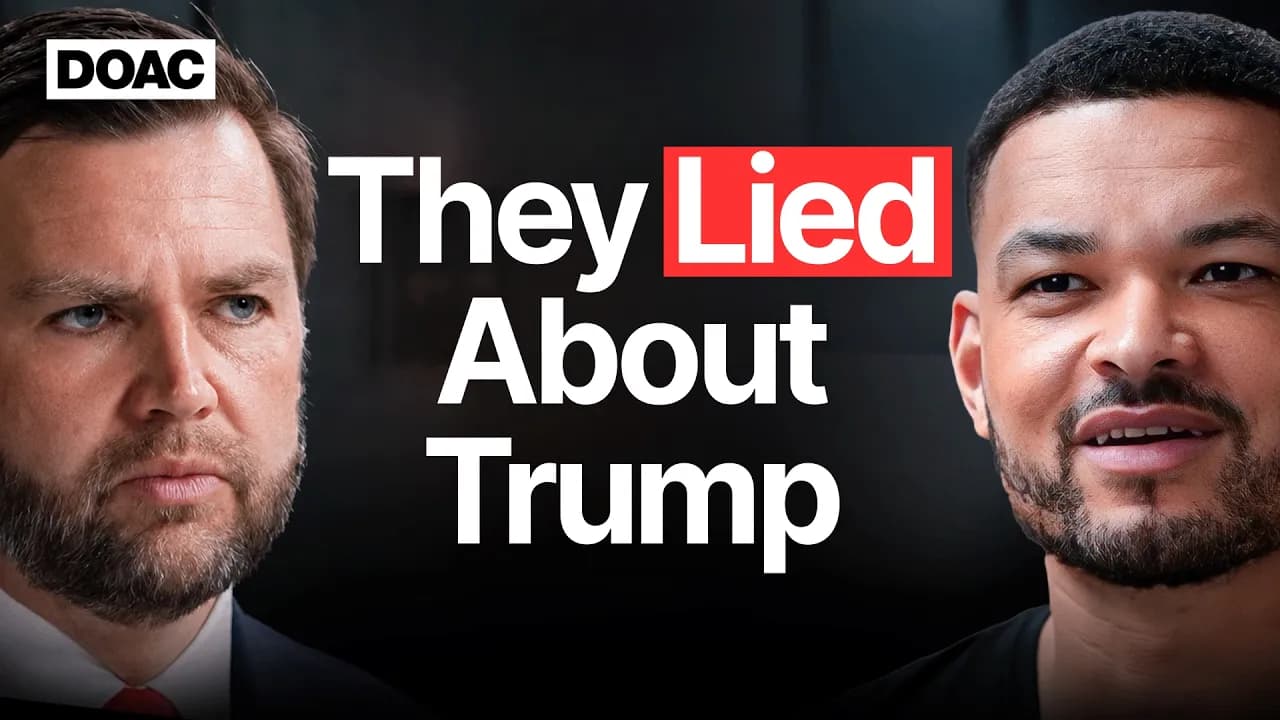
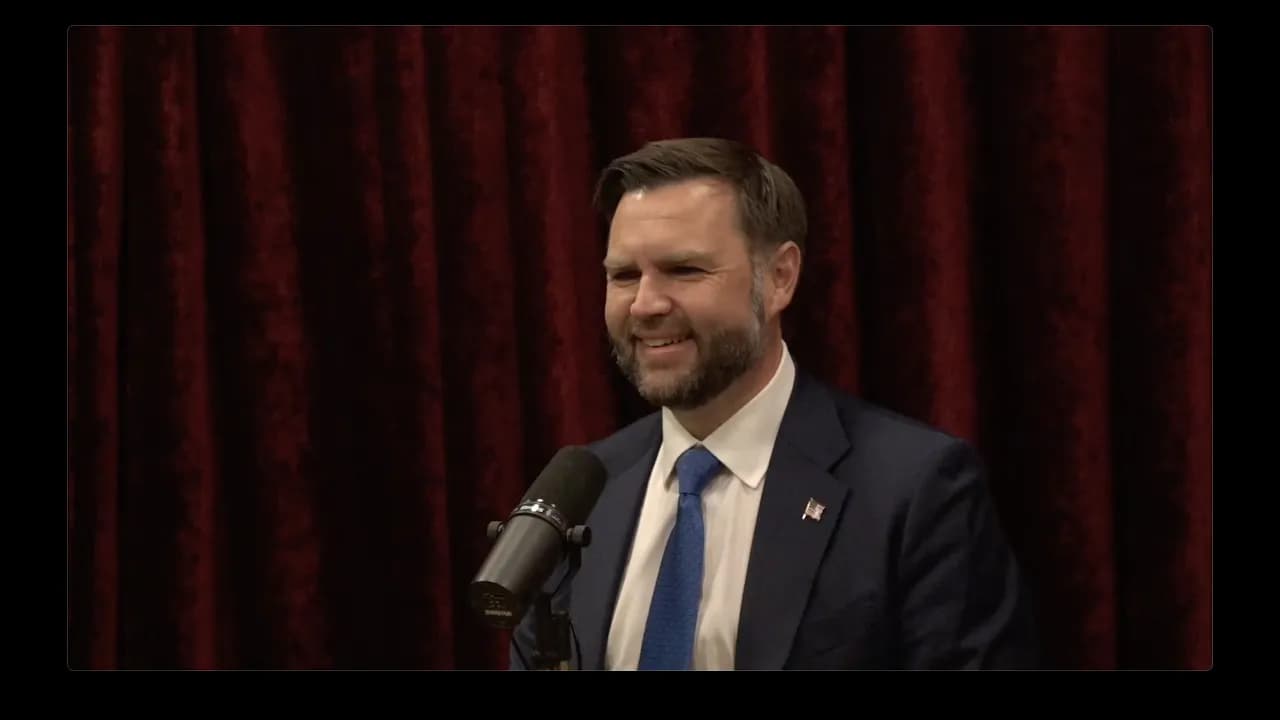
JD Vance on AI, Entitlement Fraud, Iran War, Israel, H-1B Abuse & the Midterms
In a Nutshell
JD Vance claims the administration reversed illegal immigration for the first time in decades and spurred trillions in new manufacturing investment. The core pitch is to reelect Republicans to finish the job on fraud reduction, H-1B reform, and energy expansion, rather than handing power back to the Democrats who caused the problems. He also stresses that U.S. foreign policy, including toward Israel, must prioritize American interests over any foreign partner.
These notes were generated by AI and may contain inaccuracies.
Vice President JD Vance highlighted two major accomplishments from the first two years of the administration. The first was gaining control of the southern border and reversing the flow of illegal immigration, resulting in approximately 3 million fewer illegal immigrants compared to when the administration took office. This marked a significant departure from post-war Western governments that had either opened borders or at best slowed illegal immigration, but never reversed the trend.
The second major achievement was the re-industrialization and recapitalization of America's manufacturing base. Vance noted that trillions of dollars in new investment, new construction, and new manufacturing facilities being built represent a reversal of a 40-year trend toward globalization. The administration has rejected the bipartisan consensus that a prosperous economy could be built entirely around services, tech, and finance, recognizing that a truly prosperous economy requires making physical goods.
Constituents expressed frustration about two issues: the promise not to start foreign wars and the failure to get inflation under control. Regarding the Middle East situation, Vance explained that President Trump came into office committed to keeping the United States out of foreign entanglements while also preventing Iran from obtaining a nuclear weapon. The administration conducted substantial destruction of Iran's nuclear program and conventional military capabilities. Despite this, Iran continued shooting at commercial shipping during peace negotiations, prompting the president to protect world energy markets and ensure the flow of oil and gas continues.
On inflation, Vance acknowledged that 3.5% remains too high but pointed to substantial progress from the 9-12% annualized rates under the Biden administration, which represented the highest rate in approximately 48 years. He framed the choice for voters as whether to reelect those making progress or return to those who caused the problem initially.
Regarding the fiscal deficit, Vance reported that anti-fraud efforts have saved approximately $250 billion of American taxpayers' money. The administration inherited a $2 trillion fiscal deficit and aims to reduce it to around 3% of GDP through smart cuts combined with economic growth. Treasury Secretary Scott Bessent is working toward this sustainable level. The administration acknowledges this requires long-term bipartisan solutions, though many in Congress from both parties have shown unwillingness to address spending seriously.
Vance addressed backlash against data centers, attributing it to the United States not building enough power generation for a generation. He cited that in 2005, the People's Republic of China crossed the line to generate slightly more power than the United States, and since then, America has flatlined while China now generates three times as much electricity. The administration advocates for a vision of electricity that is "too cheap to meter" to push back against anti-building sentiment.
Regarding AI, Vance criticized those at the frontier of the AI economy who advocate for one-world governance structures for artificial intelligence while simultaneously denying companies access to defensive mechanisms against AI threats like cyber hacking tools. He argued that if companies are building dangerous AI systems, they should either stop or provide the tools needed to defend against those threats rather than seeking government regulation.
Vance described working with President Trump as never boring, noting Trump's willingness to take risks rather than follow the safe path. Trump constantly probes whether the administration is taking the easy path or the right path, even when political backlash might occur or payoffs might not be obvious for years. Vance contrasted this entrepreneurial approach with the caretaker presidents and CEOs that have dominated recent decades.
On H-1B visas, the administration identified significant fraud in the system and implemented administrative reforms since Congress showed no political will for legislative changes. Key reforms include imposing a $100,000 fee and preventing companies that use H-1B visas from laying off American workers while seeking foreign replacements. The administration's position is that H-1B should exist to enrich the American economy with exceptional talent, not to replace American workers with lower-wage foreign workers.
Vance estimated government fraud at potentially 10-20% of the $7 trillion federal budget, representing hundreds of billions of dollars. The biggest challenge in addressing fraud is that states with the worst problems, particularly blue states like California, Illinois, and New York, show the least willingness to cooperate. Examples include Medicare fraud involving fabricated identities, hundreds of thousands of illegal aliens on Medicaid in sanctuary states, and the SNAP program where the federal government wires billions to California monthly with no ability to verify eligibility.
Vance addressed concerns about the US-Israel relationship, noting that President Trump has shown more willingness than any president in the last 40 years to part ways with Israeli Prime Minister Benjamin Netanyahu when American interests differ from Israeli government interests. While Israel remains an important partner for military technology and intelligence sharing, the administration maintains independence in its decision-making.
The American people need a different direction regarding the Israel relationship. Rooting this relationship, like all relationships, in America's interest is the way to have a rational conversation. When focused on whether a given policy is in America's interest, this approach ensures the American people know their interests are being fought for. This also allows for rational focus and forces conversation about when policies that may have sounded good or become cliches over the past 20 or 30 years need to be reconsidered.
This approach applies not just to the Israel relationship but to all relationships. A similar pushback occurs when the president makes arguments about NATO. While there are important relationships and partnerships in NATO, European foreign policy should not be made completely subservient to NATO, just as Middle Eastern foreign policy cannot be subservient to the state of Israel. The approach is to work with people when working with them, disagree when disagreeing, and pursue America's interest as the only way to have a rational foreign policy.
Marco Rubio is doing a great job. The media narrative suggesting that Marco and the Vice President are hyper competitive and sit around thinking about running for president against each other in 2028 is inaccurate. At 2:25, there was a scheduled call with Marco in five minutes, indicating they work together on the business of the American people. Rubio is described as a great dude and great human being who is doing a great job.
There are two basic messages for the midterm elections. First, there has been a lot of good accomplished over the past 18 months. This includes big tax cuts, specifically tax cuts on overtime, social security, and tips - tax cuts for middle American workers, not just for elites in Washington and New York City. There has been amazing success with the border and immigration, and H-1B reform has been pursued that prioritizes American workers over foreign nationals. Despite the good work done, there is still a lot of work left to do, and the message is to not give power to the people who caused the problems being fixed, but instead give another chance or couple of years to continue the work.
The second argument is that even if voters don't agree on every issue, the other party is consumed by craziness. They are consumed by people who want to steal everything and give the country over to illegal aliens and criminals, and they actively brag about it. An example given was somebody running for Congress in New York who said that July 4th was about the liberation of Puerto Rico and Palestine. The message to American people is to send these people packing and not put them in Congress. Even if voters don't agree on every policy issue, at least the current approach is motivated by common sense and American interest, while the alternative is motivated by left-wing interest groups and radicalism.
Keep All-In Podcast in your library
Save the videos and channels worth coming back to, and find them again in one place.