Joe Rogan Experience #2578 - Calley Means
In a Nutshell
Calley Means resigned as senior adviser to Bobby Kennedy because Susie Wiles and her inner circle—lobbyists for pharma, pesticides, and sugar—centralized policy to protect industry donors over MAHA reforms. Key examples include Wiles pushing a Supreme Court brief granting Bayer liability protection for glyphosate, fast-tracking fruit-flavored vapes despite youth addiction data, and blocking an ultra-processed food definition and school-lunch protein requirement to keep sugar-industry money for midterms. The pattern shows that money from Ballard Partners, Continental Strategies, and Tony Fabrizio’s clients consistently overrides voter priorities on health policy.
These notes were generated by AI and may contain inaccuracies.
Calley Means recently resigned from his position as senior adviser at the White House where he led MAHA implementation. He initially came in with high optimism after Bobby Kennedy joined President Trump, viewing it as one of the greatest political miracles in history showing a Democrat working with a Republican to fight special interests and the swamp.
Things get done in politics through special interest money or real public pressure. The speaker notes that special interest money explains why America spends three times more than any other country on healthcare and has high housing prices. The Trump administration showed voters care about American health, and the coalition could use public pressure to break through the DC swamp.
Some achievements occurred through public shame, including the psychedelic policy that had a full directive from the top to slow down progress. Joe Rogan's call to President Trump prompted action with Trump demanding it get on his desk within a week. Similar dynamics enabled progress on dietary guidelines and removing food dyes.
The speaker left because a concentrated group in the Trump administration is antagonistic to what people voted for and doing things to enrich their families. The White House structure has the most centralized control up to the chief of staff office of any administration in American history.
Susie Wilds is the most powerful chief of staff in modern American history with stranglehold on policy decisions. Before joining the administration, she was a top lobbyist taking money from Benjamin Netanyahu, the pharmaceutical industry, and the pesticide industry.
James Blair, head of political operations, is her friend from Florida and long-term political consultant who took money from the sugar industry. Walker Barrett is her neighbor in Florida and a junior but extremely powerful congressional staffer. Richard Walters is a mid-level fundraiser who came from a lobbying firm that lobbied for pesticides and pharma.
Tony Frizzio, Trump's chief pollster and very good friends with Susie, takes money from Pepsi and pharmaceutical companies while giving political analysis on policy issues. His website shows he takes money from almost every industry the administration is fighting against.
Susie's daughter became a lobbyist at Continental Strategies. The firm's revenue went from almost zero before the Trump administration to approximately 30 million dollars per year. If a company hired Susie's daughter, it received high priority treatment. Chris Levita's daughter works at Checkmate, which had the same revenue trajectory. Ballard Partners, where Susie previously worked, became the highest revenue generating lobbying firm in history, with revenue reaching 98 million dollars.
This is not idiosyncratic to the Trump administration but represents how DC operates structurally. The speaker spoke to top lobbyists who confirmed this is simply the game and how careers work. Chuck Schumer gave a speech to hospital lobbyists saying he would have their back, and all their people became lobbying firms. Every firm in DC is shifting to Schumer's and Jeffy's former staffers.
Americans did not vote for Trump to have people accepting money from foreign countries while running midterm strategy, with their kids working at lobbying firms making tens of millions of dollars. The centralized policy process is dictated by who is paying Ballard rather than by voters.
Tony Frizzio told the speaker that MAHA was not really a big part of their strategy. The political team was obsessed with a surgical strategy of redistricting various states to change congressional maps favorable to Republicans. Susie repeatedly stated they needed money for the midterms.
The political strategy was based on getting enough money for the midterms rather than doing things that would energize voters. They pushed gimmicks like no tax on tips and affordability as central campaign messages instead of addressing corruption and the broken system.
Recent polls from Pew, CNBC, and Fox News show that corruption and money in politics is the biggest issue in the country. Americans feel spiritually that competitiveness does not rest on passing no tax on tips. Trump did not get shot in the face and go through everything to run on gimmicks.
Susie Wilds ran Trump's campaign and was chosen as chief of staff based on her reputation as a steady hand and adult in the room. There was a big force to get her in as chief of staff. Many cabinet secretaries are exasperated by the centralized control and paralysis driven by Susie.
American children are the sickest in the developed world, hitting puberty 2-3 years younger than 50 years ago. The United States is 4% of the world's population but uses 20% of the world's glyphosate and herbicides by some measures. America spends half as much of national income on food compared to Europe, but three times more on healthcare.
Tony Frizzio's poll showed 92% of Republicans want to regulate pesticides. President Trump specifically said during the endorsement ceremony they would look into pesticides. The MAHA report listing what Trump wanted to examine, including pesticides, faced the greatest fight the speaker had experienced. The amount of almost violent reaction against including the word glyphosate in that report from industry, with calls to Susie and everyone, was the biggest policy battle seen up to that time.
Just a word, just a word.
The health dangers of glyphosate are medically undisputed. The EPA has not reviewed glyphosate in nearly 30 years and currently classifies it as non-carcinogenic. Five years ago, the EPA was scheduled to review glyphosate but concluded it does not cause cancer. Court proceedings later revealed that Bayer, the manufacturer of glyphosate, ghostwrote research for the EPA report and bribed EPA officials. The previous EPA review was thrown out due to these revelations.
Industry pressure regarding glyphosate and pesticides centers on preventing any inquiry rather than specific policy outcomes. Bipartisan senators from agricultural states exert tremendous pressure on the NIH to avoid studying the issue, threatening appropriations if investigations occur. The MA report acknowledging that glyphosate might be problematic represents the first time the US government has recognized this potential reality, though the report was significantly watered down.
Lawsuits have settled for billions of dollars proving glyphosate causes cancer, particularly in children. These lawsuits threaten Bayer financially. Bayer has worked state-by-state to pass legislation providing legal immunity for glyphosate, making it the second product after vaccines that cannot be sued over in America. Even in deep red agricultural states, these immunity bills faced significant opposition. An attempt to insert liability protection into the farm bill in Congress also encountered major resistance, including from Republicans.
As the MAHA representative in the White House, Calley Means recognized the political danger of appearing to favor liability protection for a product proven to cause cancer in children. After discussions with Susie's team and USDA leadership, an agreement was reached that the administration should not weigh in on the issue. However, Walker Bear presented an executive order declaring glyphosate a national security issue and alluding to liability protection using national defense justifications. Military leadership does not consider lack of glyphosate on US farms a national security issue. The EO focused entirely on farming and glyphosate.
Walker Bear declared the executive order final, stating it would be announced the next day with other people present. He instructed Means to inform Bobby Kennedy that the matter was not up for discussion and that Kennedy should not contact the president or others about it. Susie called Bobby's office to prevent discussion. The executive order was announced the following day.
The Supreme Court was considering whether to take a case involving liability protection for glyphosate. The Biden administration had chosen not to weigh in on the case. Heidi Overton, Susie's deputy now under consideration for FDA commissioner, worked with the Department of Justice to construct a legal argument supporting Supreme Court review and liability protection for pesticide makers without consulting Bobby Kennedy. The DOJ brought Sarah Harris from Bayer's main law firm into the solicitor general's office, where she wrote an opinion recommending the Supreme Court take the case and grant liability protection to Bayer.
The Supreme Court sided with the case after the administration's brief urging them to take it. Without the administration's intervention, the Court likely would not have accepted the case.
The core issue was not banning glyphosate but whether people could sue if harmed. In a free market system, legal recourse for externalities caused by harmful products represents appropriate market dynamics. Removing legal recourse creates an assault on market principles by eliminating accountability mechanisms.
A Tennessee teenager named Ardan Allison was drenched in glyphosate while working on a cell tower maintenance crew. He developed one of the worst cases of Hodgkin lymphoma his doctor had ever seen. He spent the next seven years fighting a massive tumor, with visible swelling on one side of his face from the exposure. His case became widely shared online.
Iowa currently has the highest cancer rates in the world of any geographic location in human history. Kentucky and other US farm states also have the highest cancer rates globally. Following the removal of liability protection, Bayer paid significant legal fees.
During a White House meeting with Trump, Bobby Kennedy, and others, a regenerative farmer raised the Supreme Court decision. Trump reacted by calling it a terrible idea and questioning how it happened, indicating he had no knowledge of the Department of Justice's involvement. Trump was also unaware that the administration had supported the liability protection. His initial reaction was that the decision was terrible.
This glyphosate case study demonstrates a broader pattern throughout the MAHA agenda and health policy where decisions bypass Kennedy and other relevant officials. Americans did not vote for non-transparent processes that jam liability protection for pesticide makers through without public discussion.
Polls indicate 95% of Americans oppose liability protection for pesticide manufacturers. The 5% who support such measures represent those with vested financial interests.
The current agricultural system depends on glyphosate, with 99% of US corn and 98% of soybeans treated with it. Seeds are genetically modified to resist glyphosate, allowing farmers to spray fields and kill all vegetation except the target crops. The system uses glyphosate for post-harvest desiccation on wheat as well.
Worldwide annual spending on glyphosate-based weed killers ranges from $7-12 billion according to various market estimates. The industry maintains aggressive lobbying efforts, with firms like FSG Global receiving payments from Crop Life. Large agricultural companies view unrestricted pesticides as essential for maintaining competitive pricing and have secured support from senators representing agricultural states.
Zach Lane, a Republican gubernatorial candidate in Iowa, made investigating Iowa's cancer rates his primary campaign message. Water quality has become Iowa's top issue due to agricultural runoff. Both the Republican and Democratic candidates in recent elections ran on opposing liability protection and investigating cancer rates, indicating even in the epicenter of agricultural chemical use, public sentiment has shifted against these protections.
Thousands of similar issues exist throughout government where corporate interests override public will. The current system lacks free markets in healthcare, agriculture, and housing. Without addressing structural corruption problems, Americans may seek alternative political solutions. The founding fathers designed the Constitution based on skepticism of human nature and created checks and balances accordingly.
Americans need to recognize that policy promises made through existing structures often result in deception. Legal restrictions should prevent government advisors from accepting money from foreign governments. A constitutional amendment may be needed to address corporate influence over the system. The Senate and Congress have become broken institutions that consistently favor special interests over constituent concerns.
A senator spends 90% of their time fundraising. Under the original Constitution, senators were appointed by state legislators rather than directly elected, creating a buffer between voters and the Senate. The 17th Amendment changed this to direct election during the populist era. Senators spend 90% of their time not with voters but on fundraising, and everyone in DC has convinced themselves that money is more important than voters.
The premise that money is required to win elections is a lie. Trump has won elections with much less money, proving that message and what a candidate promises matters more. Congress will produce no major bills to constrain themselves or enact structural change due to misaligned incentives. The hope lies with presidential candidates running on reform to appeal to the mass base of voters.
A one-page constitutional amendment could structurally change corporate money in politics. Other countries do not allow the level of corporate political influence that exists in America. The document must be 100% bipartisan and treat corporate money and union money equally. This represents a 90% issue about corruption in politics and structural reform of money and politics.
A president must run on structural reform as a central campaign promise and declare it a mandate. The president should send the legislation to Congress on day one and refuse to sign any other bills until it passes. The president must shame Congress into action. Congress will never originate such reforms themselves. The amendment must be extremely simple and start chipping away at the problem incrementally.
Most people lack awareness of how significant and deep the influence of money runs through the political system. Voters hold idealistic narratives about what their party and politicians represent without understanding the extent of financial influence. The resistance from Congress, lobbyists, and corporate interests would be enormous if a candidate threatened to end the gravy train.
The strategy focuses on issues that make opponents look irrational for opposing. Taking junk food out of school lunches faced resistance because it would hurt companies selling junk food. The day Calley Means left, stocks of major junk food companies went up 8%. MAHA represents a popular coalition that polls well, making opponents appear foolish for blocking improvements like better school lunches.
Bobby Kennedy is the most popular figure in the Republican Party and the most popular public official in America according to Harvard Harris polls. Democrats calling for his impeachment appear disconnected from public sentiment. The Republican Party will not survive unless it becomes an anti-corruption party as Trump promised during the campaign. A free market cannot exist without fighting corruption first.
It is possible for President Trump to remove lobbyists from the White House and replace compromised staff. There are good people in the White House who are frustrated and would not compromise for foreign governments. However, structural reform requires presidents running on true institutional reform as their top priority.
Two routes exist for institutional reform: a president jamming reform through as their top priority, or a constitutional convention where two-thirds of states vote to meet and pass amendments without Congress. The latter has never happened but remains constitutionally available.
Trump can save the presidency by changing staff, returning to an America First position against the swamp, and potentially working with Democrats. Trump wants to be a historic figure and recognizes the need for true reform. No major populist bill has passed Congress in 20 years that genuinely takes on special interests. Americans understand the system is broken and entering a consequential moment in history.
Reform starts with simple questions: Should super PACs exist? Should corporations completely buy off the political process? Should senators spend 90% of their time fundraising? Should 90% of generals leave and immediately become military contractors? Should 19 out of 20 HHS staffers become lobbyists for the industries they were regulating the day after leaving government?
Dave Ricks, CEO of Eli Lilly, is in DC every week practically living there and having dinners with mid-level White House staffers. CEOs routinely have dinners with staffers at places like the Ned Club. These interactions allow corporations to feel out staffers and understand their positions on policy matters.
Courtney Nup, a staffer at the National Security Council who previously worked as a congressional staffer, co-drove an executive order on glyphosate with Susie Wiles. She then left to become CEO of the soybean board, which functions as a glyphosate lobbying group. She currently serves as director of global supply chain at the National Security Council.
The executive order argued that phosphorus, a component of glyphosate, is needed for munitions manufacturing. The order claimed that promoting national defense requires ensuring adequate supply of elemental phosphorus and glyphosate-based herbicides. It also stated glyphosate enables farmers to efficiently produce food and livestock feed, and that phosphorus is needed for semiconductors, radar, solar cells, sensors, and lithium-ion batteries.
Susie Wiles' person informed Calley Means the order was final and that Bobby Kennedy should not push back. Susie called Kennedy's office directly telling them not to litigate the issue. The order was signed the next day without a public signing ceremony. The national security argument was viewed as a middle finger to MAHA and Kennedy.
Europe uses much less glyphosate than America and is actively phasing it out. Other regulatory authorities have recognized the cancer link. The EPA review is approaching, and HHS was extremely pressured by senators and others not to study glyphosate. Iowa has the second highest cancer rates in the country, and maps of glyphosate use and cancer rates in the United States are nearly identical. Non-Hodgkin's lymphoma represents a significant concern.
Several regenerative farmers including John Lundren and Will Harris were brought to the White House. Will Harris spent 20 years converting his family farm from industrial to regenerative practices. Several billion dollars moved from USDA toward regenerative farming incentives. Brooke at USDA worked on these efforts despite constituency constraints.
Trump should clear his house of compromised staff. While crime reached all-time lows, the border was secured, and the woke mind virus was addressed, Trump still has opportunity to go down as a great president by combating special interests and the swamp. He should go to war with Congress and the Senate rather than trying to make friends with figures like John Thune.
New left-wing politicians ran on a Trump message, claiming they do not want socialist policies, DEI, and want to help the middle class and combat the swamp. There is opportunity for Trump to meet with figures like Bernie Sanders and Alexandria Ocasio-Cortez to drive institutional reform. Mid-level people in the administration and those who have left want to drive historic reform and would return if given the opportunity.
The next president's winning message will be running against the Senate and Congress. The president is the only person elected by everyone and therefore has incentive to pursue widely popular positions. The most popular position currently is running on blowing up DC. The foundational issues are structural, and without real institutional reform, rigged rules will continue producing rigged outcomes.
The founders would be shocked that structural reform hasn't occurred more aggressively. There's a serious incentive to bring structural reform into the conversation, and the president could inject that topic. There's opportunity for him to do great things in the next two years. The president wants to empower Bobby Kennedy more and empower change makers in the administration. The intuition is that he wants that outcome.
The president is deeply unpopular with some American people. Bobby Kennedy spent every day with staff at a 90,000-person agency surrounded by demons who want him out and destroyed. Trump is sitting at 2 million people. The staff is completely compromised. Career officials sent around a CIA manual about how to be a bad bureaucrat and subvert an institution from within. They hate President Trump.
There's frustration over the past two years of not aggressively moving on widely popular policies that the president ran on. There's been severe consolidation of power using the fact that the president is very busy to slow many policies down. The president can make a change to his staff. The president knows who the people are that will not sell him out to a foreign government. The president knows the people around him that will try to go hard to really drive compelling change.
There's opportunity in the fact that the president ran on saying the same thing that people on the left are saying, which are actually not partisan. There's opportunity to get things done that are not partisan but anti-institution, to reform the institution. There has been incredible resistance from people worked with to meet with the president at the White House about ibogaine and psychedelic use for veterans and people with addictions.
The president signed an executive order on psychedelics, but it's unbelievably bogged down. Psychedelics is moving more positively than almost any other issue because the president is very engaged on it. There's an infrastructure trying to wait out and bog down everything. There are good people still in the administration flagging issues and making sure this goes through. The psychedelic issue is massive because it's an issue for veterans and people with addictions.
Heidi Overton is now going to be the FDA commissioner and was trying to block psychedelics without understanding what they were. This represents the demonic nature of DC. The Trump administration is going to do whatever possible to make sure psychedelics get out, meaning there's a path to have some drugs reviewed and fast-tracked on research. This will be one of the greatest accomplishments of the Trump administration because it will change mankind. There's a gigantic problem with drug addictions in the country, and psychedelics are one of the most effective things ever studied.
Psychedelics wasn't a widely lobbyed issue, though there was some lobbying from pharma because it's disruptive to have a substance that can be potentially one-time and transformative, which isn't the usual pharma business model. There was institutional resistance to doing anything new. The top people at the White House, including Heidi Overton, didn't have a full understanding of what psychedelics were and had no interest. She talked about these in the same class as street drugs.
The president's anti-drug stance was used as a talking point that psychedelics were just putting another drug on the street. This was a mass White House talking point that got out from Heidi after contact was made about it. When contacted, there was a halt from Heidi. Susie was invoked, and Heidi got very frustrated with the FDA commissioner saying this was going to be stalled and there's nothing that can be done about it. There was huge paralysis to getting anything innovative or new done.
People were very upset about the call to the president, and a person said it was an end run of the policy process. The response was that calling the president is not an end run because representation of a lot of people with a finger on the pulse helps the president and there's every prerogative to call the president. The president doesn't only need to meet with Ballard lobbyists and can talk to people like Joe and take that into account.
Thirty states took soda off SNAP. Minnesota took soda off SNAP. California is one of the 20 states that didn't go along with removing soda from SNAP. Texas did it despite food companies flying private jets to tell Governor Abbott not to do it. Florida did it. Every state should do that. Coca-Cola is making $8 billion from taxpayer money to give soda to kids who are then on Medicaid and bankrupting the system.
Thirty-eight percent of teens in the United States have pre-diabetes. Forty-five percent of teens are overweight or obese. Twenty percent of young adults have fatty liver disease. Almost 80% of American adults are obese or overweight. This is the biggest issue in the country and it's directly from incentives. SNAP is depended on by 15% of Americans, and the number one item is soda, with candy and potato chips as the number two and three items.
We're beyond a personal choice issue with 38% of kids having pre-diabetes. There's a systemic breakdown, and no other country force feeds through SNAP like this. The lobbying continues, and SNAP reform was achieved through public pressure. The threat of bad press works, and sometimes it had to happen. Nobody gives a shit about these things in DC meetings. All that matters is special interest money or whether people are going to get a bad article about them.
MAHA used the threat of disappointing voters or having influencers get upset. Bobby Kennedy got a lot done, but the ecosystem wants to expel any of this. Democrats and Republicans need to see that this is wider than partisan and is a structural problem.
Childhood vaping is rampant in high schools. A study from one of the leading groups asked kids how many of their friends vape, and by the best statistics it's about 50%. When kids were asked directly if they vape, it was like 5%, but when asked what percentage of their friends vape, it was 50%. It's clear from surveys that it's all about flavored vapes. Seventy percent of kids said that people wouldn't vape if there weren't flavored vapes.
There's significant money flowing from the vaping industry to some of the people mentioned. The big tobacco guys are getting into vaping and funneling money to Ballard. This was a tagged issue at the White House. This was the single most prioritized issue at HHS among any health issue for James Blair, who has a stranglehold on policy. Policy has to go through him. This was the top issue for the White House, and the issue was to get a better pathway for fruit flavored vapes.
There's a law from Congress that says before any FDA approval of vapes, there needs to be a study saying this isn't harmful to kids. Marty McCary was pounded on this issue meeting after meeting. He wasn't getting called up to talk about dietary guidelines reform or healthy food. James Blair and other people said this was where the money was. Being immersed in this world and being the gate on policy, he would argue that approving vapes was a core midterm issue because young men want their fruit flavored vapes.
The polling and policy people were using midterms as a reason to jam vaping through. This wasn't remembered as a top issue from campaign involvement connecting Secretary Kennedy and President Trump. When bringing up the need to cater to MAHA voters and fast-track ultraprocessed food definitions, James Blair said they really got to be careful because these guys have played by the rules of the food industry and don't want to beat up on them too much. Tony Frizzio said juice wasn't worth the squeeze on some of those policies, but on vaping this was a very important midterm issue.
Marty McCary stood his ground and worked to create some solution. He was later fired. When he was fired, Heidi Overton, who did whatever Susie wanted, wrote up a policy to relax standards on fruit flavored vapes. They released that policy and got sued by various people including the American Heart Association, noting the law requiring studies showing this isn't harmful for kids. Still to this day, it's a top issue. James Blair left but is still very involved. Richard Walters, who replaced him, has this as his top issue.
The FDA sent an application back on the Moderna mRNA flu vaccine. Moderna was using their mRNA technology to create a flu vaccine in a joint venture with Blackstone, with hundreds of millions invested. The FDA reviewed it and found two major issues. The study compared the drug to an antiquated old flu vaccine instead of the best standard of care, which they had been warned about by the Biden administration. The second issue was that it didn't work, with only 8% absolute risk reduction and a significant side effect profile based on clinical trials.
There were deaths in the trial group and a host of other issues. There was unrelenting pressure from the Ballard world. The playbook is to pay Ballard, pay Continental, pay Susie's daughter, pay Checkmate, and pound Susie with donations and calls. Heidi Overton, who was basically Marty's intern and who Marty mentored at Johns Hopkins, said corporate pressure is getting so much that she doesn't know what she can do anymore. This place turns people into demons.
Heidi Overton responded to corporate crime on a vaccine that was going to go out and be called safe and effective. Marty McCary was fired. Heidi drove the jamming through of a re-review where they set up a sham advisory committee run by Caslo, the head of the vaccine center who was formerly head of vaccines for Merck. He has a license plate that says vaccinate and wears an N95 mask all the time. His group put together a sham advisory committee that said this is perfect, and now the vaccine is approved despite the FDA not thinking it was appropriate or at least needing more studies.
Liability protection has coincided with an ideology that if a product is called a vaccine, it immediately gets respected. Ninety percent of Americans trust the pharmaceutical industry. Trust is declining, but there's a huge effort among pharma to label as many things as vaccines as possible because of liability protection. Once labeled as a vaccine, it's like it can't be questioned. The left used to be leaders on this issue but has really kind of lost the vaccine debate.
Tony Fabrizio put a block on any studies on vaccines through a direct White House order. Trump unblocked that order. Fabrizio takes money from pharma, which is listed on his website, including Pfizer, Pharmaceutical Research and Manufacturing of America, Philip Morris, Proctor and Gamble, RJ Reynolds Tobacco, Vaping, Heritage Foundation, and Dow Chemical. He has full veto power on any policy, and every cabinet leader in the Trump administration works to get his approval. Fabrizio is one of the most powerful people in the country.
Joe Rogan shared a story about a guest who recommended kratom, describing it as a mild stimulant at low doses like coffee. At higher doses, Rogan took 10 capsules and experienced a strange high that didn't affect motor skills but left him intoxicated. Duncan was drinking Feel Free drinks incessantly. Rogan later had a guest on the podcast who pointed to kratom on the countertop and warned against taking it, stating he was addicted and couldn't get off it. The guest described it as a horrible high and a straight-up opioid. Rogan noted that many functional people who had problems with OxyContin and Oxycodone now take kratom instead.
Kratom is called gas station heroin. It is an opioid derived from a leaf, with the molecule 7-hydroxymitragynine concentrated in products. A legal gray area allows it to be sold at gas stations and stores. This is a $3 billion industry in the United States. It causes devastation, with people coming off drug addiction ending up back on opioids. It causes deaths. The FDA and DEA put a 0.05% concentration limit early in the term, requiring people to drink 20 to 30 or 40 bottles to get high. Unrelenting lobbying from the industry, including Suzie Wiles pushing from the West Wing, increased the tolerance 20 times. This change will cause deaths.
The vaping industry is becoming the whole tobacco industry, with Reynolds and Altria moving from cigarettes to vaping. The global e-cigarette and vaping industry is estimated at $24 billion in 2026. US tracked retail is $6 billion in 2025, with US electronic cigarettes and vape shots at $8 billion in 2026.
Rogan described receiving a morphine drip after knee reconstruction surgery, where he could press a button for pain relief and experienced an intense high. He noted the kratom high felt different, leaving him functional, which felt strange.
Kratom represents a loophole for an opioid available at gas stations. Marty had an initiative and press conference to address it, standing with mothers who lost sons. The amount of lobbying was unrelenting from vape shop companies riding the wave of an addictive product. The 20 times increase in tolerance limits will cause nothing good.
This pattern of lobbying happens everywhere in totally unconnected parts of government. Cabinet secretaries complain deeply about it. The playbook is clear: when money for campaigns is seen as the most important thing, anything can be excused.
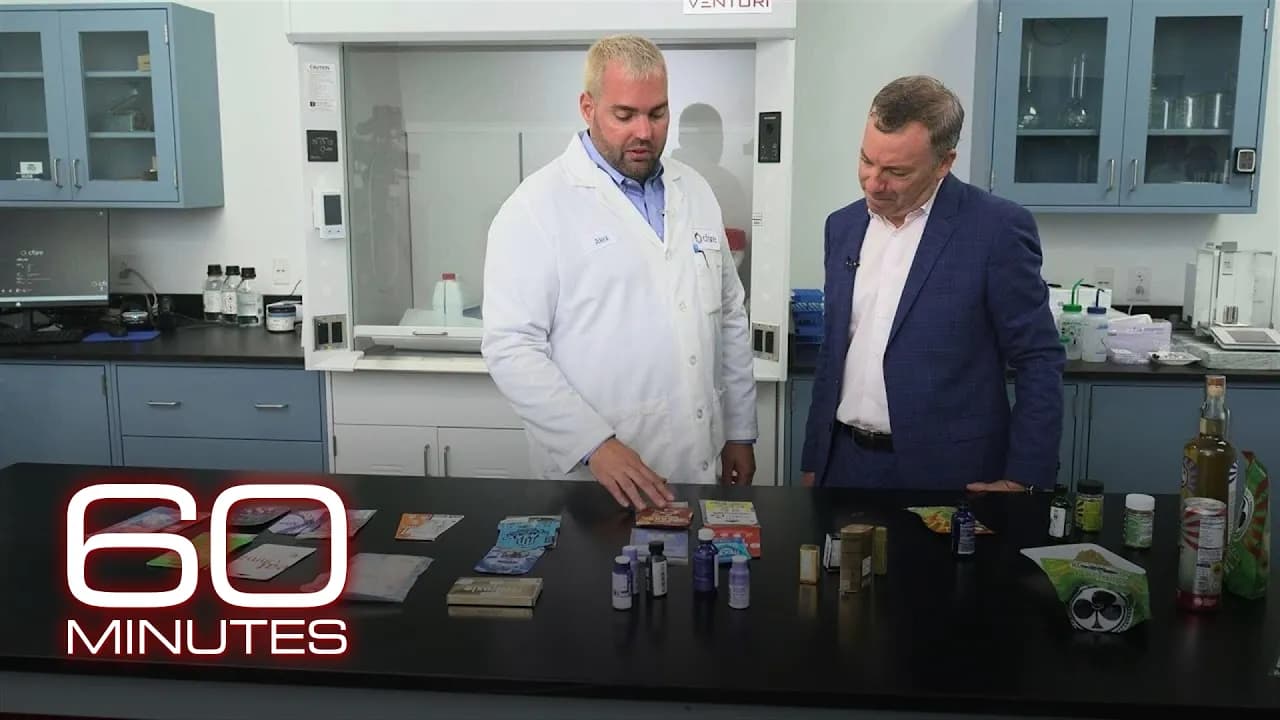
David Kessler, FDA commissioner during the Clinton administration who exposed how tobacco companies manipulated nicotine levels, submitted a petition to the FDA. The petition would compel the FDA to investigate the amounts of sugar and refined carbohydrates in diets from a scientific perspective, similar to the tobacco industry investigation. Kessler appeared on 60 Minutes supporting Bobby Kennedy on this issue. The FDA did not know what is in food, as the industry self-polices and self-certifies ingredients and their amounts. Companies marketing high-sugar products to kids are legally required to have studies showing the recommended amounts do not harm children.
The administration planned a 60 Minutes initiative with full White House approval to ask whether the amount of sugar in children's diets was appropriate. Suzie Wiles stated they could not do it because they needed the sugar industry money for the midterms. Rogan questioned why they would make deals for special interests and stab them in the back after midterms when there would be no political reason to do so.
The belief that money for campaigns is the most important thing allows excusing anything. Rogan believes this is based on a lie. The Trump campaign was not about money but about Trump letting it rip. The dismissive attitude toward the coalition brought in and MAHA messaging felt wrong. Midterm paralysis impacted the administration about six months after the term started. Rogan suggests taking a hold on policy for a year in a new administration to take on Congress and demand structural reform.
An article revealed Suzie Wiles kept Trump in the dark about the looming GOP disaster. She would shut down conversations about oversight probes, believing it could pull focus from the campaign. She always said they were going to win. Wiles and her team are now aggressively leaking and blaming the president. James Blair had pinned tweets about political strategy during the 2024 campaign. Rogan states that Trump ran and won the election, not these strategists.
Vinay Prasad, pushed out by Suzie Wiles, worked with Marty on an elegant solution for the COVID vaccine. When reapproving Pfizer's model, they required an immediate new safety study showing efficacious benefit, with approval contingent on the study. After Marty was fired, the FDA told Pfizer they do not have to do the study. Pfizer agreed to the condition but worked to avoid the results coming out because they knew it would show bad things.
Bobby Kennedy has never put his finger on the scale for anything and is begging for real studies and science. The president's been the real ally on vaccine issues. CEOs communicate deep into the FDA, and people who worked for Merck will work there again.
We're entering a very interesting time where some people are saying with AI that we're entering the most disruptive period of human history in the next four years. Inequality is not going down. Social anxiety is not going down. Institutionally, we are pretty far along, and the question is whether we're going to have a serious conversation or not. Americans want this, and there's an incentive for political leaders at the presidential level to actually start jamming this in the conversation. Americans should be intolerant of any leader that does not talk about actually how to fix the rules of the game instead of just policies.
Policies are garbage. Obamacare was one of the biggest policies in the past 20 years written by the insurance industry. Insurance premiums have gone up 1.5x since then. Healthcare is now 25% of the US economy. It was written by the insurance industries and created a thing where you can raise premiums and get 15% of a larger and larger pie. The stocks of insurance companies have gone up 15x. It was the worst law in American history that exploded healthcare costs. We spend three times more than any other country in the world on healthcare and live less than any other developed country. The policy process is broken and has to be fixed structurally. Money and politics is a big deal.
The leaders of the government use the importance of money as an excuse to basically be antagonistic to what voters said and help gas station heroin, help vaping, help pharma companies, help glyphosate. Those are the issues that were being pushed down from the White House. It wasn't healthy food at all. Had to bulldoze that stuff.
The last straw was a huge issue that the administration had agreed to release an ultraprocessed food definition. The processed food definition is super simple and includes a color, a non-nutritive sweetener, and one of these factory-derived chemicals that there's an FDA list on. Worked with left, right, and center, purposely working with every academic that could be found. Every academic group aligned on the definition, including Harvard and Tufts. Had the American Heart Association, the American Academy of Pediatrics, American Medical Association, all these groups that are suing the Trump administration, other things, willing to stand in an event and say this is the most important public health issue in the country.
70% of a child's diet in the US is ultraprocessed food and it's 10% in Spain. That's the problem, and we incentivize it. The definition was simply a definition, not even tied to regulation, but there was vitriol and lobbying on this issue. The food companies don't want people to know the truth. They don't want people to have transparency. Even just a definition would come out, and people would be able to look on apps. Maybe they could do voluntary labels and maybe there'd be some momentum eventually to have this on a label where states could pass laws to restrict it in school lunches. It would continue the momentum, and they lobbied aggressively.
Met with Coca-Cola, Mars, every the Oreo lobbyist from Mars, who just told me they don't want it done because it will hurt their business. The lobbyist said they had a mandate behind them, this was an administration priority, and they were going to get it done. The lobbyist said he was going to call Mark Pilot, he was going to call Susie, he was going to call, and he talked about these people at the White House like they were extensions of him. The lobbyist said he was going to call them, and he called them.
This policy that Brooke Rollins at the USDA, who has a lot of constituency, they don't want it. She agreed to it. Everyone agreed to it. There was a meeting and then it got delayed, delayed, delayed. Bobby and I went with Susie, and she said they were doing great, she didn't know about any special interest concerns, and she lied to us to our face. Then heard her complaining about us after that meeting and talking about how we need to do something about Calley Means and Bobby Kennedy because they were being annoying. They were getting in the way of them making money.
Tied into this was the school lunch reform worked on for six months on full alignment throughout the entire government, the full policy process, the OMB, the USDA, HHS, every stakeholder, the national economic council, hundreds of meetings. This isn't everything wanted, but we don't require protein at breakfast. The number one breakfast for school children in America is donuts and sugary pastries. We have tens of millions of donuts and sugary pastries going government funded to kids every day, destroying their metabolic health. It's not excusable. There's no protein requirement. So, we said you can't have sugary desserts for breakfast and we're going to put a protein requirement at breakfast so maybe people can have some eggs. We raised protein a little bit. We put that you should prioritize whole food proteins instead of, you know, at menu right now. You look at a school, it's pizza and fried chicken nuggets. It's disgusting. It's a national embarrassment what's happened with school lunches. It's not even a money issue. We spend more than any other country on school lunches. You compare us to Japan, it's a national embarrassment.
The industry comes in on this issue that's central to Bobby Kennedy, central to a political coalition, so popular and impactful, and they say it's going to hurt their sales. If we're going to block school lunches and a quarter page definition of ultraprocessed food that doesn't even have a regulatory impact when Bobby Kennedy is the most popular figure in America, this is the most popular part of the domestic policy, not to mention that it's just critically important for the future of America that we continue the trend away from ultraprocessed food, which is literally destroying our country. Just hearing the lie, lying to my face.
The journey is still going. The goal is that we're in early stages. I'm actually optimistic, but I did what I felt was the best thing to do at the time. When this type of subversion is happening, maybe the best thing you can do is tell the truth.
Keep PowerfulJRE in your library
Save the videos and channels worth coming back to, and find them again in one place.